
Where durability meets design—redefining how commercial interiors and exteriors stand up to the rush of daily life while telling a story that resonates.
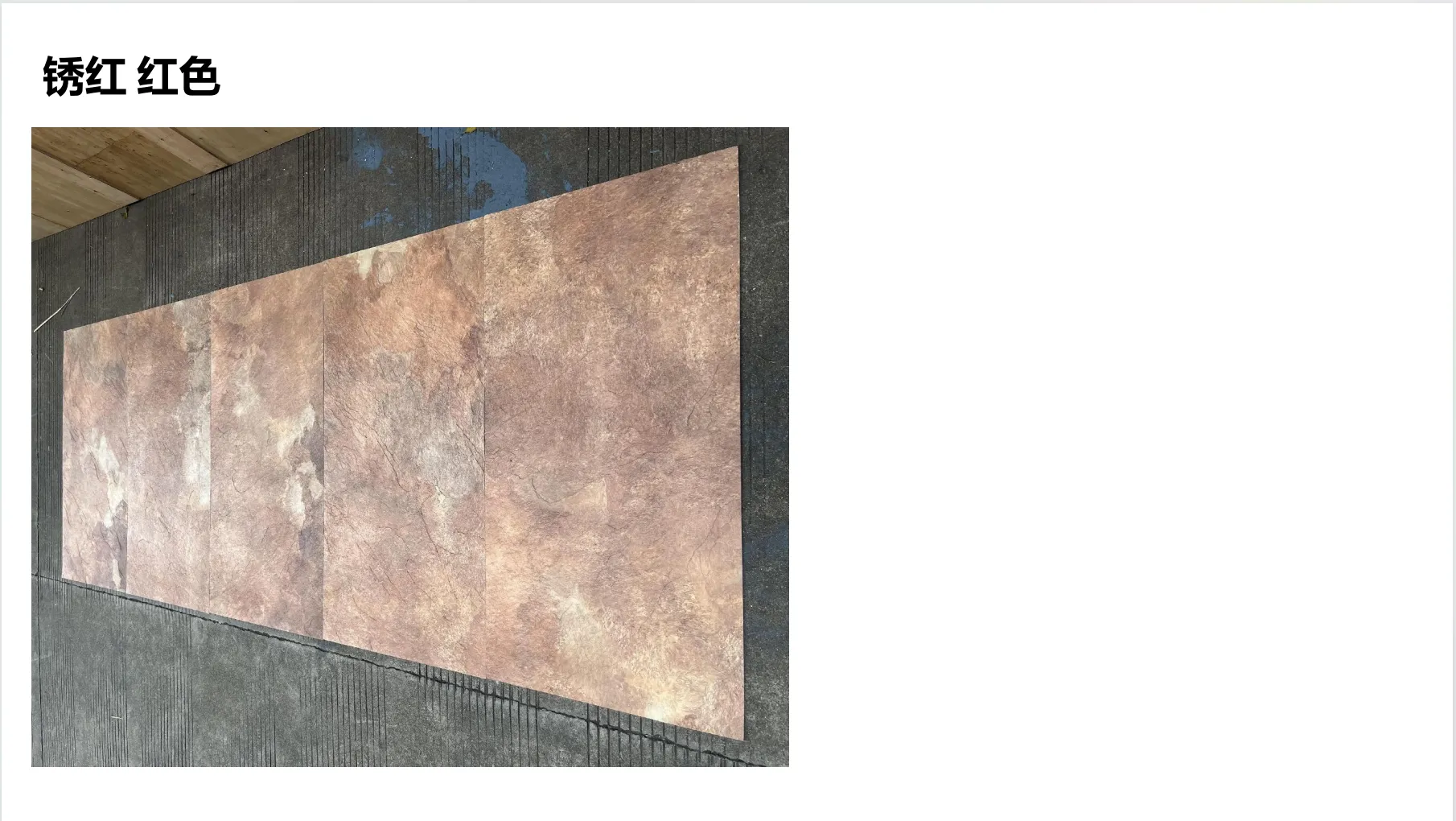
Step into any thriving commercial space—a bustling retail mall, a busy restaurant, a sleek corporate lobby—and you'll notice something subtle but powerful: the materials that shape the environment. They don't just fill space; they set the mood, guide movement, and withstand the relentless rhythm of foot traffic, spills, and time. For designers and architects, the challenge isn't just choosing something "nice to look at"—it's finding a material that can keep up with the chaos of high-traffic areas without losing its soul. Enter the Rusty Red MCM Project Board, a standout in the MCM Project Board Series that's quietly revolutionizing how we build commercial spaces. It's not just a surface; it's a solution crafted for the way we live, work, and connect.
High-traffic commercial spaces are the unsung heroes of urban life. They're where deals are made, memories are created, and communities gather. But behind their polished exteriors lies a battlefield of wear and tear. Let's break down the silent struggles designers face:
For years, the default response was to choose "the lesser evil"—opting for durability over beauty, or vice versa. But what if a material existed that refused to compromise? That's where the MCM Project Board Series comes in, with Rusty Red leading the charge.
MCM, or Modified Composite Material, isn't just another acronym in the construction world. It's a leap forward in material science—engineered to address the flaws of traditional options while amplifying their strengths. At its core, MCM combines natural minerals, high-performance polymers, and advanced manufacturing techniques to create panels that are lightweight, flexible, and incredibly strong.
The MCM Project Board Series takes this innovation further, offering a range of textures, colors, and finishes tailored to commercial needs. From the industrial chic of Fair-Faced Concrete to the timeless elegance of Travertine (Vintage Gold), the series is a toolkit for designers. But among them, Rusty Red stands out—not just for its striking hue, but for how it marries form and function.
Colors tell stories. Rusty Red isn't just a shade; it's a narrative of warmth, resilience, and heritage. Imagine the rich, earthy tones of aged terracotta roofs in Mediterranean villages, the weathered patina of a vintage barn door, or the fiery glow of a sunset over desert landscapes—that's the inspiration behind Rusty Red. It's a color that feels both rooted in history and utterly modern, making it versatile enough for a cozy café or a cutting-edge tech office.
But Rusty Red's appeal goes beyond aesthetics. In commercial design, color psychology plays a quiet role in shaping customer behavior. Warm tones like red are known to evoke energy, passion, and approachability—qualities that draw people in and keep them engaged. In retail, it can subtly encourage browsing; in hospitality, it fosters a sense of comfort. Unlike bold primary reds that feel overwhelming, Rusty Red has depth—with undertones of brown and orange that soften its impact, making it suitable for large-scale applications like feature walls or flooring.
Case in Point: The Redwood Bistro
A family-owned bistro in downtown Portland was struggling with its dining area floors. The original hardwood looked stunning but warped within months of opening, thanks to spilled wine, water, and constant foot traffic. The owners considered switching to concrete—durable but cold—or tile, which felt generic. Then they discovered Rusty Red MCM panels. Today, their floors feature the warm, rustic charm of Rusty Red, with a matte finish that hides scuffs and a texture that prevents slips. "It feels like we brought the outside in," says head chef Maria Gonzalez. "Our customers comment on the floors all the time—they say it makes the space feel 'lived-in' and welcoming, not sterile." And best of all? Six months in, there's not a scratch in sight.
Beauty is subjective, but performance is measurable. Let's dive into the specs that make Rusty Red MCM Project Boards a workhorse for high-traffic spaces:
MCM panels are engineered with a core of mineral-filled polymer, reinforced with fiberglass for tensile strength. This composition makes them resistant to:
Traditional materials like natural stone or concrete are heavy, requiring reinforced structures and complex installation. Rusty Red MCM panels weigh in at just 4-6 kg per square meter—less than half the weight of marble. This lightweight nature means:
In an era of climate consciousness, Rusty Red MCM doesn't just perform—it protects. Here's how:
High-traffic spaces demand materials that prioritize safety, and Rusty Red MCM delivers:
Still not convinced? Let's put Rusty Red MCM head-to-head with three common alternatives in high-traffic commercial design:
| Material | Durability (1-10) | Installation Time | Annual Maintenance Cost | Aesthetic Versatility | Sustainability |
|---|---|---|---|---|---|
| Rusty Red MCM Project Board | 9/10 (Scratch, stain, and UV resistant) | Fast (1-2 days for a 500 sq ft area) | Low ($50-$100/year for cleaning supplies) | High (Can mimic stone, wood, or metal; flexible for curves) | High (Recycled materials, long lifespan, recyclable) |
| Fair-Faced Concrete | 7/10 (Durable but prone to staining and cracking) | Slow (3-5 days; requires curing time) | Medium ($300-$500/year for sealing and repairs) | Low (Limited color options; industrial look only) | Medium (High carbon footprint in production; long lifespan) |
| Travertine (Vintage Gold) | 6/10 (Porous; scratches and stains easily) | Medium (2-3 days; requires careful cutting) | High ($800-$1,200/year for sealing, polishing, and stain removal) | Medium (Natural beauty but limited customization) | Low (Mined from quarries; high transportation emissions) |
| Foamed Aluminium Alloy Board (Vintage Silver) | 8/10 (Resistant to dents but prone to scratches) | Medium (2-3 days; requires specialized tools) | Medium ($400-$600/year for polishing and rust prevention) | Medium (Metallic finish only; cold aesthetic) | Medium (Recyclable but energy-intensive to produce) |
The data speaks for itself: Rusty Red MCM isn't just a competitor—it's a front-runner, offering better durability, lower maintenance, and higher design flexibility at a fraction of the long-term cost.
Rusty Red's versatility makes it a chameleon in commercial design. Here are just a few spaces where it's making a difference:
Retail: The Boutique That Stood Out
Blossom & Co., a high-end clothing boutique in Chicago, wanted to create a space that felt "luxurious but lived-in." Their challenge? A narrow storefront with heavy foot traffic from passersby. The design team chose Rusty Red MCM for the exterior facade and interior accent walls. The warm, terracotta-inspired hue draws pedestrians in, while the matte finish resists fingerprints and smudges from curious shoppers. "We get compliments daily on how the color pops against the city's gray buildings," says owner Eliza Chen. "And since installing it a year ago, we haven't had to repaint or repair a single panel—even with delivery trucks brushing against the facade!"
Hospitality: A Hotel Lobby That Feels Like Home
The Azure Hotel in Miami wanted its lobby to evoke "beachside warmth with urban edge." Traditional marble felt too cold, while hardwood risked water damage from rain-soaked guests. The solution? Rusty Red MCM flooring paired with woven rattan furniture and potted palms. The result is a space that feels both sophisticated and relaxed. "Guests often mention the floors—they say it's like walking on a sun-baked desert floor, but without the grit," laughs hotel manager Jake Torres. "And when we had a pipe burst last winter, the water just beaded up on the MCM—no warping, no staining. We mopped it up and were back to normal in an hour."
Corporate: A Tech Office That Breaks the Mold
Silicon Valley startups are known for bold design, but few go as far as NovaTech, which wanted its new headquarters to "feel like a creative workshop, not a cubicle farm." The design team used Rusty Red MCM for the main staircase, creating a dramatic focal point that connects the lobby to the upper floors. The panels wrap around the curved staircase, their texture mimicking the look of hand-chiseled stone. "It's become our 'Instagram spot'—employees and clients can't resist taking photos there," says CEO Maya Patel. "But beyond the aesthetics, it's incredibly durable. We have team-building events on those stairs, and they still look brand-new."
One of the biggest myths about high-performance materials is that they're "high-maintenance." Not Rusty Red MCM. Let's walk through what installation and upkeep actually look like:
Installing Rusty Red MCM panels is refreshingly straightforward. Here's a step-by-step overview:
Most commercial projects take 1-3 days, depending on size—meaning minimal downtime for businesses.
Caring for Rusty Red MCM is as easy as it gets:
Commercial design isn't static. Trends shift, but some themes endure. Rusty Red MCM aligns with three major movements shaping today's spaces:
Gone are the days of stark, all-white "minimalism." Modern minimalism is warm, textured, and inviting. Rusty Red's earthy tone adds depth to neutral palettes, pairing beautifully with whites, grays, and natural woods. It's the perfect balance of "calm" and "character."
Industrial design often leans cold, with metal and concrete dominating. Rusty Red softens that edge, adding warmth without sacrificing the genre's raw, authentic feel. It's why it's a favorite in coffee shops, breweries, and co-working spaces.
Biophilic design connects people to nature through materials, colors, and patterns. Rusty Red evokes the outdoors—think desert landscapes, autumn leaves, or sun-baked clay—creating spaces that feel grounded and restorative, even in the heart of the city.
By choosing Rusty Red MCM, designers aren't just following trends—they're future-proofing spaces, ensuring they remain relevant and appealing for years to come.
High-traffic commercial spaces deserve more than "good enough." They deserve materials that work as hard as the people who use them—materials that don't just survive, but thrive. Rusty Red MCM Project Boards check every box: durable enough to withstand the chaos, beautiful enough to inspire, and sustainable enough to feel good about. It's not just a surface; it's a partner in building spaces that matter.
So the next time you're designing a commercial space, ask yourself: What story do I want to tell? And does my material have the strength to tell it for years to come? With Rusty Red MCM, the answer is a resounding yes.
Recommend Products












