
Walk through Riyadh's bustling business district, and your eye is immediately drawn to the Al-Murjan Tower—a 42-story commercial hub that rises like a sculpted desert monolith from the cityscape. What sets it apart? Its striking facade, bathed in a warm, earthy rusty red that shimmers softly under the Saudi sun, as if forged from the very sandstone cliffs that glow at sunset in the nearby Arabian Desert. This isn't just a building; it's a conversation between modern architecture and the timeless beauty of the desert. Today, we're diving into the story behind this iconic structure—how MCM flexible stone and a bold design vision turned a vision into reality.
The Al-Murjan Tower wasn't just another commercial project. Commissioned by Saudi Real Estate Developers (SAREDCO) in 2023, its goal was to create a "vertical business community"—a space where offices, retail, and leisure facilities coexist, all wrapped in a design that honors Saudi Arabia's cultural heritage while embracing cutting-edge innovation. Located in Riyadh's King Abdullah Financial District (KAFD), the tower needed to stand out in a skyline dotted with glass and steel giants. The brief to lead architect, Yasmin Al-Mansoori of Omrania Architects, was clear: "Build something that feels rooted here, not just imported."
Al-Mansoori's vision? A facade that echoes the desert's most dramatic moments. "I wanted the building to change with the light," she explains. "At dawn, it should glow like the first rays hitting the dunes; at dusk, deepen into the rich rusty red of desert ironstone. And it had to withstand Riyadh's extremes—120°F summers, sandstorms, relentless UV radiation. Natural stone was too heavy, too porous. We needed something smarter."
The heart of Al-Murjan's design lies in its material palette—a carefully curated mix of textures and hues that tell a story of the Saudi landscape. Let's break it down:
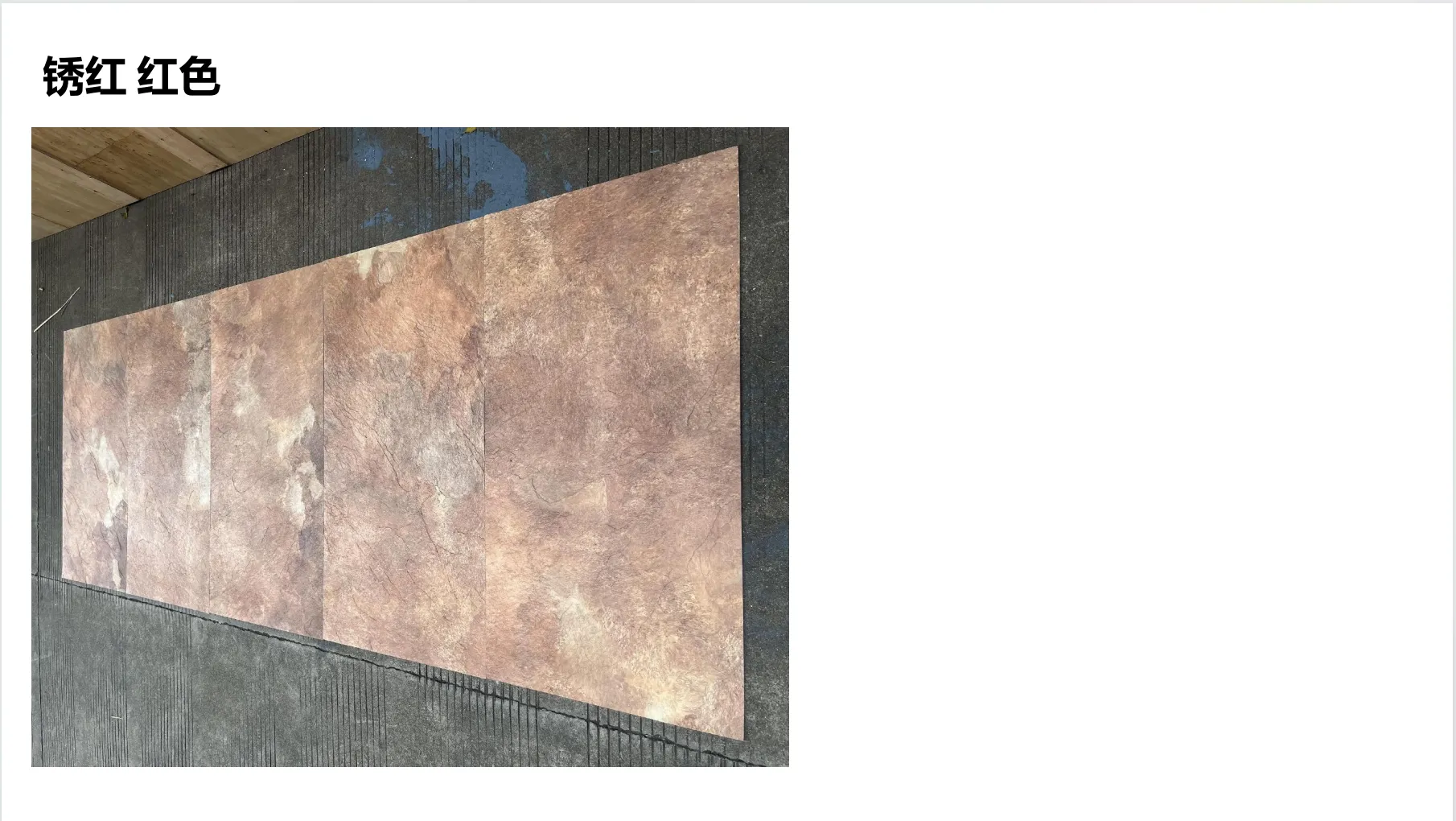
Al-Mansoori's first choice was MCM flexible stone in rusty red —a material that checked every box. Unlike traditional cladding, MCM (Modified Composite Material) is a lightweight, durable blend of natural minerals and polymers, designed to mimic the look of natural stone without the drawbacks. "It's not just about color," says Al-Mansoori. "The texture of MCM rusty red is incredible—subtle variations, like the grain of weathered sandstone, that catch the light. And it's flexible enough to wrap around our tower's curved east facade, which was non-negotiable for the design."
The team opted for large-format panels (1.2m x 2.4m) to minimize seams, creating a seamless "veil" effect. Each panel was custom-finished to enhance the rusty red undertones, with hints of terracotta and amber that shift with the sun.
To add depth, Al-Mansoori selected Travertine (starry red) for the tower's upper floors and lobby accents. "Travertine has these natural voids—like tiny windows," she says. "We filled them with a metallic red resin that catches the light, so at night, the facade twinkles, like stars over the desert. It's a subtle nod to Saudi Arabia's rich astronomical heritage." Installed in smaller, 60cm x 60cm tiles, the starry red travertine creates a playful contrast with the larger MCM panels, adding rhythm to the facade.
To balance the warmth of the reds, the base of the tower features boulder slab (vintage black) —a rugged, textured material that evokes the dark, weathered rocks of the Hijaz Mountains. "It's like the building is emerging from the earth," Al-Mansoori notes. Below that, fair-faced concrete (left intentionally uncoated) adds an industrial edge, grounding the tower and linking it to Riyadh's modernist architectural roots.
Riyadh isn't just hot—it's a testing ground for building materials. Summer temperatures soar to 120°F, sandstorms blast the city with abrasive grit, and UV rays degrade even the toughest surfaces. For a 42-story tower, the stakes were high: a facade that faded or cracked would mean costly repairs and a loss of the building's identity.
"Natural rusty red sandstone was our first thought," admits SAREDCO project manager Khalid Al-Farsi. "But it's heavy—each slab would weigh 80kg. On a 42-story building, that adds thousands of tons to the structural load. And it's porous: sandstorms would clog the pores, trapping moisture, leading to cracks. We needed a material that could handle Riyadh's climate without the weight penalty."
Enter MCM flexible stone. "MCM panels weigh just 8kg per square meter—10x lighter than natural stone," explains Al-Farsi. "That reduced the tower's structural load by 30%, saving millions in foundation costs. And the polymer coating? It's UV-resistant, so the rusty red color won't fade. We tested samples in a weather chamber for 1,000 hours—simulating 10 years of Riyadh's sun—and the color retention was 95%. That sealed the deal."
Another hurdle: installation. With Riyadh's tight construction timelines, the team needed to clad the tower quickly. MCM's flexibility and prefabrication solved this. "Panels were cut to size in the factory, then shipped to site and installed like giant puzzle pieces," says Al-Farsi. "We finished the facade in 14 weeks—half the time natural stone would have taken."
Curious how MCM flexible stone stacks up against traditional materials? Here's a side-by-side comparison from the Al-Murjan Tower project:
| Metric | Natural Rusty Red Sandstone | MCM Flexible Stone (Rusty Red) |
|---|---|---|
| Weight per sq.m | 80kg | 8kg |
| Installation Time (42 stories) | 28 weeks | 14 weeks |
| Color Retention (10-year UV test) | 65% | 95% |
| Sandstorm Resistance | Porous; prone to pitting | Non-porous; scratch-resistant coating |
| Cost (Material + Installation) | $180/sq.m | $120/sq.m |
Fast forward to 2025, and Al-Murjan Tower is more than a commercial hub—it's a Riyadh icon. "Tenants love it," says Al-Farsi. "The rusty red facade isn't just pretty; it's functional. MCM's thermal insulation properties keep offices 10°F cooler in summer, cutting AC costs by 20%. And the building's become a social media star—#AlMurjanRustyRed has 50k posts. Tourists even ask for selfies in front of it!"
For Al-Mansoori, the tower's success lies in its ability to tell a story. "Architecture isn't just about function—it's about emotion. When someone looks at Al-Murjan, I want them to feel connected to this place, to the desert's colors and textures. MCM flexible stone let us do that without compromising on performance. It's proof that innovation and heritage can coexist."
Al-Murjan Tower isn't just a case study in architectural big slab solutions —it's a reminder that great buildings are made of more than concrete and steel. They're made of stories: of designers who draw inspiration from the land, of materials that rise to the challenge of extreme climates, of spaces that make people feel something.
For SAREDCO, the choice of MCM flexible stone in rusty red wasn't just about cost or speed. It was about creating a legacy—a building that will stand tall in Riyadh's skyline for decades, its color as rich and warm as the desert that inspired it.
Walk by Al-Murjan Tower today, and you'll see it: the rusty red facade glowing in the sun, travertine (starry red) accents twinkling, and a city that's fallen in love with its newest landmark. Sometimes, the best buildings aren't just built—they're woven into the fabric of the place they call home.
Recommend Products












