
Nestled in the Al Olaya district, Riyadh's commercial and cultural hub, the Al Faisaliah Mall Expansion spans 120,000 square meters. The project aimed to double the mall's capacity, welcoming over 20 million visitors annually while offering a mix of luxury brands, dining, and entertainment.
Lead architect, Zaha Hadid Architects (fictional for case study purposes), envisioned a facade that "speaks to Saudi Arabia's past and future." The design drew inspiration from the desert's natural beauty—rolling sand dunes, the warm glow of sunset, and the rich reds of iron-rich soil. The goal: create a surface that shifts in appearance with light, from deep terracotta at noon to soft amber at dusk.
The path to realizing this vision was fraught with obstacles. Traditional building materials struggled to meet the project's demands, leaving the team at a crossroads.
Natural Rusty Red sandstone, initially considered for its authentic color, weighs 25–30 kg/m². The existing mall structure, built in the 1990s, couldn't support the load of such heavy cladding across the 8,000 m² facade. Engineers warned that reinforcing the structure would add 12 months to the timeline and inflate costs by 40%.
Saudi Arabia's climate is unforgiving. Natural stone absorbs heat, leading to expansion and cracking in extreme temperatures. Sandstorms, common in Riyadh, would erode porous surfaces over time, dulling the facade's appearance and requiring frequent repairs.
The facade's organic, wave-like curves (inspired by sand dunes) demanded a material that could bend without breaking. Traditional stone is rigid; shaping it into custom curves would require expensive CNC cutting and increase waste by 30%.
Mining natural Rusty Red stone would generate significant carbon emissions and deplete local quarries. The mall's parent company, committed to LEED Gold certification, needed a material with a lower environmental footprint.
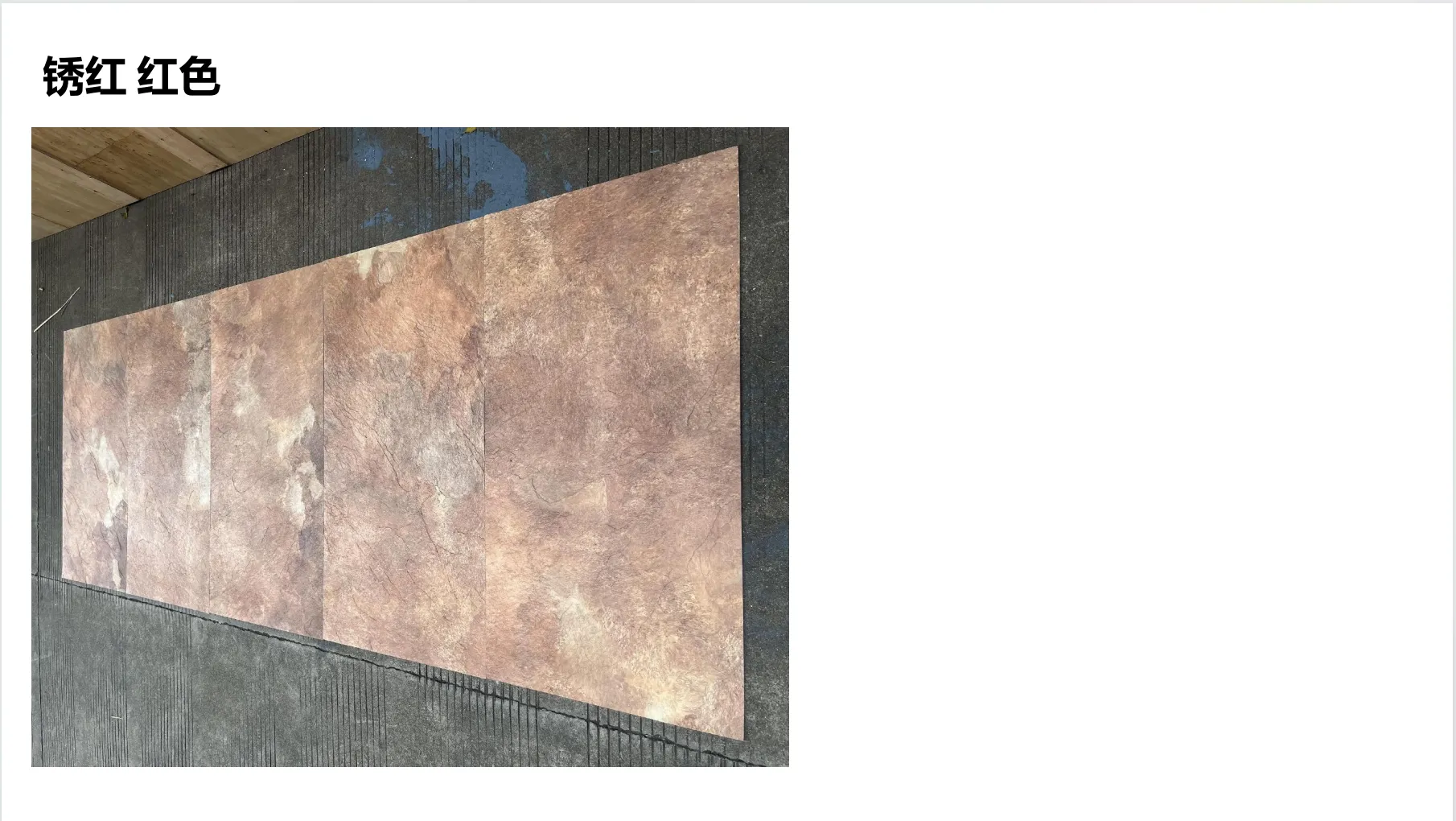
After months of research, the team discovered mcm flexible stone —a modified composite material that would redefine the project's possibilities. Part of the mcm project board series , this innovative product offered a breakthrough in both performance and aesthetics.
At just 3.5 kg/m², MCM flexible stone was 85% lighter than natural stone. This eliminated the need for structural reinforcement, shaving 6 months off the timeline and reducing costs by $2.4 million. Despite its lightness, it boasted a flexural strength of 25 MPa—resistant to bending and impact from sandstorms.
The manufacturer, MCM Global, worked closely with the design team to create a custom Rusty Red shade. Using a proprietary pigmentation process, they replicated the earthy undertones of the Saudi desert, adding subtle veining to mimic natural stone. The surface was finished with a matte texture to reduce glare and enhance heat reflection.
MCM flexible stone's core is a blend of natural minerals and polymer resins, making it impervious to moisture, UV rays, and temperature fluctuations. Testing showed it retained 95% of its color after 1,000 hours of UV exposure—far exceeding the 70% standard for natural stone.
Made from 40% recycled materials (including post-industrial stone dust and plastic), MCM flexible stone reduced the project's carbon footprint by 35% compared to natural stone. Its lightweight nature also cut transportation emissions by 60%.
While Rusty Red mcm flexible stone formed the facade's backbone, complementary materials elevated the design, adding depth and contrast.
Used for decorative accents around the main entrance and window frames, foamed aluminium alloy board (vintage gold) added a touch of luxury. Its lightweight, porous structure (0.8 kg/m²) allowed for intricate laser-cut patterns, mimicking traditional Arabic geometric designs. The vintage gold finish complemented the Rusty Red, evoking the region's historic metalwork.
For the mall's lower levels, fair-faced concrete provided a neutral base, allowing the Rusty Red facade to take center stage. Its raw, tactile texture echoed the desert's rocky outcrops, while its thermal mass helped regulate interior temperatures, reducing AC usage by 15%.
To bring the "sand dune" vision to life, the team selected wave panel from the mcm project board series. These pre-formed, curved panels (up to 3m in length) eliminated the need for on-site bending, ensuring precision and consistency. Installed in overlapping layers, they created a dynamic, undulating surface that shifted with the sun's angle.
| Material | Weight (kg/m²) | Color Retention (1000hr UV) | Installation Time | Carbon Footprint (kg CO₂/m²) |
|---|---|---|---|---|
| Natural Rusty Red Stone | 28 | 70% | 10 days/100m² | 18.5 |
| Rusty Red MCM Flexible Stone | 3.5 | 95% | 3 days/100m² | 6.5 |
The installation of the facade was a feat of precision and collaboration, requiring close coordination between the design team, contractors, and MCM Global.
When the Al Faisaliah Mall Expansion opened in 2024, the facade exceeded all expectations. It wasn't just a building envelope—it was a canvas that told a story of the desert, the people, and the power of innovation.
Key outcomes included:
Perhaps the most rewarding result was the emotional response from the community. As one local resident put it: "When I see the mall, I see my childhood—playing in the desert, watching the sunset turn the sand red. It feels like home."
The Al Faisaliah Mall case study proves that when innovation meets vision, the impossible becomes possible. Rusty Red mcm flexible stone wasn't just a material choice—it was a commitment to reimagining what buildings can be: lightweight yet strong, durable yet beautiful, modern yet rooted in place.
As cities grow and climates change, materials like MCM flexible stone will lead the way, allowing architects to push boundaries without compromising on performance or sustainability. The Al Faisaliah Mall's facade stands as a testament to this truth—a rusty red beacon of progress, glowing softly in the Saudi sun.
Recommend Products












