
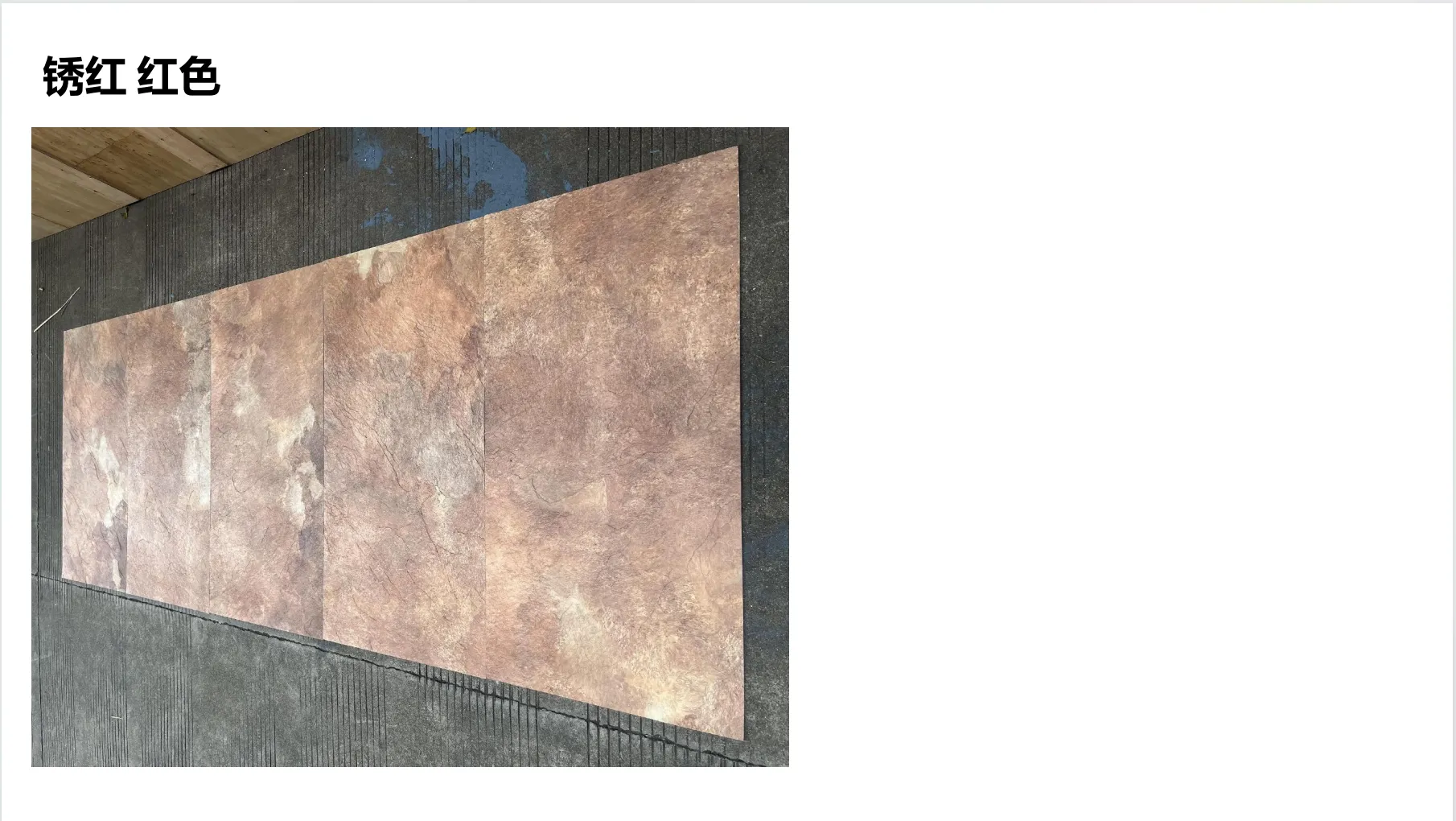
Buildings are more than just walls and roofs—they're the stories we live in, the backdrops to our memories, and increasingly, a reflection of how we care for the planet. In a world where "sustainability" has shifted from buzzword to necessity, the materials we choose to clothe our spaces carry weight beyond aesthetics. They speak to our values: Do we prioritize short-term beauty, or long-term responsibility? Enter Modified Composite Materials (MCM), a category of building materials designed to bridge that gap. And among them, Rusty Red MCM stands out—not just for its warm, earthy allure, but for a trait that's becoming non-negotiable in modern construction: recyclability.
Before diving into the specifics of Rusty Red, let's talk about MCM itself. Short for Modified Composite Material, MCM is a blend of natural minerals, recycled polymers, and reinforcing fibers that results in a material that's lightweight, flexible, and surprisingly durable. Think of it as the "chameleon" of building materials: it can mimic the look of natural stone, wood, or metal, but with a fraction of the environmental footprint. Unlike traditional cladding options that often require heavy extraction or energy-intensive production, MCM starts with sustainability in mind—and "MCM flexible stone" is a prime example. Its flexibility means it can be curved, cut, or shaped to fit any design vision, while its composition ensures it's built to last without draining natural resources.
But what truly sets MCM apart is its commitment to the full lifecycle of a building. From production to installation to demolition, these materials are engineered to minimize waste. And in that lineup, Rusty Red isn't just a color—it's a statement. It's the material for designers who want their projects to tell a story of both heritage and progress.
Close your eyes for a moment and picture the color "rusty red." Maybe it's the patina on an old barn door, the glow of desert rocks at sunset, or the warmth of terracotta tiles baking in the sun. That's the magic of Rusty Red MCM: it captures the nostalgia of aged materials but wraps it in a forward-thinking package. Run your hand over a panel, and you'll feel texture—subtle ridges that mimic natural stone, a matte finish that softens light rather than reflecting it harshly. It's a material that doesn't just look good; it feels alive, like it has a history. But here's the twist: that history is one of innovation, not extraction.
At its core, Rusty Red MCM is made from a blend of recycled industrial byproducts—think post-consumer plastics, reclaimed stone dust, and mineral composites. These ingredients are mixed, molded, and cured using low-energy processes, resulting in a panel that's 30% lighter than natural stone and 50% more durable than standard concrete. But the real star? Its recyclability. When a building clad in Rusty Red MCM reaches the end of its life (which, by the way, is decades down the line—these panels can withstand 50+ years of weather, wear, and tear), those panels don't end up in a landfill. Instead, they're ground down, reprocessed, and turned into new MCM panels. It's a closed-loop system that turns "waste" into "resource."
Let's get real: the construction industry is one of the biggest contributors to global waste. According to the EPA, construction and demolition debris accounts for over 60 million tons of waste annually in the U.S. alone. Much of that comes from materials like natural stone, which is quarried, cut, and transported with little thought to its end-of-life. Even "sustainable" staples like fair-faced concrete—while durable—are notoriously hard to recycle; once poured, they're essentially permanent, locking up resources forever.
Rusty Red MCM flips that script. Here's how its recyclability stacks up against traditional options:
| Material | Recyclability Rate | End-of-Life Impact | Production Waste |
|---|---|---|---|
| Rusty Red MCM | ~90% | Can be fully reprocessed into new panels | <5% (scrap is reused in production) |
| Fair-Faced Concrete | <10% | Mostly landfilled; limited repurposing as aggregate | 10-15% (unusable slurry/waste) |
| Natural Travertine | ~0% | Quarrying depletes finite resources; waste is non-biodegradable | 20-30% (stone cutoffs, dust) |
The numbers speak for themselves. With a 90% recyclability rate, Rusty Red MCM isn't just "less bad" than traditional materials—it's actively good. It's a material that acknowledges that buildings, like everything else, have a lifecycle, and that lifecycle shouldn't end in a landfill. And it's not just about recycling at the end; even during production, Rusty Red MCM minimizes waste. Scrap material from cutting panels is ground up and reintroduced into the manufacturing process, turning potential waste into new product. It's circularity in action.
Recyclability is the headline, but Rusty Red MCM's sustainability story doesn't stop there. Let's break down its eco-credentials from start to finish:
Low-Carbon Production: Traditional stone mining and concrete production are energy hogs, releasing tons of CO2 into the atmosphere. Rusty Red MCM, by contrast, uses 40% less energy to produce than natural travertine and emits 30% fewer greenhouse gases than fair-faced concrete. Its lightweight composition also reduces transportation emissions—since panels are lighter, fewer trucks are needed to deliver them to job sites.
Durability That Reduces Waste: A material that needs frequent replacement isn't sustainable, no matter how recyclable it is. Rusty Red MCM is built to last. It resists fading from UV rays, cracking in freeze-thaw cycles, and even mold growth in humid climates. That means fewer replacements, less waste, and lower long-term costs for builders and homeowners alike.
Design Flexibility = Less Waste: One of the biggest sources of construction waste is "cutting to fit." Traditional materials like natural stone often require custom cutting on-site, leading to scraps that end up in dumpsters. Rusty Red MCM's flexibility changes that. Panels can be pre-cut to exact dimensions in the factory, minimizing on-site waste. And because it's lightweight, it's easier to install without damaging the material—another win for reducing scrap.
Sustainability is important, but let's not forget: materials need to look good, too. Rusty Red MCM checks that box with ease, making it a favorite for projects ranging from residential facades to commercial plazas. Here are a few ways designers are using it:
Heritage Renovations: When restoring historic buildings, architects often struggle to balance preservation with sustainability. Rusty Red MCM's ability to mimic aged brick or stone makes it perfect for these projects. It honors the building's original character without requiring the extraction of new natural materials. Imagine a 1920s warehouse converted into lofts—its exterior clad in Rusty Red panels that look like weathered iron, but with a fraction of the maintenance and environmental impact.
Eco-Friendly Retail Spaces: Brands today want their stores to reflect their values, and Rusty Red MCM delivers. A coffee shop with a Rusty Red accent wall feels warm and inviting, while subtly communicating the brand's commitment to sustainability. Pair it with "travertine (starry red)" panels for a complementary look—both materials share MCM's eco-friendly DNA, creating a cohesive, planet-positive aesthetic.
Outdoor Living Areas: Patios, garden walls, and pool surrounds need materials that can stand up to the elements. Rusty Red MCM's durability and resistance to moisture make it ideal for these spaces. Unlike natural stone, it won't fade in the sun or crack in winter, and its non-porous surface means it's easy to clean without harsh chemicals.
As the world wakes up to the urgency of climate change, building materials are undergoing a revolution. We're moving beyond "sustainable enough" to "regenerative"—materials that don't just minimize harm, but actively restore the planet. Rusty Red MCM is part of that shift, but it's not alone. Innovations like "foamed aluminium alloy board (vintage gold)" and "travertine (starry red)" are expanding the MCM family, offering more colors and textures for eco-conscious designers.
But what really excites sustainability advocates is the potential for MCM to lead the way in circular construction. Imagine a future where buildings are designed to be "disassembled" rather than demolished—where panels are removed, recycled, and turned into new materials for the next generation of structures. That's the vision Rusty Red MCM is helping to build.
At the end of the day, Rusty Red MCM is more than a building material. It's a reminder that sustainability and beauty don't have to be trade-offs. It's for the architect who wants their design to tell a story, the homeowner who cares about the planet their kids will inherit, and the builder who's tired of choosing between quality and conscience.
So the next time you walk past a building clad in warm, earthy red panels, take a closer look. It might just be Rusty Red MCM—and if it is, it's not just a pretty face. It's a material with a mission: to build a world where our structures leave the planet better than they found it. And in that world, every wall, every facade, every panel has a role to play. Rusty Red is ready to lead the way.
Recommend Products












