
Because every structure deserves to stand strong—against time, nature, and the chaos of modern life
Walk down any city street, and you'll notice them: buildings that tell stories. The weathered facade of a coastal cottage, the sleek lines of an urban high-rise, the warm brick of a neighborhood café where you first kissed your partner. These structures aren't just walls and roofs—they're backdrops to our lives. But here's the hard truth: every day, they're under attack.
Pollution clings to their surfaces like a unwelcome guest, turning bright whites to dingy grays. Salt spray from coastal winds eats away at metal and stone, leaving pockmarks that feel like scars. Acid rain, car exhaust, industrial fumes—they all conspire to turn "new" into "old" far too soon. And when a building fades, something intangible fades with it: the pride of a community, the promise of longevity, the beauty that makes a place feel like home.
Enter Rusty Red MCM. More than just a building material, it's a defender. A quiet guardian that stands between your structure and the elements, refusing to let time and toxins steal its character. Let's talk about how this unassuming material is rewriting the rules of durability—starting with the battles it fights every single day.
First things first: MCM stands for Modified Composite Material, but let's not get bogged down in acronyms. Think of it as nature and science holding hands. Traditional stone and concrete are tough, but they're heavy, porous, and prone to cracking when the weather throws a tantrum. MCM flips that script. It's made by bonding natural minerals (like the iron oxides that give Rusty Red its warm, earthy hue) with advanced polymers, creating a material that's lightweight, flexible, and—here's the kicker— incredibly resistant to the stuff that destroys other surfaces.
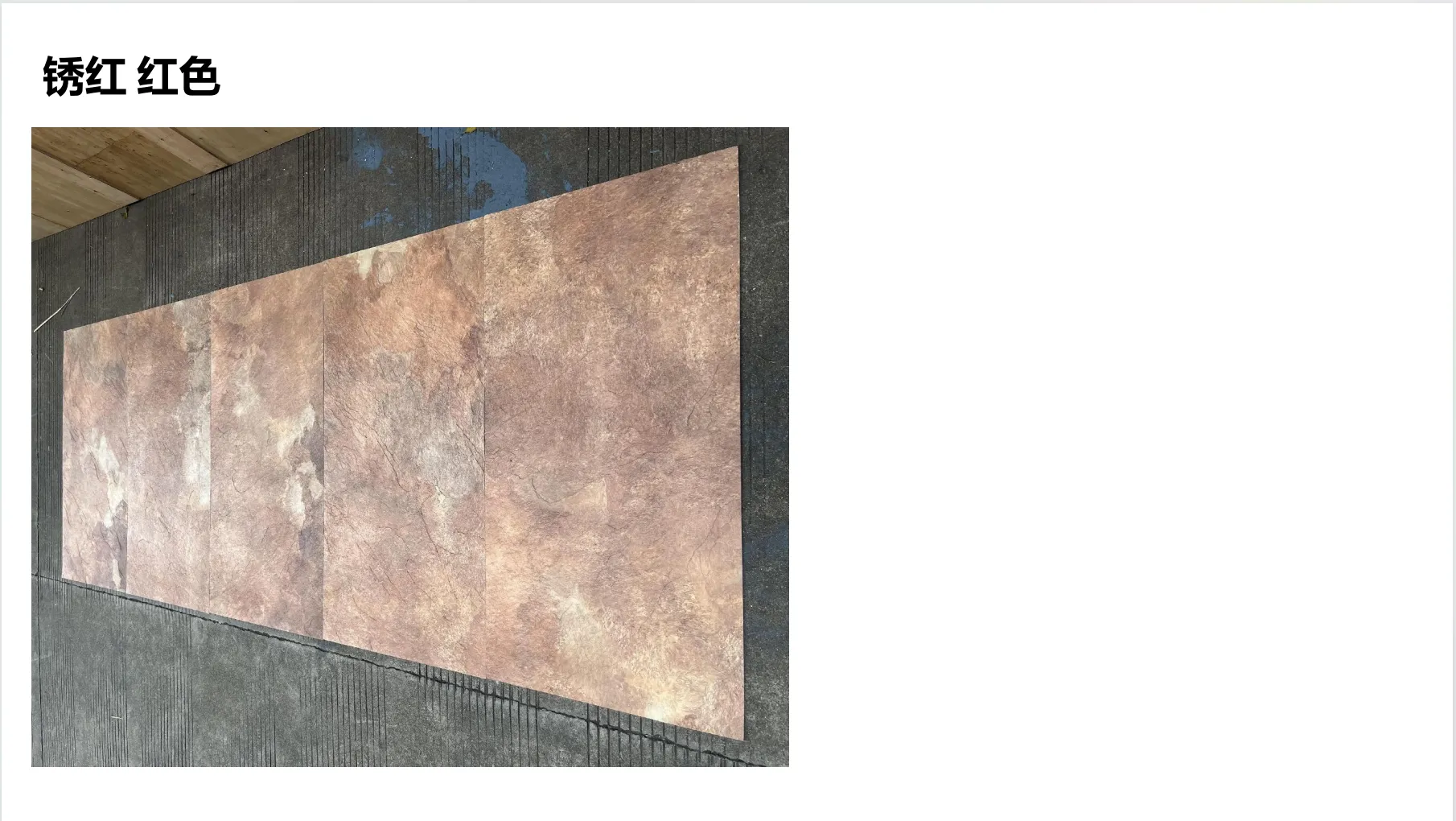
Rusty Red MCM isn't just a color choice, either. That rich, rusty tone is intentional—a nod to the beauty of aged materials, but with a modern twist. It looks like it's been kissed by time, but it's built to outlast it. Imagine a vintage leather jacket that never fades, never cracks, and only gets more striking with each passing year. That's Rusty Red MCM for your building.
And it's part of a larger family: mcm flexible stone, which includes siblings like Travertine (starry red) and Epoch Stone. But Rusty Red? It's the one that specializes in resilience. It's the material you choose when you want your building to look like it belongs to the landscape, not like it's fighting against it—even when it is fighting.
Let's talk about pollution. Not the headline-grabbing kind—though smog and acid rain are definitely culprits—but the quiet, daily assault. In cities, buildings breathe in car exhaust (think nitrogen oxides and sulfur dioxide), industrial emissions, and even the microscopic particles from brake dust and construction. These chemicals don't just sit on the surface; they seep in, reacting with the material's composition. Over time, they discolor it, weaken it, and turn once-vibrant facades into something dull and lifeless.
Take fair-faced concrete, for example. It's popular for its minimalist, raw look—those smooth, gray surfaces that feel modern and industrial. But fair-faced concrete is porous. It's like a sponge, and pollution is the water. After a few years in a busy city, you'll start to see stains: dark streaks from rainwater carrying grime, patches where chemicals have eaten away at the top layer. It's not that fair-faced concrete is bad; it's just not built for the war zone that is urban air.
Rusty Red MCM, though? It's got a secret weapon: a non-porous surface. That polymer matrix we mentioned earlier acts like a shield, preventing pollutants from sinking in. Instead of seeping into the material, those harmful chemicals sit on top, easy to wash away with a hose or a soft brush. It's like having a self-cleaning jacket for your building. Even in cities with high pollution levels—think Shanghai, Mumbai, or Mexico City—Rusty Red MCM stays bright, bold, and unapologetically itself.
I visited a school in a coastal industrial town last year that had been clad in Rusty Red MCM five years prior. The surrounding buildings? Their fair-faced concrete walls were streaked with black and gray, looking tired and neglected. The school? It still looked like it had been built yesterday. The principal (smiled and said), "We used to repaint the exterior every two years. Now? We hose it down once a season, and it's good as new." That's the difference resistance makes.
If you've ever lived near the ocean, you know the drill: metal railings rust overnight, paint peels like sunburned skin, and even stone starts to look pitted after a few years. That's salt spray in action. When seawater evaporates, it leaves behind tiny salt crystals that cling to surfaces. When it rains, those crystals dissolve, forming a corrosive brine that eats away at everything it touches. It's why coastal homes need constant maintenance—and why so many of them end up looking weathered long before their time.
Rusty Red MCM laughs in the face of salt spray. Literally. In lab tests, it's subjected to 5,000 hours of continuous salt spray (that's over 208 days!) and comes out with zero signs of corrosion, discoloration, or degradation. For context, most traditional stones start showing damage after 1,000 hours. Even some high-end metal claddings? They'll rust or pit after 2,000 hours. Rusty Red? It just… holds on .
How does it do it? The key is that polymer binder we talked about earlier. It creates a waterproof barrier that salt can't penetrate. The natural minerals in the MCM are also inert, meaning they don't react with the salt to form new, damaging compounds. It's like wrapping your building in a raincoat made of armor—light, flexible, and impenetrable.
Take the case of a beachfront café in Bali I visited last summer. The owner, Ketut, had replaced his old wooden cladding with Rusty Red MCM three years ago. "Before, I had to sand and repaint the wood every six months," he told me, gesturing to the vibrant rusty panels that glowed in the sunlight. "The salt would make it splinter, and the rain would warp it. Now? I haven't touched it. It still looks the same as the day it went up. And the customers? They love it—it matches the sunset."
Rusty Red MCM isn't the only player in the game. So how does it hold up against other popular materials? Let's break it down:
| Material | Pollution Resistance | Salt Spray Resistance | Maintenance Needs |
|---|---|---|---|
| Rusty Red MCM | Excellent (non-porous surface repels chemicals) | 5,000+ hours of salt spray testing with no damage | Minimal (hose down occasionally) |
| Fair-Faced Concrete | Poor (porous; stains easily from pollution) | Moderate (starts pitting after ~1,500 hours) | High (requires sealing every 1-2 years) |
| Traditional Travertine | Moderate (porous; needs regular sealing) | Low (salt causes pitting and discoloration) | High (seal yearly; professional cleaning) |
| Wood Cladding | Poor (absorbs moisture and pollutants) | Very Low (rots and warps quickly in salt air) | Extremely High (sand, stain, repaint every 6-12 months) |
The numbers speak for themselves. Rusty Red MCM isn't just better—it's in a league of its own. And that's not even mentioning its flexibility. Unlike rigid materials like concrete or stone, MCM can bend slightly without cracking, making it ideal for buildings in earthquake-prone areas or regions with extreme temperature swings (hello, desert days and freezing nights).
This isn't a material for just one type of building. Rusty Red MCM is a chameleon—it adapts to its surroundings, enhancing the space rather than overpowering it. Here are just a few places it's making a difference:
And here's the best part: it's not just functional. Rusty Red MCM adds warmth and character to any space. That rich, earthy tone pairs beautifully with greenery, making urban buildings feel more connected to nature. It complements modern designs with its clean lines and vintage-inspired looks, making it a favorite among architects who want both style and substance.
Buildings are more than just places to live or work. They're where we celebrate birthdays, sign business deals, fall in love, and build memories. When a building fades, it's not just the structure that loses value—it's the stories it holds. Rusty Red MCM understands that. It's not just about resisting chemicals or salt spray; it's about preserving the moments that make a place meaningful.
So the next time you're planning a building project—whether it's a cozy beach house, a towering office block, or a renovation of your hometown's historic theater—think about what you're really investing in. Are you choosing a material that will fade, crack, and require constant upkeep? Or are you choosing one that will stand strong, year after year, protecting the stories that matter?
Rusty Red MCM isn't just a product. It's a promise: that your building will be here tomorrow, next year, and long after you're gone—still vibrant, still resilient, still telling your story. And in a world that feels like it's always rushing, that's a promise worth keeping.
Recommend Products












