
Buildings are more than just walls and roofs—they're storytellers. They speak to our values, our relationship with the environment, and the way we want to experience the world around us. In recent years, that story has taken a decidedly green turn. As architects and designers strive to create spaces that nurture both people and the planet, two innovations have risen to the forefront: green roof systems and advanced cladding materials that blend durability with aesthetic depth. Today, we're diving into one such pairing that's capturing the attention of the design world: rusty red Modified Composite Material (MCM) and green roof systems. It's a combination that doesn't just work—it sings, merging sustainability with visual poetry.
Before we explore the magic of rusty red MCM, let's take a moment to understand why green roof systems have become a cornerstone of modern sustainable design. At their core, green roofs are exactly what they sound like: roofs covered in vegetation, from grasses and wildflowers to shrubs and even small trees. But they're far more than a decorative touch—they're living, breathing ecosystems that transform the way buildings interact with their environment.
There are two primary types of green roofs: extensive and intensive. Extensive green roofs are lightweight, with a thin layer of soil (typically 5-15 cm) and drought-resistant plants like sedum or moss. They're low-maintenance, affordable, and ideal for retrofitting existing buildings. Intensive green roofs, on the other hand, are deeper (15 cm or more), supporting a wider variety of plants, including herbs, vegetables, and small trees. They act almost like rooftop gardens, offering recreational space while delivering enhanced environmental benefits.
The perks of green roofs are hard to ignore. For starters, they're natural insulators: the soil and vegetation layer reduces heat transfer, cutting down on heating and cooling costs by up to 25%. They're also stormwater heroes, absorbing up to 70% of rainfall and reducing runoff, which eases pressure on city drainage systems. In urban areas, they combat the "heat island effect" by absorbing sunlight and releasing moisture through evapotranspiration, cooling surrounding air temperatures. And let's not forget biodiversity: green roofs provide habitats for pollinators like bees and butterflies, which are critical for our food systems. Simply put, green roofs turn unused rooftop space into a resource—one that benefits both the building and the planet.
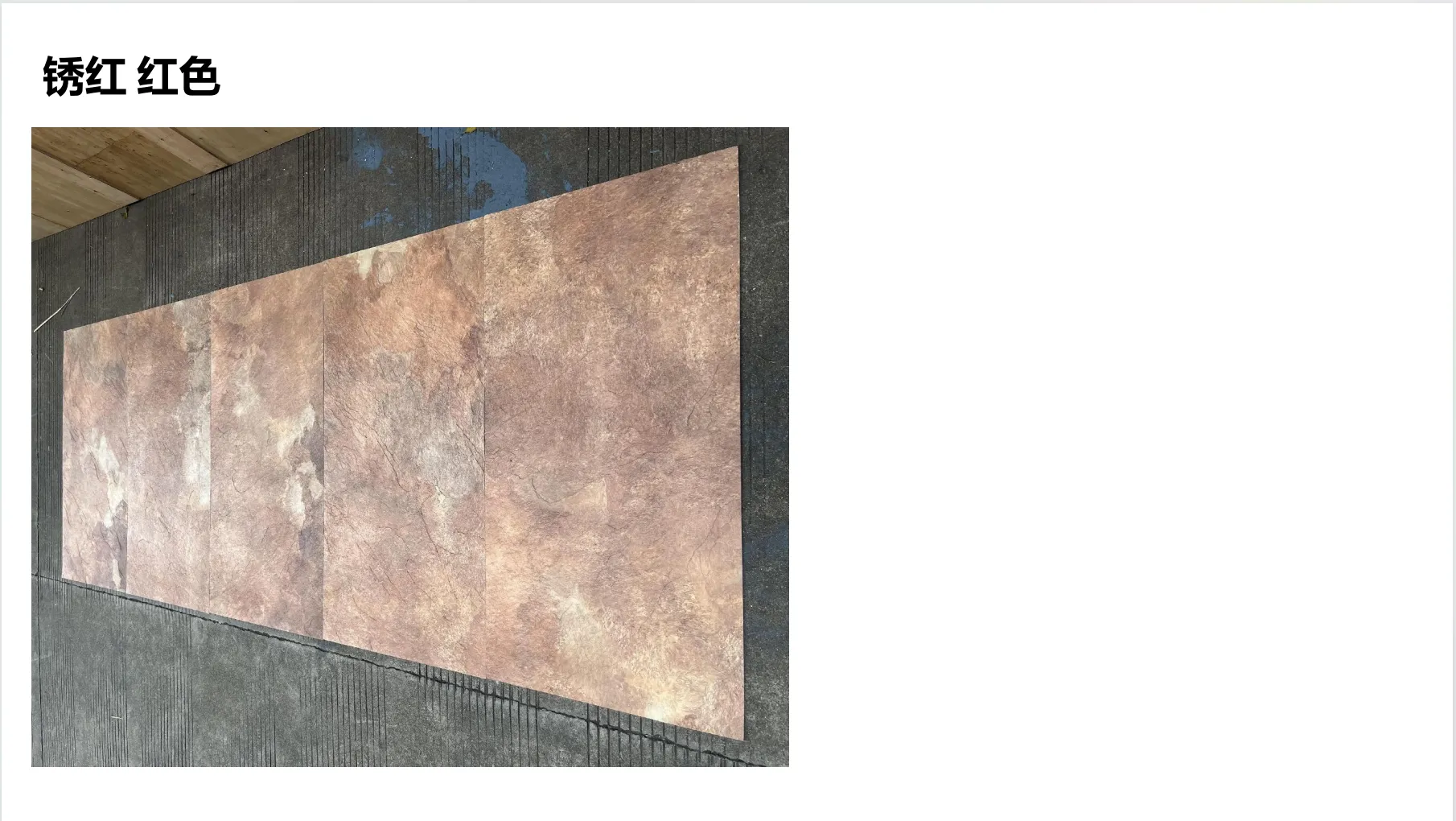
Now, let's turn our attention to the star of the show: rusty red MCM. MCM, or Modified Composite Material, is a revolutionary cladding solution that's redefining what's possible in building design. Unlike traditional materials like natural stone or brick, MCM is engineered to be lightweight, flexible, and incredibly durable—all while capturing the organic beauty of natural textures. And rusty red MCM? It's a standout in the MCM family, with a warm, earthy hue that evokes the patina of aged metal or the rich tones of desert landscapes.
So, what makes rusty red MCM tick? At its core, it's a composite of natural minerals, polymers, and fibers, fused together through advanced manufacturing processes. This blend gives it the best of both worlds: the look and feel of natural stone, with the strength and versatility of modern composites. One of its most impressive features is its flexibility—hence the term mcm flexible stone . Unlike rigid natural stone, which can crack under stress, MCM bends and adapts, making it ideal for curved surfaces, complex facades, and yes, even roof applications. This flexibility also simplifies installation, reducing labor time and costs.
But let's talk about that color: rusty red. It's not just a paint job; it's a result of careful mineral blending and surface treatment that mimics the natural oxidation process of metal, but without the fragility. The finish is rich and multi-dimensional, with subtle variations in tone that catch the light—think of the way sunlight plays on a weathered barn roof or the rusted hull of an old ship. It's a color that feels both timeless and contemporary, bridging the gap between industrial edge and organic warmth. And because the color is integrated into the material (not just applied topically), it resists fading, even under harsh UV exposure. That means your rusty red MCM cladding will look just as vibrant in 20 years as it does on day one.
Durability is another feather in its cap. Rusty red MCM is water-resistant, fire-retardant, and impervious to pests, mold, and mildew. It stands up to extreme temperatures, from scorching summer heat to freezing winter cold, without warping or deteriorating. And at just 3-5 kg per square meter, it's significantly lighter than natural stone (which can weigh 20-30 kg/m²) or even brick. This low weight is a game-changer for roof applications, where every kilogram counts toward structural load limits. When paired with a green roof system, which already adds some weight (soil, vegetation, water), a lightweight cladding material like rusty red MCM becomes not just a preference, but a practical necessity.
So, we've established that green roofs are eco-powerhouses and rusty red MCM is a durable, beautiful cladding option. But why do they work so well together? It all comes down to three key factors: structural compatibility, aesthetic harmony, and functional synergy. Let's break them down.
Roofs are engineered to support a specific load, and adding a green roof system means accounting for soil, plants, and water weight. The last thing you want is a cladding material that adds unnecessary heft. Here's where rusty red MCM shines: its low weight (3-5 kg/m²) ensures that even when combined with a green roof, the total load remains manageable. Compare that to natural stone, which could add 20+ kg/m², and it's clear why MCM is the smarter choice for rooftop integration. This lightweight nature also reduces stress on the building's foundation and structural frame, extending the lifespan of the entire structure.
But it's not just about weight—it's about installation, too. Green roof systems require careful planning for drainage, irrigation, and access. Rusty red MCM's flexibility and ease of cutting mean it can be tailored to fit around rooftop vents, skylights, and green roof infrastructure without compromising the material's integrity. It's a material that works with the roof's existing features, not against them.
Let's be honest: design matters. A building that's sustainable but uninspiring won't capture the imagination—or encourage others to follow suit. Rusty red MCM and green roof systems, however, create a visual dialogue that's nothing short of stunning. The warm, earthy red of the MCM cladding provides the perfect backdrop for the vibrant green of the rooftop vegetation. It's a contrast that feels natural, like a desert landscape dotted with oasis, or a forest floor blanketed in fallen leaves. The combination is both striking and soothing, drawing the eye upward and inviting people to engage with the building's design.
This aesthetic versatility makes the pairing suitable for a range of architectural styles. Imagine a modernist commercial building with a sleek, angular green roof and rusty red MCM panels—clean lines meet organic texture. Or a rural community center with a sloped green roof and MCM cladding that blends with the surrounding countryside. Even in urban settings, the combination stands out: the red adds warmth to concrete jungles, while the green offers a pop of life amid steel and glass. It's a design language that says, "We care about the planet—and we care about beauty, too."
Beyond looks and load-bearing, rusty red MCM and green roofs work together to enhance a building's performance. Let's start with water management: green roofs absorb rainfall, but any excess needs to drain efficiently to prevent pooling. Rusty red MCM's water-resistant surface ensures that runoff from the roof edge (where the cladding meets the green roof) doesn't seep into the building envelope. Its smooth, non-porous finish also makes it easy to clean, so dirt and debris from the green roof don't accumulate and cause maintenance headaches.
Then there's thermal performance. Green roofs insulate from the top, while MCM cladding insulates from the sides. Together, they create a "thermal blanket" around the building, reducing heat gain in summer and heat loss in winter. This synergy translates to lower energy bills and a more comfortable interior environment. And because both systems are durable, they reduce the need for frequent repairs or replacements—a win for both your wallet and the environment (fewer materials mean less waste and lower carbon emissions).
| Material | Weight (kg/m²) | Durability (Est. Lifespan) | Sustainability | Aesthetic Versatility |
|---|---|---|---|---|
| Rusty Red MCM | 3-5 | 30+ years | Recyclable; low embodied carbon; made with natural minerals | High—flexible for curves; color integrated (no fading); mimics natural textures |
| Natural Stone (Granite) | 20-30 | 50+ years | Non-recyclable; high quarrying impact; heavy transportation footprint | Medium—rigid; limited color options; requires sealing |
| Brick | 18-25 | 100+ years | Recyclable; high firing energy use; heavy | Low—uniform shape; limited texture; color fades over time |
| Fair-Faced Concrete | 22-28 | 50+ years | High carbon footprint; limited recyclability | Medium—industrial look; can be stamped for texture; prone to staining |
To truly appreciate the potential of this pairing, let's imagine a few real-world scenarios where rusty red MCM and green roofs come together to create memorable spaces.
Urban Community Center: Picture a three-story community hub in the heart of a city, surrounded by concrete and glass. The design team wants to create a welcoming, nature-connected space, so they top the building with an extensive green roof planted with native grasses and wildflowers. To complement this green oasis, they clad the upper facade and rooftop parapet in rusty red MCM. From the street, the building reads as a warm, earthy counterpoint to the cool tones of its neighbors. The rooftop, accessible via a stairwell, becomes a community garden where locals can grow vegetables and host small events. The rusty red MCM panels wrap around the rooftop edges, creating a safe, durable barrier that blends seamlessly with the greenery. Rainwater from the green roof drains through a hidden system, while the MCM cladding ensures no moisture seeps into the interior spaces below.
Residential Townhouses: A developer is building a row of townhouses with limited outdoor space. To maximize livability, each unit gets a private green roof terrace (intensive, with soil deep enough for shrubs and small trees). The exteriors, however, need to stand out in a crowded market. They choose rusty red MCM for the facade cladding, which ties the row together with a cohesive, warm palette. The lightweight MCM keeps the structural load manageable, even with the added weight of the green roofs. Homeowners love the combination: the rooftop gardens provide a peaceful retreat, while the rusty red cladding gives their homes a unique, boutique feel. Plus, the MCM's low maintenance means they won't be repainting or repairing the facade anytime soon.
Corporate Office Campus: A tech company wants its campus to reflect its commitment to sustainability. They install a large-scale green roof on their main office building, complete with walking paths and outdoor meeting spaces. The campus buildings are clad in a mix of materials, including rusty red MCM and fair-faced concrete , creating a dynamic contrast of textures. The MCM is used on the upper levels and roof overhangs, where its flexibility allows for sweeping, cantilevered designs that frame the green roof below. Employees report feeling more connected to nature, and the company's sustainability metrics get a boost—all while the campus becomes a landmark in the area, thanks to its striking aesthetic.
As we look to the future of building design, the integration of materials like rusty red MCM and systems like green roofs will only become more important. Climate change is pushing architects to prioritize resilience, while urbanization demands that we make the most of every square meter of space. Green roofs and advanced cladding materials answer both calls, turning rooftops into assets and facades into statements of purpose.
Innovation in MCM technology is also on the horizon. We're already seeing new textures and finishes, from wood grain patterns to metallic sheens, but the core promise remains the same: lightweight, durable, sustainable beauty. And as green roof systems evolve—with better drainage, more drought-tolerant plants, and even integrated solar panels—the compatibility with MCM will only deepen. Imagine a green roof that generates solar power, with rusty red MCM cladding that reflects heat and insulates the building—all working in harmony to create a net-zero energy structure.
At the end of the day, buildings are about people. They shape how we live, work, and interact with our environment. Rusty red MCM and green roof systems don't just make buildings more sustainable—they make them more human. They create spaces that feel rooted in nature, even in the heart of the city. They tell a story of balance: between progress and preservation, between innovation and tradition, between the built and the natural world.
Rusty red MCM and green roof systems are more than a design trend—they're a blueprint for the future of construction. They prove that sustainability and beauty don't have to be trade-offs; in fact, they can amplify each other. Whether you're an architect designing a skyscraper, a homeowner renovating a rooftop, or a developer building a community, this pairing offers a path forward: one that honors the planet, delights the eye, and stands the test of time.
So, the next time you look up at a building, take a moment to notice its roof and its facade. Are they working together, or are they just… there? With rusty red MCM and green roofs, they can do more than work—they can inspire. And in a world that needs more inspiration, that's a story worth telling.
Recommend Products












