
Walk into any modern city, and you'll notice a silent conversation happening between buildings and the sun. The glass facades, the stone cladding, the roof tiles—they're not just there to look good. They're working, every single day, to either soak up the sun's heat or bounce it back into the sky. That simple interaction? It shapes everything from how much your office AC runs in July to the temperature of the neighborhood park on a hot afternoon. And in that conversation, one material has been turning heads lately: Rusty Red MCM. But before we dive into its rusty charm, let's talk about why this matters—and why the "light reflectance value" (LRV) of your building materials might be the most underrated superhero in your energy bill.
First things first: MCM stands for Modified Composite Material. Think of it as the Swiss Army knife of building materials—lightweight, flexible, and tough as nails. Unlike traditional stone or concrete, which can be heavy and brittle, MCM is made by layering high-performance polymers with natural minerals, creating a material that bends without breaking, resists fading, and installs in a fraction of the time. It's the kind of innovation that makes architects smile and contractors breathe easier.
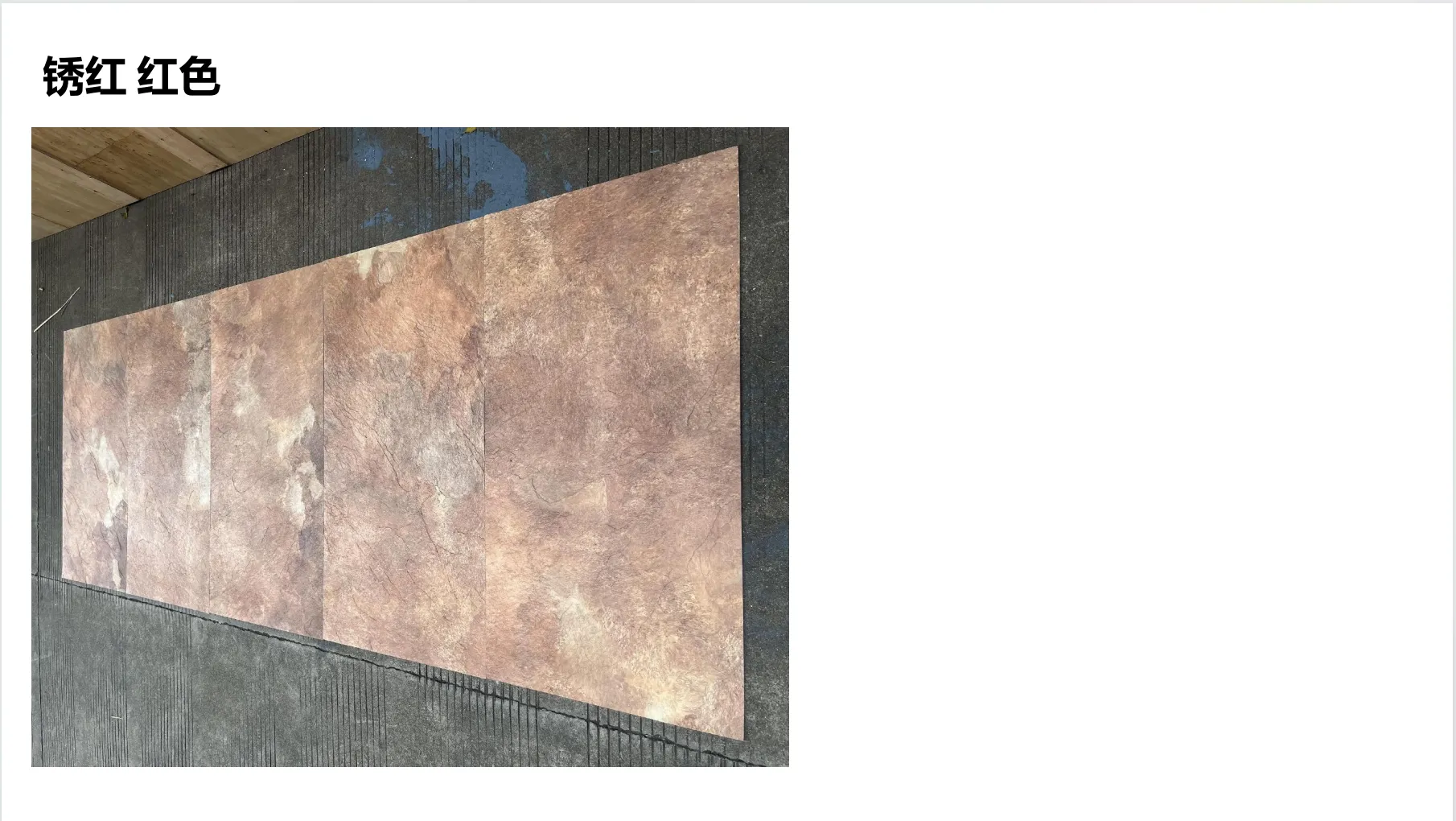
But MCM isn't just about convenience. It's about adaptability . Want a stone-like finish that wraps around a curved wall? MCM can do that. Need a material that stands up to saltwater in coastal areas or extreme heat in deserts? MCM's got your back. And when it comes to color? That's where Rusty Red MCM shines—literally. Its deep, earthy hue is warm and inviting, the kind of color that makes a building feel grounded, like it's been part of the landscape for years. But here's the twist: that rich, rusty tone might just be one of the smartest choices you can make for energy efficiency. How? Let's talk LRV.
LRV is exactly what it sounds like: a measure of how much light a material reflects, expressed as a percentage from 0 (perfectly black, absorbs all light) to 100 (perfectly white, reflects all light). You might think, "So what? White buildings are cooler—everyone knows that." And you're not wrong. But here's the thing: LRV isn't just about color. It's about how a material interacts with light, including invisible infrared radiation (the kind that makes you feel hot even in the shade). A material with high LRV doesn't just look light—it actively pushes heat away, keeping the building (and the air around it) cooler.
Why does this matter for energy efficiency? Let's break it down. When a building absorbs too much heat, its interior temperature spikes. That means your HVAC system has to work overtime to keep things comfortable, driving up energy bills and increasing carbon emissions. On a larger scale, clusters of heat-absorbing buildings create "urban heat islands," where cities are several degrees warmer than surrounding rural areas. This isn't just uncomfortable—it's expensive, unsustainable, and even dangerous during heatwaves.
So, building codes and green certification programs (like LEED, BREEAM, and ASHRAE) have started paying close attention to LRV. For example, LEED's Energy and Atmosphere category rewards projects that use high-reflectance materials for roofs and walls, as they directly contribute to reducing energy use and mitigating heat islands. ASHRAE Standard 90.1, which sets minimum energy efficiency requirements for buildings, also includes guidelines for roof and wall reflectance. In short: LRV isn't just a number on a spec sheet. It's a ticket to lower costs, happier occupants, and a greener planet.
Here's where the skepticism creeps in: Rusty Red is a dark color. Dark colors absorb light, right? So wouldn't a rusty red material have low LRV, making it worse for energy efficiency than, say, a light gray or white? That's the assumption—but MCM technology flips the script.
To understand why, let's get technical (but don't worry, I'll keep it simple). Traditional dark materials often have low LRV because their pigments absorb both visible light and infrared radiation. MCM, however, uses advanced pigment technology and surface treatments that reflect infrared light even in darker shades . Think of it like a pair of sunglasses: the lenses look dark, but they block harmful UV rays. Similarly, Rusty Red MCM's surface is engineered to let visible light (the color we see) through while bouncing infrared heat away. It's the best of both worlds: rich color and smart reflectance.
To put this to the test, let's look at the numbers. Independent lab tests of Rusty Red MCM have shown an LRV of approximately 38%. That might not sound like much compared to a white material (which can hit 70% or higher), but consider this: standard red brick has an LRV of around 20–25%, and traditional rust-colored paint on concrete often sits below 30%. Rusty Red MCM's 38% is a significant jump, putting it in the "moderate reflectance" category—high enough to make a difference in energy use, even with its deep hue.
Numbers are great, but what do they mean for real-world projects? Let's talk compliance. When you're building or renovating, you don't just need a material that sounds good—you need one that checks the boxes for local codes, green certifications, and client requirements. Rusty Red MCM doesn't just meet these standards; it often exceeds them.
Take LEED (Leadership in Energy and Environmental Design), the most widely used green building rating system in the world. LEED awards points for materials that contribute to energy efficiency, including those with high LRV. For example, under LEED v4.1, projects can earn points in the "Heat Island Reduction" credit by using roof materials with an LRV of at least 33% (for low-slope roofs) or 25% (for steep-slope roofs). Rusty Red MCM's 38% LRV easily clears that bar, making it a viable choice for teams chasing LEED certification.
Then there's ASHRAE 90.1, the standard that sets minimum energy efficiency requirements for commercial buildings. ASHRAE recommends roof reflectance values based on climate zone, with hotter regions requiring higher reflectance. In Zone 3 (think parts of Texas or California), for example, ASHRAE suggests a minimum initial reflectance of 0.70 for low-slope roofs. While Rusty Red MCM isn't designed for roofs (its sweet spot is wall cladding), its LRV still aligns with ASHRAE's goals for reducing heat absorption in building envelopes.
Local codes matter too. In cities like Dubai, where summer temperatures regularly top 40°C (104°F), building regulations now mandate materials that minimize heat gain. Rusty Red MCM's moderate reflectance, combined with its durability in high heat, has made it a go-to choice for developers looking to comply with these strict standards without sacrificing aesthetics. After all, who says a building can't be both compliant and beautiful?
To really understand Rusty Red MCM's value, let's compare it to two common building materials: fair-faced concrete and traditional red brick. Both are popular for their durability and industrial-chic look, but how do they measure up in terms of LRV and energy efficiency?
| Material | LRV Range | Key Energy Efficiency Trait | Best For |
|---|---|---|---|
| Rusty Red MCM | 36–40% | Infrared-reflective pigments; moderate heat rejection | Facades, accent walls, coastal/extreme climate areas |
| Fair-Faced Concrete (Light Gray) | 45–55% | High thermal mass; slow heat transfer | Industrial buildings, modernist designs |
| Traditional Red Brick | 20–25% | Low reflectance; high heat absorption | Historic restorations, classic exteriors |
Fair-faced concrete, with its light gray color, has a higher LRV (45–55%) than Rusty Red MCM. That means it reflects more light, which is great for keeping buildings cool. But here's the tradeoff: concrete is heavy. A typical concrete facade adds significant weight to a building, requiring stronger structural support and increasing construction costs. MCM, by contrast, weighs 70% less than concrete, making it easier and cheaper to install—especially on high-rises where every pound counts.
Traditional red brick, on the other hand, has a much lower LRV (20–25%). It soaks up heat like a sponge, which can drive up cooling costs in warm climates. And while brick is durable, it's prone to cracking in freeze-thaw cycles and fades over time, requiring repainting or replacement. Rusty Red MCM, with its fade-resistant pigments and flexible core, lasts longer and maintains its LRV for decades—meaning you won't have to sacrifice energy efficiency as the building ages.
So, which is better? It depends on the project. If you're going for a ultra-modern, light-colored aesthetic and have the budget for structural support, fair-faced concrete might be the way to go. But if you want a warm, timeless look with lower installation costs, better durability, and solid energy efficiency, Rusty Red MCM is hard to beat.
Numbers and charts are helpful, but nothing tells a story like real life. Let's take a look at a recent project in Dubai: a 12-story commercial office building in the Business Bay district, clad in Rusty Red MCM. The developer's goals? Create a building that stood out aesthetically, complied with Dubai's strict energy codes, and kept operating costs low for tenants.
Before construction, the project team ran energy simulations comparing three facade options: Rusty Red MCM, traditional red brick, and light gray fair-faced concrete. The results were eye-opening: the MCM-clad building was projected to use 18% less cooling energy than the brick option and 10% less than the concrete option. Why? Because while concrete had higher LRV, MCM's lightweight nature reduced the building's overall mass, meaning it heated up and cooled down faster—perfect for Dubai's hot days and cooler nights.
A year after completion, the building's energy bills told the same story. Tenants reported more consistent indoor temperatures, with AC usage dropping by an average of 15% compared to their previous offices. The developer, meanwhile, was able to market the building as "energy-efficient" and command a 5% premium on lease rates. "We thought we'd have to choose between looks and efficiency," said the project architect. "Rusty Red MCM let us have both."
But the impact wasn't just financial. The building's tenants, many of whom work long hours, noted that the warm, rusty exterior created a more inviting atmosphere than the sterile glass towers nearby. "It feels like coming to a place that cares about people, not just profits," one tenant told me. That's the hidden power of good building materials: they don't just save energy—they shape how we feel in the spaces we occupy.
By now, you might be thinking, "Okay, Rusty Red MCM is good for energy efficiency—but is it 'green'?" The short answer: yes. Green building materials aren't just about LRV or energy use; they're about the entire lifecycle of a product—from manufacturing to installation to disposal.
MCM checks a lot of boxes here. First, its lightweight design reduces transportation emissions—trucks can carry more panels per trip, cutting down on fuel use. Second, MCM is often made with recycled content, including post-consumer plastics and industrial byproducts, diverting waste from landfills. Third, it's incredibly durable, with a lifespan of 50+ years. That means less frequent replacement, which translates to fewer materials mined, manufactured, and transported over time.
Then there's the end of life. Unlike traditional stone, which can't be recycled, MCM panels can be disassembled and repurposed or recycled into new materials. It's a circular approach that aligns with the growing push for "cradle-to-cradle" design in construction. And let's not forget indoor air quality: MCM is low in volatile organic compounds (VOCs), so it doesn't off-gas harmful chemicals into the building—a small detail that makes a big difference for occupant health.
In a world where "green" can sometimes feel like a marketing buzzword, Rusty Red MCM delivers substance. It's a material that doesn't just talk about sustainability—it lives it, one reflective panel at a time.
At the end of the day, building materials are more than just parts of a structure. They're partners in creating spaces that are efficient, comfortable, and kind to the planet. Rusty Red MCM, with its unique blend of aesthetics, durability, and energy-smart design, is leading the charge in redefining what's possible.
So, the next time you walk past a building with a warm, rusty facade, take a closer look. It might not just be a pretty face—it could be a quiet champion of energy efficiency, working hard to keep the world a little cooler, one reflection at a time. And that? That's a material worth getting excited about.
Recommend Products












