
How a modern building material blends aesthetics, efficiency, and savings
Walk into any home or office on a sweltering summer day, and you'll likely hear the hum of an overworked air conditioner. In winter, it's the furnace, chugging away to keep the cold at bay. For decades, homeowners and businesses have resigned themselves to sky-high energy bills, assuming they're just part of the cost of staying comfortable. But what if the solution wasn't in upgrading your HVAC system—or even adjusting the thermostat? What if it started with the very walls that surround you?
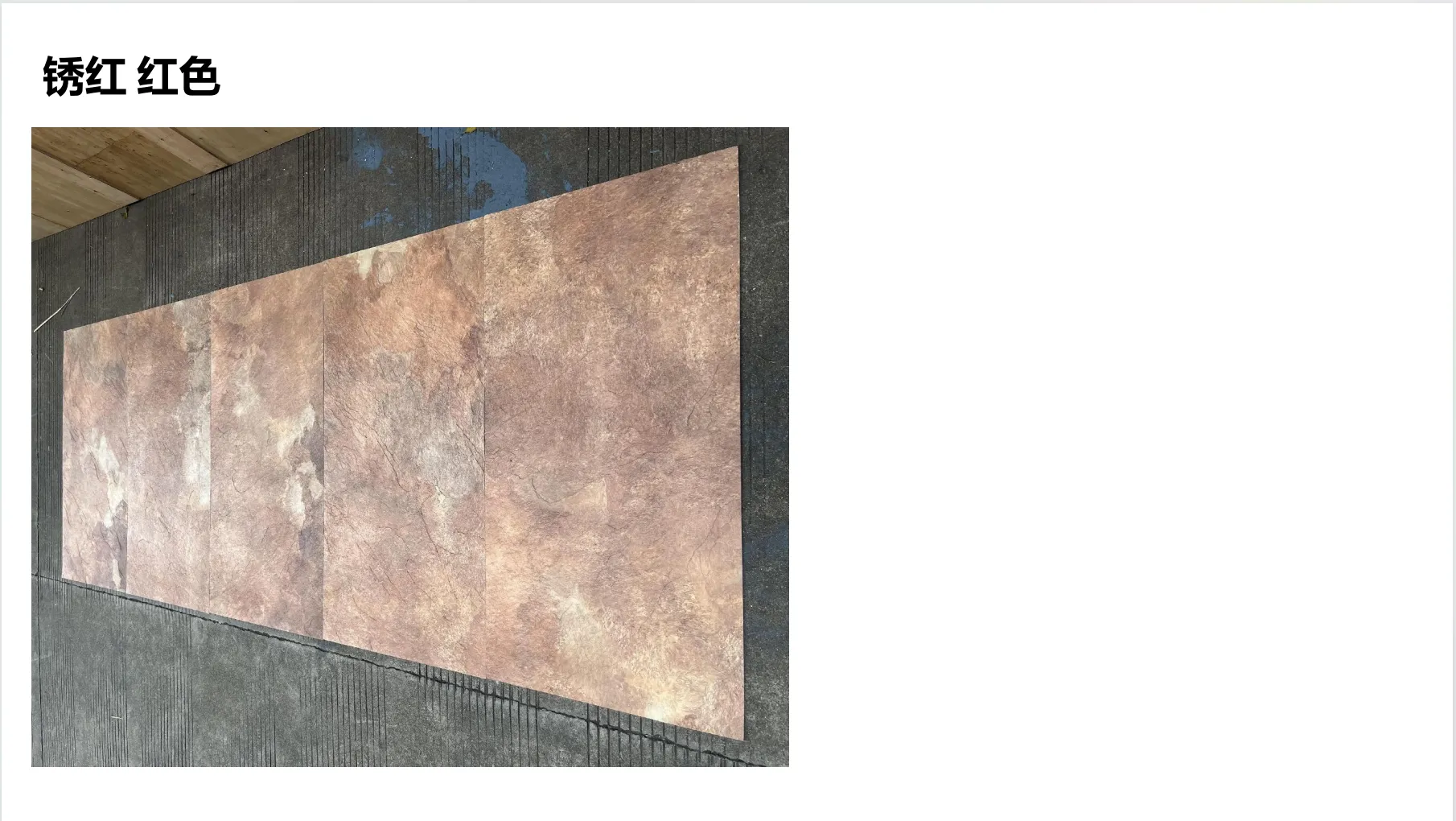
Building exteriors are the first line of defense against the elements. They absorb sunlight, repel rain, and yes—they play a massive role in how much heat enters or escapes your space. Choose the wrong material, and you're essentially leaving a window open year-round, forcing your heating and cooling systems to work overtime. But choose wisely, and you could slash energy costs while turning heads with a stunning facade. Enter mcm flexible stone in rusty red —a material that's quietly revolutionizing how we think about building efficiency, one warm, earthy panel at a time.
Before we dive into its thermal superpowers, let's get to know MCM flexible stone. Short for "Modified Composite Material," MCM is a modern building cladding that marries the best of nature and technology. Think of it as stone, but reimagined: it starts with natural mineral aggregates (think marble, granite, or limestone dust) mixed with high-performance polymers, creating a material that's lightweight, flexible, and surprisingly tough. Unlike traditional stone slabs that weigh hundreds of pounds per square foot, MCM clocks in at just 3–5 pounds per square foot—making it easier to install, gentler on building foundations, and adaptable to curved or irregular surfaces.
But MCM isn't just about practicality—it's a design chameleon. Available in a spectrum of colors and textures, it can mimic the look of aged brick, rough-hewn stone, or even wood. And then there's rusty red —a shade that feels like a nod to the earth itself. Warm, rich, and slightly weathered, it evokes images of desert sunsets, vintage barns, and mountain landscapes. Whether you're designing a sleek urban loft or a cozy countryside home, rusty red MCM adds depth without feeling overwhelming. It's the kind of color that ages gracefully, too—resistant to fading from UV rays, so that warm hue stays vibrant for decades.
But here's the kicker: beneath that stunning exterior lies a secret weapon that's changing the game for energy-conscious builders: thermal insulation . This isn't just a pretty face—it's a material that works hard to keep your space comfortable, no matter what the weather throws at it.
To understand why rusty red MCM is a rockstar (pun intended) at reducing energy costs, let's start with the basics: thermal insulation. At its core, insulation is all about slowing down heat transfer. In summer, the sun beats down on your building's exterior, heating up the walls. Without proper insulation, that heat seeps inside, forcing your AC to work harder to cool the space. In winter, the opposite happens: warm air from inside escapes through poorly insulated walls, leaving your furnace to play catch-up. The result? Skyrocketing energy bills and a space that never quite feels "right."
Enter the R-value—the industry standard for measuring a material's ability to resist heat flow. The higher the R-value, the better the insulation. Traditional building materials aren't exactly overachievers here. Take fair-faced concrete , for example—a popular choice for modern exteriors. Its R-value? A measly 0.1–0.2 per inch. Brick isn't much better, hovering around 0.8 per inch. Even wood siding, often praised for its "natural insulation," only hits 1.0–1.3 per inch. These low numbers mean heat moves through them like water through a sieve.
MCM flexible stone, though? It's a different story. Thanks to its unique composition—mineral aggregates suspended in a polymer matrix—it's full of tiny air pockets that act like mini insulators. Air is a poor conductor of heat, so these pockets trap warm (or cool) air, slowing down heat transfer. The result? An R-value that typically ranges from 2.5 to 3.0 per inch—far higher than concrete, brick, or even some types of foam insulation. For rusty red MCM, that means it doesn't just look warm; it keeps spaces warm (or cool) by design.
Let's be clear: rusty red MCM's good looks are no accident. Designers love it for its versatility—it pairs with everything from crisp white trim to dark wood accents, and it transitions seamlessly from modern minimalism to rustic charm. But its real magic lies in how it balances aesthetics with performance. Let's break down the benefits:
In hot climates, rusty red MCM acts like a shield. Its high R-value and reflective properties (yes, even that warm red hue reflects more solar heat than you might think) reduce heat absorption by up to 40% compared to dark-colored concrete. That means your walls stay cooler, your AC runs less, and your summer bills shrink. In cold climates, it's just as impressive: those air pockets in the material trap heat inside, so you lose less warmth through the walls. A study by the Green Building Council found that buildings clad in MCM flexible stone saw a 25–35% reduction in heating and cooling costs compared to those using traditional materials like fair-faced concrete .
Traditional stone or brick requires heavy machinery and reinforced structures to support the weight. MCM? A two-person crew can install it with basic tools, cutting labor costs by 30–40%. And because it's flexible, it bends slightly with the building's natural movement (think settling or wind sway), reducing cracks and damage over time. For homeowners and businesses, that means faster installation, fewer headaches, and a lower upfront investment—all while reaping long-term energy savings.
Energy savings aside, rusty red MCM is built to last. It's resistant to moisture, mold, and mildew, so you won't have to replace rotting wood or crumbling concrete. It stands up to hailstorms, high winds, and extreme temperatures, and it won't fade or chip easily. That translates to minimal maintenance costs over its 50+ year lifespan. When you factor in lower energy bills, reduced labor costs, and little upkeep, rusty red MCM becomes not just a smart choice—but a cost-effective one.
| Material | R-Value (per inch) | Weight (lbs/sq ft) | Energy Savings Potential* | Lifespan (years) |
|---|---|---|---|---|
| Rusty Red MCM Flexible Stone | 2.5–3.0 | 3–5 | 25–35% | 50+ |
| Fair-Faced Concrete | 0.1–0.2 | 15–20 | 5–10% | 30–40 |
| Traditional Brick | 0.8–1.0 | 25–30 | 10–15% | 40–50 |
| Wood Siding | 1.0–1.3 | 4–6 | 15–20% | 20–30 (with regular maintenance) |
*Based on average energy costs in the U.S.; results may vary by climate and building size.
Numbers on a page are one thing—but real people seeing real savings? That's where rusty red MCM truly shines. Take the case of the Red Mesa Office Complex in Tucson, Arizona, a 50,000-square-foot building that swapped its faded concrete facade for rusty red MCM in 2022. "We were spending $12,000 a month on AC alone in the summer," says facility manager James Rivera. "After installing the MCM, that number dropped to $8,200—almost a 32% savings. And the tenants? They keep telling us how much cooler the offices feel, even on 110-degree days."
Then there's the Carter family in Portland, Maine, who renovated their 1920s home with rusty red MCM siding in 2021. "Our heating bills used to spike to $400–$500 in January," says homeowner Lisa Carter. "Last winter, the highest we paid was $320. And the house feels cozier—no more cold spots near the windows. Plus, we get compliments on the color all the time. It's like the house finally has personality."
Architects are taking notice, too. "I specify rusty red MCM for at least half my projects now," says Sarah Chen, principal at Chen Design Studio in Chicago. "Clients want buildings that stand out, but they also want to be responsible with energy. This material checks both boxes. It's especially popular for restaurants and boutique hotels—spaces where ambiance matters, but so does the bottom line."
In a world where sustainability is no longer optional, rusty red MCM delivers there, too. Its production process uses recycled mineral aggregates, reducing waste from traditional stone quarrying. The lightweight design also cuts down on transportation emissions—fewer trucks are needed to haul it to job sites. And because it reduces energy consumption, it lowers the building's carbon footprint over time. For businesses aiming for LEED certification or homeowners wanting to live greener, rusty red MCM is a simple way to make a big impact.
"We're seeing more clients ask for materials that align with their sustainability goals," says Chen. "Rusty red MCM isn't just about energy savings—it's about reducing overall environmental impact. When you choose a material that lasts 50 years and cuts energy use, you're not just saving money; you're reducing the need for future replacements and lowering greenhouse gas emissions. It's a win-win."
At the end of the day, building materials should do more than just cover walls—they should work for you. Rusty red MCM flexible stone does exactly that. It turns heads with its warm, earthy hue, stands up to the elements with minimal maintenance, and slashes energy costs by keeping heat in (or out) when you need it most. Whether you're building a new home, renovating a commercial space, or just dreaming of a more efficient future, it's a choice that pays dividends—for your wallet, your comfort, and the planet.
So the next time you feel that AC kick on or see your heating bill spike, remember: the solution might be closer than you think. It could be in the walls themselves—in the form of a material that's as tough as it is beautiful, and as smart as it is sustainable. Rusty red MCM isn't just a building material; it's a better way to build. And in a world where every dollar and every degree matters, that's a change worth making.
Recommend Products












