
Where Heritage Meets Innovation in Architectural Materials
Saudi Arabia stands at the crossroads of tradition and transformation. From the iconic skyline of Riyadh to the coastal elegance of Jeddah, and the cultural heart of Medina, the kingdom is redefining architectural excellence. Today's buildings are more than structures—they are stories, blending the rich tapestry of Saudi heritage with the bold vision of modern design. At the center of this narrative are the materials that shape these spaces, and few names resonate as strongly as COLORIA GROUP. With a commitment to innovation, quality, and understanding the unique needs of Saudi Arabia, COLORIA GROUP has become a trusted partner for architects, developers, and designers seeking materials that don't just build—they inspire.
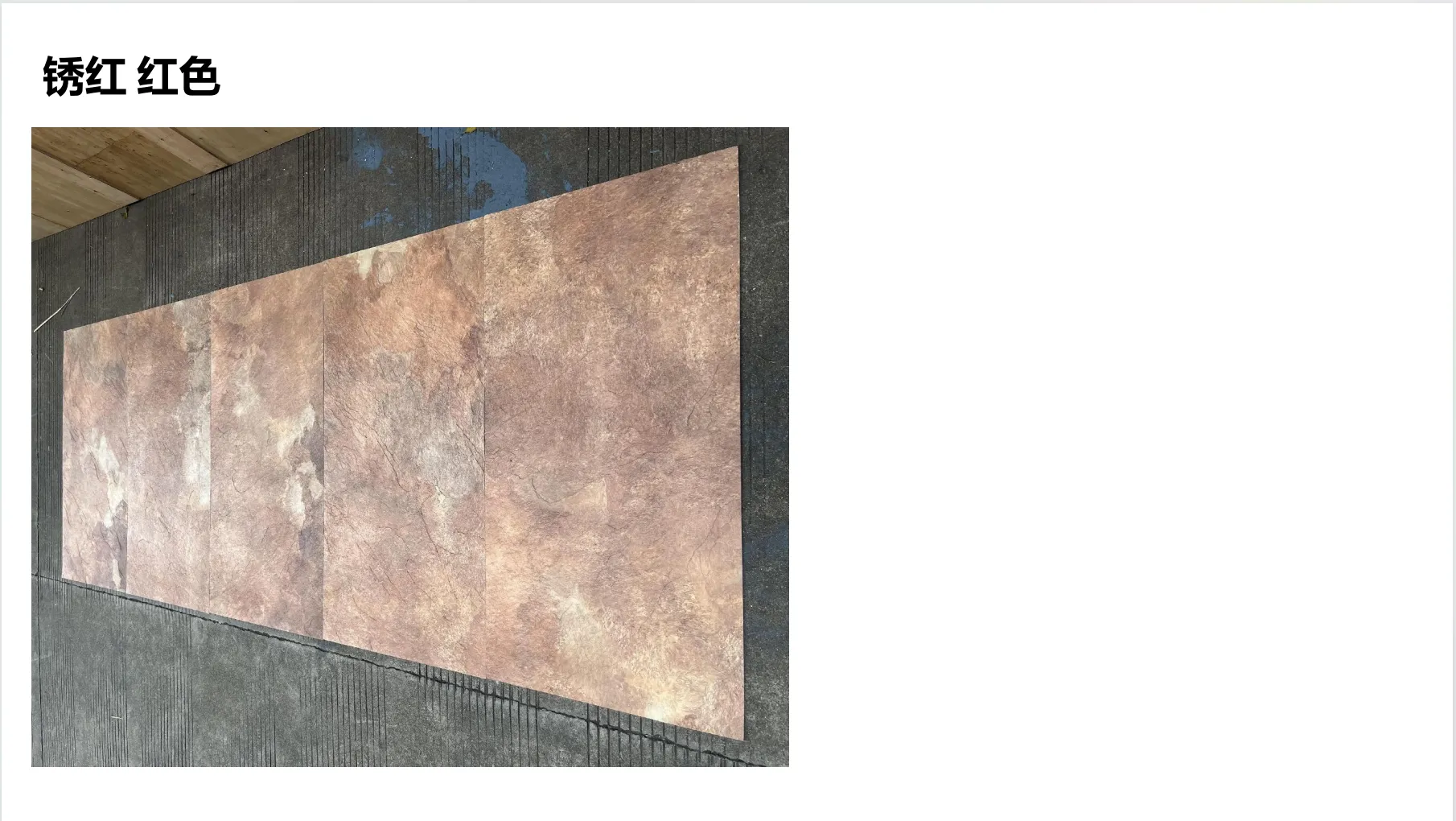
In this journey, one color has emerged as a symbol of this harmonious blend: rusty red. Evocative of sun-baked desert landscapes, ancient mud-brick fortresses, and the warm hues of traditional textiles, rusty red is more than a shade—it's an emotion. Paired with cutting-edge materials like MCM flexible stone, travertine (starry red), historical pathfinders stone, and boulder slab, it becomes a powerful tool to craft spaces that honor the past while embracing the future. Let's explore how these materials are transforming Saudi Arabia's architectural landscape, one project at a time.
To understand the appeal of rusty red in Saudi architecture, one need only look to the country's landscapes and heritage. The deserts of Saudi Arabia, with their undulating sand dunes that shift from gold to terracotta as the sun sets, are a masterclass in earthy tones. Traditional Najdi architecture, with its mud-brick walls and ornate wooden latticework, relies on these warm hues to create buildings that blend seamlessly with the environment. Rusty red, in particular, evokes the iron-rich soils of the Hijaz region and the weathered bricks of ancient forts like Masmak in Riyadh—structures that have stood for centuries as testaments to resilience and ingenuity.
Today, as Saudi Arabia embraces modernity, rusty red is being reimagined. No longer confined to traditional materials, it now adorns the facades of skyscrapers, the interiors of luxury hotels, and the walkways of cultural centers. It's a color that speaks to both nostalgia and progress—a reminder that the future doesn't have to erase the past. For architects, this means an opportunity to create spaces that feel familiar yet fresh, grounding occupants in heritage while exciting them with innovation. And for COLORIA GROUP, it means crafting materials that capture the essence of this color, infusing it with durability, versatility, and beauty.
At the forefront of COLORIA GROUP's offerings is MCM flexible stone—a revolutionary material that has redefined what's possible in architectural design. Short for Modified Composite Material, MCM flexible stone is a lightweight, ultra-durable cladding solution that combines the best of natural stone and modern engineering. Unlike traditional stone, which is heavy and rigid, MCM flexible stone is thin (often just 3-5mm thick), bendable, and surprisingly strong—making it ideal for Saudi Arabia's diverse architectural needs.
What makes MCM flexible stone particularly suited for Saudi Arabia? Let's start with the climate. With temperatures soaring above 50°C in summer and frequent sandstorms, building materials must withstand extreme conditions. MCM flexible stone is engineered to resist UV radiation, heat, and abrasion, ensuring that its vibrant rusty red finish remains intact for decades. Its lightweight nature also reduces the structural load on buildings, a critical advantage in high-rise construction where every kilogram matters. Installation is another breeze: unlike natural stone, which requires heavy machinery and specialized labor, MCM flexible stone can be cut on-site with standard tools and applied using adhesives, slashing both time and costs.
But the true magic of MCM flexible stone lies in its design flexibility. Imagine cladding a curved facade with the warm, earthy tones of rusty red—something that would be nearly impossible with traditional stone. MCM flexible stone bends to the architect's vision, allowing for organic shapes, intricate patterns, and seamless transitions between indoor and outdoor spaces. In Riyadh's King Abdullah Financial District, for example, a recent office tower used COLORIA's rusty red MCM flexible stone to create a undulating facade that mimics the movement of desert sand. The result? A building that doesn't just stand in the landscape—it becomes part of it.
Beyond facades, MCM flexible stone shines in interior applications. From accent walls in luxury hotels to backsplashes in restaurants, its rusty red hue adds warmth and character to any space. In Jeddah's waterfront development, a boutique hotel used the material in its lobby, pairing it with natural wood and brass accents to create a space that feels both contemporary and rooted in Saudi culture. Guests often remark on how the color evokes memories of traditional majlis gatherings, where the glow of lanterns and the warmth of terracotta walls created an atmosphere of hospitality.
For those seeking luxury with a touch of the extraordinary, COLORIA GROUP's travertine (starry red) is a showstopper. Travertine, a natural stone formed from mineral-rich hot springs, has been prized for millennia—think of the ancient Roman Colosseum, where its warm, porous texture has stood the test of time. COLORIA's starry red variant takes this classic material to new heights, infusing it with subtle metallic flecks that catch the light like stars in the desert sky.
The starry effect is no accident. COLORIA's artisans carefully select travertine blocks with high concentrations of mineral deposits, then polish and treat them to enhance the natural shimmer. The result is a stone that shifts with the light: in the soft glow of morning, it radiates a deep, earthy red; in the harsh midday sun, the metallic flecks sparkle, creating the illusion of a starry night. It's a material that invites touch as much as sight—run a hand over its surface, and you'll feel the subtle pores and ridges that make travertine so tactile.
In Saudi Arabia's luxury hospitality sector, travertine (starry red) has become a favorite. A five-star resort in Al Ula, nestled among the region's iconic rock formations, used the stone for its spa's feature wall. The warm red tones complement the desert surroundings, while the starry flecks evoke the clear night skies that have guided travelers for centuries. Guests describe the space as "transcendent"—a place where the boundaries between nature and luxury blur. Similarly, in Riyadh's diplomatic quarter, a high-end restaurant chose travertine (starry red) for its flooring, pairing it with brass fixtures and dim lighting to create an intimate, opulent ambiance.
Of course, beauty must meet practicality. Travertine (starry red) is sealed to prevent staining and water absorption, making it suitable for both indoor and sheltered outdoor use. Its natural durability ensures it can withstand heavy foot traffic, while its timeless appeal means it will never go out of style. For architects aiming to create spaces that feel both luxurious and authentically Saudi, travertine (starry red) is more than a material—it's a statement.
For projects that seek to honor Saudi Arabia's rich history, COLORIA GROUP offers historical pathfinders stone—a material designed to evoke the weathered, timeworn beauty of ancient stone paths. Imagine walking through a museum dedicated to Saudi Arabia's Bedouin heritage, where the floor beneath your feet looks as if it has been trodden by generations of travelers, traders, and explorers. That's the experience historical pathfinders stone creates: a tactile connection to the past.
Historical pathfinders stone is engineered to mimic the natural wear patterns of ancient stones. Its surface features subtle indentations, color variations, and "fossilized" textures that look like they've been shaped by wind, rain, and human footsteps over centuries. The rusty red variant, in particular, calls to mind the ancient trade routes that crisscrossed the Arabian Peninsula, where caravans of camels left their mark on stone paths that connected civilizations.
One notable application of historical pathfinders stone is in the Al Diriyah Gate development, a UNESCO World Heritage site and the birthplace of the Saudi state. The project aimed to restore and revitalize the historic district while making it accessible to modern visitors. COLORIA's historical pathfinders stone was used to pave the walkways, ensuring that every step feels like a journey through time. Local residents and tourists alike have praised the material for its authenticity—children run their fingers over its textured surface, while elders recall stories of their own childhoods walking on similar paths in rural villages.
Beyond heritage sites, historical pathfinders stone has found a home in cultural centers, universities, and even residential developments that aim to foster a sense of community and continuity. In Jeddah's Al Hamra district, a public library used the stone in its courtyard, creating an outdoor reading space that feels both scholarly and rooted in tradition. The rusty red color, combined with the stone's weathered appearance, encourages visitors to slow down, reflect, and engage with the stories around them.
Practicality is never overlooked. Historical pathfinders stone is slip-resistant, making it safe for high-traffic areas, and its durable composition ensures it can handle the wear and tear of daily use. It's also easy to maintain—simply sweeping and occasional pressure washing keeps it looking like it has for centuries. For architects and developers, historical pathfinders stone is more than a flooring material; it's a way to embed history into the very fabric of a space.
For those who crave the bold, unapologetic beauty of natural stone, COLORIA GROUP's boulder slab is a revelation. Inspired by the massive boulders that dot Saudi Arabia's deserts and mountain ranges, boulder slab captures the raw, untamed energy of the natural world—yet with the versatility and durability needed for modern design. Available in a range of finishes, including vintage silver, gold, and black, it's the rusty red variant that truly steals the show, offering a striking contrast to minimalist and industrial aesthetics.
Boulder slab is characterized by its rugged, irregular edges and deep, variegated coloration. Unlike polished stone, which can feel cold and sterile, boulder slab has a tactile, organic quality that invites interaction. Run your hand along its surface, and you'll feel the rough-hewn texture of a desert boulder, complete with subtle cracks and crevices that tell a story of geological time. The rusty red hue, with its hints of orange and brown, adds warmth to this raw beauty, making it a perfect fit for both contemporary and rustic interiors.
In Riyadh's art district, a contemporary gallery used boulder slab (rusty red) to create a backdrop for its collection of Saudi modern art. The material's bold presence complements the vibrant paintings and sculptures, while its earthy tones ground the space in the region's natural landscape. Visitors often comment on how the gallery feels "alive"—as if the walls themselves are part of the art. Similarly, in a luxury villa in the mountains of Taif, the homeowner chose boulder slab for their outdoor patio, creating a seamless transition between the built environment and the surrounding rocky terrain.
Like all of COLORIA's materials, boulder slab is designed with Saudi Arabia's climate in mind. Its thick, dense composition provides excellent insulation, helping to keep interiors cool in summer and warm in winter. Its resistance to moisture and pests makes it ideal for outdoor use, even in coastal areas like Dammam. And while it looks like a massive, heavy stone, boulder slab is surprisingly lightweight compared to natural boulders, making installation feasible in a wide range of projects.
| Product Name | Core Material | Key Aesthetic Features | Best For | Climate Perks |
|---|---|---|---|---|
| MCM Flexible Stone (Rusty Red) | Modified Composite | Smooth, uniform rusty red finish; bendable | Curved facades, interior accent walls | UV/heat resistant; lightweight (reduces structural load) |
| Travertine (Starry Red) | Natural Travertine + Metallic Flecks | Porous texture; starry shimmer; deep red hue | Luxury lobbies, feature walls, high-end flooring | Heat resistant; sealed for stain protection |
| Historical Pathfinders Stone | Engineered Stone | Weathered appearance; mimics ancient paths | Heritage sites, museum walkways | Slip-resistant; durable for high foot traffic |
| Boulder Slab (Rusty Red) | Composite Boulder Material | Rugged edges; raw, natural texture | Outdoor patios, contemporary art galleries | Moisture/pest resistant; insulating properties |
What sets COLORIA GROUP apart in Saudi Arabia's competitive building materials market? It's not just the quality of their products—it's their commitment to understanding the unique needs of each project and partnering with clients to bring their vision to life. From the initial design phase to installation and beyond, COLORIA's team of experts works closely with architects, contractors, and developers to ensure that every material choice aligns with the project's goals, budget, and timeline.
Take, for example, a recent mixed-use development in Doha (a neighboring market, but with similar climate challenges). The client wanted to use rusty red materials throughout the project but was concerned about consistency across different applications—facades, flooring, and outdoor landscaping. COLORIA's team proposed a tailored solution: MCM flexible stone for the facade, historical pathfinders stone for the walkways, and boulder slab for outdoor seating areas. By coordinating the rusty red hues across these materials, the development achieved a cohesive, immersive aesthetic that delighted both the client and end-users.
Sustainability is another cornerstone of COLORIA GROUP's philosophy. In a region increasingly focused on green building practices, the company ensures that its materials are sourced and manufactured responsibly. MCM flexible stone, for instance, contains recycled content and requires less energy to produce than traditional stone. Travertine (Starry Red) is quarried from sustainable sites, and historical pathfinders stone uses locally sourced aggregates, reducing carbon emissions from transportation. For developers aiming to achieve LEED or Estidama certifications, COLORIA's materials are a valuable asset.
Perhaps most importantly, COLORIA GROUP understands that in Saudi Arabia, architecture is personal. Buildings are not just investments—they are expressions of identity, pride, and progress. By offering materials that honor the country's heritage while embracing innovation, the company has become more than a supplier; it's a collaborator in shaping Saudi Arabia's architectural legacy.
As Saudi Arabia continues to grow and evolve, so too will its architecture. From the futuristic NEOM project to the expansion of holy cities like Mecca and Medina, the demand for innovative, high-quality building materials will only increase. In this landscape, rusty red—and the materials that carry its hue—will remain a constant, a color that binds the nation's past, present, and future.
Imagine a skyline where skyscrapers clad in rusty red MCM flexible stone rise beside restored historical forts paved with historical pathfinders stone. Picture luxury resorts where travertine (starry red) feature walls overlook desert landscapes, and public spaces where boulder slab seating invites community gatherings. This is the future COLORIA GROUP is helping to build—a future where architecture tells a story of resilience, creativity, and pride.
For architects, developers, and designers ready to embark on this journey, COLORIA GROUP is more than a partner—it's a visionary. With a portfolio that combines cutting-edge technology, timeless aesthetics, and a deep understanding of Saudi Arabia's needs, the company is poised to lead the way in the next chapter of the kingdom's architectural renaissance.
So, whether you're designing a landmark tower, a cultural center, or a private villa, consider the power of rusty red. Consider the versatility of MCM flexible stone, the luxury of travertine (starry red), the history of historical pathfinders stone, and the raw beauty of boulder slab. And when you do, remember: with COLORIA GROUP, you're not just choosing materials—you're choosing to be part of Saudi Arabia's architectural story.
Recommend Products












