
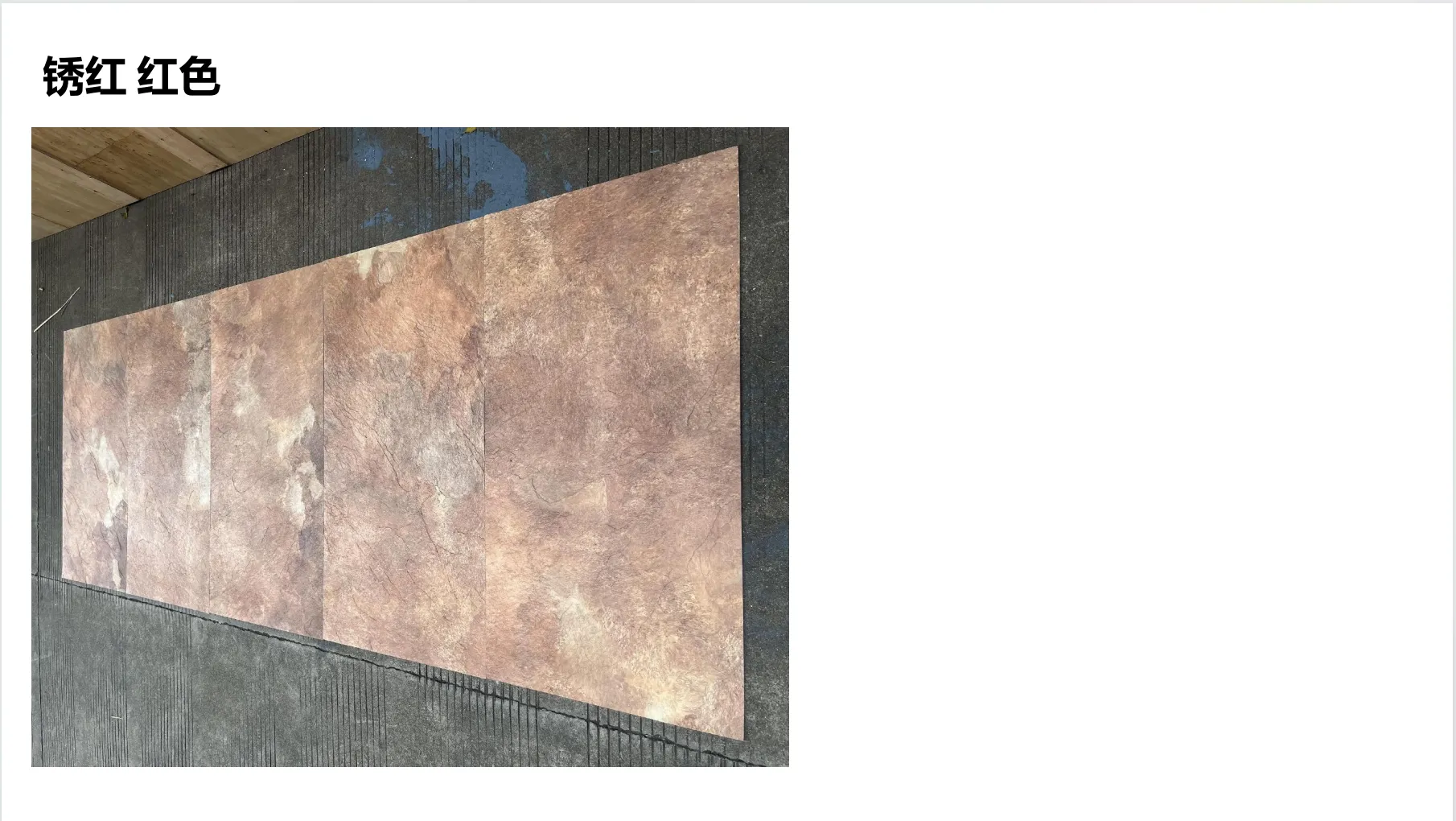
There's something inherently captivating about rusty red—a hue that bridges the warmth of terracotta, the depth of aged iron, and the vibrancy of a sunset. When paired with the versatility of MCM (Modified Composite Material) surfaces, this color transforms from a simple shade into a storyteller, shaping spaces with emotion, tactility, and character. Whether you're designing a cozy home nook or a bold commercial lobby, the texture of your rusty red MCM panels can make or break the mood. Today, we're diving into three key finishes—matte, glossy, and textured—to explore how each unlocks unique design possibilities, with a spotlight on standout options like travertine (starry red) , rust board (medium plaid) , and gradient color rammed earth board . Let's uncover how these textures turn walls, countertops, and accent pieces into experiences.
Matte rusty red is the quiet achiever of texture options—understated, yet deeply inviting. It doesn't demand attention with shine, but rather draws you in with its soft, diffused glow, like sunlight filtering through aged brick. Running your hand over a matte surface feels like touching weathered terracotta or a well-loved leather journal: warm, slightly porous, and reassuringly tactile. This finish excels at creating spaces that feel lived-in and cozy, where every corner whispers comfort.
Take travertine (starry red) in a matte finish, for example. The natural pockmarks and veining of travertine are softened by the matte treatment, while the "starry" flecks—tiny metallic or mineral deposits—catch light subtly, like distant campfires in a dark forest. It's a texture that works hard without trying: in a kitchen backsplash, it adds earthy depth without clashing with wooden cabinets; in a bedroom accent wall, it wraps the room in a cocoon of warmth, perfect for unwinding after a long day. Pair it with wood grain board in light oak, and you've got a palette that feels like a countryside cottage, where time slows down.
Then there's rust board (medium plaid) , a matte option that adds subtle pattern to the mix. The "medium plaid" refers to a soft, woven-like texture—think the gentle crisscross of a handwoven blanket—etched into the rusty red base. Unlike bold patterns that can overwhelm, this texture adds depth without chaos, making it ideal for large surfaces like living room walls or hallway paneling. Imagine a home office lined with this board: the rusty red hue keeps energy levels steady, while the matte finish reduces glare from screens, and the plaid texture adds just enough visual interest to keep creativity flowing.
Matte rusty red also plays well with other materials. Layer it with rough granite stone (beige) for a rustic-chic kitchen countertop, where the matte red backsplash balances the granite's speckled texture. Or use it as a backdrop for white wood shelves— the contrast between the warm red and crisp white feels fresh yet grounded, like a modern take on a farmhouse kitchen. For those who prefer minimalism, matte rusty red paired with fair-faced concrete creates an industrial-meets-organic vibe, where the softness of the red tempers the concrete's coolness.
If matte is about quiet warmth, glossy rusty red is about unapologetic drama. This finish adds a layer of sophistication, turning rusty red from a cozy color into a statement-maker. Imagine a surface that reflects light like a polished gem, where the red deepens in shadow and brightens in sunlight, shifting hues with every angle. Glossy textures aren't just about shine—they're about movement, creating dynamic spaces that feel alive and energetic.
One standout option here is pairing glossy rusty red with foamed aluminium alloy board (vintage gold) . The aluminium's sleek, mirror-like finish acts as a foil to the red's richness, creating a contrast that's equal parts luxurious and edgy. Picture a restaurant bar: the rusty red glossy panels line the back wall, catching the glow of pendant lights, while the vintage gold aluminium trim frames the bar top. The result? A space that feels both intimate (thanks to the red) and glamorous (thanks to the gold), perfect for sipping cocktails and sharing stories.
Glossy rusty red also shines in commercial settings, where first impressions matter. Take a hotel lobby: a floor-to-ceiling accent wall clad in travertine (starry red) with a high-gloss seal. The starry flecks, amplified by the shine, look like constellations against a crimson sky, instantly elevating the space from ordinary to memorable. Pair this with polish concrete floors, and you've got a blend of industrial edge and luxury that appeals to both business travelers and design enthusiasts.
But glossy doesn't have to mean over-the-top. In smaller doses, it adds just the right amount of sparkle. A bathroom vanity countertop in glossy rusty red dolomitic travertine (claybank) becomes a focal point, reflecting the soft glow of wall sconces and making the space feel larger. Or, for a bold kitchen, use glossy rusty red square line stone as cabinet fronts—paired with linear travertine (claybank) countertops, it's a modern twist on retro color palettes, where the shine adds a touch of 1970s glamour without the kitsch.
The key to using glossy rusty red? Balance. Too much shine can feel overwhelming, so pair it with matte or textured elements to ground the space. For example, a glossy red accent wall in a living room works beautifully with a weaving (khaki) sofa and bamboo mat board coffee table—textiles and natural materials absorb excess light, creating a space that's bold but not brash.
Textured rusty red MCM panels are for the design adventurers—the ones who believe surfaces should be felt as much as seen. These finishes turn walls into tactile journeys, with peaks, valleys, and patterns that invite touch and curiosity. From wave panel undulations to the layered ridges of gradient color rammed earth board , textured rusty red adds movement and dimension, making even the simplest space feel like a work of art.
Gradient color rammed earth board is a showstopper here. Rammed earth, a traditional building material made from compressed soil, gets a modern update with MCM flexibility, and when infused with rusty red gradient, it becomes a visual masterpiece. Imagine a wall where deep rust fades into terracotta, then blushes into soft peach, mimicking the colors of a desert sunset. The texture is gritty yet smooth, with tiny particles of stone and clay adding depth—run your fingers along it, and you'll feel the subtle shift from dense to airy, like tracing the layers of a canyon wall. This finish is perfect for commercial spaces like boutique hotels or art galleries, where it can serve as a backdrop for installations or as a standalone feature that tells a story of time and nature.
For something more playful, wave panel in rusty red adds rhythm to a room. The panels curve gently, like ocean swells frozen in time, and the rusty red hue amplifies the organic feel, evoking memories of coastal cliffs eroded by wind and waves. In a children's playroom, this texture becomes a tactile learning tool—kids can trace the waves with their hands as they imagine sailing adventures. In a restaurant, a wave panel accent wall behind the host stand sets a lively, welcoming tone, making guests feel like they're stepping into a space that's dynamic and full of life.
Then there's travertine (starry red) with a textured finish—a step up from the matte version. Here, the travertine's natural pores are exaggerated, creating small indentations that trap light and shadow, while the starry flecks are raised slightly, adding a 3D effect. It's like looking at a starry night sky from a mountaintop: the red base is the dark, velvety sky, and the flecks are stars twinkling just out of reach. This texture works wonders in bedrooms, where it turns a plain wall into a celestial escape, or in home theaters, where the dim lighting makes the starry pattern come alive, enhancing the movie-watching experience.
Textured rusty red also pairs surprisingly well with sleek materials, creating contrast that's both striking and harmonious. For example, rough granite stone (dark grey) countertops with a textured rusty red backsplash— the smooth, cool granite balances the warm, tactile red, creating a kitchen that's both functional and visually engaging. Or, in a bathroom, cut stone (grey) floors with a textured rusty red shower wall— the interplay of hard and soft, smooth and rough, turns a daily routine into a sensory experience.
| Finish Type | Key Characteristics | Emotional Impact | Ideal Spaces | Complementary Materials |
|---|---|---|---|---|
| Matte | Soft, diffused glow; slightly porous; low reflectivity | Warm, cozy, grounded; evokes nostalgia and comfort | Living rooms, bedrooms, home offices, cottage-style kitchens | Wood grain board, rough granite stone (beige), white wood |
| Glossy | High reflectivity; smooth, mirror-like surface; bold color saturation | Dramatic, energetic, luxurious; adds a sense of glamour | Commercial lobbies, restaurants, modern kitchens, accent walls | Foamed aluminium alloy board (vintage gold), polish concrete, linear travertine (claybank) |
| Textured | Tactile; varied patterns (waves, gradients, pores); 3D visual depth | Dynamic, organic, storytelling; sparks curiosity and engagement | Art galleries, boutique hotels, children's spaces, accent walls | Wave panel, rough granite stone (dark grey), cut stone (grey) |
Rusty red MCM textures are more than just building materials—they're tools for crafting emotion. Matte finishes wrap us in comfort, glossy ones ignite drama, and textured ones tell stories of nature, time, and creativity. Whether you're drawn to the quiet warmth of travertine (starry red) matte, the bold glamour of glossy rust board , or the tactile adventure of gradient color rammed earth board , the right texture can turn a space from functional to unforgettable. So go ahead—touch, explore, and let rusty red's texture lead the way. After all, the best designs aren't just seen—they're felt.
Recommend Products












