
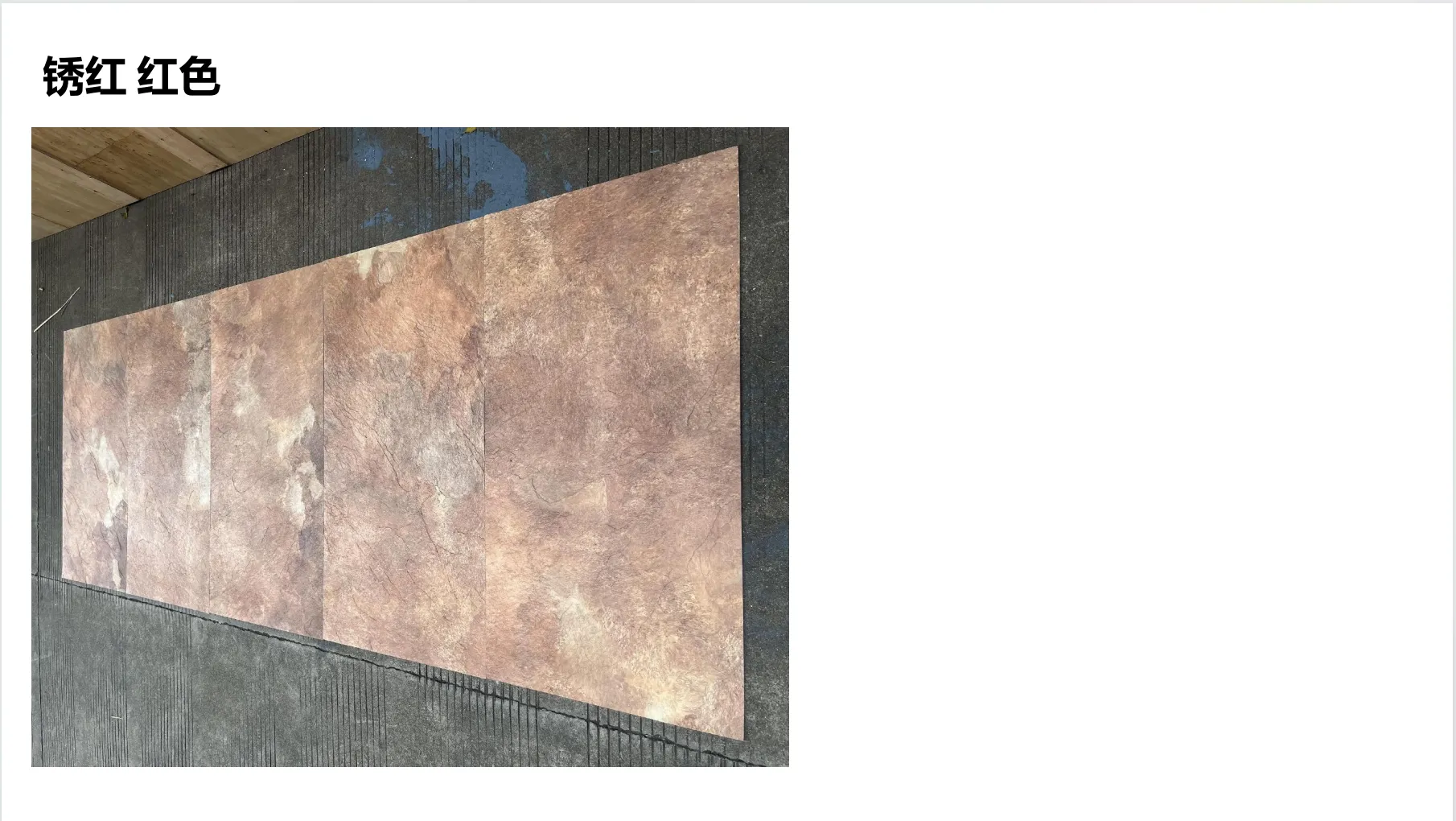
Walk down any street, and you'll notice that buildings don't just stand—they tell stories. The materials that clothe their exteriors whisper of design choices, cultural influences, and even the values of those who built them. Today, as we strive for spaces that are both beautiful and responsible, the line between "form" and "function" is blurring. Enter Rusty Red MCM Thermal Insulation: a cladding solution that doesn't just catch the eye, but wraps buildings in a blanket of efficiency. It's where the warmth of rust-red hues meets the cool logic of energy savings, proving that the best building materials don't have to choose between looking good and doing good.
First, let's break down the basics: MCM stands for Modified Composite Material, a modern innovation that's redefining cladding. Unlike traditional stone or concrete, MCM is a lightweight, flexible material engineered to combine the best traits of natural elements and synthetic durability. And Rusty Red? It's not just a color—it's a statement. Think of the warm, earthy tones of a desert at sunset, or the rich patina of aged metal, but with a consistency and vibrancy that lasts for decades. This isn't just about aesthetics, though; the real magic lies in what's beneath that striking surface: thermal insulation technology that turns buildings into energy-saving powerhouses.
At its core, Rusty Red MCM Thermal Insulation is designed to tackle one of the biggest challenges in construction: heat transfer. Buildings lose a staggering 30% of their energy through their walls, whether it's sweltering summer heat seeping in or precious warmth escaping during winter. Traditional cladding materials—like brick, stucco, or even fair-faced concrete—often act like sponges for temperature extremes, forcing HVAC systems to work overtime. Rusty Red MCM changes that. Its layered structure, combining a rigid outer shell with a foam-like insulating core, creates a barrier that slows heat flow. Imagine a thermos for your building: it keeps the inside temperature stable, so you use less energy to heat or cool, and your utility bills shrink as a result.
To truly appreciate Rusty Red MCM's efficiency, let's talk about R-value—the measure of a material's resistance to heat flow. The higher the R-value, the better the insulation. While standard stucco might have an R-value of around 0.5 per inch, and fair-faced concrete (a popular choice for its raw, industrial look) sits at roughly 0.1 per inch, Rusty Red MCM clocks in at an impressive R-5 per inch. That means even a thin layer (often 0.25 to 0.5 inches thick) can deliver insulation comparable to thicker, heavier materials. For a commercial building with thousands of square feet of exterior wall, that difference adds up fast.
Consider a small café in a busy downtown area. Before switching to Rusty Red MCM, its west-facing walls absorbed so much afternoon sun that the AC ran nonstop, costing hundreds of dollars extra each month. After installation, the MCM's insulation kept the interior 10-15 degrees cooler naturally, cutting AC usage by nearly a third. The owner didn't just save money—they also reduced their carbon footprint, a win for both their budget and the planet. It's a simple equation: less energy used equals fewer greenhouse gas emissions, making Rusty Red MCM a friend to both your wallet and the environment.
Let's be honest: no one wants to live or work in a building that looks like a giant cooler. The beauty of Rusty Red MCM Thermal Insulation is that it doesn't force you to sacrifice style for efficiency. In fact, it opens up a world of design possibilities, especially when paired with complementary materials like travertine (starry red) or rammed earth board.
Take travertine (starry red), for example. This variant of travertine features subtle metallic flecks that catch the light, adding a touch of whimsy to its deep red base. When used as an accent alongside Rusty Red MCM, it creates a layered, dynamic look—think a Rusty Red MCM facade with travertine (starry red) panels framing the entrance or windows. The result? A building that feels both grounded (thanks to the MCM's earthy rust tones) and lively (from the starry red's sparkles). It's a combination that works equally well for a modern art gallery or a boutique hotel, proving that bold colors and texture can coexist harmoniously.
Then there's rammed earth board, a material that evokes the timelessness of ancient architecture with its natural, textured finish. Imagine a residential home where the lower half is clad in Rusty Red MCM for insulation and durability, while the upper half uses rammed earth board in a soft beige gradient. The contrast between the smooth, consistent rust red and the organic, earthy rammed earth creates a home that feels connected to the land—warm, inviting, and deeply rooted. It's a design that nods to the past while embracing the future of sustainable building.
And let's not forget flexibility—literal flexibility. MCM's lightweight nature means it can be bent, curved, or shaped to fit any architectural vision. Want a building with sweeping, rounded walls? Rusty Red MCM can follow those curves without cracking or losing its insulating properties. Traditional stone or concrete would require heavy, custom-cut pieces, driving up costs and limiting design freedom. With MCM, the only limit is imagination.
To put Rusty Red MCM's benefits into perspective, let's compare it to three popular cladding options: fair-faced concrete, travertine (starry red), and rammed earth board. Each has its strengths, but when it comes to balancing efficiency, durability, and design, Rusty Red MCM pulls ahead.
| Material | Thermal Resistance (R-value per inch) | Installation Time (per 100 sq ft) | Expected Lifespan | Aesthetic Range | Cost (Approx. per sq ft) |
|---|---|---|---|---|---|
| Rusty Red MCM Thermal Insulation | 5.0 | 2-3 hours | 50+ years | Wide (custom colors, textures, finishes) | $12-$18 |
| Fair-Faced Concrete | 0.1 | 4-6 hours | 80+ years | Limited (raw, industrial look) | $8-$15 |
| Travertine (Starry Red) | 0.8 | 5-7 hours | 60+ years | Medium (natural stone variations) | $20-$30 |
| Rammed Earth Board | 1.5 | 6-8 hours | 70+ years | Medium (earthy tones, textured) | $15-$25 |
As the table shows, Rusty Red MCM outperforms the others in thermal resistance by a wide margin, which translates directly to lower energy costs. It's also faster to install than natural stone or rammed earth, reducing labor expenses and project timelines. While fair-faced concrete is cheaper upfront, its poor insulation means higher long-term energy bills—a trade-off that often isn't worth it. And when it comes to lifespan, Rusty Red MCM holds its own, with a 50+ year expectancy that ensures your investment lasts for generations.
Numbers and comparisons are helpful, but nothing tells a story like real-world results. Let's look at two projects that showcase Rusty Red MCM Thermal Insulation in action.
Case Study 1: The Desert Bloom Hotel
Located in a hot, arid region, the Desert Bloom Hotel was struggling with sky-high cooling costs. Its original stucco exterior offered little insulation, and guests often complained about uneven temperatures. The owners wanted a solution that would cut energy bills and refresh the hotel's outdated look. They chose Rusty Red MCM for the main facade, paired with travertine (starry red) accents on the lobby walls and outdoor patios. The results were dramatic: within six months, energy costs dropped by 28%, and guest satisfaction scores improved thanks to more consistent indoor temperatures. The hotel's new exterior, with its warm rust red and sparkling starry red accents, became a local landmark—proof that sustainability can also be a marketing asset.
Case Study 2: The GreenHaven Community Center
A nonprofit community center in a temperate climate wanted to reduce its carbon footprint while creating a space that felt welcoming to all. They opted for a mix of Rusty Red MCM and rammed earth board (in a soft khaki shade) to blend modern efficiency with natural warmth. The MCM was used on the south-facing walls (most exposed to sun) for maximum insulation, while the rammed earth board added texture to the north side. The center now uses 32% less energy than before, freeing up funds to expand programming. Local residents love the building's "hugging" feel—the Rusty Red MCM's warmth and the rammed earth's organic texture make it feel less like a public building and more like a community home.
One of the biggest perks of Rusty Red MCM Thermal Insulation is how little it asks of you. Unlike natural stone, which may need sealing every few years, or wood, which can warp or rot, MCM is remarkably low-maintenance. Its outer layer is resistant to fading, even in harsh sunlight, so that vibrant rust red will stay vibrant for decades. It's also mold-resistant, pest-proof, and impervious to water damage—no need to worry about cracks or leaks after heavy rain. For most buildings, a simple rinse with a garden hose once or twice a year is all it takes to keep the facade looking fresh. That means less time and money spent on upkeep, and more time enjoying the benefits of a beautiful, efficient building.
Sustainability isn't just about energy efficiency—it's about the entire lifecycle of a material. Rusty Red MCM checks this box, too. Many MCM manufacturers use recycled materials in their production process, reducing waste and reliance on virgin resources. The lightweight nature of MCM also cuts down on transportation emissions; since it's lighter than stone or concrete, fewer trucks are needed to deliver it to job sites. And because it lasts so long (50+ years), it reduces the need for frequent replacements—a key factor in minimizing construction waste. For architects and builders aiming for LEED certification or other green building standards, Rusty Red MCM is a valuable ally, contributing points in energy efficiency, materials selection, and indoor environmental quality.
As we look to the future, the demand for building materials that balance beauty, efficiency, and sustainability will only grow. Net-zero energy buildings—structures that produce as much energy as they consume—are no longer a distant dream; they're a goal for cities and countries worldwide. Rusty Red MCM Thermal Insulation is poised to play a starring role in this movement. Its ability to reduce energy use, paired with its design flexibility, makes it a go-to choice for forward-thinking architects and builders.
But it's not just about meeting regulations or hitting sustainability targets. It's about creating buildings that enhance our lives. A home clad in Rusty Red MCM isn't just energy-efficient—it's a home that feels warm and inviting, where you can relax without worrying about bills. A commercial building with Rusty Red MCM isn't just a business—it's a statement that the company cares about its impact on the planet and its community. In a world where we spend 90% of our time indoors, the materials that surround us matter. They shape our moods, our productivity, and even our sense of belonging.
Rusty Red MCM Thermal Insulation isn't just a cladding solution—it's a philosophy. It's the belief that buildings should serve us, not the other way around. That beauty and efficiency don't have to be enemies. That the choices we make about materials today can create a better tomorrow. Whether you're building a new home, renovating a commercial space, or designing a community center, Rusty Red MCM offers something rare: a chance to do good while looking good. It's a material that doesn't just cover walls—it covers all the bases. So the next time you walk down that street, keep an eye out for buildings that tell stories of innovation, responsibility, and warmth. Chances are, they're wearing Rusty Red MCM.
Recommend Products












