
Choosing materials that blend heart and resilience for your space
Walk into any home, office, or public space, and the first thing that whispers (or shouts) about its character is the materials. A kitchen with warm, textured walls feels like a hug; a cold, glossy bathroom might leave you feeling like you're in a sterile box. That's the power of building materials—they don't just serve a function; they shape how we experience a space.
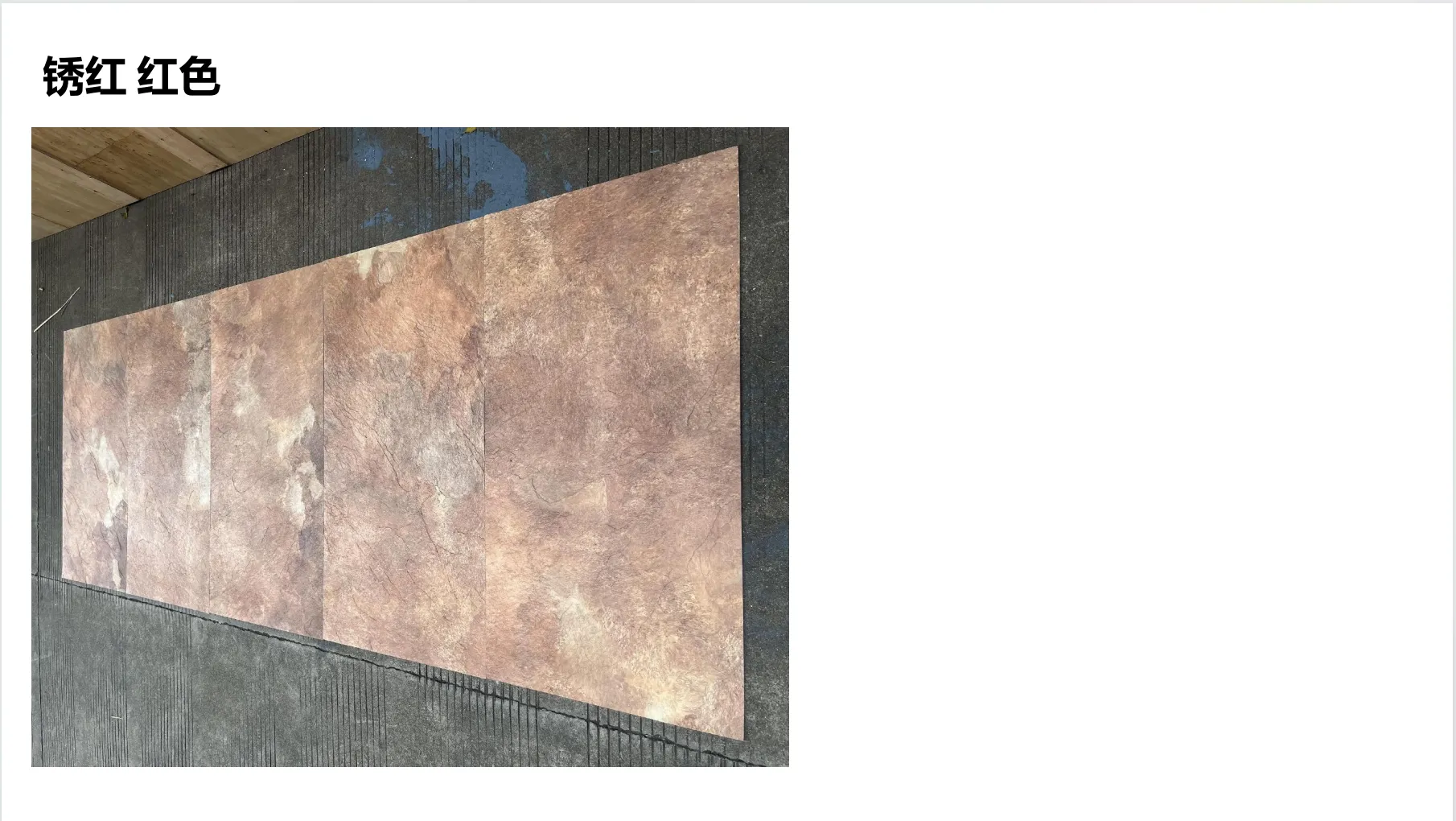
In recent years, MCM (Modified Composite Material) products have emerged as a game-changer, offering the beauty of natural materials with the resilience of modern engineering. Take, for example, the rusty red variants from MCM's lineup—rich, earthy, and brimming with the kind of depth that makes a wall feel like it has a story. But how do these innovative materials stack up against the old reliable: ceramic tiles? Let's break it down, not just with specs, but with the feels and the facts that matter most.
Let's start with the obvious: how something looks. After all, we don't just live in spaces—we feel them. Ceramic tiles have been a staple for decades, and for good reason: they come in endless colors, from crisp whites to bold blues, and finishes from high-gloss to matte. But here's the catch: they often feel… flat . A ceramic tile might mimic marble or stone, but under close inspection, that "texture" is often a printed pattern, lacking the organic depth of the real thing.
Enter MCM flexible stone. Products like the rusty red line aren't just colored—they're crafted . Imagine running your hand over a wall and feeling the subtle ridges of weathered iron, the soft fade of a sunset, the quiet complexity of a stone that's been kissed by time. That's the texture MCM brings. Unlike ceramic tiles, which are often uniform, MCM panels (think MCM project board series or specialty lines like historical pathfinders stone ) have natural variations in hue and texture. One section might have a deeper, coppery red; another, a softer, terracotta warmth. It's the difference between a photograph of a forest and standing in one—you notice the details that make it alive.
Design versatility is another win for MCM. Ceramic tiles are typically small (12x12 inches is common), which means grout lines—lots of them. These lines can break up a space, making walls feel busy or disjointed. MCM, on the other hand, offers large-format slabs that can stretch across entire walls with minimal seams. Want a feature wall in your living room that feels like a single, sweeping canvas of rusty red stone? MCM makes it possible. And because it's flexible, it can wrap around curves, archways, or even furniture, turning ordinary surfaces into focal points.
Ceramic tiles have their place—they're great for a sleek, modern look where uniformity is key. But if you want a space that feels lived-in , with character that evolves (not fades) over time, MCM's aesthetic depth is hard to beat. It's not just a material; it's a mood.
Aesthetic appeal only gets you so far. If your beautiful wall chips after a stray soccer ball or fades after a year of sunlight, what's the point? Let's talk durability—the unsung hero of great building materials.
Ceramic tiles are tough, but they're not indestructible. drop a heavy pot on a ceramic floor, and there's a good chance you'll end up with a chip (or a shattered tile). And while they're water-resistant, the grout lines between them? Not so much. Over time, moisture seeps in, leading to mold, mildew, or even loose tiles. Ever tried scrubbing grout in a shower? It's a battle no one wins.
MCM flexible stone, by contrast, is built to last. It's made from a composite of natural minerals and polymers, which gives it the best of both worlds: the hardness of stone and the flexibility of plastic. That means it can take a hit—literally. A falling tool in the garage or a rambunctious kid with a toy truck is unlikely to leave a mark on an MCM wall. And because it's non-porous, there's no need to seal it (unlike ceramic tiles, which require regular sealing to keep moisture out). Rain, humidity, even harsh chemicals? MCM laughs them off.
Let's talk about the outdoors, too. If you're dreaming of a patio or exterior facade that ages like fine wine, rusty red MCM is a rockstar. Ceramic tiles fade in sunlight; their colors dull over time, turning that vibrant blue into a sad gray. MCM, though? It's UV-resistant, so that rich, earthy red stays rich and earthy for decades. Freeze-thaw cycles? No problem. Unlike ceramic tiles, which can crack when water seeps in and expands, MCM's flexibility lets it shift with temperature changes without breaking a sweat.
Let's get real: beauty and durability matter, but so does ease of use. No one wants to spend weekends maintaining their walls or blow their budget on installation. Here's how MCM and ceramic tiles stack up in the real world.
Ceramic tiles are heavy. A single 12x12 inch tile can weigh 3-5 pounds, and when you're covering a wall or floor, that adds up fast. Installers need sturdy substrates (think cement backer boards) and lots of adhesive to keep them in place. It's labor-intensive, which means higher installation costs and longer timelines.
MCM panels, though? They're lightweight—about 1/5 the weight of ceramic tiles. That means easier transport (no need for a crane to haul them up to a second-story bathroom), simpler installation (they cut with standard tools), and less strain on your walls. Even DIYers can tackle small projects with MCM, whereas ceramic tile installation often requires a pro. Time is money, and MCM saves you both.
Remember that grout we talked about earlier? Ceramic tile maintenance is all about grout. You'll need to scrub it regularly with special cleaners, re-seal it every 1-2 years, and hope it doesn't discolor. And if a tile cracks? Replacing it means matching the color (good luck) and dealing with the messy process of removing old adhesive.
MCM? Wipe it with a damp cloth and call it a day. No grout, no sealing, no special cleaners. Spilled coffee? Wipe. Muddy footprints? Wipe. And if (heaven forbid) something does damage a panel, replacing it is a breeze—just peel off the old one and stick on a new one. No mess, no stress.
Let's talk dollars and cents. Ceramic tiles are often cheaper upfront—you can find basic tiles for $2-$5 per square foot. MCM, on the other hand, starts around $8-$12 per square foot. But here's the thing: cost isn't just about the initial price tag. It's about how much you'll spend over time.
Ceramic tiles need sealing, grout cleaning supplies, and occasional replacements. Over 10 years, those costs add up. MCM? Once it's installed, it's done. No extra products, no repairs, no replacements. And because it lasts longer (30+ years vs. 10-15 for ceramic tiles), you'll save money in the long run. It's an investment, not an expense.
| Feature | Rusty Red MCM | Ceramic Tiles |
|---|---|---|
| Texture Depth | Organic, 3D texture mimicking natural stone/weathered materials | Mostly flat; printed patterns lack tactile depth |
| Impact Resistance | High; flexible composite resists chips/cracks | Moderate; prone to chipping/shattering on heavy impact |
| Weather/UV Resistance | Excellent; color fastness and durability in harsh conditions | Fades over time; vulnerable to freeze-thaw cracking |
| Installation Ease | Lightweight; easy to cut, shape, and install (DIY-friendly) | Heavy; requires sturdy substrate and professional installation |
| Maintenance | Minimal; wipe with damp cloth (no sealing/grout care) | High; regular grout cleaning/sealing and potential repairs |
| Lifespan | 30+ years | 10-15 years (with proper maintenance) |
Ceramic tiles have earned their spot in the building world—they're affordable, versatile, and work well in spaces where simplicity is key. But if you're looking for something more—something that feels less like a "material" and more like a partner in creating your space's story—MCM flexible stone, especially in rich hues like rusty red , is hard to beat.
It's the kind of material that ages gracefully, that gets more interesting over time, not less. It's tough enough for a busy family home, beautiful enough for a high-end restaurant, and practical enough for anyone who doesn't want to spend weekends scrubbing grout. In the end, building materials aren't just about function—they're about feeling. And with MCM, that feeling is pure, unapologetic warmth.
So, whether you're renovating your kitchen, designing a commercial space, or just daydreaming about your future home, ask yourself: Do I want a surface that's just there, or one that speaks ? If it's the latter, rusty red MCM might just be the voice you've been looking for.
Recommend Products












