
If you've ever stood in front of a granite-clad building, you know the feeling: that sense of permanence, of solidity, like the structure itself grew from the earth. Granite has long been the gold standard for architects and designers chasing timeless elegance—its rich veining, depth of color, and rugged durability make it a go-to for everything from skyscraper facades to kitchen countertops. But here's the thing: granite isn't without its flaws. It's heavy, expensive, and often requires extensive structural support. Enter Rusty Red MCM, a rising star in the world of building materials. Part of the broader mcm flexible stone family, this material promises the same head-turning aesthetics as granite—think warm, earthy tones, textured surfaces, and that coveted "natural stone" look—without the headaches. In this deep dive, we'll explore why Rusty Red MCM is quickly becoming the material of choice for those who refuse to compromise on beauty or practicality.
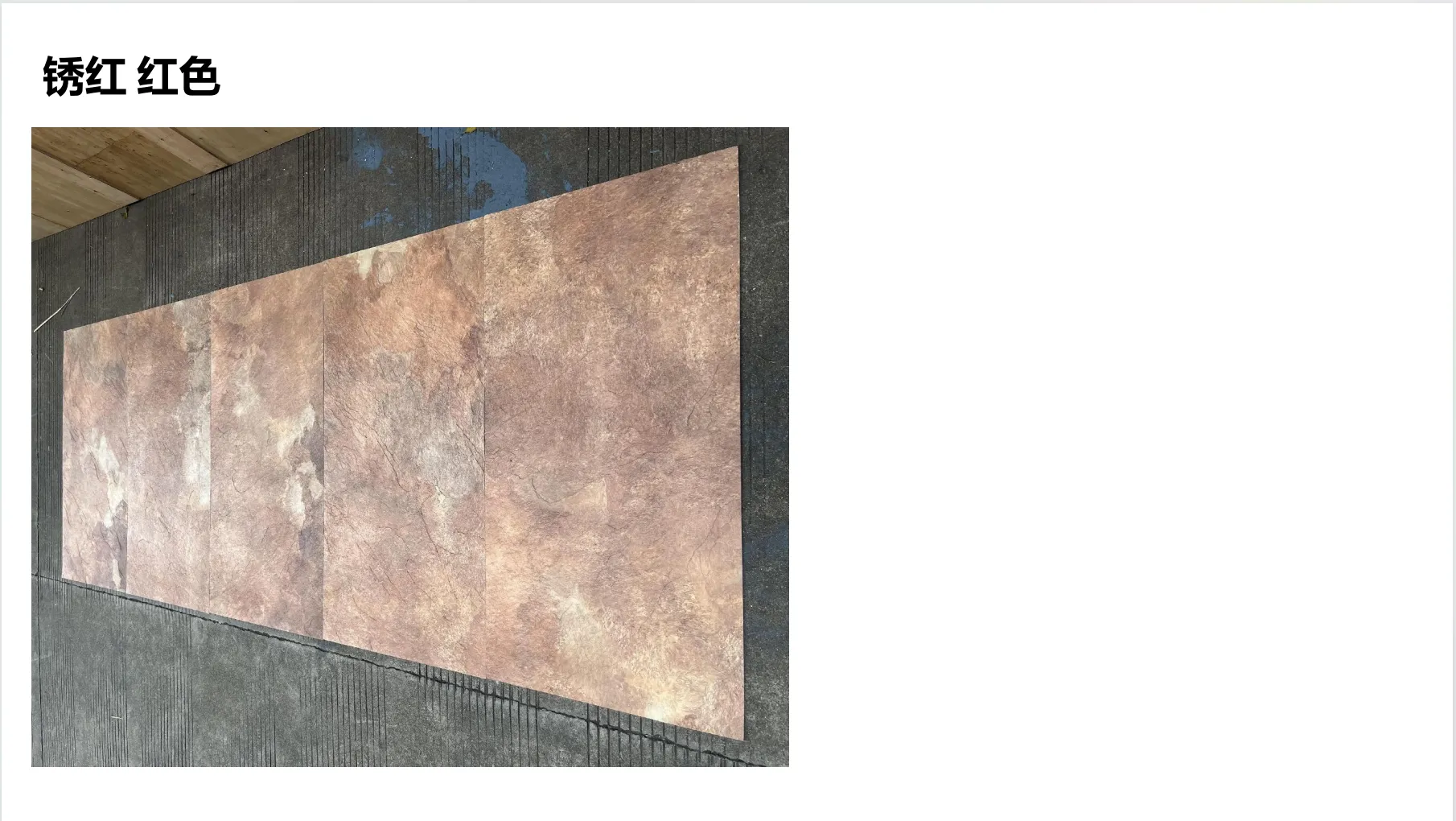
Let's start with the basics: MCM stands for Modified Composite Material, a category of engineered building products designed to mimic the look and feel of natural stone, wood, or metal—without the associated weight, cost, or maintenance. At its core, MCM is a blend of mineral aggregates, polymers, and reinforcing fibers, pressed into thin, flexible panels that can be cut, shaped, and installed with relative ease. And Rusty Red MCM? It's a standout variant that captures the weathered, timeworn charm of aged iron or rusted metal, paired with the organic texture of stone. Imagine the warm, earthy hues of a desert sunset—deep reds, burnt oranges, and muted browns—swirled together in a surface that looks like it's been shaped by decades of wind and rain. That's the magic of Rusty Red MCM.
But what truly sets Rusty Red MCM apart is its flexibility—literally. Unlike rigid natural stone slabs, mcm flexible stone can bend and curve, making it ideal for non-flat surfaces like arches, columns, or rounded walls. This versatility opens up a world of design possibilities that granite, with its heavy, inflexible nature, simply can't match. And it's not just about looks: MCM panels are lightweight (typically 3-5 kg per square meter, compared to granite's 20-30 kg), which means they put less stress on building structures, reduce transportation costs, and simplify installation. No need for heavy machinery or reinforced foundations here—just a team of installers with basic tools and a vision.
Rusty Red MCM is also part of a broader MCM family that includes stunning variants like travertine (starry red) —a stone-like panel with tiny, glittering flecks that mimic the night sky—and boulder slab , which replicates the rugged, uneven surface of a split boulder. This range means designers can mix and match textures and colors to create truly unique spaces, all while sticking to the same lightweight, cost-effective material.
To understand why Rusty Red MCM is making waves, we first need to acknowledge the elephant in the room: granite. For centuries, granite has been the benchmark of luxury and durability. Quarried from deep within the earth, this igneous rock is formed when magma cools slowly, creating a dense, crystalline structure that's resistant to scratches, heat, and weathering. Walk through any historic district, and you'll likely spot granite in courthouses, banks, and grand homes—it's a material that says, "This building is built to last."
Aesthetically, granite is unmatched in its variety. From the deep blacks of granite nero margiua to the gold-flecked warmth of granite portoro , each slab is a one-of-a-kind work of art, with unique veining and color patterns that can't be replicated. This uniqueness is a double-edged sword, though: while it adds character, it also means inconsistency. Two slabs from the same quarry might look drastically different, making it hard to achieve a uniform look across large projects. And let's not forget the cost: high-quality granite can run anywhere from $50 to $200 per square foot, before installation. Factor in the need for professional installers, heavy equipment, and structural reinforcements, and the price tag quickly spirals out of reach for many budgets.
Then there's maintenance. Granite is porous, which means it needs regular sealing to prevent stains from liquids like wine, oil, or even rainwater. Over time, exposure to harsh weather can cause it to fade or chip, requiring expensive repairs or replacements. For all its beauty, granite demands a lot of upkeep—and not everyone is willing or able to commit to that.
To truly see how Rusty Red MCM stacks up against granite, let's break it down. The table below compares the two materials across key categories, from aesthetics to cost:
| Category | Rusty Red MCM | Granite |
|---|---|---|
| Material Composition | Composite of mineral aggregates, polymers, and fibers; flexible backing | Natural igneous rock; crystalline structure of quartz, feldspar, and mica |
| Aesthetic Appeal | Replicates rusted metal/stone with warm reds, oranges, and browns; consistent texture and color across panels; available in matte or semi-gloss finishes | Unique veining and color variations (blacks, whites, grays, golds); high-gloss or honed finishes; natural, organic look |
| Durability | Resistant to UV rays, moisture, and temperature fluctuations; scratch and impact-resistant; lifespan of 20-30 years with minimal maintenance | Extremely hard (6-7 on Mohs scale); heat and scratch-resistant; prone to chipping at edges; porous (requires sealing every 1-3 years) |
| Installation | Lightweight (3-5 kg/m²); can be cut with standard tools; adhesive installation; suitable for curved surfaces; 2-3 installers can cover 100m² in a day | Heavy (20-30 kg/m²); requires specialized cutting tools; mortar or mechanical fixing; needs structural reinforcement; 2-3 installers can cover 20-30m² in a day |
| Cost (Material + Installation) | $20-$40 per square foot (material: $10-$20; installation: $10-$20) | $80-$150 per square foot (material: $50-$100; installation: $30-$50) |
| Sustainability | Often contains recycled materials; low transportation emissions (lightweight); energy-efficient production; recyclable at end of life | High quarrying impact (deforestation, habitat loss); energy-intensive extraction and processing; heavy transportation footprint |
At a glance, the numbers speak for themselves: Rusty Red MCM offers comparable durability and aesthetic appeal to granite at a fraction of the cost, with added benefits like flexibility and sustainability. But let's dig deeper into why these differences matter in real-world scenarios.
One of the biggest frustrations with natural granite is its inconsistency. You might fall in love with a sample slab at the quarry, only to have the actual delivery arrive with unexpected veins, spots, or color shifts. This can throw off an entire design scheme, especially for large projects like hotel exteriors or shopping malls where uniformity matters. Rusty Red MCM, on the other hand, is engineered for consistency. Each panel is crafted to match the next, ensuring a seamless look across walls, facades, or countertops. That said, it doesn't feel "fake"—the texture is intentionally designed to mimic the irregularities of natural materials, so you still get that organic, lived-in charm. It's the best of both worlds: predictability and personality.
Imagine trying to clad a 10-story building in granite. The structural engineer would need to design reinforced floors, thicker walls, and stronger foundations to support the weight—adding months to the project timeline and tens of thousands of dollars to the budget. With Rusty Red MCM, those headaches vanish. Its lightweight nature means it can be applied to existing structures without costly retrofits, making it perfect for renovations as well as new builds. Take, for example, a historic warehouse conversion: instead of tearing down walls to support granite, you could apply MCM panels directly to the existing brick, preserving the building's character while giving it a modern update. It's a game-changer for architects working with tight spaces or heritage buildings.
Granite's porosity is its Achilles' heel. Spill a glass of red wine on a granite countertop, and you'll spend hours scrubbing with specialized cleaners—if you can remove the stain at all. Rusty Red MCM, by contrast, is non-porous and resistant to stains, moisture, and even mold. A quick wipe with soap and water is all it takes to keep it looking fresh. And unlike granite, it doesn't fade in sunlight or crack in freezing temperatures, making it ideal for outdoor use in harsh climates. For busy commercial spaces like restaurants or retail stores, where maintenance downtime is costly, this is a huge advantage.
In an era where eco-conscious design is no longer optional, MCM shines. Many manufacturers use recycled stone dust, glass, or plastic in their composite blends, reducing the need for virgin materials. The lightweight panels also cut down on transportation emissions—trucks can carry more panels per trip, lowering the carbon footprint. And because MCM is so durable, it rarely needs replacement, which means less waste in landfills. Compare that to granite quarrying, which involves blasting mountainsides, disrupting ecosystems, and consuming massive amounts of water. For clients who prioritize green building practices (and increasingly, many do), Rusty Red MCM is an easy choice.
Walk through any modern business district, and you'll likely spot MCM in action. Take the new headquarters of a tech startup in Austin, Texas: the exterior features Rusty Red MCM panels paired with fair-faced concrete accents, creating a striking contrast between warm, organic tones and sleek, industrial lines. The lightweight panels allowed the architects to add a cantilevered second floor—something that would have been impossible with granite—giving the building a dynamic, forward-thinking silhouette. Inside, the lobby uses rust board granite (another MCM variant) for the reception desk, adding a rustic touch that balances the space's modernity. Employees and visitors alike often comment on how the materials "feel alive"—warm and inviting, yet durable enough to withstand heavy foot traffic.
For homeowners, Rusty Red MCM is a way to elevate curb appeal without breaking the bank. In Boulder, Colorado, a family replaced their outdated vinyl siding with Rusty Red MCM panels, transforming their home from "cookie-cutter suburban" to "modern mountain retreat." The panels mimic the look of aged metal roofing, tying the house to the region's mining history, while the lightweight installation meant they didn't need to replace their roof trusses. Neighbors have since followed suit, creating a streetscape that feels cohesive yet uniquely individual. And because MCM is so low-maintenance, the family spends weekends hiking instead of power-washing or sealing their siding—priceless in a place like Boulder, where outdoor time is sacred.
Restaurants and hotels thrive on ambiance, and Rusty Red MCM delivers. A boutique hotel in Santa Fe, New Mexico, used the panels to clad its outdoor dining patio, travertine (starry red) tabletops for a cohesive desert-inspired theme. The warm reds and oranges of the MCM complement the hotel's adobe architecture, while the material's weather resistance ensures the patio looks as good in monsoon season as it does in the dry summer months. Guests often post photos of the space on social media, with captions like, "It feels like dining in a hidden canyon"—proof that MCM isn't just a building material; it's a storytelling tool.
Granite will always have its place in architecture—there's something irreplaceable about the depth and uniqueness of natural stone. But for most projects, Rusty Red MCM offers a better balance of beauty, practicality, and cost. It's not just a "cheaper alternative"; it's a smarter one. Whether you're designing a commercial high-rise, renovating a historic home, or creating a cozy restaurant patio, MCM gives you the freedom to dream big without being held back by weight, cost, or maintenance constraints.
And let's not forget the future. As sustainability becomes increasingly central to design decisions, materials like MCM—with their recycled content, low transportation impact, and long lifespans—will only grow in popularity. Rusty Red MCM, in particular, taps into a timeless aesthetic that feels both rooted in tradition and forward-thinking. It's a material that tells a story: of resilience, of adaptability, of beauty that doesn't have to come at a cost to the planet or your budget.
So, the next time you're faced with the choice between natural stone and engineered materials, ask yourself: What do I value most? The unpredictability of nature, or the reliability of innovation? For many, the answer is clear. Rusty Red MCM isn't just changing the way we build—it's changing the way we think about building materials. And that's a change worth celebrating.
Recommend Products












