
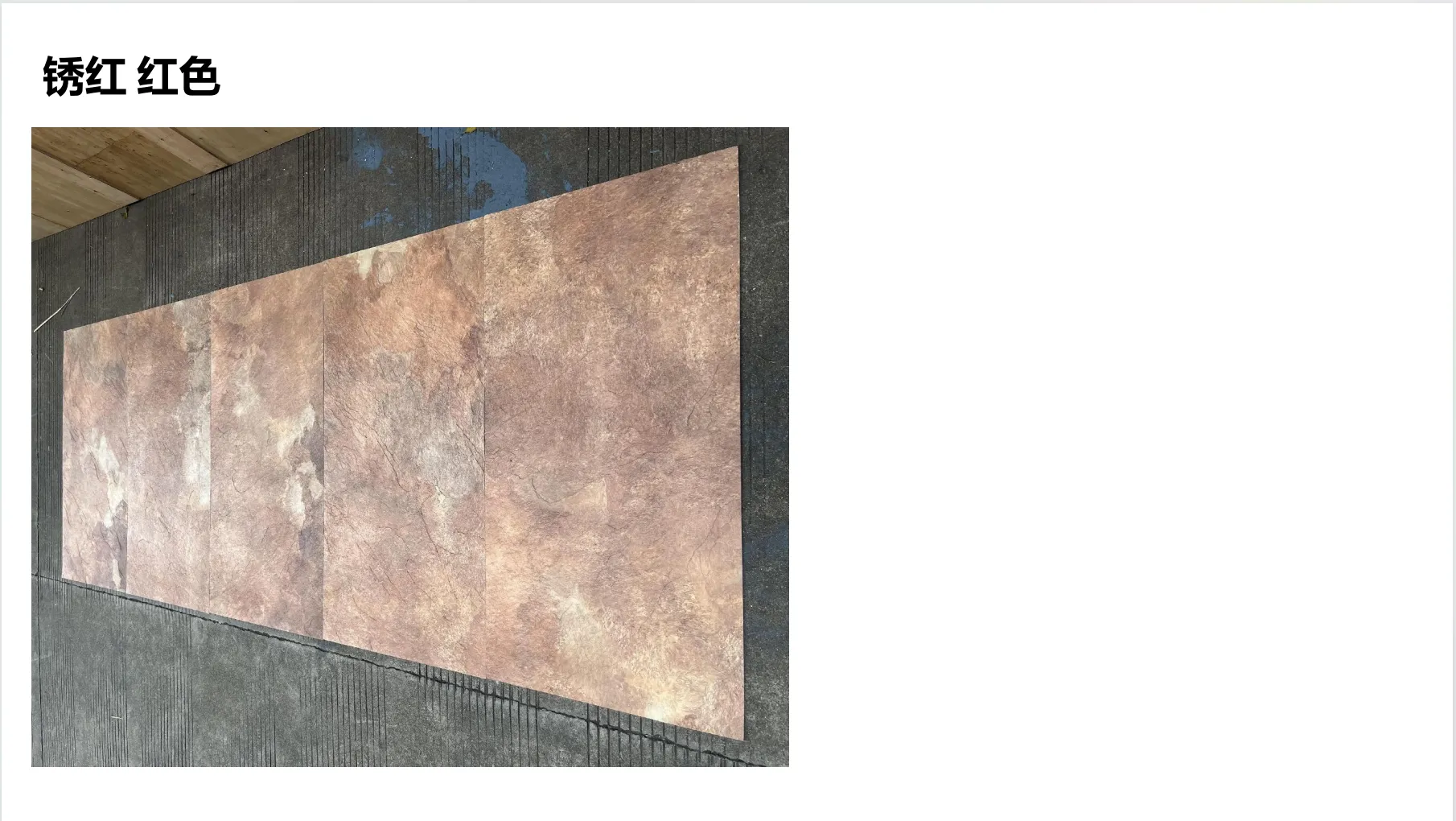
Choosing the right building material is like picking a partner for your home or project—you want something that looks good today, but more importantly, stands the test of time. When it comes to cladding, flooring, or exterior accents, durability isn't just a buzzword; it's the difference between a structure that ages gracefully and one that needs constant repairs. Two materials that often top the list for their striking looks and promises of resilience are Rusty Red MCM and Natural Rust Stone . But which one truly delivers on durability? Let's dive in, compare their strengths, and help you make the call.
If you're not familiar with MCM, let's break it down. MCM stands for Modified Composite Material —think of it as the "smartphone" of building materials: engineered to combine the best traits of natural substances and modern technology. Rusty Red MCM, in particular, is a star in the MCM flexible stone lineup, designed to mimic the warm, earthy tones of rusted metal or weathered stone without the hassle of natural materials.
At its core, Rusty Red MCM is made from a blend of natural minerals (like stone powder), reinforced with fibers, and bound together by high-performance resins. This "recipe" is what makes it part of the modified composite material panels family—engineered to be lightweight, flexible, and yes, durable. Unlike rigid natural stone, it bends slightly, which might not sound like a big deal until you realize that flexibility helps it absorb impacts (more on that later).
Natural Rust Stone is exactly what it sounds like: a type of natural stone that gets its signature rusty red hue from iron oxide minerals trapped in its layers over millions of years. Think of it as nature's artwork—each slab has unique veining, pits, and color variations that tell a story of geological time. It's been used in construction for centuries, from ancient temples to modern luxury homes, prized for its raw, organic beauty.
But here's the catch: being a natural material means it comes with all the quirks of nature. It's dense, heavy, and porous—traits that influence its durability in ways both good and bad. While its density can make it tough, its porosity leaves it vulnerable to things like water absorption and staining if not properly cared for.
Durability isn't just about "being tough"—it's about how well a material holds up over time against the specific challenges it faces. Let's compare Rusty Red MCM and Natural Rust Stone across the factors that matter most for long-term performance.
Imagine a building in a place with scorching summers, freezing winters, and monsoon-like rains. How would these two materials fare?
Rusty Red MCM: Thanks to its engineered composition, MCM is built to stand up to extreme weather. Most manufacturers treat it with UV-resistant coatings, so the rusty red color won't fade drastically even after years of direct sunlight. Its non-porous surface also means rainwater beads up and runs off instead of soaking in, preventing issues like freeze-thaw damage (when water seeps in, freezes, expands, and cracks the material). In short, it's like a raincoat for your building—keeping the elements out.
Natural Rust Stone: Natural stone is no stranger to weather, but it's not invincible. While some types of natural stone (like granite) are highly weather-resistant, Rust Stone's porosity is a weak spot. Without regular sealing, rainwater can penetrate its surface, leading to discoloration or even cracks over time (especially in cold climates where water freezes). UV rays can also fade its vibrant rusty red color, turning it into a duller shade if left unprotected. It's tough, but it needs a little help to stay that way.
Whether it's a stray baseball, a hailstorm, or a delivery truck bumping into the wall, buildings take impacts. How do these materials handle the unexpected?
Rusty Red MCM: Remember that flexibility we mentioned earlier? It's a game-changer here. MCM panels can bend slightly without cracking, which helps them absorb the force of impacts. Think of it like a car's crumple zone—instead of shattering, it gives a little. This makes Rusty Red MCM a solid choice for high-traffic areas (like retail storefronts or school exteriors) where accidental bumps are more likely. It's not indestructible, but it's far less prone to chipping or cracking than rigid materials.
Natural Rust Stone: Natural stone is hard—really hard. That hardness makes it resistant to scratches, but it's also brittle. If you hit it with enough force (say, a heavy object dropping from a height), it can chip or even crack. Those natural pits and veins? They're weak points where cracks can start. Once a crack forms, it can spread over time, especially if water gets inside and freezes. It's like a glass—strong until it's struck in the right (or wrong) spot.
Durability isn't just about surviving—it's about surviving with minimal effort. Let's talk upkeep.
Rusty Red MCM: If low maintenance is your jam, MCM might be your new best friend. Its non-porous surface resists stains, so you can wipe off dirt, oil, or even graffiti with a damp cloth and mild soap. No need for special sealants or harsh chemicals. Even better, it doesn't require regular re-sealing (unlike natural stone), which saves time and money over the years. For busy homeowners or commercial property managers, this is a huge win.
Natural Rust Stone: Natural stone is a bit high-maintenance by comparison. Because it's porous, it needs to be sealed every 1–3 years (depending on the sealant and foot traffic) to prevent staining from spills, oil, or acidic substances (like lemon juice or rainwater with high acidity). If it does get stained, removing the stain can be tricky—you might need specialized cleaners or even professional help. It's beautiful, but it demands attention.
We're not just talking a few years—we're talking decades. Let's see how they stack up.
Rusty Red MCM: Most MCM manufacturers offer warranties of 15–20 years, but real-world performance tells a longer story. Many MCM installations from the early 2000s still look great today, with minimal signs of wear. With proper installation (no gaps for water to sneak in) and basic cleaning, it's reasonable to expect Rusty Red MCM to last 30+ years. It's not forever, but it's a solid run for a material that's often more affordable than natural stone.
Natural Rust Stone: When it comes to longevity, natural stone is the OG. Think about ancient Roman structures with stone walls that have stood for millennia. If maintained properly (regular sealing, repairs for cracks), Natural Rust Stone can last centuries. But here's the caveat: without that maintenance, its lifespan shortens dramatically. Stains, cracks, and erosion can take their toll, turning a timeless beauty into a worn eyesore in just 10–15 years. It's a long-term investment, but only if you're willing to put in the work.
Not all environments are created equal—humidity, salt, pollution, and extreme temperatures can test a material's limits. Let's see how they handle real-world conditions.
Rusty Red MCM: It's a team player in diverse environments. In humid areas, its moisture-resistant surface resists mold and mildew growth. In coastal regions, where salt spray can corrode metal and degrade some materials, MCM's protective coating holds strong. Even in polluted city environments, it resists discoloration from smog or industrial emissions. Its engineered formula is designed to adapt, making it versatile for everything from beachfront homes to urban high-rises.
Natural Rust Stone: Natural stone can struggle in harsh environments without extra care. In humid climates, its pores can trap moisture, leading to mildew growth (even with sealing). Coastal salt spray can react with the stone's minerals, causing pitting or discoloration over time. In polluted areas, acidic rain can eat away at the surface, dulling its finish. It's not impossible to use in these spots, but it requires more frequent maintenance and protective treatments.
| Factor | Rusty Red MCM | Natural Rust Stone |
|---|---|---|
| Weather Resistance | High (UV-resistant, water-repellent, no freeze-thaw damage) | Moderate (needs sealing to resist water/UV damage) |
| Impact Resistance | High (flexible, absorbs impacts without cracking) | Moderate (hard but brittle, prone to chipping/cracking) |
| Maintenance | Low (no sealing, simple cleaning) | High (seal every 1–3 years, stain-prone) |
| Longevity | 30+ years (with proper installation) | Centuries (with regular maintenance) |
| Environmental Adaptability | Excellent (resists humidity, salt, pollution) | Moderate (needs extra care in harsh environments) |
Durability isn't the only factor—context matters. Here's where each material truly excels:
Rusty Red MCM: It's a workhorse for modern, high-performance projects. Think commercial buildings (like retail stores or office facades) where foot traffic and impact risk are high, and maintenance budgets are tight. It's also great for homes in climates with extreme weather (hot sun, heavy rain, or cold winters) where you want a material that won't fade or crack. And because it's lightweight, it's easier (and cheaper) to install on tall buildings or structures with weight restrictions.
Natural Rust Stone: If you're after timeless beauty and don't mind the upkeep, this is your stone. It's perfect for heritage renovations, luxury homes, or public spaces where the goal is to evoke a sense of history and authenticity. Imagine a boutique hotel with a Rust Stone lobby wall, or a countryside villa with a stone facade that blends into the natural landscape—these are the moments where Natural Rust Stone's unique character can't be replicated.
Here's the truth: "better" depends on what you value most. If you want consistent, low-maintenance durability that can handle the chaos of daily life (kids, weather, busy schedules) without fading or cracking, Rusty Red MCM is the clear winner. It's engineered to perform reliably, with minimal effort on your part.
But if you're willing to invest in maintenance and prioritize the timeless, one-of-a-kind beauty of natural stone—knowing that with care, it could outlast your grandchildren— Natural Rust Stone has a longevity that's hard to beat. It's not just a building material; it's a legacy.
At the end of the day, both materials have their place. Rusty Red MCM offers modern peace of mind, while Natural Rust Stone offers a connection to the earth's history. Whichever you choose, you're not just building a structure—you're building something that will stand the test of time, in its own unique way.
Recommend Products












