Let's set the scene: You're standing in front of a 19th-century town hall, its red brick facade weathered by time, yet still radiating the kind of warmth that makes you pause. The local council wants to restore it—keep the heritage charm, but make it safe, energy-efficient, and ready for another 100 years. The architect on the project sighs, staring at the brick samples. "Red brick is non-negotiable for the aesthetic," they say, "but the structural team is worried about the weight. And have you seen the cost of repointing all those mortar joints?" Sound familiar? For anyone working on heritage-style buildings, the tug-of-war between tradition and modern practicality is all too real. Today, we're diving into a material that's quietly changing the game:
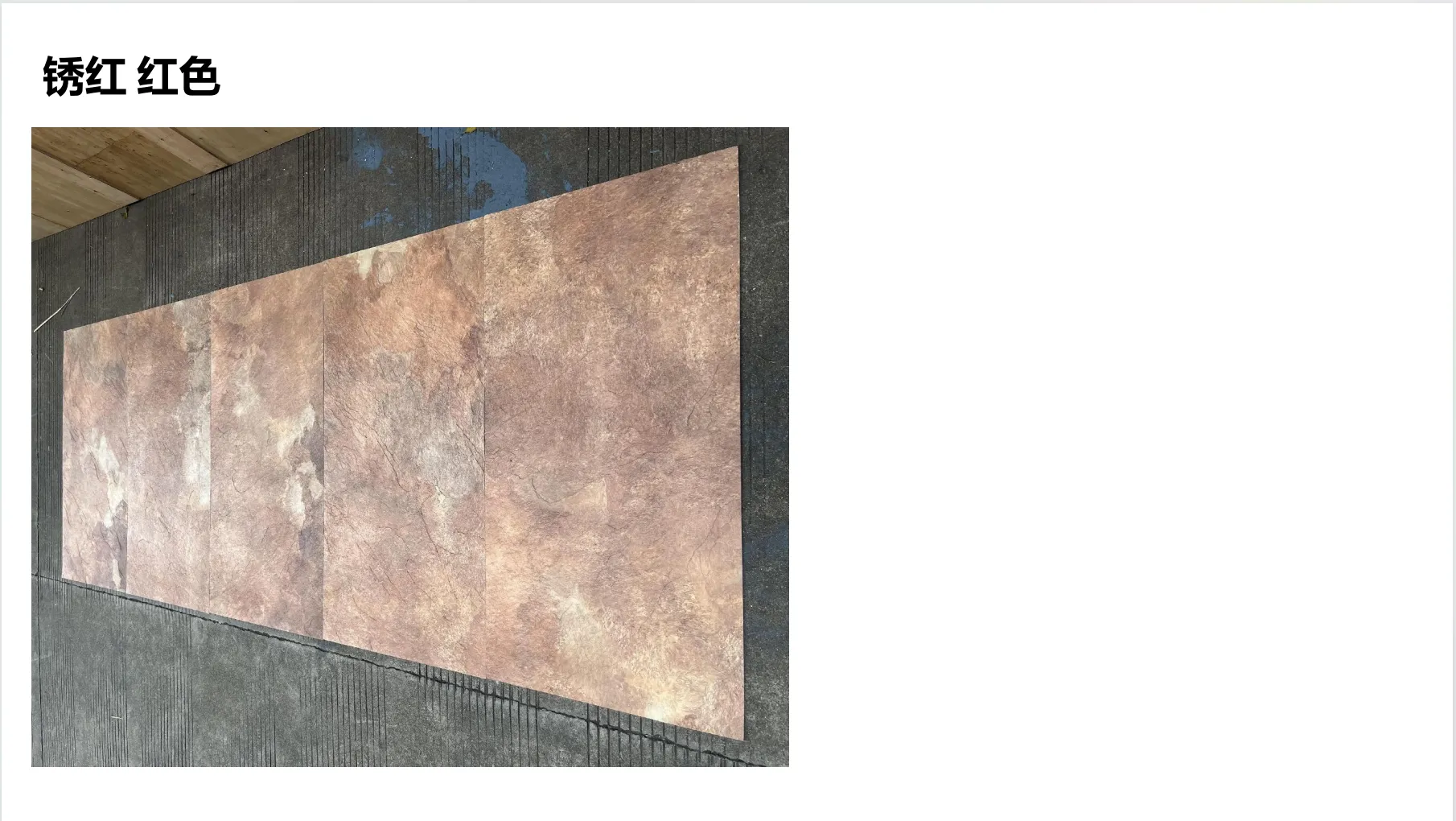
Rusty Red MCM
. Is it really a worthy alternative to red brick for heritage projects? Let's find out.
1. The Timeless Allure of Red Brick: Why It's Loved (and Why It Sticks Around)
Let's start with the obvious: Red brick isn't just a building material—it's a storyteller. For centuries, it's been the backbone of heritage architecture, from English cottages to American colonial homes, from European town squares to Asian temples. There's a reason it's endured: it looks *alive*. The way sunlight hits a red brick wall, casting shadows through its rough texture; the subtle variations in hue, from deep terracotta to soft rose, thanks to natural clay and firing techniques; the way it ages, developing a patina that feels like a handshake from the past. "Heritage pathfinders stone" projects often lean on red brick because it's a visual shorthand for "history." Walk down a street lined with red brick buildings, and you don't just see structures—you feel a connection to the people who built them, the communities that grew around them.
Beyond looks, red brick has earned its reputation as a workhorse. It's strong, fire-resistant, and (when properly maintained) can last for generations. Early builders prized it for its availability—clay is abundant—and its simplicity: mold, fire, stack. Even today, in a world of high-tech materials, there's a comfort in choosing something that's stood the test of time. When clients say, "We want it to feel like it's always been here," red brick is often the first answer. It's not just about building a wall; it's about building trust in the past.
2. The Hidden Struggles of Red Brick in Modern Heritage Projects
But here's the thing: Heritage buildings today aren't just museums. They're schools, offices, community centers—spaces that need to meet modern codes, energy standards, and user expectations. And that's where red brick starts to show its age. Let's talk about weight first. A standard red brick weighs around 4.5 pounds, and a single square foot of brick wall can tip the scales at 30-40 pounds. For older buildings with aging foundations, adding that kind of load during renovations can be a disaster. Engineers often have to reinforce structures, adding steel beams or underpinning foundations—driving up costs and extending timelines. "We had a project where the original 1850s church needed a new wing," recalls Maria, a heritage architect I spoke with. "The red brick we wanted would have required reinforcing the entire basement. It was either that or scale back the design. We had to compromise."
Then there's maintenance. Red brick might be durable, but it's not invincible. Mortar joints crack over time, letting in water that freezes and expands, chipping away at the bricks. Repointing—scraping out old mortar and replacing it—is a tedious, labor-intensive process that costs anywhere from $10 to $25 per square foot. And that's not all: bricks absorb moisture, which can lead to mold inside walls; they're porous, so they don't insulate well, driving up heating and cooling bills; and in coastal areas, salt air eats away at them, turning bright red into a faded pink. "We restored a red brick lighthouse a few years back," says Tom, a contractor specializing in heritage work. "Three years later, we were back replacing bricks that had spalled from salt damage. The client was shocked—they thought brick was 'maintenance-free.' Spoiler: It's not."
Sustainability is another hurdle. Traditional brick production is energy-heavy: firing bricks in kilns at 2,000°F releases significant CO2, and mining clay can disrupt local ecosystems. For modern heritage projects aiming for green certifications like LEED or BREEAM, red brick's carbon footprint is a tough pill to swallow. "We had a client who wanted a 'heritage-style' community center but also wanted it to be net-zero," Maria adds. "Red brick was off the table once we crunched the numbers on embodied carbon. They felt like they had to choose between the look they wanted and their sustainability goals."
3. Enter Rusty Red MCM: A Modern Material with a Heritage Heart
So, what if there was a material that gave you the *look* of red brick—the texture, the color, the patina—but none of the headaches? That's where
MCM flexible stone
comes in. MCM, or Modified Composite Material, is a lightweight, durable cladding made by bonding natural stone particles (like marble or granite) with a polymer resin. It's been around for a while, but recent advancements have taken its aesthetic game to new heights—especially with colors like
Rusty Red. Think of it as red brick's tech-savvy cousin: it studied the family photos, learned the stories, and then added a few upgrades.
Let's talk about the "heritage heart" first.
Rusty Red MCM isn't trying to be a perfect copy of red brick—and that's a good thing. Instead, it captures the *essence* of aged brick: the warm, earthy tone that shifts with the light, the subtle texture that catches shadows, even the occasional "imperfection" (a slightly darker spot here, a lighter streak there) that makes it feel organic. Manufacturers use digital scanning to replicate the look of real, weathered red brick, then press the pattern into the MCM surface. The result? A panel that, from 10 feet away, is nearly indistinguishable from the real thing. "We did a blind test with clients once," laughs Jake, a sales rep for an MCM manufacturer. "We put a
Rusty Red MCM sample next to a 50-year-old red brick. Most people couldn't tell which was which—until they picked them up. The MCM panel weighed about a pound; the brick? Four times that."
But
Rusty Red MCM isn't just about looks. It's about solving the problems red brick can't. Let's start with weight: at just 3-5 pounds per square foot, it's up to 80% lighter than red brick. That means no structural reinforcement needed for most heritage projects—no extra steel, no underpinning, no stressful engineering meetings. "We used
Rusty Red MCM on a 1920s school renovation last year," says Tom, the contractor I mentioned earlier. "The original walls were wood frame, not built for heavy brick. With MCM, we could clad the entire exterior without touching the foundation. The structural engineer called it a 'game-changer.'"
4. Beyond the Facade: The Practical Perks of Rusty Red MCM
Okay, so it looks like brick and weighs less. But what about the other pain points of red brick? Let's break it down:
Installation Ease:
Red brick requires skilled masons to lay each brick by hand, mortaring joints, and ensuring level lines. It's slow—especially for intricate heritage details like arches or cornices.
Rusty Red MCM comes in large panels (up to 4x8 feet) that can be cut to size with standard tools. It installs like siding: attach a mounting system to the wall, then snap the panels into place. "We cut installation time by 50% on our last heritage project using MCM," Tom says. "And because the panels are lightweight, we didn't need scaffolding—just a lift. That alone saved weeks."
Maintenance:
Remember the repointing, water damage, and salt erosion we talked about?
Rusty Red MCM laughs that off. Its resin coating is non-porous, so water can't seep in. It's resistant to mold, mildew, and UV rays, so the color won't fade. And if a panel gets damaged? Just pop it off and replace it—no need to redo an entire wall. "A client called me last month," Jake says. "A storm had blown a tree branch into their
Rusty Red MCM facade. We replaced the damaged panel in an afternoon. With brick, that would have meant repointing, matching the mortar, and hoping the new brick aged to match the old. Night and day."
Sustainability:
MCM uses recycled stone particles and low-VOC resins, cutting down on embodied carbon. It's also lightweight, which reduces transportation emissions (fewer trucks needed to haul materials). And because it lasts decades without maintenance, it reduces the need for frequent repairs or replacements—another win for the planet. "Our heritage pathfinders stone project aimed for BREEAM Excellent," Maria notes. "
Rusty Red MCM helped us hit our sustainability targets without sacrificing the aesthetic. The client was thrilled they didn't have to choose."
Design Flexibility:
Red brick is rigid—literally. It's hard to bend or shape for curved walls, custom arches, or unique heritage details.
Rusty Red MCM? It's flexible (hence the "flexible stone" in its name). It can be curved around corners, shaped into intricate moldings, or even used indoors for accent walls. "We had a project where the heritage building had a rounded tower," Tom says. "Red brick would have required custom-cut bricks and a ton of waste. With MCM, we bent the panels to the curve. It looked seamless—like the tower had always been that way."
5. Red Brick vs. Rusty Red MCM: A Side-by-Side Showdown
Still on the fence? Let's put them head-to-head:
|
Feature
|
Red Brick
|
Rusty Red MCM
|
Winner (for Heritage Projects)
|
|
Aesthetic Authenticity
|
Unmatched historical patina and texture
|
Nearly identical visual appeal; replicates aged brick details
|
Tie (MCM closes the gap significantly)
|
|
Weight (per sq ft)
|
30-40 lbs
|
3-5 lbs
|
Rusty Red MCM (by a mile)
|
|
Installation Time
|
Slow (skilled labor, mortar curing)
|
Fast (large panels, simple mounting)
|
Rusty Red MCM
|
|
Maintenance Needs
|
High (repointing, water damage, repainting)
|
Low (occasional washing, rare panel replacement)
|
Rusty Red MCM
|
|
Durability
|
Good (100+ years with maintenance)
|
Excellent (50+ years with minimal upkeep)
|
Rusty Red MCM (for modern longevity)
|
|
Sustainability
|
High carbon footprint (clay mining, kiln firing)
|
Lower (recycled materials, low VOCs, lightweight transport)
|
Rusty Red MCM
|
|
Design Flexibility
|
Limited (rigid, hard to shape)
|
High (flexible, can be curved/cut for details)
|
Rusty Red MCM
|
6. Real Stories: Heritage Projects Transformed by Rusty Red MCM
Let's move beyond theory. Here are a few hypothetical (but realistic) examples of how
Rusty Red MCM is making waves in heritage-style builds:
The Mill District Revival:
A group of developers wanted to convert an abandoned 1900s textile mill into loft apartments. The original red brick was crumbling, and the floors couldn't support the weight of new brick walls. They used
Rusty Red MCM to clad the exterior, matching the mill's original red hue and texture. Inside, they used MCM on accent walls to echo the industrial heritage. "Tenants keep asking if the walls are real brick," says the project manager. "We tell them it's MCM, and they're shocked—it feels just as authentic."
Heritage Pathfinders Stone Community Center:
This project aimed to build a new community center in a historic district, requiring it to blend with 18th-century red brick buildings nearby. The team chose
Rusty Red MCM for the facade, paired with "heritage pathfinders stone" accents (a traditional stone cladding) for the entrance. The result? A building that looks like it's been there for decades, but with modern insulation, energy efficiency, and a foundation that didn't require reinforcement. "The historical society gave us their stamp of approval," the architect notes. "They said it 'honors the past without being trapped by it.'"
The Cottage Restoration:
A homeowner bought a run-down 1920s cottage with a red brick exterior. The bricks were spalling, and the roof was leaking, causing water damage. Instead of replacing the bricks, they opted for
Rusty Red MCM. "We kept the original windows and door frames, but the MCM panels made the house weathertight," the homeowner says. "Now, when it rains, I don't panic about mold. And it still looks like the cozy cottage I fell in love with."
7. So, Is Rusty Red MCM the End of Red Brick? Hardly.
Let's be clear: Red brick isn't going anywhere. For purists restoring a landmark building with original materials, or for projects with unlimited budgets and time, red brick will always have a place. But for most heritage-style builds—renovations, new constructions in historic districts, adaptive reuse projects—
Rusty Red MCM offers something red brick can't: a way to honor the past while embracing the future. It's not about replacing tradition; it's about preserving it smarter.
Think of it this way: Heritage isn't just about the materials we use—it's about the stories we tell, the communities we build, and the legacy we leave. If
Rusty Red MCM lets us build heritage-style buildings that are lighter, stronger, more sustainable, and more accessible, isn't that honoring the past in the best way possible? After all, the architects of old chose brick because it was the best tool for the job. Today, maybe MCM is ours.
Conclusion: Building a Heritage for Tomorrow
At the end of the day, the choice between red brick and
Rusty Red MCM comes down to balance. Red brick offers unparalleled historical authenticity, but it demands compromises in weight, maintenance, and sustainability.
Rusty Red MCM, with its
MCM flexible stone core and heritage-inspired design, offers a modern solution that doesn't skimp on the "feel" of history—while solving the practical headaches that come with traditional materials.
So, to the architect staring at brick samples, to the contractor worried about structural limits, to the homeowner dreaming of a heritage-style home without the upkeep:
Rusty Red MCM isn't just a material. It's a bridge between then and now. It's proof that we don't have to choose between the buildings we love and the buildings we need. And in a world where heritage preservation and modern progress often feel at odds, that's a pretty powerful thing.
Here's to building structures that tell stories—not just of the past, but of a future where history and innovation walk hand in hand. And if that future includes a little
Rusty Red MCM? We're here for it.