
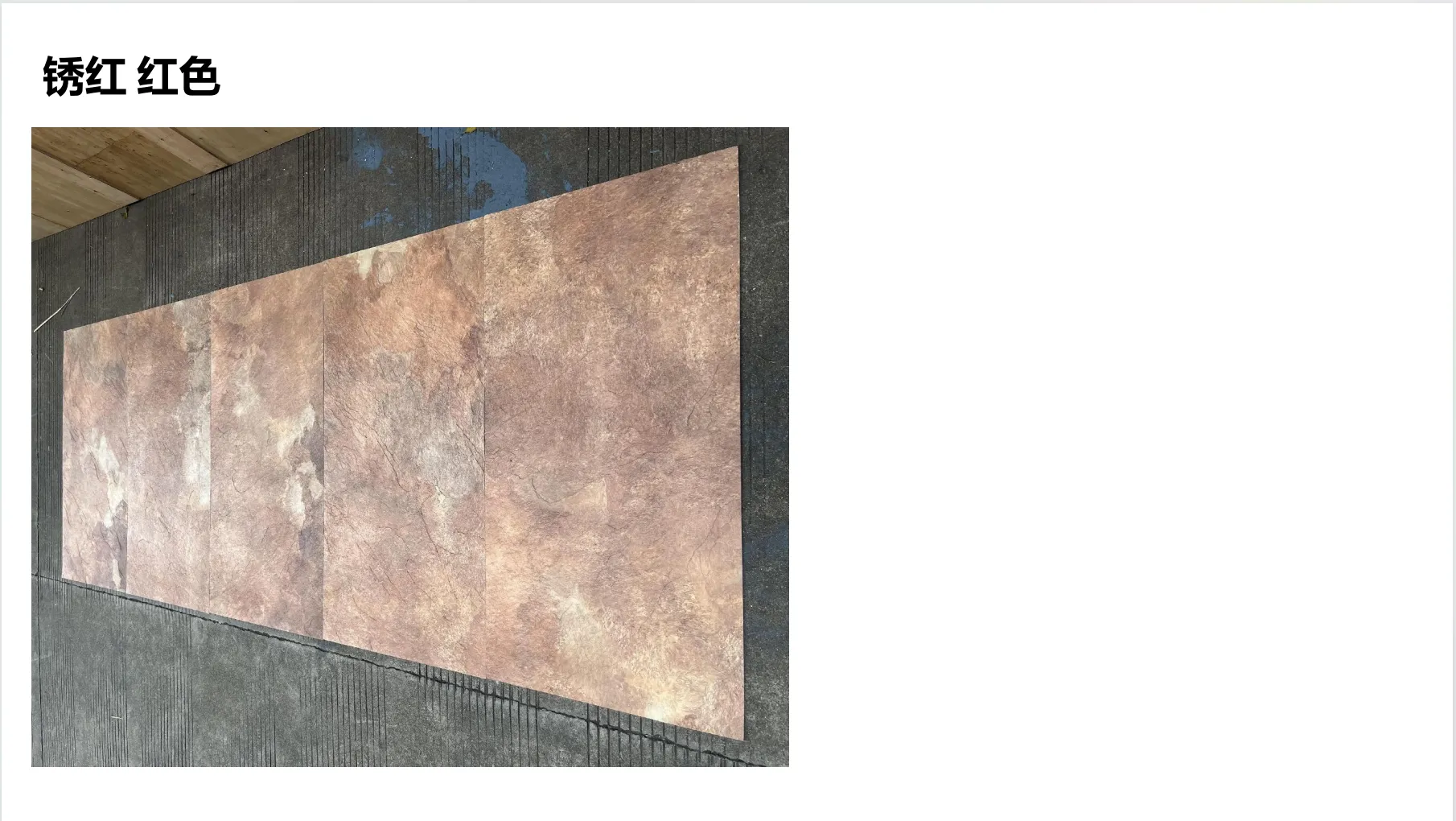
Your home's exterior is more than just a protective layer—it's a reflection of your style, a statement of pride, and a silent storyteller of the years you've spent building memories within its walls. When it comes to choosing siding, the decision feels personal: you want something that stands up to the elements, ages gracefully, and doesn't fade into the background. Two options often rise to the top of homeowners' lists: the warm, earthy allure of Rusty Red MCM (Modified Composite Material) and the budget-friendly familiarity of vinyl siding. But which one truly delivers on the promise of long-lasting beauty and resilience? Let's dive in.
MCM isn't just another building material—it's a marriage of natural stone's timeless appeal and modern engineering's practicality. At its core, MCM (short for Modified Composite Material) is crafted from a blend of natural stone aggregates, recycled minerals, and high-performance polymers, resulting in a product that's both flexible and incredibly durable. Rusty Red, one of its most sought-after finishes, mimics the rich, weathered hue of ancient clay bricks or sun-baked desert rocks, adding depth and warmth to any home's facade.
What sets MCM apart is its flexible stone technology . Unlike rigid natural stone slabs that crack under stress, MCM panels bend slightly, absorbing impacts from hailstones, stray baseballs, or even minor collisions without breaking. This flexibility also makes installation easier, allowing it to conform to curved walls or unique architectural details that would stump traditional materials. And Rusty Red isn't alone in MCM's lineup—series like Lunar Peak (with silvery, golden, and black variants) or Epoch Stone (for sleek, modern aesthetics) showcase the material's versatility, proving MCM isn't just durable, but adaptable to any design vision.
Vinyl siding has long been a staple in American homes, prized for its low upfront cost and DIY-friendly installation. Made primarily of polyvinyl chloride (PVC), it's lightweight, comes in a range of colors, and initially checks the boxes for affordability. For decades, it's been the go-to for homeowners looking to refresh their exteriors on a tight budget. But as many vinyl-clad homeowners will tell you, the initial savings often come with hidden costs—both financial and emotional.
When it comes to a home's exterior, durability isn't just about surviving the first storm—it's about maintaining its integrity and appearance for decades. Let's break down how Rusty Red MCM and vinyl siding perform in the battles that matter most.
The Key Question: Will your siding still look good and function well after 10 years? 15? 20? Let's compare.
From blistering summer heat to freezing winter winds, your siding faces a daily onslaught of weather extremes. Here's how the two materials hold up:
Life happens: a hailstorm rolls in, a kid's soccer ball goes astray, or a ladder slips during gutter cleaning. Your siding needs to take a hit and keep going.
Nothing dates a home faster than faded, patchy siding. Let's talk about color longevity.
| Factor | Rusty Red MCM | Vinyl Siding |
|---|---|---|
| Weather Resistance | Excellent (resists moisture, UV, salt, and extreme temps) | Poor (warps, cracks, and traps mold in harsh conditions) |
| Impact Resistance | High (flexible panels absorb hits without cracking) | Low (prone to dents, cracks, and holes from minor impacts) |
| Color Retention | 15+ years (pigments infused into the material) | 5–7 years (fades, requiring repainting or replacement) |
| Maintenance Needs | Minimal (hose down annually; no repairs needed) | High (regular cleaning, mold treatment, and panel replacements) |
| Expected Lifespan | 30–50 years | 10–15 years (with significant degradation) |
Durability matters, but so does beauty. After all, your home should make you smile every time you pull into the driveway.
Rusty Red MCM shines here. Its finish isn't a flat, artificial color—it has the depth and texture of natural stone, with subtle variations that catch the light and change with the time of day. Whether your home is a craftsman bungalow, a modern farmhouse, or a Mediterranean villa, Rusty Red complements brick, wood, or metal accents, adding character without overwhelming the design. And if Rusty Red isn't your style, MCM's range—from the cool silvers of the Lunar Peak series to the sleek minimalism of fair-faced concrete panels—means there's an MCM finish for every taste.
Vinyl siding, on the other hand, often struggles with authenticity. Its smooth, plastic-like surface can look cheap, and while manufacturers offer "wood-look" or "stone-look" textures, they rarely fool the eye. Limited color options and uniform patterns also make it hard to create a unique exterior—neighborhoods with vinyl siding often end up looking cookie-cutter, with homes blending into one another.
Today's homeowners care about more than just their wallets—they want to make choices that respect the planet. Here, MCM has a clear edge.
MCM is inherently eco-friendly. Many manufacturers use recycled stone dust and aggregates from construction waste, reducing the need for new mining. Its production process emits low VOCs (volatile organic compounds), and because it's so durable, it rarely needs replacement—cutting down on landfill waste. Even better, at the end of its 50-year lifespan, MCM can be crushed and recycled into new building materials.
Vinyl siding, by contrast, is a environmental concern. PVC production releases dioxins, a group of toxic chemicals linked to health issues, and vinyl is non-biodegradable—it sits in landfills for centuries. While some vinyl is recyclable, the reality is that most old siding ends up in dumps, contributing to long-term pollution.
Let's talk numbers. Vinyl siding is undeniably cheaper upfront, with costs ranging from $3–$7 per square foot installed. MCM, by comparison, starts at $8–$12 per square foot. At first glance, vinyl seems like the smarter financial choice—but that's only if you ignore the long-term picture.
Consider a 20-year timeline: A vinyl-sided home will likely need one full replacement (costing $15,000–$25,000 for an average-sized house) and multiple repairs (patching cracks, replacing warped panels) in that period. Factor in repainting every 5–7 years ($3,000–$5,000 per job), and the total cost balloons. MCM, on the other hand, requires no replacement, minimal maintenance (just an annual hose-down), and no repainting. Over 20 years, MCM often ends up being the more affordable option—and that's not even accounting for the boost in home value that comes with a durable, attractive exterior.
Don't just take our word for it. Take the case of the Martinez family in Colorado, who replaced their faded vinyl siding with Rusty Red MCM in 2010. "We had vinyl for 12 years, and by the end, it was cracked, warped, and looked like a sad grayish-pink instead of red," says Maria Martinez. "After installing MCM, we've been through hailstorms, blizzards, and 100-degree summers, and it still looks brand new. Our neighbor across the street replaced their vinyl again in 2020—we haven't touched ours. Best home improvement we ever made."
Or consider the Johnsons in Florida, who chose MCM for their beach house. "Vinyl would have melted in our humidity and salt air," laughs Tom Johnson. "Rusty Red MCM? It's been 15 years, and guests still comment on how 'charming' our exterior is. It's not just siding—it's a conversation starter."
At the end of the day, choosing siding is about investing in your home's future. Vinyl siding may save you money today, but it costs you in repairs, replacements, and lost curb appeal tomorrow. Rusty Red MCM, with its flexible stone technology, weather resistance, and timeless aesthetic, isn't just a material—it's a promise. A promise that your home will stand strong against the elements, look beautiful for decades, and reflect the care you've put into creating a space you're proud to call your own.
So, when you picture your home 20 years from now, what do you see? A faded, patched-up exterior that makes you cringe? Or a warm, Rusty Red facade that still turns heads and feels like home? The choice is clear.
Recommend Products












