
How a modern composite material is redefining durability in architecture
We've all seen it: a once-beautiful building facade that's faded to a dull shadow of its former self, pockmarked with stains or cracked from years of weathering. What if the culprit isn't just time, but something far more insidious? Water. It seeps into pores, freezes in winter, expands, and fractures even the toughest materials. For architects, builders, and homeowners, the search for a cladding solution that can stand up to moisture—without sacrificing aesthetics—has long been a challenge. Enter Rusty Red MCM, a material that's turning heads not just for its warm, earthy charm, but for its remarkable ability to keep water at bay. Let's explore how this modern composite is rewriting the rules of durability.
Before diving into Rusty Red, let's unpack the star of the show: MCM, or Modified Composite Material. Imagine taking the best of natural stone—its texture, depth, and organic beauty—and stripping away the downsides: weight, brittleness, and high maintenance. That's MCM in a nutshell. Engineered from a blend of mineral aggregates, recycled materials, and high-performance polymers, it's designed to be lightweight, yet surprisingly strong. And yes, it's flexible—so much so that it's often called mcm flexible stone . This flexibility means it can wrap around curves, adhere to uneven surfaces, and even be installed in places where traditional stone would crack or fail. But MCM isn't just about practicality; it's also a win for sustainability, using up to 80% recycled content and reducing transportation emissions thanks to its low weight.
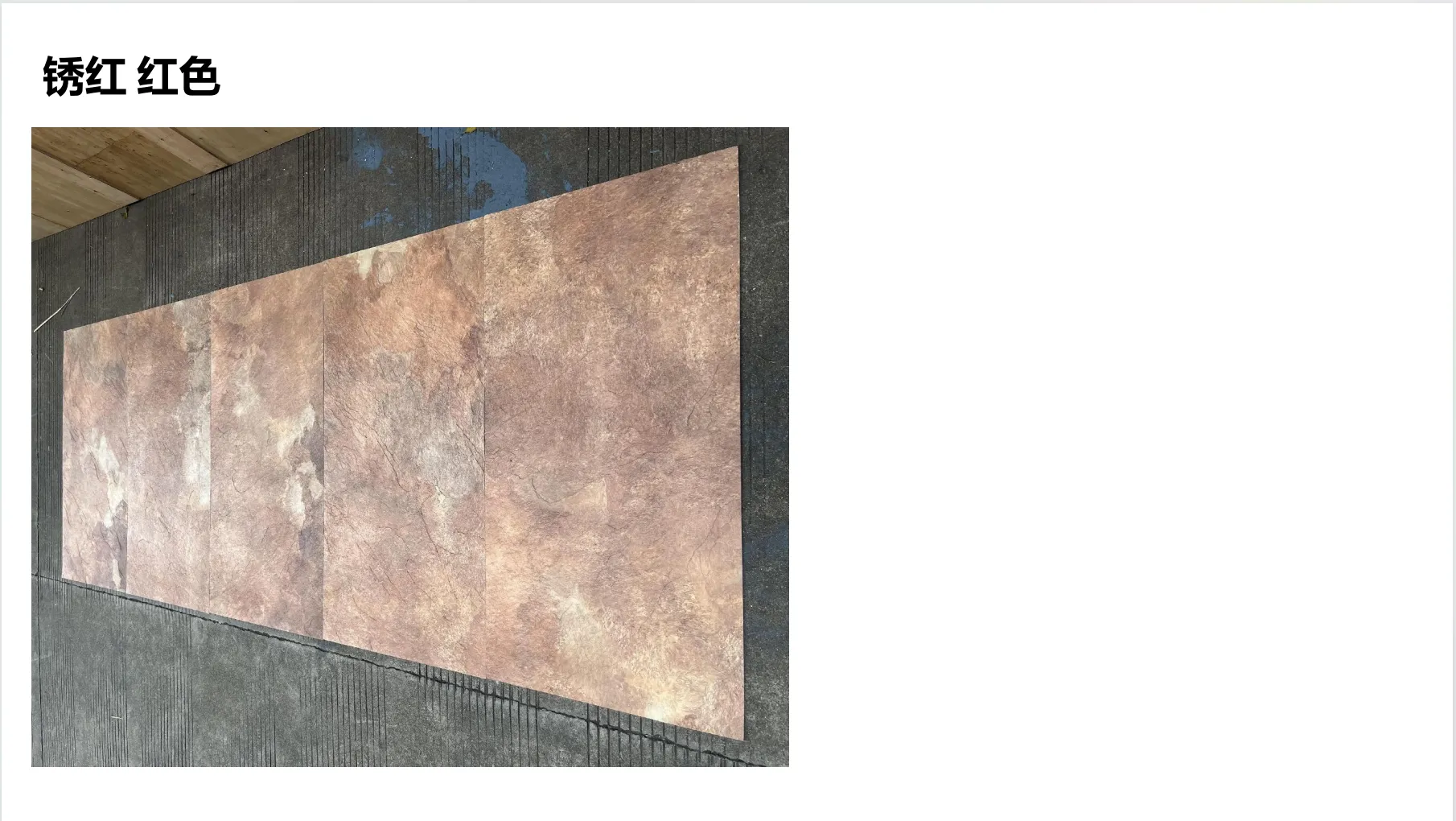
Rusty Red isn't just a shade—it's a story. Its warm, terracotta base is streaked with deeper, iron-rich hues, evoking the patina of aged metal, the rust-red cliffs of desert landscapes, or even the weathered stones of ancient trails, not unlike historical pathfinders stone that guided travelers for centuries. Unlike synthetic colors that fade, Rusty Red's pigments are integral to the material, derived from natural iron oxides that resist UV damage and maintain their vibrancy over time. It's a color that feels both timeless and modern, at home on a sleek urban cafe or a rustic countryside villa.
But what truly sets Rusty Red apart is how it interacts with light. In the morning sun, it glows with a golden undertone; at dusk, it deepens to a rich, coppery hue. It's dynamic, alive—and paired with its low-maintenance nature, it's a designer's dream. No wonder architects are specifying it for everything from feature walls to entire building exteriors.
Let's get technical for a minute—don't worry, we'll keep it simple. Water absorption rate is the percentage of a material's weight that it soaks up when submerged in water for a set time. For building cladding, this number is critical. A high rate means water seeps in, leading to mold, mildew, staining, and structural damage over time. So, how does Rusty Red MCM perform? Impressively. Its water absorption rate clocks in at less than 0.5%—that's less than half a percent. To put that in context, let's compare it to some common alternatives:
| Material | Water Absorption Rate (%) | Porosity | Common Issues with High Absorption |
|---|---|---|---|
| Rusty Red MCM | ≤ 0.5% | Very Low | Minimal: Resistant to staining, mold, and freeze-thaw damage |
| Fair-Faced Concrete | 3–5% | Moderate | Cracking, staining, and efflorescence (white salt deposits) |
| Travertine (Starry Red) | 2–4% | High | Vulnerable to acid etching, staining, and color fading |
| Historical Pathfinders Stone | 4–6% | Very High | Weathering, pitting, and loss of structural integrity over time |
As the table shows, Rusty Red MCM outperforms traditional materials by a wide margin. That 0.5% isn't just a number—it's a guarantee that your cladding won't turn into a sponge for moisture.
So, how does Rusty Red MCM achieve such a low water absorption rate? It all comes down to porosity—or, more accurately, the lack thereof. Porosity refers to the tiny gaps and channels in a material that let water, air, or other substances pass through. In natural stones like travertine, these pores form as gas bubbles escape during formation, leaving behind a honeycomb-like structure. In concrete, they're often the result of incomplete compaction during mixing. MCM, however, is engineered to be dense and uniform.
The manufacturing process starts with a base of fine mineral powders, sourced from recycled stone and ceramic waste. These powders are mixed with a proprietary polymer resin that acts as a binder, filling in any potential gaps. The mixture is then compressed under high pressure and cured, creating a tight, interlocking matrix that leaves little room for pores. Think of it as packing sand into a jar: if you just pour it in, there are gaps; but if you shake and press it down, it becomes dense and solid. That's essentially what happens with MCM—resulting in a material that's not just water-resistant, but actively repels moisture.
The benefits of this low porosity are game-changing. For starters, it prevents freeze-thaw damage, a common problem in cold climates where water seeps in, freezes, expands, and cracks the material. With Rusty Red MCM, there's no water to freeze—so no cracks. It also resists mold and mildew, which thrive in damp environments. And because water can't penetrate, stains from rain, dirt, or even accidental spills (like that coffee cup at the outdoor cafe) wipe away easily. Perhaps most importantly, the color stays true: no more faded patches or uneven discoloration, even after years of exposure.
Rusty Red MCM isn't just a lab success story—it's proving its mettle in the real world. Let's take a look at some of the places where it's making a difference:
What these projects have in common is a need for beauty that lasts. Rusty Red MCM delivers that, proving that you don't have to choose between aesthetics and durability.
At the end of the day, the true test of any building material is how it holds up over time. Rusty Red MCM has been in use for over a decade in various climates, and the results are clear: it lasts. Independent testing shows that it retains over 95% of its color after 20 years of UV exposure—far better than natural stone, which can fade by 30% or more in the same period. Its impact resistance is also impressive: a 50-pound weight dropped from 6 feet leaves no visible damage, whereas natural travertine would crack.
Maintenance? Minimal. Unlike wood, which needs painting or staining every few years, or natural stone, which requires sealing, Rusty Red MCM needs nothing more than an occasional rinse with water. For commercial properties, this translates to lower long-term costs; for homeowners, it means more time enjoying their space and less time maintaining it.
Perhaps the most compelling endorsement comes from architects and builders themselves. "I specify Rusty Red MCM because it lets me design without compromise," says Maria Gonzalez, a principal at a boutique architecture firm in Austin. "I don't have to tell clients, 'This will look great, but in five years…' With MCM, I can promise both beauty and longevity."
In a world where we're increasingly focused on sustainability and longevity, Rusty Red MCM stands out as a material that delivers on both fronts. Its low water absorption rate and minimal porosity aren't just technical features—they're promises: of a facade that stays vibrant, a surface that resists damage, and a building that ages with grace. It's a material that honors the past, drawing inspiration from natural wonders like historical pathfinders stone , while embracing the innovation of modern engineering.
Whether you're building a new home, renovating a commercial space, or restoring a heritage structure, Rusty Red MCM offers something rare: peace of mind. It's proof that when we combine nature's beauty with human ingenuity, the result is a material that doesn't just build structures—it builds legacies. So, the next time you're choosing cladding, remember: the best materials aren't just seen—they're felt, experienced, and trusted to stand the test of time. Rusty Red MCM is one of those materials. And in a world that moves fast, that's a rare and valuable thing.
Recommend Products












