
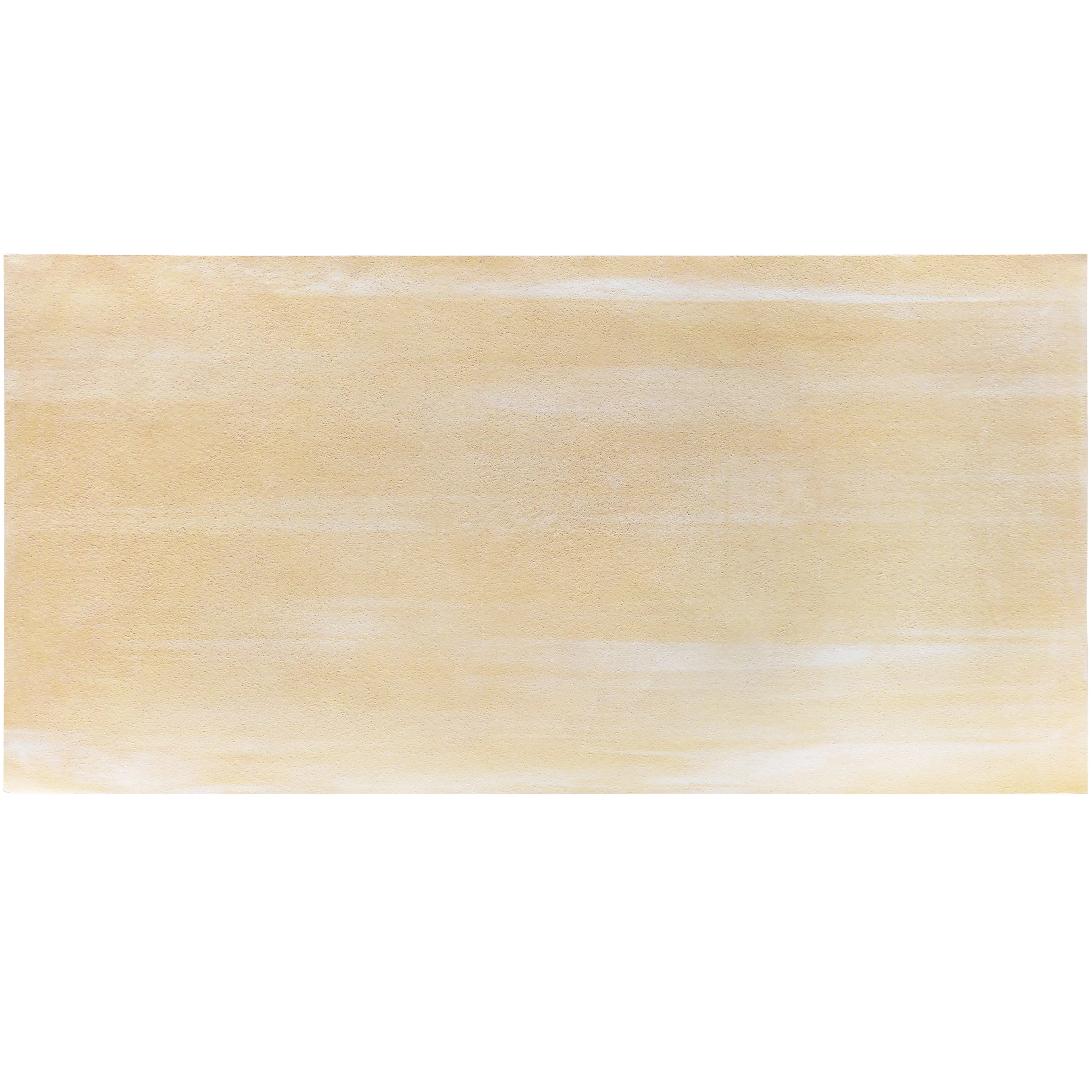
Walk down any city street, and you'll notice something subtle but powerful: the buildings around you aren't just structures—they're stories told in stone, concrete, and glass. Yet for all the innovation in modern architecture, there's a quiet frustration many designers share: traditional materials too often box in creativity. A curved wall might require custom molds that eat into budgets. A textured facade could mean heavy, hard-to-install stone slabs that limit height or flexibility. What if there was a way to marry the organic beauty of natural materials with the freedom of 3D printing? Enter COLORIA's Sandstone Cloude 3D Printed Designs—a game-changer in the MCM 3D Printing Series that's turning architectural "what-ifs" into "why nots."
Let's rewind to a typical Monday morning for Elena, a lead architect at a boutique firm in Barcelona. She's staring at a sketch of a community center—soft, flowing lines inspired by the nearby Mediterranean waves. The client loves the design, but there's a problem: the curved exterior walls. Traditional sandstone is heavy, brittle, and unforgiving. Carving those curves would mean months of labor, a sky-high budget, and compromises on the final shape. "We might have to straighten the edges," her project manager sighs. Elena winces. Those curves aren't just aesthetic—they're meant to make the building feel welcoming, like a hug. That's when her intern, Mia, slides a sample across the desk: a thin, flexible panel with the rough-hewn texture of sandstone, but light enough to bend in one hand. "COLORIA's Sandstone Cloude," Mia says. "3D printed. They call it part of their MCM 3D Printing Series."
Elena runs her fingers over the sample. It's warm, not cold like concrete, with tiny indentations that catch the light. When she bends it gently, it flexes without cracking. "This could work," she murmurs. And just like that, a project once constrained by materials became a showcase for what's possible when technology meets tradition.
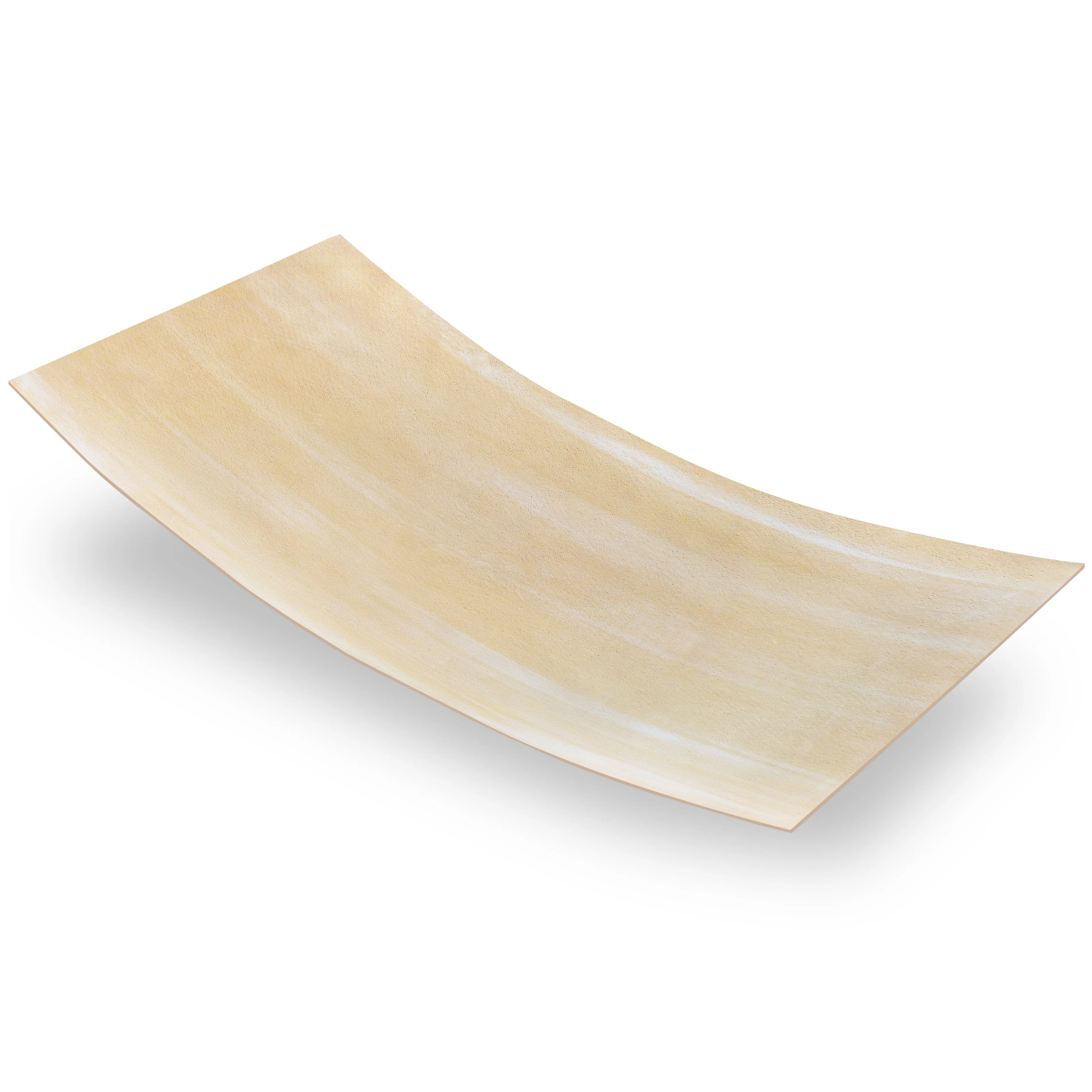
COLORIA's MCM 3D Printing Series isn't just about printing materials—it's about redefining how we think about building. Traditional 3D printing in construction often focuses on concrete, churning out blocky, industrial forms. But the MCM series? It's different. Imagine a printer that doesn't just layer material, but "sculpts" it—adding texture, depth, and nuance as it goes. That's the magic of Sandstone Cloude. Using modified composite materials (MCM) as its base, the process combines the best of natural stone with cutting-edge engineering. The result? Panels that look and feel like they were quarried from the earth, but behave like they were born to bend, curve, and flow.
What sets the MCM 3D Printing Series apart is its attention to detail. Traditional sandstone panels are limited by the size of the quarry block or the mold used to cast them. With 3D printing, there are no molds—just a digital design translated directly into physical form. Want a wall with undulating waves that rise and fall like a tide? The printer can do that. Dream of a facade dotted with tiny, organic indentations that mimic wind-eroded rock? Done. And because the process is additive (it builds up material layer by layer, rather than cutting it away), there's minimal waste—making it as kind to the planet as it is to a designer's vision.
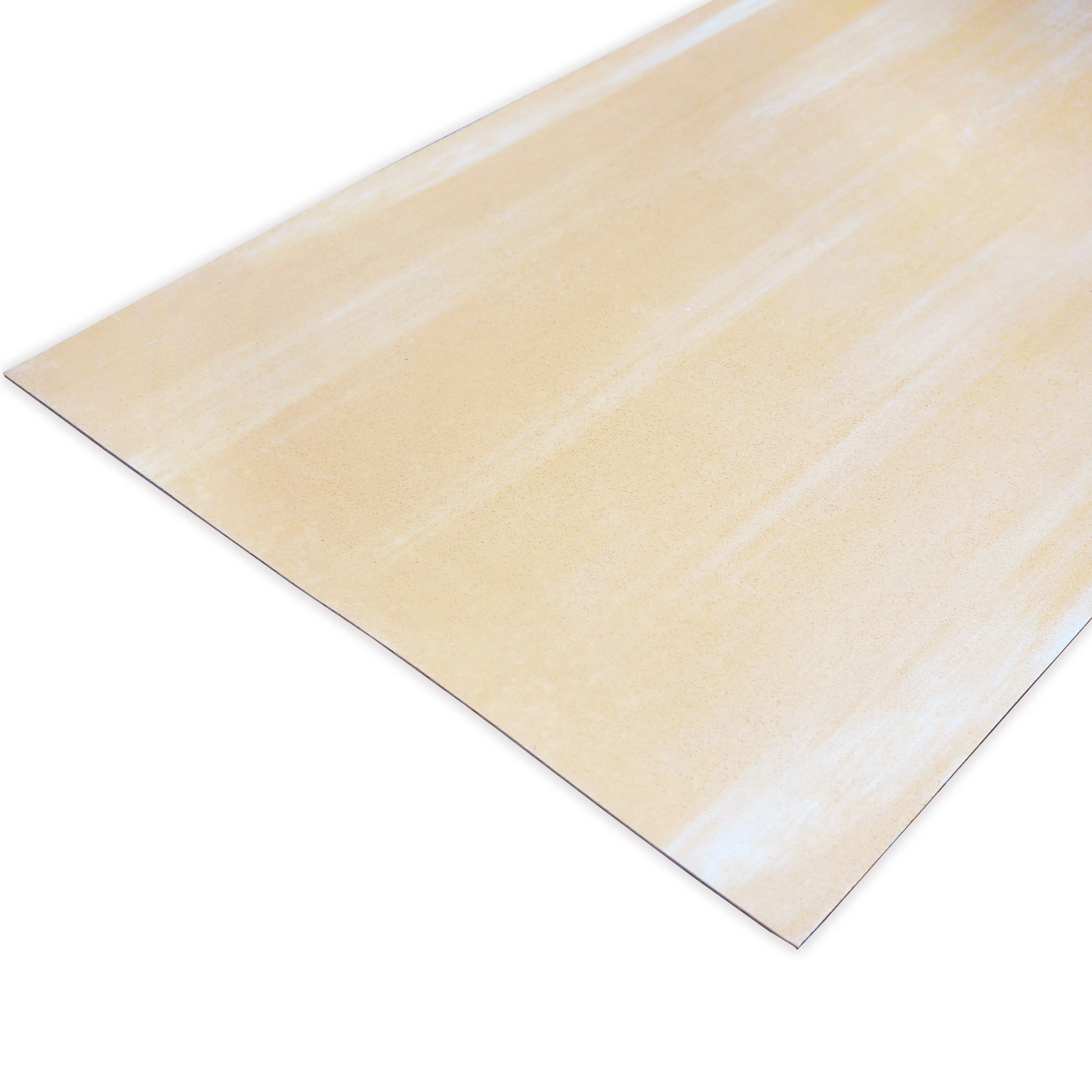
At the heart of Sandstone Cloude is Flexible Stone—a material that sounds almost contradictory until you see it in action. It's made by blending natural stone aggregates with a proprietary polymer binder, creating a composite that's 70% lighter than traditional stone but just as durable. "Think of it as stone with a memory," says Carlos Mendez, COLORIA's lead material scientist. "It can flex under pressure, absorb impact, and return to its shape. That's a game-changer for high-traffic areas or buildings in earthquake-prone zones."
For architects like Elena, the benefits go beyond flexibility. Installation is a breeze: panels weigh as little as 4kg per square meter, so they can be carried by two people instead of a crane. They're also water-resistant, fire-retardant, and resistant to UV rays—no fading, even in harsh desert sun. But the real "wow" factor? The texture. Unlike smooth, uniform concrete or overly polished marble, Flexible Stone retains the organic, imperfect beauty of natural sandstone. Run your hand over a Sandstone Cloude panel, and you'll feel the same grit, the same subtle color variations, as you would on a stone plucked from a riverbed. It's nature, but smarter.
Take the "Starry Green" travertine variant, for example. It's dotted with tiny, iridescent flecks that catch the light, like stars twinkling in a forest canopy. But unlike natural travertine, which is porous and hard to seal, Sandstone Cloude's version is non-porous—no need for constant resealing. "We had a client in Dubai who wanted a 'starry night' facade," Carlos recalls. "With traditional travertine, those flecks would fade in the sun. With Flexible Stone? They're embedded in the material. Five years later, that building still glows at dusk."
| Feature | Traditional Sandstone | Sandstone Cloude (Flexible Stone) |
|---|---|---|
| Weight | 25-30kg/m² (requires heavy machinery) | 4-6kg/m² (installs by hand) |
| Design Flexibility | Limited to flat or pre-cast shapes | Curves, waves, custom textures—no molds needed |
| Durability | Prone to cracking, porous (needs sealing) | Flexible, impact-resistant, non-porous |
| Installation Time | Weeks (crane rental, cutting on-site) | Days (lightweight, pre-cut panels) |
| Sustainability | High waste (quarrying, cutting) | 3D printing reduces waste by 60% |
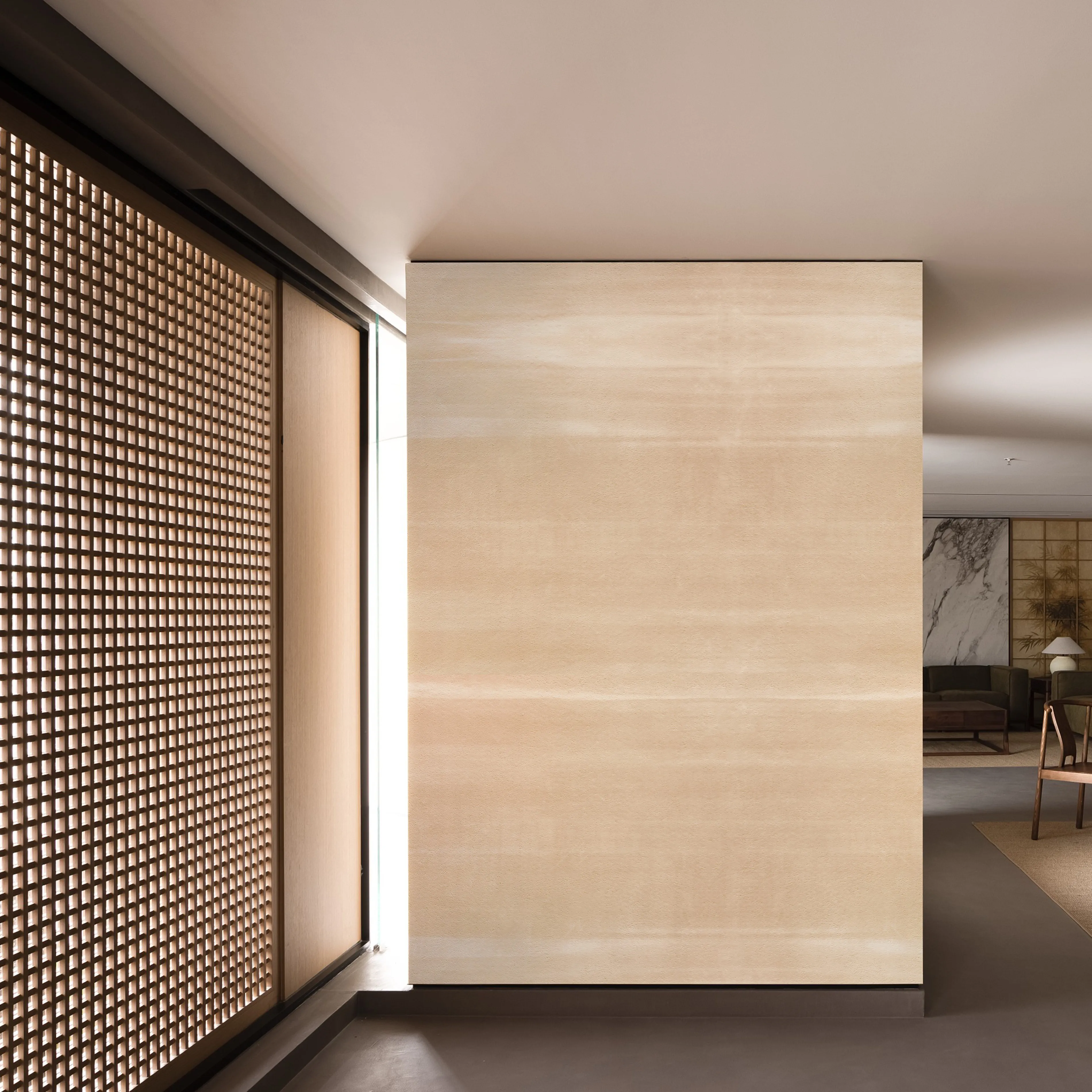
Sandstone Cloude isn't just a material—it's a palette. COLORIA offers dozens of finishes, each designed to tell a different story. Take Bali Stone, for instance. Inspired by the weathered stone walls of Balinese temples, it has a warm, earthy tone with deep grooves that mimic centuries of rain and wind. "We worked with artisans in Ubud to capture that texture," says Sofia Lin, COLORIA's design director. "They showed us how they carve stone by hand, following the natural grain. We digitized that process, so every Bali Stone panel feels like it has a human touch."
Then there's Lunar Peak Silvery—a finish that's out of this world, literally. It's designed to mimic the moon's surface: pockmarked, silvery-gray, with a subtle metallic sheen that shifts with the light. "We tested it on a hotel in Reykjavik," Sofia says. "At sunrise, the panels glow pink; at midnight, they look like they're dusted with stardust. Guests keep taking photos of the facade—they say it feels like staying in a lunar base."
For Elena's community center, the choice was easy: a blend of Sandstone Cloude in Bali Stone and Lunar Peak Silvery. The lower half of the building uses Bali Stone panels, their warm beige tones grounding the structure, while the upper curves are clad in Lunar Peak Silvery, catching the sun and mirroring the sky. "It's like the building grows out of the earth and reaches for the stars," the client says, tears in her eyes, when she sees the finished design. "That's the power of texture," Elena thinks. "It doesn't just look good—it makes people feel something."
Sandstone Cloude isn't just for community centers. It's popping up in hotels, offices, retail spaces, and even homes—anywhere architects want to blend form and function. Take the "Oasis Mall" in Riyadh, for example. Its facade is a maze of undulating Sandstone Cloude panels in "Gobi Panel" finish, mimicking the ripples of desert sand. "Traditional stone would have required thousands of custom cuts," says lead architect Omar Al-Mansoori. "With 3D printing, we uploaded the design, and COLORIA delivered panels that snapped together like a puzzle. The result? A mall that feels like a desert oasis, not a concrete box."
Residential projects are getting in on the action too. In Tokyo, a minimalist home uses Sandstone Cloude in "Fair-Faced Concrete" finish for its exterior walls. The panels are thin enough to allow natural light to filter through, creating dappled shadows in the living room. "It's like living in a cave, but bright," laughs homeowner Yuki Tanaka. "And when it rains, the texture changes—darker, richer. It's never the same house twice."
Even historic renovations are benefiting. In Rome, a 17th-century palazzo needed its crumbling sandstone facade restored. Traditional methods would have meant replacing each stone by hand, a process that could take years. Instead, conservators used 3D scans of the original stone, then printed Sandstone Cloude panels that matched the texture and color exactly. "It's preservation with a modern twist," says art historian Dr. Lucia Rossi. "The building looks the same, but it's now stronger than ever."
In an era of climate crisis, architects and developers are under pressure to build sustainably—and Sandstone Cloude delivers. The MCM 3D Printing Series uses 80% recycled stone aggregates, diverting waste from landfills. The 3D printing process itself is energy-efficient, using 30% less power than traditional manufacturing. And because panels are lightweight, transportation emissions are cut by half. "We're not just selling a product—we're selling a vision," says COLORIA CEO Maria Gonzalez. "A vision where buildings don't harm the planet, but heal it."
For Elena, sustainability was a non-negotiable. "The community center is for kids," she says. "We wanted it to teach them about taking care of the earth. Using Sandstone Cloude felt like walking the walk. The panels are made from recycled stone, and because they're lightweight, we didn't need to pour a massive concrete foundation. The building's carbon footprint is 40% lower than if we'd used traditional materials. That's a win for everyone."
As Sandstone Cloude gains traction, COLORIA is already dreaming bigger. "We're working on 4D printing next," Carlos Mendez hints. "Imagine panels that change texture based on temperature—opening pores to cool a building in summer, closing them to insulate in winter. Or panels embedded with sensors that repair tiny cracks automatically. The possibilities are endless."
For now, though, the impact of Sandstone Cloude is clear: it's giving architects the freedom to design buildings that feel human. Buildings that bend, flow, and tell stories. Buildings that don't just stand there, but connect—with the people who use them, with the environment, with the past and future.
Elena stands in front of her community center, watching kids run around the curved walls, their laughter echoing off the Bali Stone and Lunar Peak Silvery panels. A little girl stops, touches the wall, and looks up at her. "It feels like a rock, but it's soft," she says. Elena smiles. "That's the magic of Sandstone Cloude," she thinks. "It's stone, but it's alive."
In the end, architecture isn't just about walls and roofs. It's about creating spaces that make us feel alive too. And with COLORIA's Sandstone Cloude 3D Printed Designs, that future is already here—one flexible, textured, human-centered panel at a time.
Recommend Products












