
How MCM technology is transforming building facades from fragmented to flawless
Walk down any street, and you'll notice buildings whispering stories through their exteriors. Some speak of grandeur, others of coziness, but far too many tell a tale of fragmentation . Look closer, and you'll see why: tiny lines crisscrossing the walls, dividing them into a patchwork of tiles, stones, or panels. These are joints—the gaps between individual cladding pieces—and while they're necessary for installation, they often become the unintentional stars of the show.
Over time, joints trap dirt, crack under weather stress, and let water seep into walls. A once-crisp facade starts to look tired, like a sweater with loose threads. For architects and homeowners alike, this isn't just a cosmetic issue; it's a practical headache. "I've spent hours designing a building's flow, only to have it undermined by the chaos of joints," says Maria, a residential architect with 15 years of experience. "It's like painting a masterpiece and then adding a grid over it."
Traditional cladding materials—think small limestone(beige) tiles or vintage brick—have long relied on these joints. They're easy to manufacture in small sizes, but that convenience comes at a cost: more joints mean more maintenance, more chances for damage, and a visual rhythm that feels staccato rather than smooth. It's a problem that's lingered in construction for decades, until now.
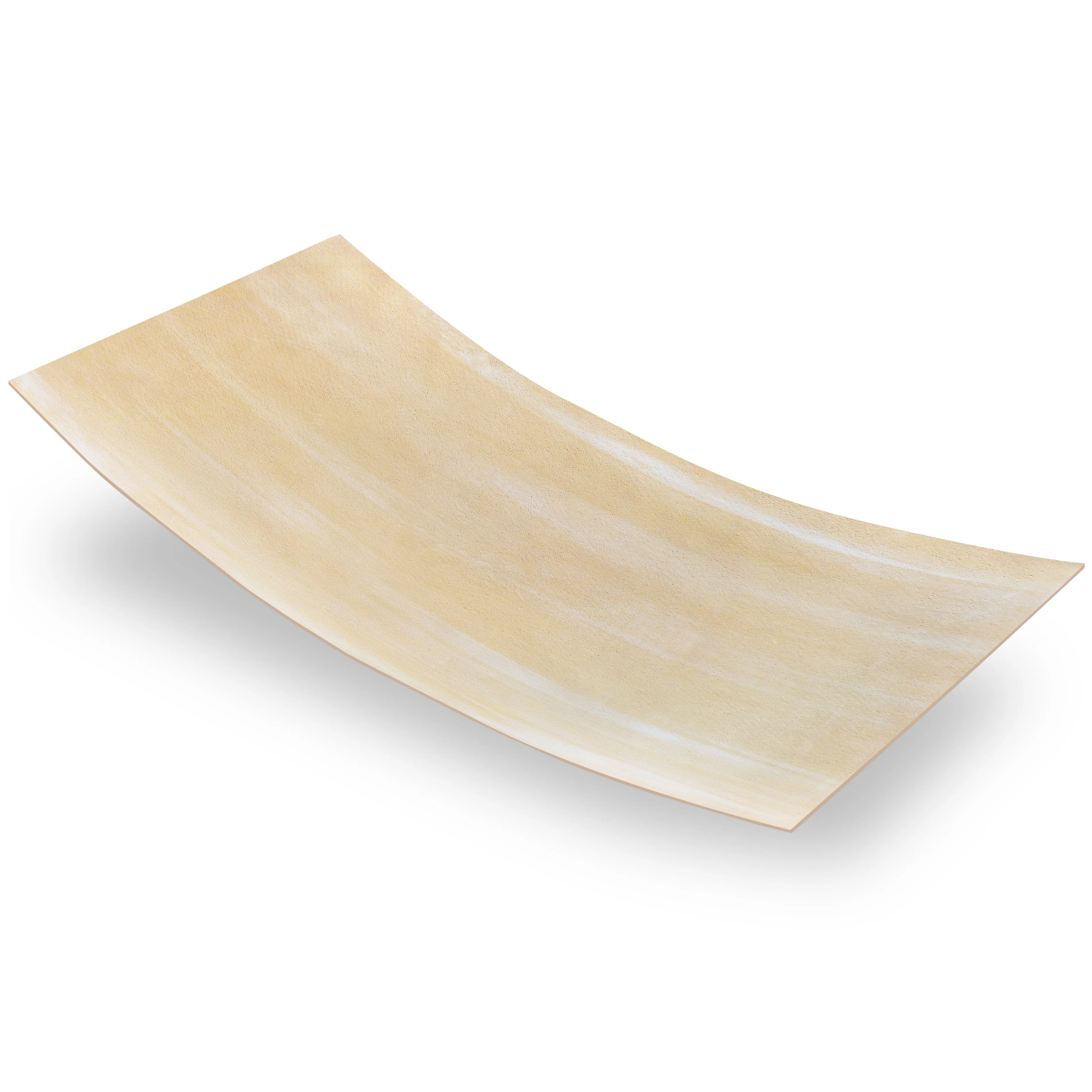
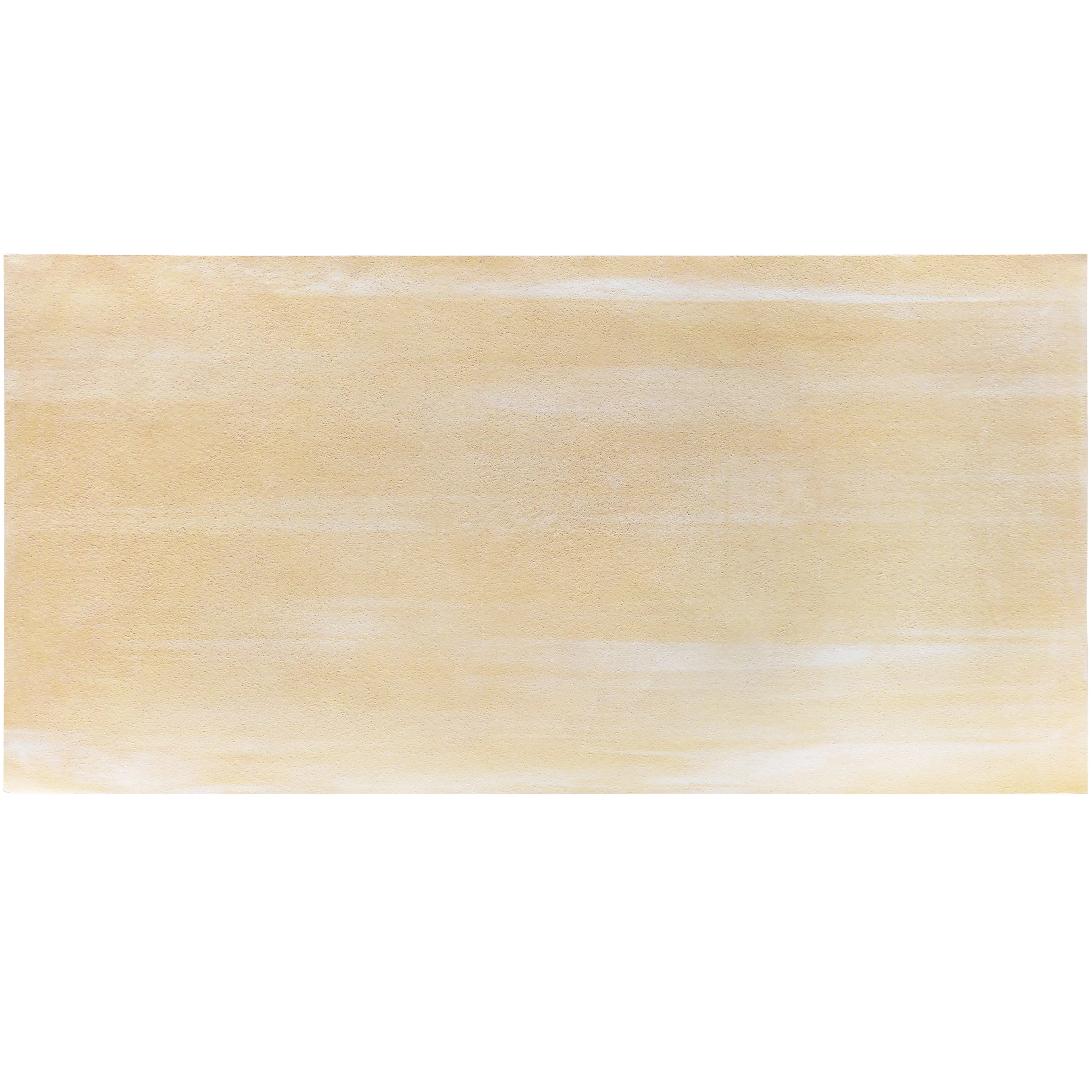
If joints are the "grid" ruining the masterpiece, then Sandstone Cloude Big Slab is the eraser. As part of the MCM big slab board series , this material reimagines what cladding can be. MCM—short for Modified Composite Material—blends natural minerals with advanced polymers to create something remarkable: flexible stone that's lightweight, durable, and, crucially, available in extra-large slabs.
Imagine a cladding panel that spans entire wall sections without needing to be broken into pieces. That's Sandstone Cloude. At up to 1.2m x 2.4m per slab, it drastically cuts down on the number of joints. "It's like switching from building with Lego blocks to sculpting with a single piece of clay," explains Raj, a commercial builder who recently used Sandstone Cloude on a hotel project. "Suddenly, the wall feels intentional, not accidental."
But Sandstone Cloude isn't just about size. Its surface mimics the soft, weathered texture of natural sandstone, with subtle veining that flows across the slab uninterrupted. Unlike rough-cut stone, which can feel harsh, this material has a warmth to it—like a stone that's been kissed by desert winds for centuries. It's a texture that invites touch, that makes a building feel approachable, not imposing.
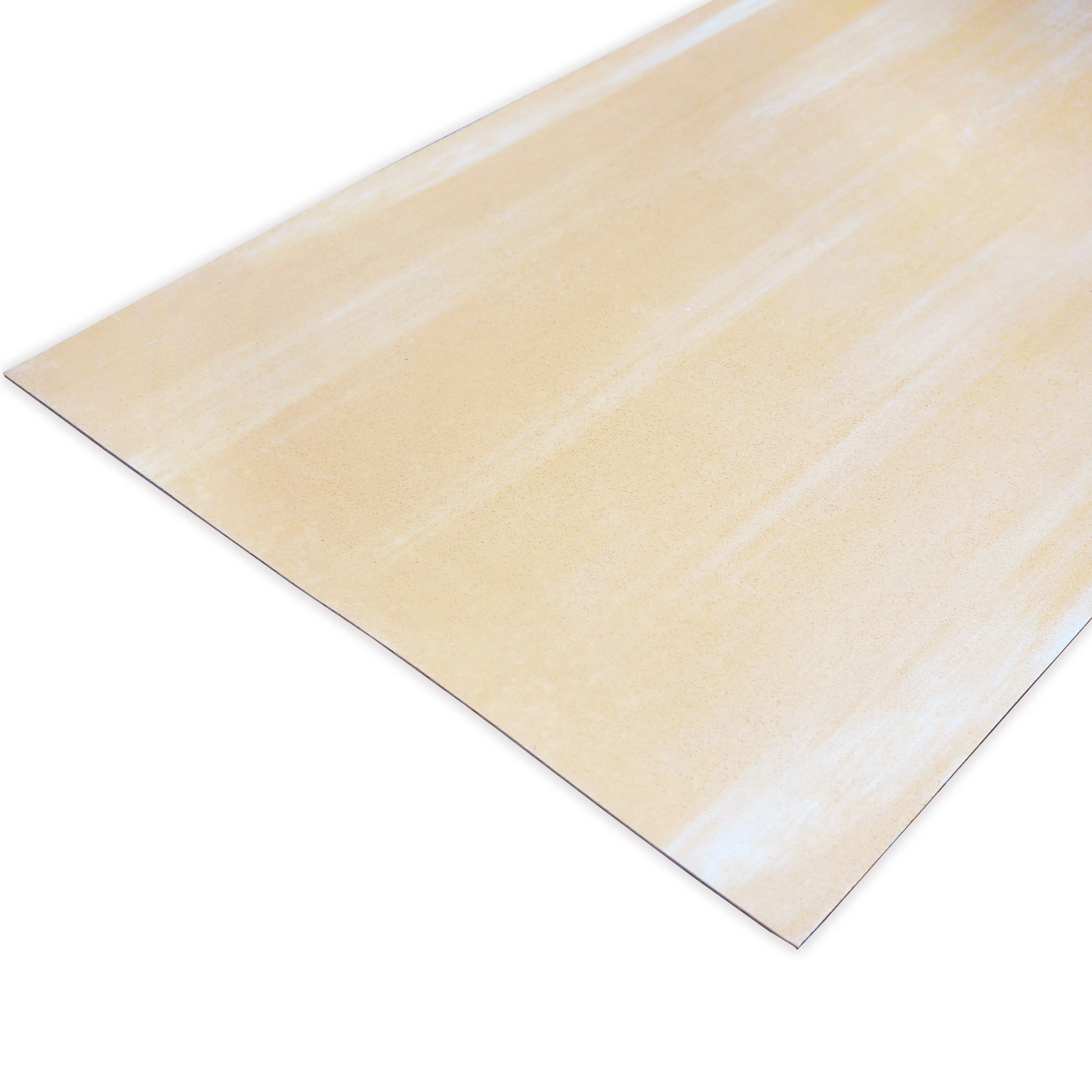
Let's talk numbers—because when it comes to joints, less really is more. A standard 100 sqm wall clad in small (30cm x 30cm) tiles might have over 1,000 joints. With Sandstone Cloude's big slabs? That number drops to fewer than 40. That's a 96% reduction in gaps, and with fewer gaps comes fewer problems.
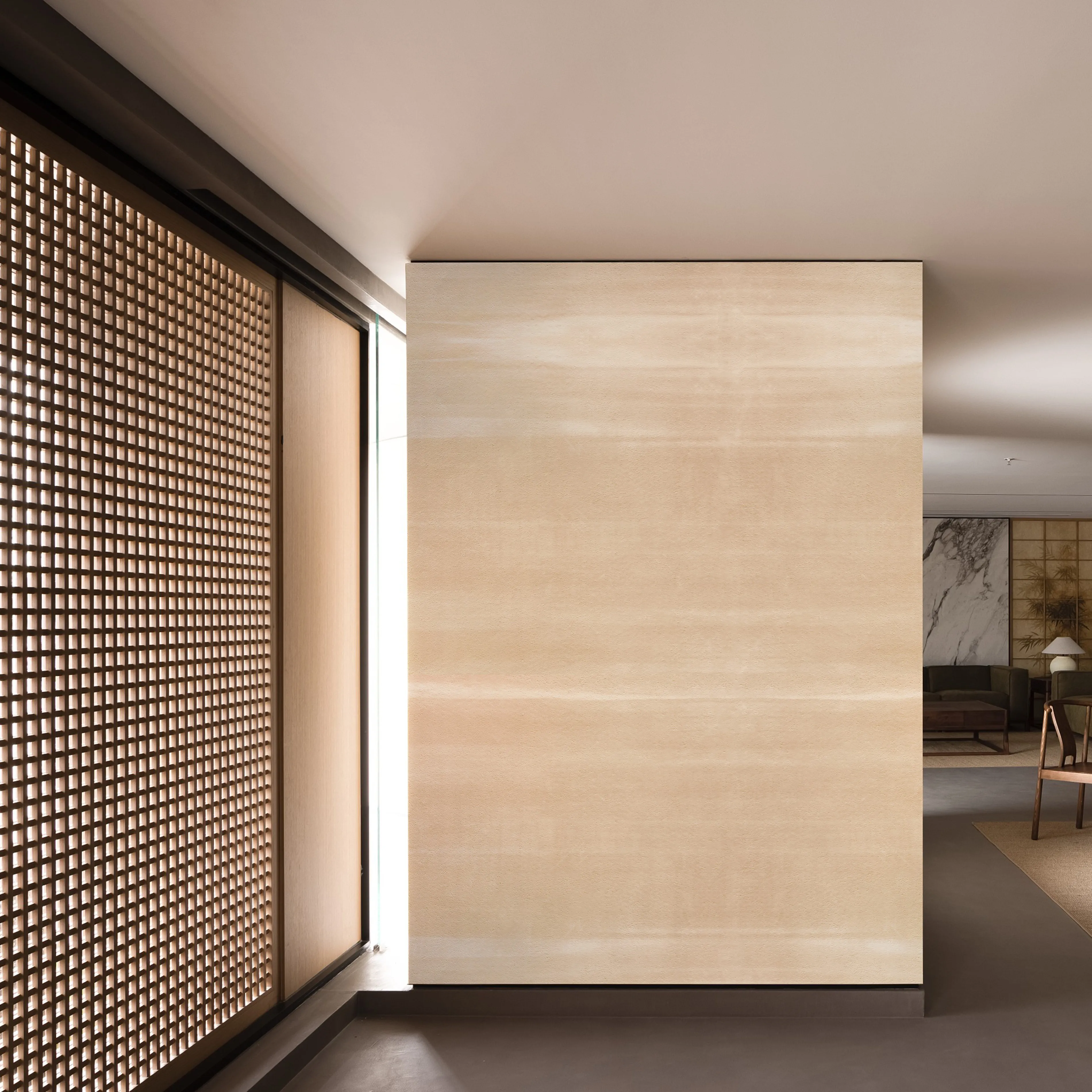
Beyond practicality, there's something deeply emotional about a seamless facade. Think of a sunset over the ocean—no lines, no breaks, just a continuous flow of color. That's the feeling Sandstone Cloude brings to architecture. It turns a wall into a canvas, where texture and color can unfold without interruption.
Take the lobby of the Azure Hotel in downtown Portland. Previously clad in small travertine tiles, the walls felt busy, even cluttered. After switching to Sandstone Cloude, the space transformed. "Guests walk in and pause now," says the hotel's interior designer, Lila. "They run their hands over the wall and say, 'It feels like being in a canyon, but cozy.' The seamless look makes the room feel larger, calmer. It's no longer just a lobby—it's an experience."
For historical buildings, this is especially powerful. Many heritage structures use materials like historical pathfinders stone , which has a rich, aged texture. Pairing that with Sandstone Cloude's modern seamless slabs creates a dialogue between past and present. "We restored a 1920s bank last year," says James, a preservation architect. "We kept the original historical pathfinders stone for the entrance but used Sandstone Cloude for the upper floors. The contrast is stunning—old meets new, but neither feels out of place."
Even in minimalist designs, Sandstone Cloude shines. Its neutral palette (think soft beiges, warm grays, and earthy browns) acts as a backdrop for other elements—large windows, wooden accents, or landscaping. "Minimalism isn't about being boring; it's about being intentional," says Tao, a modern home designer. "Sandstone Cloude lets the building's form speak for itself, without joints cluttering the conversation."
Still skeptical? Let's put Sandstone Cloude head-to-head with common cladding materials. The results might surprise you:
| Material | Joints per 100 sqm | Installation Time (per sqm) | Annual Maintenance Cost | Aesthetic Feel |
|---|---|---|---|---|
| Sandstone Cloude Big Slab | ~40 | 15-20 mins | $50-$80 | Seamless, flowing, cohesive |
| Traditional Limestone(beige) Tiles (30x30cm) | ~1,100 | 30-40 mins | $200-$300 | Fragmented, busy, dated |
| Fair-Faced Concrete | ~20 (but large, visible seams) | 45-60 mins | $150-$250 | Industrial, cold, uniform |
| Historical Pathfinders Stone (heritage projects) | ~200-300 | 60-90 mins (hand-cut) | $300-$500 (requires specialist care) | Rich, aged, but fragmented |
As the table shows, Sandstone Cloude isn't just better—it's smarter . It saves time during installation, cuts maintenance costs, and delivers an aesthetic that other materials can't match.
Sandstone Cloude's versatility is part of its charm. It adapts to any environment, whether you're building in a arid climate or a rainy city.
In desert regions, its earthy tones blend with the landscape, while its UV resistance prevents fading. "We used it on a resort in the Gobi Desert," says Ahmed, a hospitality developer. "The sun is brutal there, but after two years, the Sandstone Cloude looks as warm and golden as the day it was installed. It doesn't clash with the sand dunes—it becomes part of them."
In urban settings, it adds softness to concrete jungles. Imagine a modern office building with Sandstone Cloude walls, paired with large glass windows and wooden planters. It's a contrast that feels balanced, not jarring. "Cities can feel cold," says Mia, an urban planner. "Sandstone Cloude brings a little bit of nature back into the mix, without looking out of place."
Even in residential spaces, it's making waves. Homeowners are choosing it for exterior walls, garden walls, or even indoor feature walls. "I wanted my home to feel like a retreat," says Tom, a homeowner in Colorado. "Sandstone Cloude on the exterior makes it look like it's been there for decades, nestled into the mountains. Guests always comment on how 'welcoming' it feels."
Sandstone Cloude Big Slab isn't just a new product—it's a shift in how we think about buildings. For too long, cladding was seen as a necessary layer, something to protect the structure but not to elevate it. Now, with MCM technology and big slab design, cladding has become a storyteller.
It tells the story of a building that's intentional, that values both beauty and function. It tells the story of spaces that feel whole, not fragmented. And most importantly, it tells the story of people—architects who can finally see their vision realized without compromise, homeowners who no longer stress over maintenance, and communities that get to live and work in buildings that inspire.
So the next time you walk past a building, take a moment to look at its walls. Are the joints shouting, or is the design whispering? With Sandstone Cloude, the answer is clear: the building speaks, and we're finally ready to listen.
Recommend Products












