
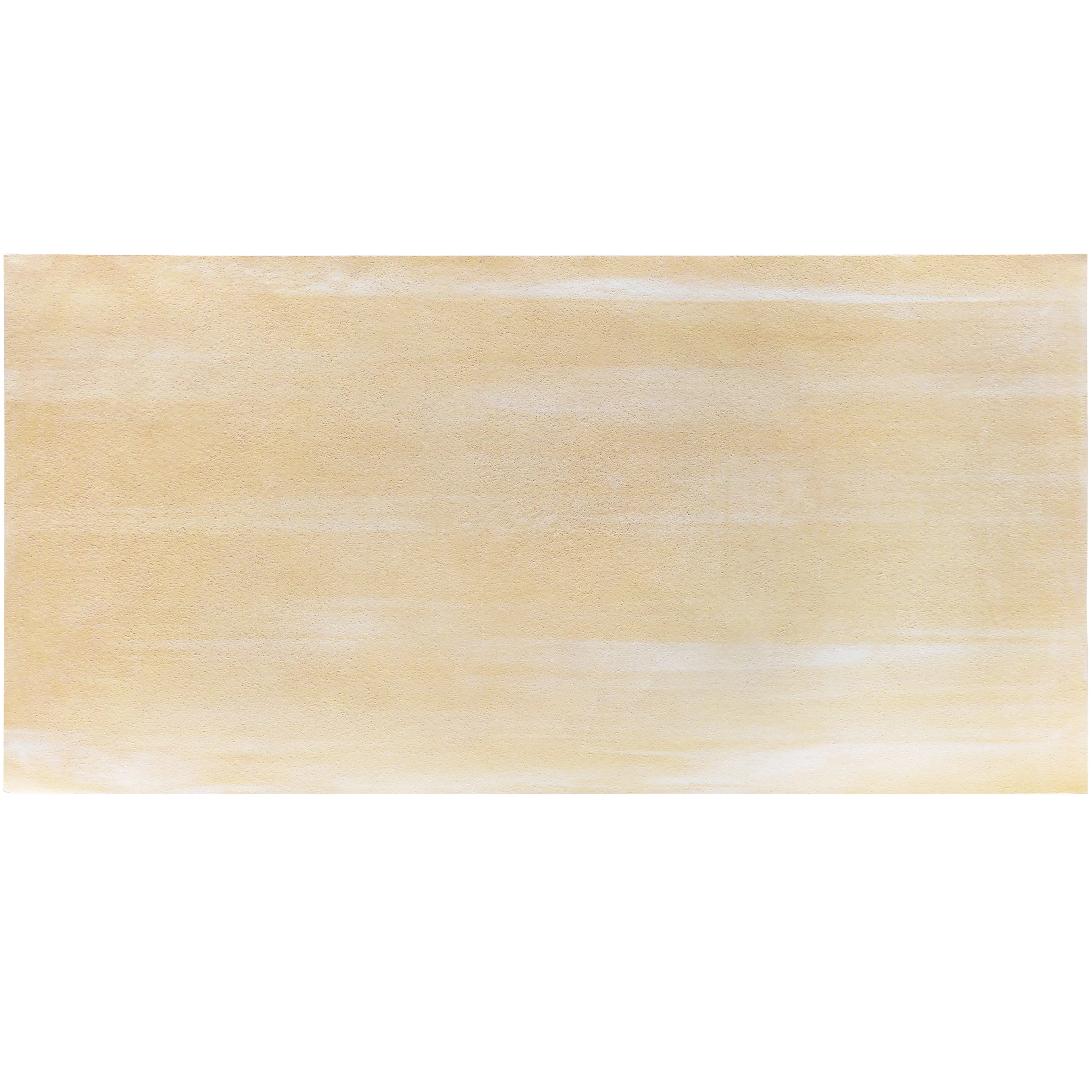
Because the right stone doesn't just build a wall—it builds a feeling
Walk into a space and close your eyes. What do you feel? The coolness of stone under your palms, the rough texture that tells a story of time, the way light dances over its surface like a whispered secret. Building materials are more than just tools—they're storytellers. They shape the mood of a café where friends laugh, the gravitas of a museum hall, the warmth of a home where families grow. Today, we're diving into two stones that often stand at the crossroads of tradition and innovation: Sandstone Cloude and Natural Sandstone . One is a child of the earth, forged over millennia; the other, a masterpiece of human ingenuity, born from the desire to blend nature's beauty with modern practicality. Let's explore their differences—not just as materials, but as partners in bringing your project's vision to life.
Natural sandstone is the earth's love letter to patience. Formed over millions of years, it's born from layers of sand-sized grains—quartz, feldspar, mica—compressed and cemented together by minerals like silica or calcium carbonate. Each slab carries the fingerprint of its origin: the slow rhythm of ancient rivers, the weight of prehistoric oceans, the quiet pressure of time. Run your hand over it, and you'll feel the unevenness of its journey—tiny pits where a mineral once sat, subtle ridges from the forces that shaped it, colors that shift like a landscape at dawn, from warm beiges to deep reds, depending on the iron oxides and organic matter trapped in its layers.
It's raw, unapologetic, and deeply rooted in place. A quarry in India might yield sandstone with rich, terracotta hues, while one in France could produce softer, cream-colored slabs. This uniqueness is its superpower—and sometimes its challenge. No two pieces are identical, which is why architects and designers often cherish it for projects that crave authenticity, like restoring a 19th-century cottage or building a garden wall that feels like it's always been there.
Sandstone Cloude, on the other hand, is where nature's palette meets human creativity. Part of the innovative family of mcm flexible stone and mcm big slab board series , it's a engineered material designed to capture the essence of natural sandstone—its texture, depth, and organic beauty—while addressing some of the limitations that come with Mother Nature's handiwork. Think of it as a collaboration: natural sandstone particles (crushed from real stone) are blended with a high-performance, flexible polymer substrate, creating a material that's both true to stone's aesthetic and tailored for modern construction needs.
Unlike natural sandstone, which is quarried in large, heavy blocks, Sandstone Cloude is crafted in controlled environments. This means it can be produced in consistent colors, patterns, and even sizes—like the expansive panels of the mcm big slab board series —without sacrificing the "lived-in" charm that makes sandstone so beloved. It's stone, reimagined: lighter, more adaptable, and ready to fit the curves, heights, and unique demands of today's boldest designs.
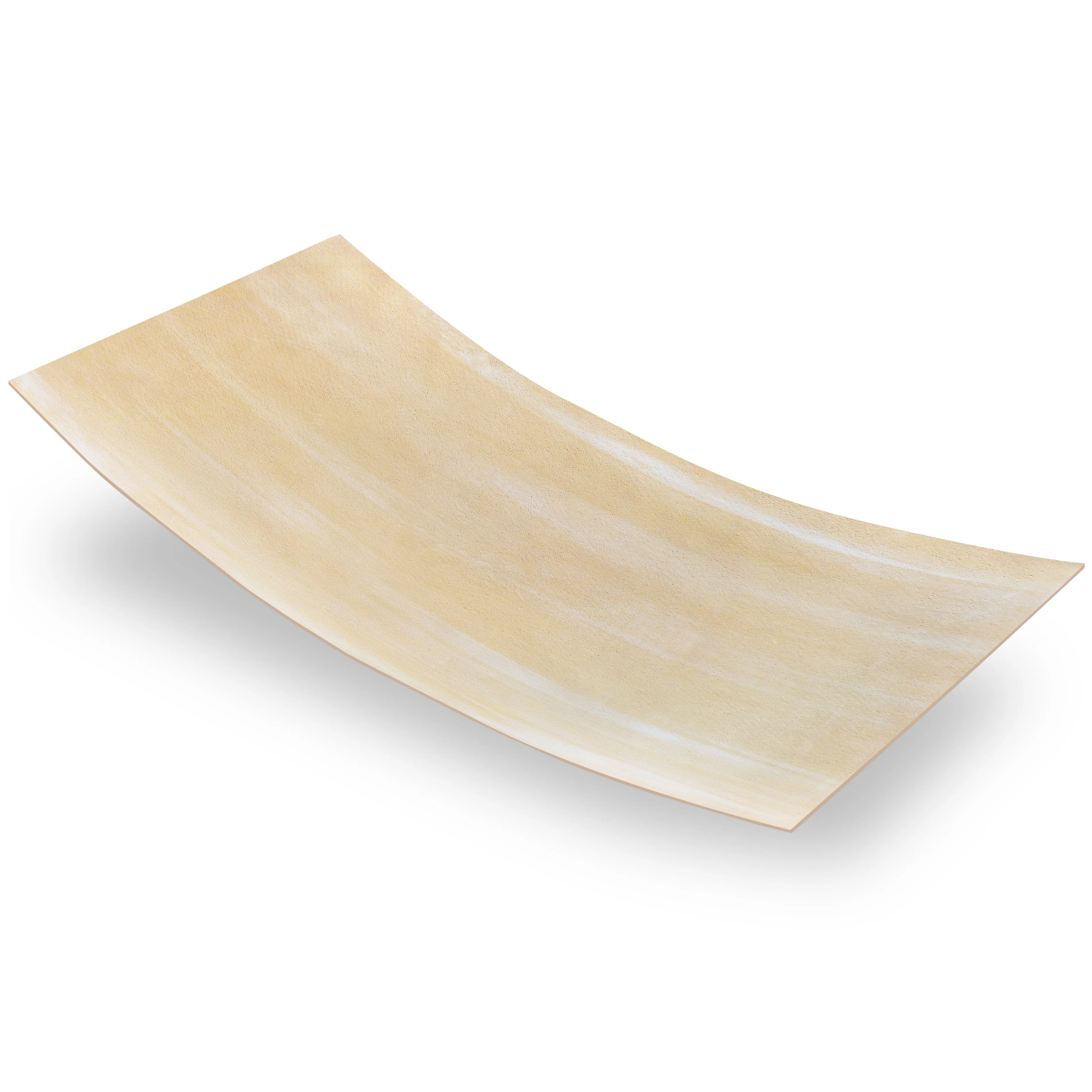
At the end of the day, the first thing anyone notices about a material is how it makes them feel. Does it calm? Excite? Tell a story? Let's compare the aesthetic voices of these two stones.
Natural sandstone is a romantic. Its beauty lies in its "flaws": the hairline cracks from ancient earthquakes, the fossilized shells that peek through like hidden treasures, the way rainwater might leave subtle streaks that deepen over time. It's a material that ages gracefully, developing a patina that only adds to its character. Imagine a countryside villa with a natural sandstone facade—each storm softens its edges, each sunbeam brings out new nuances in its color, making it feel like a living part of the landscape.
But this uniqueness can also be a double-edged sword. If your project calls for a uniform look—say, a sleek, modern lobby where every panel matches exactly—natural sandstone might require extensive sorting at the quarry, or even custom cutting to hide inconsistencies. It's not a flaw, really; it's just that nature doesn't follow a design brief.
Sandstone Cloude, while engineered, doesn't feel "fake"—far from it. Its creators have studied natural sandstone's most alluring traits—the way light plays on its granular surface, the softness of its color gradients—and replicated them with remarkable fidelity. But here's the twist: it offers consistency without monotony. The mcm flexible stone technology ensures that each panel has the same base color and pattern, so you won't get a wall that shifts dramatically from one slab to the next. Yet, it still retains subtle variations—tiny shifts in texture, faint veining—that keep it from feeling sterile.
Take, for example, the "Cloude" in its name: it evokes the soft, billowy texture of clouds, with a surface that looks like it's been gently brushed by wind. Run your fingers over it, and you'll feel the familiar grit of sandstone, but with a smoother, more controlled finish. It's perfect for projects that want the warmth of natural stone but need a cohesive look—like a boutique hotel where every guest room wall should feel "handmade" but not haphazard, or a retail space where brand consistency matters as much as aesthetic appeal.
"I once worked on a restaurant where the client wanted the 'rustic charm of a mountain lodge' but with the precision of a modern eatery," recalls Maria, a commercial designer in Chicago. "Natural sandstone would have given us the charm, but we would have spent weeks matching slabs. Sandstone Cloude let us have both—the texture that makes you want to reach out and touch the walls, and a uniformity that kept the space feeling intentional, not chaotic."
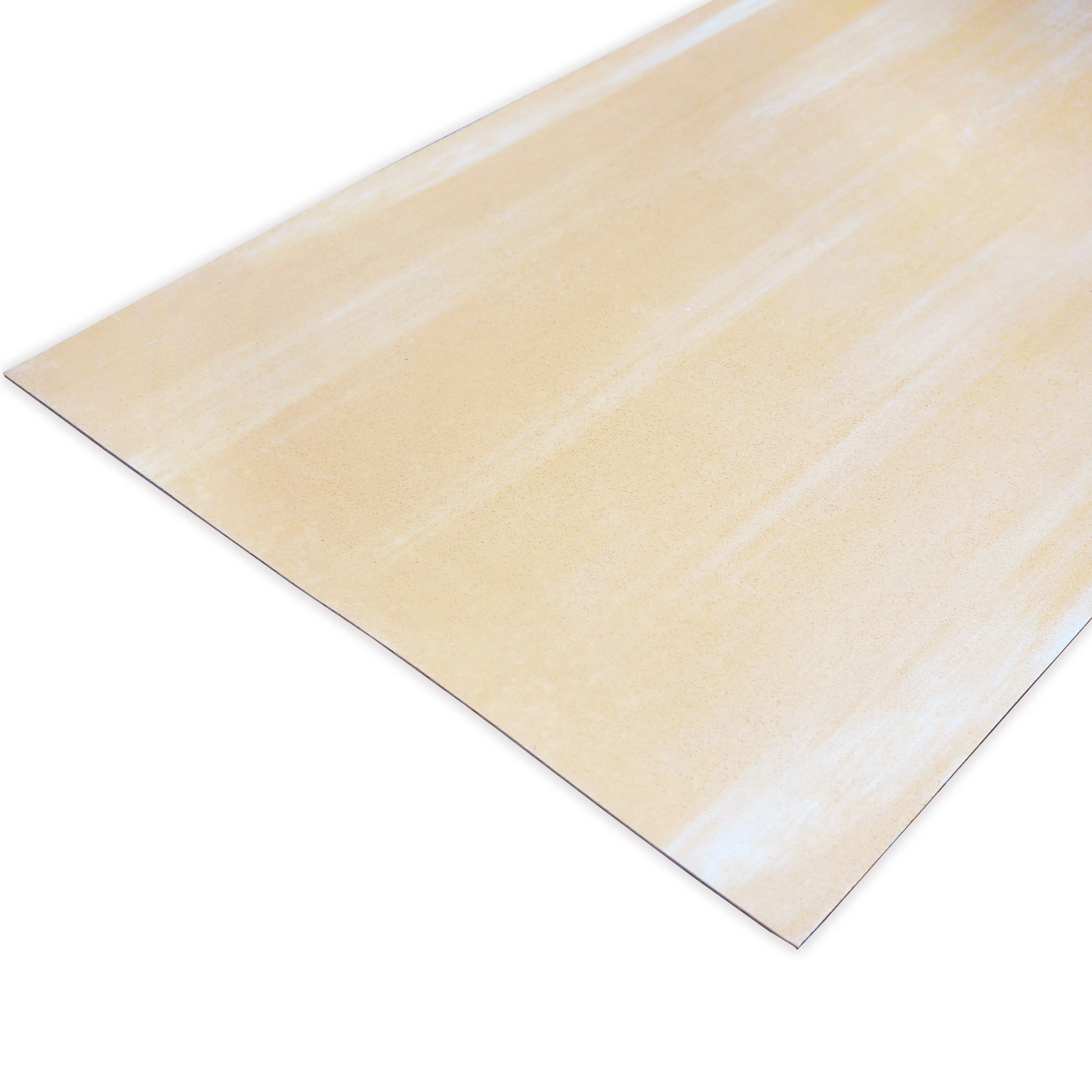
A beautiful material is nothing if it can't keep up with the demands of daily life. Let's talk about durability, flexibility, and maintenance—because in construction, "pretty" needs to be practical, too.
Natural sandstone is tough, but it's not invincible. Its porous nature means it absorbs water, which can lead to problems in wet climates: freeze-thaw cycles can cause cracking, and acidic substances (like rainwater or spilled juice) can stain or etch its surface. It's also prone to chipping if hit by heavy objects—think of a busy hallway where a stray luggage cart might scrape the wall.
Sandstone Cloude, thanks to its mcm flexible stone composition, is a different beast. The polymer substrate acts as a barrier, making it far less porous than natural sandstone. It resists water, stains, and even UV rays, so it won't fade in direct sunlight. And because it's flexible (hence the "flexible stone" in its name), it can bend slightly without cracking—ideal for buildings in earthquake-prone areas or for curved surfaces like archways or rounded columns. One contractor I spoke to described it as "stone with a backbone"—strong enough to take a hit, but with the give to adapt to a building's natural movement over time.
Natural sandstone is heavy—really heavy. A single slab can weigh hundreds of pounds, requiring cranes, specialized equipment, and a team of workers to maneuver. Cutting it to size is also tricky; it's prone to splitting if not handled carefully, leading to wasted material and delays. And because each slab is unique, installers often have to "test fit" panels like a puzzle, which can slow down construction timelines.
Sandstone Cloude, by contrast, is lightweight—about a third the weight of natural sandstone. This makes it easier to transport, carry up scaffolding, and install, even on upper floors or in tight spaces. The mcm big slab board series takes this a step further: large-format panels (up to 1200x2400mm, in some cases) mean fewer seams, faster installation, and a more seamless look. And because it's flexible, it can be cut with standard tools—no need for diamond-tipped saws—and even bent around curves, opening up design possibilities that natural sandstone can't match.
Natural sandstone needs care. To protect it from stains and water damage, it requires regular sealing—usually every 1–3 years, depending on the climate. Scratches or chips are hard to repair; you might need to replace the entire slab. And if it does absorb water, mold or mildew can grow, which not only looks bad but can weaken the stone over time.
Sandstone Cloude is low-maintenance by design. Its non-porous surface resists stains, so a spilled glass of wine or a muddy boot print can be wiped away with a damp cloth. It doesn't need sealing, and minor scratches can often be buffed out with a soft brush. For busy spaces—like schools, hospitals, or high-traffic offices—this translates to lower long-term costs and less downtime for repairs.
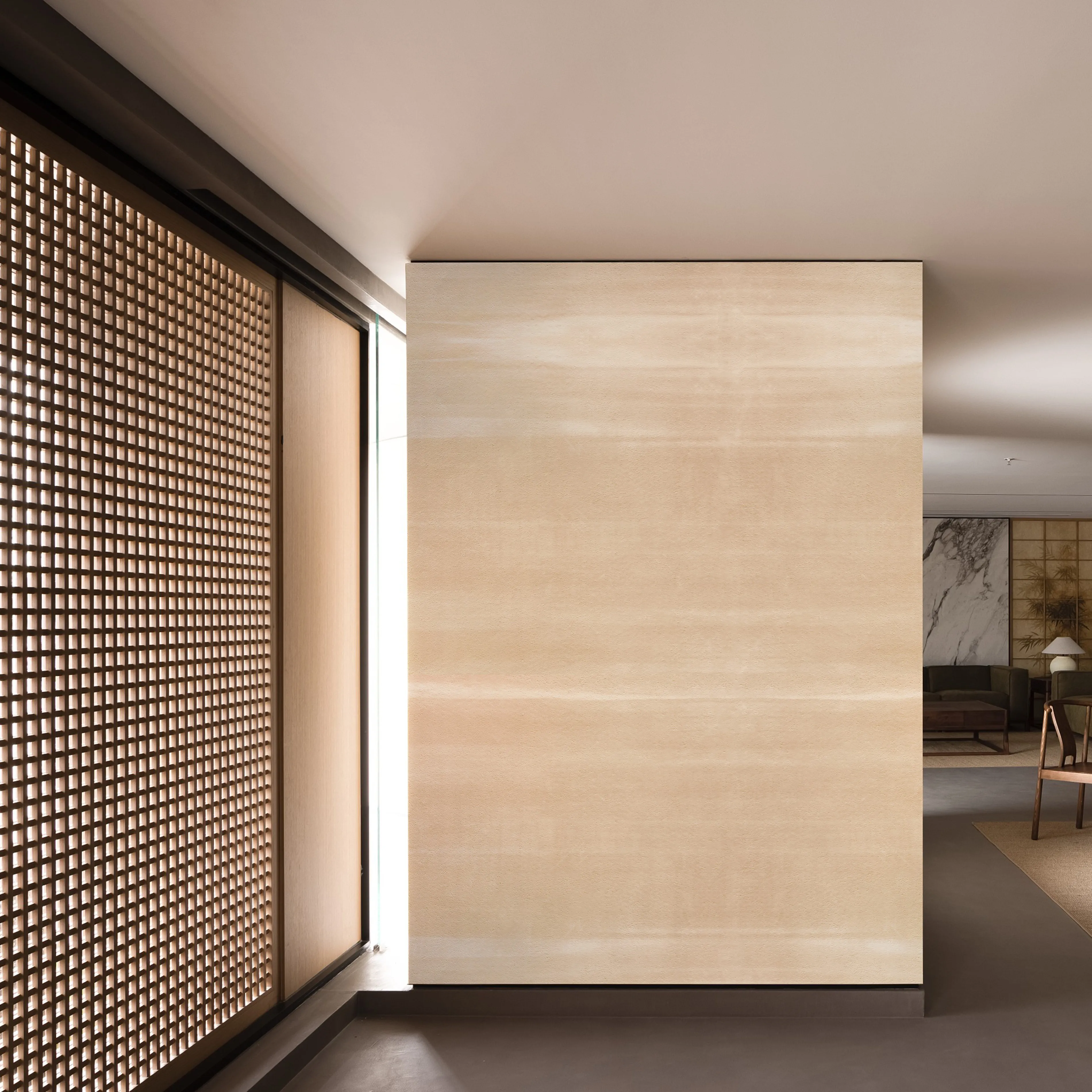
These days, choosing a material isn't just about aesthetics or performance—it's about responsibility. How does each stone impact the planet? Let's break it down.
On the one hand, natural sandstone is a natural, biodegradable material—when a building is demolished, it can be crushed and reused as aggregate. On the other hand, quarrying it is resource-intensive. Heavy machinery, diesel fuel, and the removal of large amounts of earth can disrupt local ecosystems, and transporting heavy slabs long distances adds to a project's carbon footprint.
Sandstone Cloude, as part of the MCM product line, is designed with sustainability in mind. Many manufacturers use recycled stone particles (from quarry waste or demolition sites) in its production, reducing the need for new mining. Its lightweight nature also cuts down on transportation emissions—you can fit more panels on a truck, meaning fewer trips. Plus, its durability and low maintenance mean less material waste over time (no need to replace stained or cracked slabs). For projects aiming for LEED certification or other green building standards, this can be a significant advantage.
Neither stone is "better"—they're just better suited for different stories. Here's where each tends to thrive:
Let's talk numbers—because budget is always part of the conversation. Natural sandstone typically has a higher upfront cost: quarrying, transportation, and installation all add up. Prices can range from $20–$50 per square foot, depending on the stone's rarity and origin. Sandstone Cloude, while not cheap, is often more affordable upfront (around $15–$35 per square foot) and can save money in installation (fewer labor hours, less equipment needed) and maintenance (no sealing, fewer repairs) over time. It's an investment in both beauty and practicality.
At the end of the day, Sandstone Cloude and Natural Sandstone are both exceptional materials—they just speak different languages. Natural sandstone is the poet, whispering tales of ancient earth and untamed beauty. Sandstone Cloude is the innovator, blending that poetry with the pragmatism of modern design. The choice depends on your project's soul: Do you need a material that carries the weight of history, or one that bends to the demands of tomorrow? Do you crave the unpredictability of nature, or the reliability of human ingenuity?
Whichever you choose, remember: a stone isn't just a surface. It's the backdrop to memories, the first impression of a space, the silent narrator of your project's story. Choose wisely—and let it tell a story worth remembering.
Recommend Products












