
Rising like modern-day monuments against the vast Saudi Arabian sky, commercial towers are more than just buildings—they are storytellers. They speak to a nation's ambition, its respect for heritage, and its leap into the future. Yet, for all their grandeur, these structures face a unique challenge: how to stand tall as symbols of progress while staying rooted in the land's rich cultural and natural tapestry. Enter MCM exterior solutions—a blend of innovation and tradition that's redefining what commercial tower facades can be. Today, we're diving into one of the most compelling materials in this lineup: lime stone (beige), and exploring how MCM's technology turns it into a canvas for architectural poetry.
Walk through Riyadh, Jeddah, or Dammam, and you'll notice a skyline in flux. Sleek glass and steel still dominate, but there's a quiet revolution happening. Developers and architects are no longer chasing "just modern"—they want buildings that feel alive , that echo the warmth of Saudi's deserts, the texture of its ancient mud-brick forts, and the subtlety of its oases. This shift isn't just about aesthetics; it's about creating spaces that resonate with people on a deeper level. A tower that looks like it could belong anywhere feels cold, impersonal. But one wrapped in materials that whisper of home? That becomes a landmark.
"We're moving beyond 'starchitecture'," says Lina Al-Mansoori, a Riyadh-based architect with over a decade of experience in commercial projects. "Clients now ask, 'How does this building speak to our culture?' They want exteriors that don't just impress—they connect . That's where MCM comes in. It's not just a material; it's a bridge between the old and the new."
MCM (Modified Composite Material) isn't a single product—it's a family of solutions designed to address the unique demands of modern construction. What sets it apart? Flexibility, durability, and a commitment to authenticity. Unlike traditional stone cladding, which can be heavy and prone to cracking on tall structures, MCM panels are lightweight, impact-resistant, and engineered to withstand Saudi Arabia's harsh climate: scorching summers, sudden sandstorms, and occasional downpours. But the real magic? They capture the essence of natural materials—their color, texture, even their "imperfections"—without the logistical headaches.
For commercial towers, this is game-changing. Imagine a 50-story building wrapped in what looks like solid limestone, but weighs a fraction of the real thing. Installation is faster, structural stress is reduced, and maintenance costs plummet. But MCM doesn't stop at practicality. It elevates aesthetics, too. Take the MCM big slab board series, for example. These large-format panels (often 1200x2400mm or more) create seamless facades with minimal joints, turning a tower into a single, striking canvas. No more choppy, piecemeal exteriors—just fluid, uninterrupted beauty.
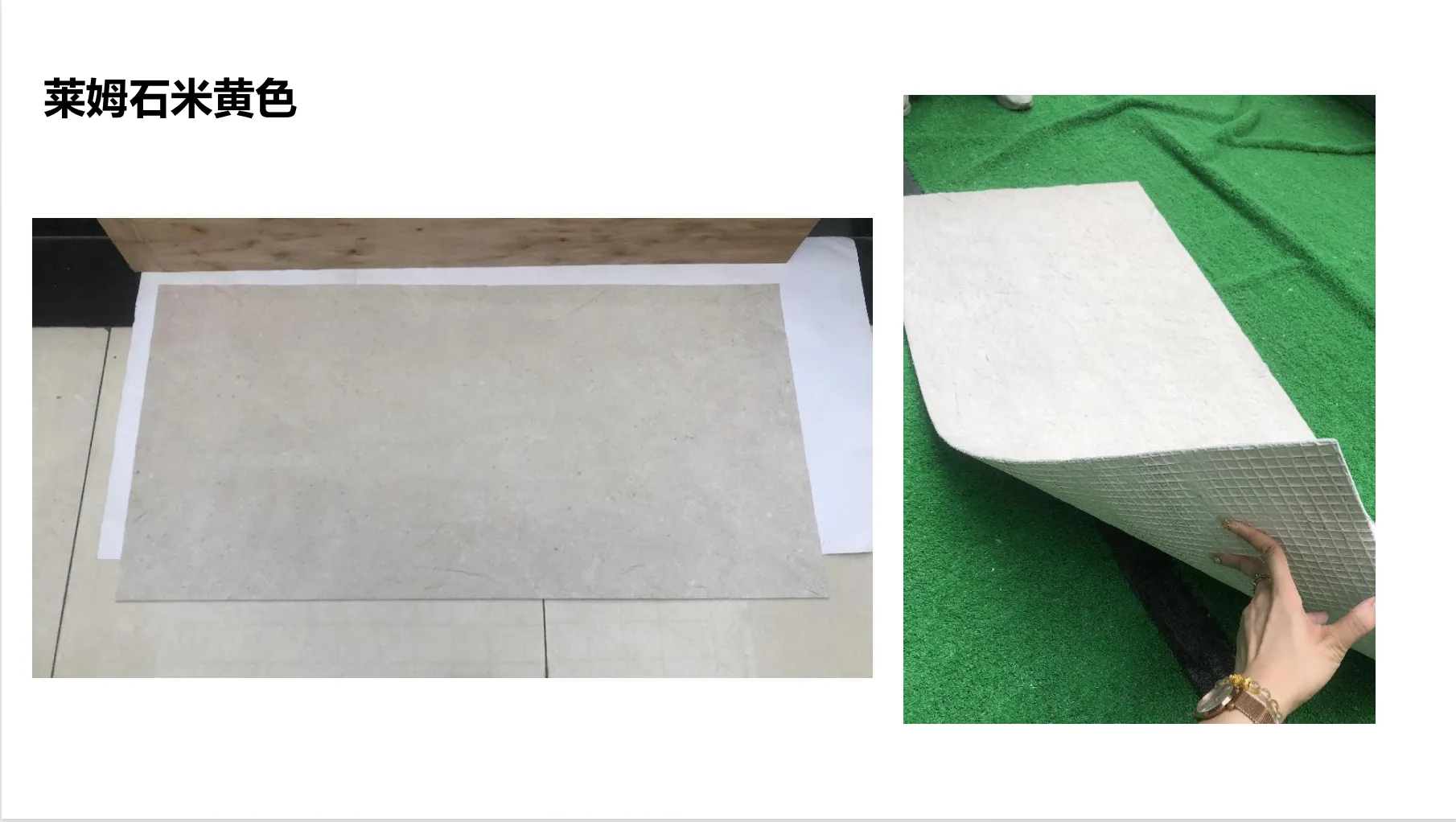
If Saudi Arabia had a "signature color," it might be the soft beige of its deserts at dawn. Not the harsh, bleached white of midday, but the warm, golden-tinged hue that makes the landscape feel like a living thing. Lime stone (beige) captures that exact tone. It's earthy without being dull, warm without being overwhelming, and versatile enough to complement both modern and traditional designs. But why choose MCM's version over natural limestone?
Natural limestone is stunning, but it's porous. In Saudi's humid coastal areas (like Jeddah), it can absorb moisture and stain. In inland cities like Riyadh, sand and dust can settle into its crevices, dulling its finish over time. MCM lime stone (beige) solves this by wrapping the stone's natural texture in a protective, weather-resistant layer. The result? A facade that retains its warm glow for decades, not years.
"We used MCM lime stone (beige) on the Al-Hikma Tower in Dammam," Al-Mansoori recalls. "The client wanted something that felt 'grounded,' not flashy. The panels have this subtle, sun-baked texture—like desert sand that's been polished by wind. When the afternoon light hits it, the tower doesn't just reflect the sun; it seems to glow , like it's part of the landscape. People stop to take photos not because it's tall, but because it feels… right ."
While lime stone (beige) is a star player, MCM's strength lies in its versatility. Commercial towers rarely rely on a single material—they thrive on contrast and layering. Imagine a tower wrapped in MCM big slab boards of lime stone (beige) as the base, then accented with travertine (starry green) panels. The starry green, with its subtle metallic flecks, adds a contemporary twist, like a modern take on the oasis's lushness against the desert. Or pair lime stone with fair-faced concrete for an industrial-chic vibe, where the beige softens the concrete's coolness, creating balance.
Another standout is the MCM flexible stone series. These thin, bendable panels can be shaped to follow curved surfaces—think a tower with a gently sloping facade, or a lobby entrance with organic, wave-like lines. "We used flexible stone in a Jeddah project to create a 'ripple' effect along the tower's crown," says Al-Mansoori. "It's lime stone (beige) with a slightly textured finish, and when the wind blows, the shadows shift, making the building look like it's breathing. That's the power of MCM—you're not limited to flat surfaces. You can sculpt ."
| Material | Key Features | Aesthetic Appeal | Ideal Application |
|---|---|---|---|
| Lime Stone (Beige) – MCM | Lightweight, weather-resistant, warm desert hue | Earthy, grounded, timeless | Primary facade for mid-to-high-rise towers |
| MCM Big Slab Board Series | Large-format panels (up to 3m), seamless finish | Modern, grand, minimal joint lines | Statement facades for luxury commercial projects |
| Travertine (Starry Green) – MCM | Metallic flecks, durable, vibrant accent color | Contemporary, eye-catching, nature-inspired | Accent panels, lobby entrances, or crown details |
| Fair-Faced Concrete – MCM | Industrial texture, low maintenance | Raw, modern, urban-chic | Complementary panels with lime stone for contrast |
Let's talk practicality. Saudi Arabia isn't kind to building materials. Summer temperatures regularly hit 45°C (113°F), and sandstorms can blast facades with grit for hours. Traditional cladding often struggles here—paint fades, stone cracks, glass etches. MCM panels, though, are engineered for this environment.
Take the core technology: a mineral-rich base combined with a reinforced polymer layer. This makes the panels resistant to UV radiation (so colors don't fade), impact-resistant (sandstorms bounce off, they don't chip), and non-porous (no moisture absorption, no mold). For developers, this translates to lower long-term costs. "We did a lifecycle analysis for a client comparing MCM lime stone (beige) to natural granite," says Al-Mansoori. "Over 20 years, MCM saved them nearly 30% in maintenance and replacement costs. That's a huge win for any commercial project."
Sustainability is another plus. MCM panels are made with recycled materials where possible, and their lightweight nature reduces transportation emissions. Plus, since they're prefabricated, there's less waste on-site—a critical consideration in a region aiming for greener construction practices.
At the end of the day, buildings are for people. A tower clad in MCM lime stone (beige) doesn't just look good—it feels good. It's the difference between walking past a cold, glass monolith and pausing to admire a structure that feels like it has a soul. "I had a client tell me their employees now take lunch breaks outside the office tower," Al-Mansoori laughs. "They said, 'The building doesn't make us feel small—it makes us feel part of something .' That's the emotional resonance MCM brings."
Consider the "historical pathfinders stone" series, another MCM offering that mimics the weathered look of ancient stone paths. When paired with lime stone (beige), it creates a facade that feels like a timeline—honoring the past while reaching for the future. Or the "gobi panel," which captures the rugged texture of desert landscapes. These materials don't just cover a building; they narrate a story.
As Saudi Arabia continues its journey of growth and transformation, its commercial towers will only become more important as symbols of progress. And MCM, with its ability to blend durability, beauty, and cultural relevance, is poised to lead this charge. Lime stone (beige) is just the beginning—whether it's the cosmic allure of travertine (starry green), the industrial edge of fair-faced concrete, or the grandeur of the MCM big slab board series, the possibilities are endless.
So the next time you look up at a commercial tower in Saudi Arabia, take a closer look. If it feels warm, textured, and somehow familiar, chances are it's wrapped in MCM. It's not just a facade—it's a promise: that progress and tradition don't have to be opposites. They can coexist, beautifully, in every panel, every texture, every beam of light that dances across its surface.
Because in the end, the best buildings aren't just seen—they're felt . And with MCM, Saudi Arabia's skyline is about to make people feel a lot more.
Recommend Products












