
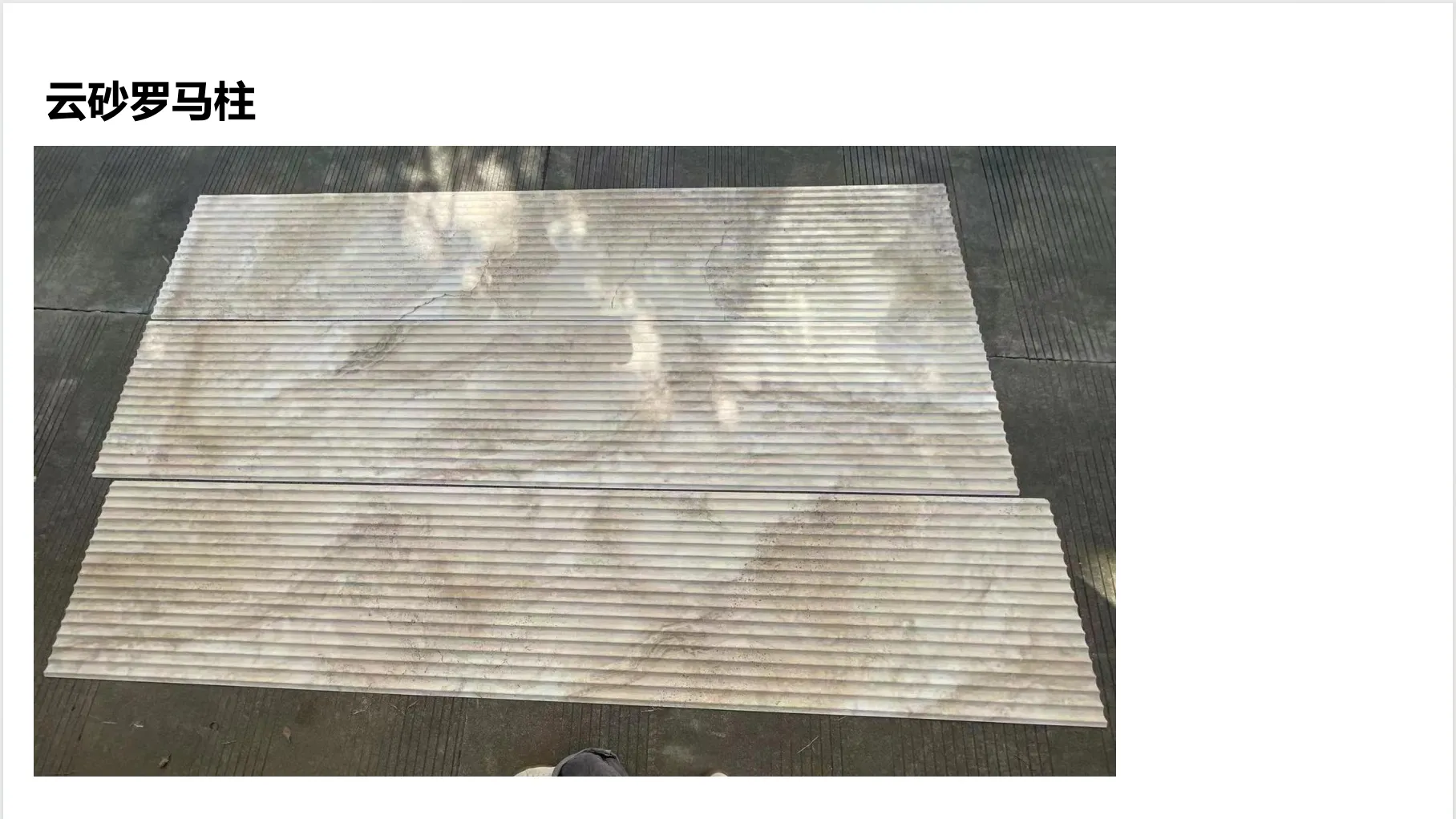
In the heart of Saudi Arabia's residential architecture, marble pillars stand as more than just structural elements—they are storytellers. Carved from natural stone, polished to a soft glow, or left with intentional texture, these pillars hold the dreams of homeowners, the vision of designers, and the quiet poetry of daily life. Today, we step beyond blueprints and renderings to explore real photos of villas and compounds where marble pillars take center stage, paired with materials like marble veil white , travertine (beige) , and mcm flexible stone to create spaces that feel both grand and deeply personal.
Walk through any modern Saudi villa or compound, and you'll notice a shift: luxury is no longer about excess—it's about intention. Homeowners are choosing materials that tell a story, and marble pillars have become a favorite canvas. Whether framing a grand entrance, dividing a living space, or supporting a soaring ceiling, these pillars bridge the gap between tradition (think of the intricate stonework of ancient Arabian palaces) and modernity (clean lines, understated elegance). What makes them truly special, though, is how they interact with light, shadow, and the people who inhabit the space. A travertine (beige) pillar might warm a morning room with its earthy tones, while a marble veil white pillar can turn a sunset into a masterpiece, scattering soft light across walls and floors.
Tucked away in Riyadh's Al-Malaz district, Al-Nour Villa belongs to a family who wanted their home to feel like a "breath of fresh air" amid the city's bustle. The centerpiece? Four marble veil white pillars that greet visitors in the entrance hall. "We wanted light to flood every corner," says the homeowner, a local architect. "White marble felt like the obvious choice—it reflects sunlight, making even the gloomiest winter days feel bright. But we didn't want coldness; we wanted warmth."
To balance the crispness of marble veil white , the design team paired the pillars with travertine (beige) flooring—its subtle honey hues and natural pitting adding texture without overwhelming the space. Along the walls, wood grain board accents (think warm oak tones with visible knots) bring in the organic feel of the Saudi desert landscape. The result? A entrance hall that feels both spacious and intimate, where the pillars don't just stand—they embrace. In real photos of the space, you can see how the marble catches the light from the floor-to-ceiling windows, casting soft patterns on the travertine below, while the wood grain adds a tactile element that invites touch.
Upstairs, the pillars continue into the family lounge, where they frame a floor-to-ceiling bookshelf filled with heirloom Quran copies and travel souvenirs. "These pillars aren't just pretty," the homeowner laughs. "They hold up the mezzanine, but they also hold our memories. When my kids run past them, or my mother sits nearby to read, the pillars become part of our family story."
In Jeddah's coastal Al-Khobar neighborhood, Al-Majd Compound was designed with community in mind. More than just a collection of villas, it's a space where families gather, children play, and neighbors share coffee on shaded patios. Here, travertine (beige) pillars take on a different role: they're connectors, not just dividers. "We wanted the compound to feel like an extension of the beach," says the lead designer. "Travertine's soft, sandy color echoes the nearby shoreline, and its porous surface feels alive—like it's breathing with the sea breeze."
In the central courtyard, a colonnade of travertine (beige) pillars wraps around a communal pool, their rounded edges softening the harsh Saudi sun. Real photos of the space show how the pillars cast dappled shadows on the terracotta tiles below, creating a natural play area for kids. Adjacent to the pool, a lounge area features mcm flexible stone cladding on the walls—its lightweight, durable design perfect for withstanding Jeddah's humidity. The combination of travertine and mcm flexible stone is intentional: the stone brings warmth, while the flexible panels add a modern, industrial edge that appeals to younger families.
One of the most beloved spots? A covered walkway lined with travertine pillars, where residents often sit to chat at sunset. "The pillars here aren't just about structure," says a long-time resident. "They're about community. When I walk under them, I see my neighbor's kids chasing each other, an older couple sharing tea, and it feels like home. The travertine has this way of making everything feel calm—like the world slows down a little bit."
For a young family in Dammam, "home" meant blending their love of industrial design with the warmth of Saudi traditions. The result? Al-Salam Villa, where marble veil white pillars stand tall against walls of fair-faced concrete , creating a space that's equal parts edgy and inviting. "We wanted something bold but not cold," says the homeowner, a tech entrepreneur. "Marble and concrete might sound like an odd pair, but they balance each other perfectly—marble softens the concrete's roughness, and concrete grounds the marble's elegance."
In the open-concept living area, two marble veil white pillars flank a fireplace made of rough-hewn fair-faced concrete , its gray tones complementing the marble's white base. The contrast is striking in real photos: the marble's smooth surface catches the firelight, while the concrete's texture adds depth, like a stone pulled straight from the desert. Nearby, wood grain board shelves (stained a deep walnut) hold family photos and potted succulents, adding a touch of life to the industrial palette.
Upstairs, the master bedroom features a single marble pillar in the corner, its base wrapped in wood grain board to mimic the look of a tree trunk. "We call it our 'roots pillar,'" the homeowner smiles. "It's a reminder that even as we embrace modern design, we stay grounded in our family and heritage." The pillar supports a floating desk, where the homeowner works from home, looking out at the Dammam skyline. "There's something about working next to a piece of natural stone," they say. "It makes even the busiest days feel a little more peaceful."
What sets these projects apart isn't just the marble pillars—it's how they're paired with complementary materials to create harmony. Below, a look at the materials that stole the show in these real-life Saudi homes:
| Project Name | Location | Marble Pillar Material | Complementary Materials | Design Theme |
|---|---|---|---|---|
| Al-Nour Villa | Riyadh | Marble Veil White | Travertine (Beige), Wood Grain Board | Modern Minimalism with Arabian Warmth |
| Al-Majd Compound | Jeddah | Travertine (Beige) | MCM Flexible Stone, Fair-Faced Concrete | Coastal Serenity Meets Desert Heritage |
| Al-Salam Villa | Dammam | Marble Veil White | Fair-Faced Concrete, Wood Grain Board | Industrial Elegance with Family Roots |
As Saudi Arabia's residential design scene evolves, one trend is clear: homeowners are craving authenticity. "People want spaces that feel like 'them,'" says a Jeddah-based interior designer. "Marble pillars are no longer just for palaces—they're for families who want to infuse their home with meaning. We're seeing more requests for custom textures, like mcm flexible stone paired with marble, or travertine left with its natural pitting to add character."
Another trend? Sustainability. Homeowners are choosing locally sourced materials (like travertine (beige) from Saudi quarries) and eco-friendly options (like mcm flexible stone , which is lightweight and reduces transportation emissions). "It's not just about looking good anymore," the designer adds. "It's about feeling good—knowing your home is kind to the planet and connected to your community."
In the end, the real magic of these Saudi villas and compounds lies not in the marble itself, but in how it interacts with the people who live there. A marble veil white pillar might frame a child's first steps, a travertine (beige) colonnade might shelter a family's evening gatherings, and a mcm flexible stone accent wall might hold the laughter of friends. These are the moments that turn houses into homes—and marble pillars into silent witnesses to a life well-lived.
So the next time you walk through a Saudi villa or compound, take a moment to look up. The pillars you see aren't just stone—they're stories, waiting to be told. And in their quiet strength, they remind us that the most beautiful spaces are the ones that feel like home.
Recommend Products












