
In the heart of the Arabian Peninsula, where ancient deserts meet futuristic skylines, Saudi Arabia's architectural renaissance ising a new chapter. Cities like Riyadh, Jeddah, and NEOM are rising as testaments to ambition—blending cultural heritage with cutting-edge design. Yet, this transformation faces a formidable opponent: the kingdom's unforgiving climate. With summer temperatures soaring above 50°C (122°F), relentless UV radiation, sandstorms that scour surfaces, and coastal humidity in the west, building materials here don't just need to look good—they need to survive . Enter Roman huge travertine, a material steeped in history and elegance, now reimagined through MCM (Modified Composite Material) technology to thrive in Saudi Arabia's unique conditions.
Travertine has been a cornerstone of architecture for millennia. From Rome's Colosseum to the Trevi Fountain, its porous, earthy texture and warm tones have symbolized timelessness. In Saudi Arabia, where designers seek to bridge the gap between classical grandeur and modern minimalism, Roman huge travertine—with its large, slab-like format and rich, veined patterns—has become a coveted choice. Imagine the lobby of a luxury hotel in Riyadh, walls clad in sweeping panels of travertine, evoking the grandeur of ancient civilizations while exuding contemporary sophistication. But here's the catch: natural travertine, while stunning, is not built for Saudi Arabia's climate.
Natural travertine is porous, absorbing moisture and salts that can lead to cracking in extreme heat. Its weight—often exceeding 50kg per square meter—adds structural strain to buildings, especially in high-rises. Worse, prolonged exposure to Saudi sunlight fades its color, turning warm golds into dull grays, while sandstorms abrade its surface, leaving it pitted and worn. For coastal cities like Jeddah, humidity and saltwater air accelerate erosion, making maintenance a costly, never-ending battle. "We loved the look of natural travertine for a project in Dhahran," says Lama Al-Mansoori, an architect at Riyadh-based firm Studio Arc, "but within two years, the facade had developed hairline cracks, and the color had faded dramatically. We needed a material that could deliver the aesthetic without the fragility."
Enter MCM—Modified Composite Material—a game-changer for Saudi Arabia's construction industry. MCM products, including MCM flexible stone and specialized lines like Roman huge travertine MCM panels, are engineered to mimic the look and feel of natural stone while addressing its weaknesses. At their core, MCM panels are made from a blend of natural minerals, polymers, and reinforcing fibers, creating a material that's lightweight (as little as 6kg per square meter), flexible, and hyper-resistant to environmental stress. For Saudi Arabia, this translates to a host of benefits:
MCM manufacturers have developed specialized lines to address Saudi Arabia's diverse climate zones—from the scorching inland deserts to the humid coasts. Let's explore how key products are solving real-world challenges:
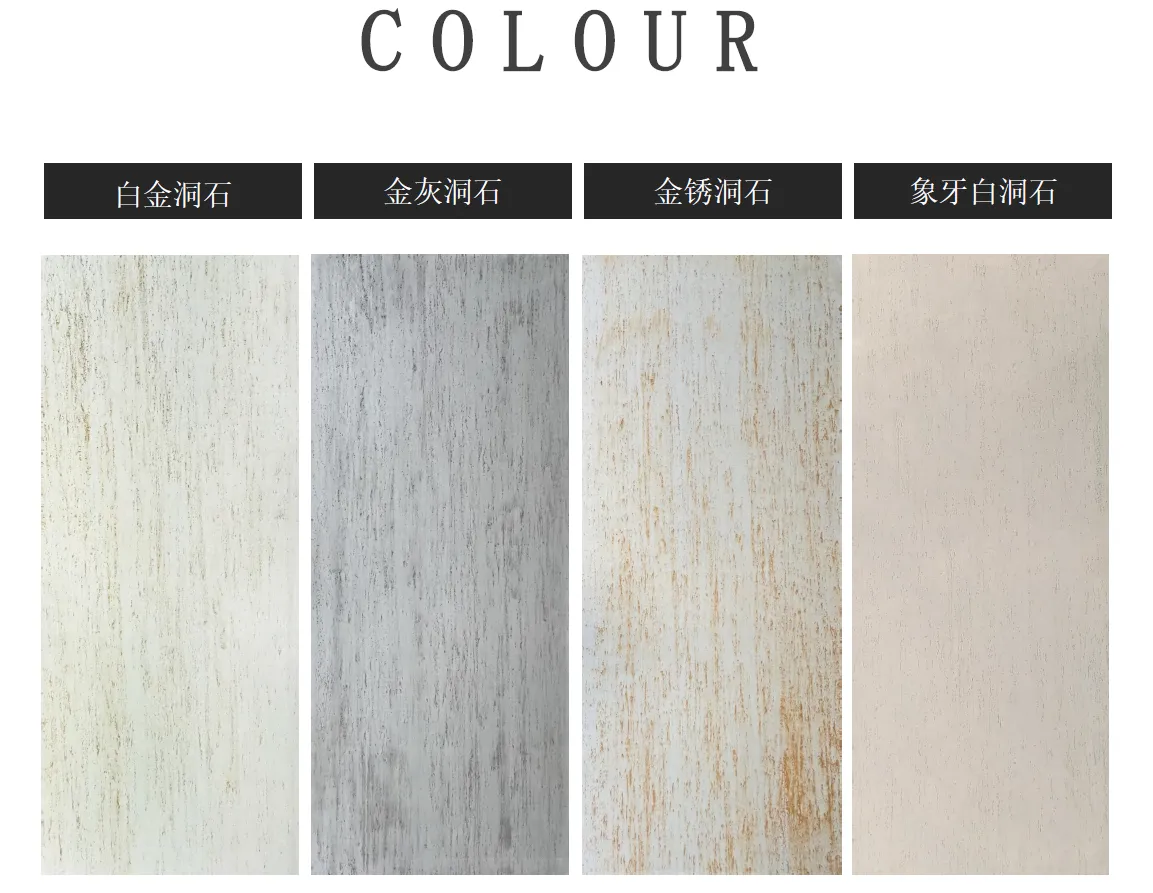
The star of the show, Roman huge travertine MCM panels replicate the natural stone's iconic look—large 1200x2400mm slabs, with creamy bases, golden veins, and subtle pitting—without the vulnerabilities. "We spent two years perfecting the texture," explains Ahmed Hassan, product developer at MCM manufacturer GreenBuild Saudi. "Using 3D scanning of authentic Roman travertine quarried in Tivoli, Italy, we recreated every pore and vein, then the surface with a nano-coating that repels water and dust." The result? A panel that looks indistinguishable from natural travertine but can withstand Saudi Arabia's harshest conditions. A recent installation at Riyadh's Al Faisaliah Tower extension used over 5,000 square meters of Roman huge travertine MCM; after three years, the facade remains as vibrant as the day it was installed, even after multiple sandstorms.
Inland cities like Riyadh and Buraydah face relentless heat, with buildings absorbing solar radiation and driving up cooling costs. Lunar peak golden MCM panels address this with a metallic, iridescent finish that reflects up to 70% of sunlight (compared to 30% for natural stone). The effect is dramatic: a building clad in Lunar Peak Golden stays up to 15°C cooler on the surface, reducing interior temperatures by 3-5°C. "We used Lunar Peak Golden for a residential complex in Hail," says architect Nasser Al-Zahrani. "Residents report lower AC bills, and the golden sheen catches the desert sunset beautifully— it's functional and poetic."
Coastal areas like Jeddah and Dammam demand materials that resist saltwater corrosion. Boulder slab (vintage gold) MCM, with its rugged, textured surface and golden-bronze hue, is designed for these environments. The panel's core is reinforced with fiberglass, while the outer layer is treated with a marine-grade anti-corrosive coating. "We installed Boulder Slab Vintage Gold on a waterfront hotel in Jeddah," notes civil engineer Fatima Al-Sayed. "After two monsoon seasons and daily salt spray, there's zero rust or discoloration. It still looks like it was installed yesterday."
For contemporary projects like tech offices or art galleries, fair-faced concrete MCM offers the raw, industrial aesthetic of poured concrete without the weight or cracking risks. Unlike traditional concrete, which shrinks and cracks in Saudi heat, MCM fair-faced panels are pre-cured in controlled environments, ensuring uniform density. They're also stain-resistant—a boon for high-traffic areas. "A museum in Riyadh wanted exposed concrete walls but worried about maintenance," says Al-Mansoori. "We used fair-faced concrete MCM, and it's been perfect. No water stains, no cracks, and it still has that raw, tactile quality the client loved."
For skyscrapers where weight is critical, foamed aluminium alloy board (vintage gold) MCM is a revelation. Weighing just 3kg per square meter, it's 90% lighter than natural stone, yet incredibly strong (tensile strength of 200MPa). Its vintage gold finish adds a touch of opulence, making it popular for luxury hotels and corporate towers. "We used it for the spire of a 40-story hotel in Riyadh," says structural engineer Khalid Ibrahim. "The reduced load allowed us to simplify the steel framework, cutting construction time by three months. And that golden glow at dusk? It's become a landmark."
| Material | Weight (kg/m²) | Heat Resistance | Sandstorm Durability | Maintenance Cost (10-Year) |
|---|---|---|---|---|
| Natural Roman Travertine | 55-65 | Poor (fades, cracks) | Low (abraded surface) | $15-20/m²/year |
| MCM Roman Huge Travertine | 5-7 | Excellent (UV-stabilized) | High (resistant to abrasion) | $1-2/m²/year |
| Natural Limestone (Beige) | 45-50 | Moderate (prone to efflorescence) | Moderate (pitting over time) | $10-12/m²/year |
| MCM Lunar Peak Golden | 6-8 | Excellent (reflective coating) | High (non-porous surface) | $0.5-1/m²/year |
Beyond durability, MCM aligns with Saudi Arabia's Vision 2030 goals for sustainable development. Traditional stone quarrying depletes natural resources and generates significant waste; MCM production, by contrast, uses recycled minerals and polymers, reducing environmental impact by up to 60%. "Our factory in Dammam recycles 95% of water used in production and runs on solar power," says Hassan. "We're not just selling a material—we're selling a commitment to the planet." Additionally, MCM's lightweight nature reduces transportation emissions, while its thermal efficiency lowers energy consumption for cooling—critical in a country where air conditioning accounts for 70% of residential energy use.
As Saudi Arabia continues to invest in mega-projects—from NEOM's futuristic cities to the Red Sea Project's luxury resorts—MCM is emerging as a cornerstone of the kingdom's architectural identity. It's not just about surviving the climate; it's about thriving in it. "With MCM, we're no longer limited by what nature provides," says Al-Mansoori. "We can have the beauty of Roman travertine, the sleekness of fair-faced concrete, or the warmth of lunar peak golden—all while building structures that will stand for generations."
In the end, Saudi Arabia's demand for Roman huge travertine isn't just about aesthetics. It's about honoring the past while embracing innovation—a balance that MCM delivers with remarkable grace. As the sun sets over Riyadh, casting golden light on MCM-clad towers, it's clear: the future of Saudi architecture is not just built to last—it's built to inspire.
Recommend Products












