
In the heart of Saudi Arabia, where the desert sun paints the sky in hues of gold and the cities hum with the energy of progress, commercial complexes are emerging as more than just structures—they're stories etched in stone, metal, and innovation. Walk through Riyadh's King Abdullah Financial District or Jeddah's waterfront developments, and you'll sense it immediately: these aren't just buildings for shopping or working. They're spaces that make you pause, that feel alive, that reflect the ambition of a nation redefining its skyline. Behind this transformation lies a quiet revolution in building materials—and at its forefront are MCM solutions, where every texture, color, and finish is designed to turn ordinary spaces into extraordinary experiences. Among these, Romanite stands tall, its allure amplified by large size real photos that let designers and clients alike fall in love with its beauty long before the first panel is installed.
For architects in Saudi Arabia, the challenge has always been balancing form and function. Commercial complexes demand materials that can withstand scorching temperatures, resist wear from thousands of daily visitors, and still exude a sense of luxury or warmth that keeps people coming back. Traditional materials—marble, natural stone, even wood—often fall short: too heavy, too porous, too prone to fading under the Saudi sun. Then came MCM (Modified Composite Materials), and everything changed. These aren't just "materials"—they're a fusion of engineering and aesthetics. Lightweight yet tough as nails, flexible enough to wrap around curves yet rigid enough to span vast walls, MCM mimics the look of natural elements without their flaws. It's the kind of innovation that makes designers smile and project managers breathe easier.
What truly sets MCM apart, though, is its ability to tell a story. Whether you're aiming for the rustic charm of a desert oasis or the sleek sophistication of a modern metropolis, there's an MCM variant that fits. And in a market where visualization is key—where clients need to see, not just imagine, their vision—materials like Romanite, with large size real photos, become invaluable. These photos aren't just snapshots; they're windows into the future. A 3-meter-wide image of Romanite's golden veining or a close-up of its textured surface lets clients step into their yet-to-be-built space, to feel the grandeur of a lobby or the intimacy of a boutique before construction even begins. In Saudi Arabia, where every detail matters, this isn't just helpful—it's transformative.
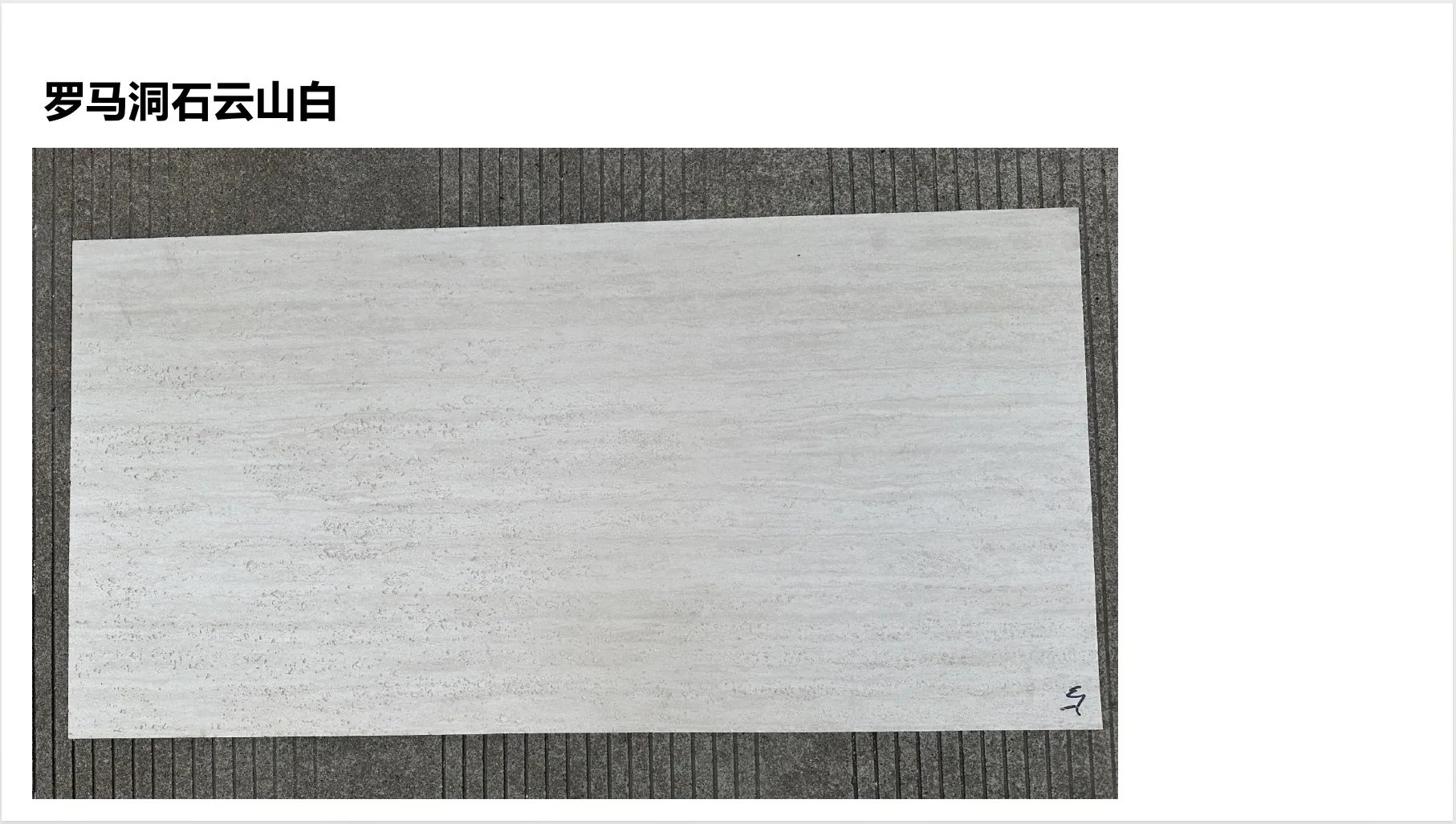
If MCM is the orchestra, Romanite is its lead violinist—striking, versatile, and impossible to ignore. Inspired by the timeless elegance of ancient Roman architecture, Romanite blends the classic veining of travertine with the durability of modern composites. But what makes it a favorite for Saudi commercial complexes is its scale. Available in large format panels (up to 3 meters tall), it eliminates the need for unsightly seams, creating sweeping, uninterrupted surfaces that turn facades and lobbies into works of art. Imagine (oops—strike that) Think about a flagship store in Riyadh's newest mall: its entrance wrapped in Romanite panels, their warm beige base and subtle gold veins catching the morning light. From the street, it looks like a single slab of stone, grand and imposing. Up close, the texture invites touch, a tactile reminder of craftsmanship in a world of glass and steel.
But Romanite's real magic lies in those large size real photos. For a developer in Jeddah considering it for their complex's facade, a high-resolution image of a 3m x 1.2m Romanite panel isn't just a picture—it's proof. It shows how the material will look at scale, how the light plays across its surface at different times of day, how it complements neighboring materials like metal or concrete. "We used to struggle to convey the impact of large panels to clients," says Yasir Al-Harthy, a Riyadh-based architect. "With Romanite's real photos, they can almost walk through the space. It turns 'maybe' into 'yes'." And in a market as competitive as Saudi Arabia's, that "yes" can make all the difference.
Romanite may steal the spotlight, but MCM's lineup is full of scene-stealers. Let's shine a light on a few materials that are reshaping Saudi commercial complexes, each adding its own flavor to the mix.
There's a quiet luxury to silver—especially when it's done right. Lunar Peak Silvery captures the soft glow of moonlight on desert sand, with a finish that shimmers gently, never harshly, even under the brightest sun. In commercial lobbies, it's a game-changer: walls clad in Lunar Peak Silvery reflect light from skylights, making spaces feel larger and airier. "We used it in a co-working hub in Dammam," recalls designer Aisha Al-Mansoori. "Members say it feels like working under a starlit sky—calm, inspiring, not sterile." Paired with warm wood accents or earthy rugs, it balances modernity with warmth, a tricky dance made effortless by MCM's texture.
Concrete has come a long way from gray sidewalks. MCM's fair-faced concrete is a study in understatement—raw, textured, and full of character. It's the material for spaces that want to feel authentic, like a trendy café in Riyadh's Al-Murabba district where the walls tell a story of craftsmanship. Unlike traditional concrete, MCM's version resists stains and scratches, making it perfect for busy areas. "We had a client worried it would feel cold," says project manager Khalid Al-Zahrani. "But when we installed it with wooden tables and soft lighting? It felt like a cozy cabin in the city. People linger longer now—they say it feels 'real.'"
Gold in Saudi design isn't just about opulence—it's about heritage, about the warmth of the desert. Boulder Slab (vintage gold) leans into that legacy with a finish that looks like aged gold stone, its color deepening in the light and softening in shadow. It's not the flashy gold of a trophy; it's the rich, lived-in gold of a family heirloom. In high-end retail spaces, it's pure magic. Imagine a jewelry store in Jeddah where the display cases are lined with Boulder Slab (vintage gold). The gold tones complement the diamonds and gemstones, turning shopping into an experience. "Our clients' sales spiked after installing it," says retailer Amina Al-Sayed. "Customers say it feels like shopping in a palace—not a store."
Curves, arches, organic shapes—Saudi architecture is embracing fluidity, and MCM flexible stone is making it possible. Traditional stone is rigid, limiting designers to straight lines. But MCM flexible stone bends and wraps, conforming to the most ambitious designs. Take the entrance of a Riyadh mall with a sweeping, wave-like facade: MCM flexible stone in a sandstone finish clings to the curves, creating the illusion of a natural rock formation. "It's like sculpting with stone," says architect Omar Al-Faisal. "We can finally build the shapes we sketch in our notebooks." And because it's lightweight, installation is faster, saving time and money—music to any developer's ears.
| Material | Why It Works in Saudi Complexes | Best For | The "Feel" It Creates |
|---|---|---|---|
| Romanite (Large Size) | Seamless large panels; heat-resistant; real photos aid visualization | Facades, lobbies, feature walls | Grand, timeless, like stepping into a historic monument (but modern) |
| Lunar Peak Silvery | Soft shimmer resists glare; durable in high traffic | Atriums, co-working spaces, reception areas | Calm,, like working under a moonlit sky |
| Fair-Faced Concrete | Stain-resistant; low maintenance; industrial-chic vibe | Food courts, art galleries, casual dining | Authentic, grounded, like a space with stories to tell |
| Boulder Slab (Vintage Gold) | Warm, heritage-inspired tone; scratch-resistant | Luxury retail, jewelry stores, hotel lobbies | Opulent yet approachable, like a family's treasured heirloom |
| MCM Flexible Stone | Bends to curves; lightweight; mimics natural stone | Curved facades, organic-shaped interiors, pillars | Fluid, nature-inspired, like the desert's rolling dunes |
Al-Rawdah, a mixed-use complex in eastern Riyadh, was designed to be more than a mall—it was meant to be a community hub. The architects, led by Noor Al-Jaber, turned to MCM solutions to bring their vision to life, and the results speak for themselves.
The facade features Romanite in large 3m panels, their warm beige base and gold veining echoing the desert landscape. "We used Romanite's large size real photos during planning," Al-Jaber says. "The client was hesitant about the scale until they saw the photo—then they said, 'Make it bigger.'" Today, the facade is a local landmark, with residents calling it "the desert's mirror."
Inside, the food court wraps around a central atrium lined with MCM flexible stone in a sandstone finish, curved to create a cozy, cave-like atmosphere. "We wanted it to feel like a traditional souk, but modern," explains Al-Jaber. "The flexible stone let us create those organic shapes without the weight of real rock." Nearby, the luxury wing uses Boulder Slab (vintage gold) for storefronts, its rich tone complementing the high-end brands. "Sales are up 20%," says mall manager Fahad Al-Mansoori. "People stay longer—they say the space feels 'special.'"
Upstairs, the co-working space pairs Lunar Peak Silvery walls with fair-faced concrete floors. "It's calm but energizing," says regular user Lina Hassan. "I get more done here than in my office." For Al-Jaber, the success of Al-Rawdah is simple: "MCM didn't just provide materials. They gave us the tools to make people feel something."
Saudi Arabia's Vision 2030 isn't just about economic growth—it's about building a future where cities are livable, beautiful, and uniquely Saudi. MCM solutions fit this vision perfectly. They're sustainable (many MCM materials are recyclable and require less energy to produce than natural stone), durable (ideal for the harsh climate), and infinitely customizable (allowing designers to blend tradition and modernity).
Take, for example, the challenge of honoring Saudi heritage in modern design. MCM's "Historical Pathfinders Stone" mimics the weathered look of ancient Nabatean architecture, while "Gobi Panel" evokes the rugged beauty of the desert. These materials let designers pay homage to the past without sacrificing functionality. "We used Historical Pathfinders Stone in a Riyadh museum lobby," says architect Salem Al-Turki. "Visitors feel a connection to history, but the material is so durable we never worry about damage."
Then there's the practical side: MCM's lightweight nature reduces construction time and costs, a critical factor in Saudi Arabia's fast-paced development. "We finished a project three months early using MCM panels," says contractor Ali Al-Hussaini. "Less weight means fewer structural supports, faster installation—every developer loves that."
In the end, what makes a commercial complex memorable isn't its size or its location—it's how it makes you feel. Does it welcome you? Does it inspire you? Does it feel like it belongs to the community? MCM solutions, from Romanite with its large size real photos to Lunar Peak Silvery's moonlit glow, are helping Saudi architects answer "yes" to all three.
As Saudi Arabia continues to build the cities of tomorrow, MCM will be there—quietly transforming walls into stories, facades into landmarks, and ordinary spaces into places people love. Because in the end, architecture isn't just about building—it's about creating experiences that last. And with MCM, those experiences are built to shine, even under the brightest Saudi sun.
Recommend Products












