
The exterior of a building is more than just a pretty face—it's its first line of defense. Think about the last time a summer storm rolled in, or winter frost settled heavy on your roof. For homeowners, architects, and builders alike, those moments bring a quiet anxiety: Will the cladding hold? Traditional materials have long left us wanting. Wood warps, concrete cracks, paint peels, and stone weighs down structures. But what if there was a cladding option that marries the warmth of natural materials with the resilience to stand up to Mother Nature's worst? Enter MCM sawing wood board—a game-changer in exterior design that's redefining durability and beauty.
Let's start with the obvious: your building's exterior takes a beating. Sunlight beats down, rain pounds, humidity seeps in, and temperature swings—from sweltering summers to freezing winters—expand and contract materials daily. Over time, even the sturdiest-looking cladding succumbs. A friend of mine, a builder in coastal Maine, once showed me a project where he'd installed cedar siding five years prior. What should have been a charming, rustic exterior was instead a patchwork of rotted planks and faded stain. "Salt air and rain," he sighed. "Wood just can't keep up here."
It's not just coastal homes. In the mountains, heavy snow and ice can crack stone. In urban areas, pollution and acid rain eat away at concrete. And in humid regions, mold and mildew turn once-pristine walls into breeding grounds for decay. The result? Endless maintenance: repainting every 2–3 years, replacing warped boards, repairing cracks—costs that add up, not to mention the frustration of watching your investment deteriorate.
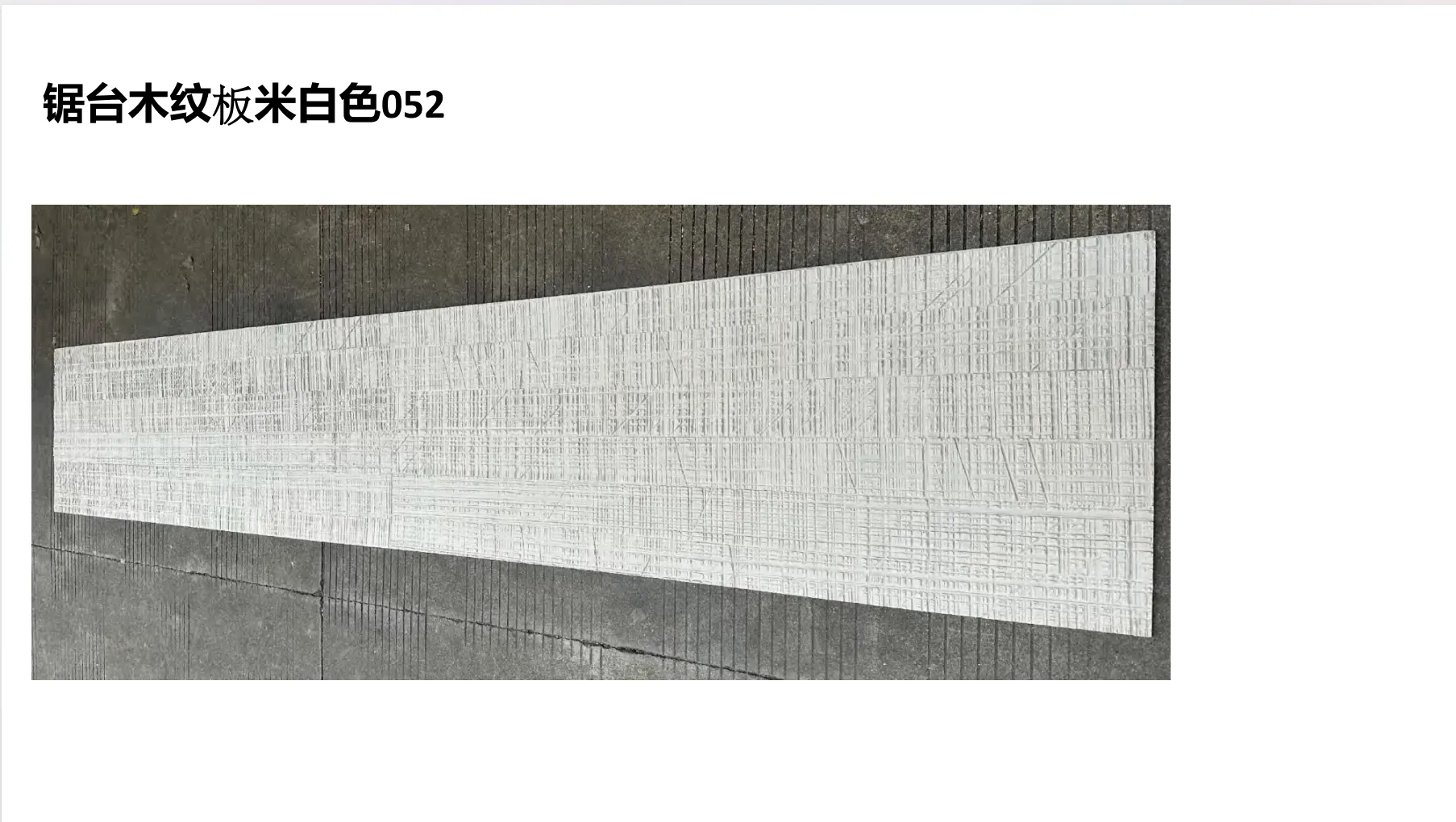
MCM (Modified Composite Material) isn't new, but its latest innovation—sawing wood board—has architects and homeowners buzzing. At first glance, it looks like authentic wood, with the same warm grain patterns and subtle saw marks you'd find in a handcrafted timber plank. But touch it, and you'll notice the difference: it's lighter, smoother, and has a quiet sturdiness that hints at its engineered core. Made by blending natural minerals, polymer resins, and recycled wood fibers, MCM sawing wood board isn't just a mimicry of wood—it's a (upgrade) designed to outlast the elements.
What makes it special? Unlike solid wood, which absorbs moisture and expands, or concrete, which cracks under stress, MCM's composite structure creates a barrier against the elements. It's part of the broader MCM flexible stone family, known for its bendable yet tough composition—meaning it can flex with building movement (a common cause of cracking in rigid materials) without breaking. And while it borrows the look of wood, it skips the downsides: no splinters, no rot, no need for toxic sealants.
Let's break down the benefits that make MCM sawing wood board a weatherproof champion. These aren't just specs on a datasheet—they're solutions to the headaches that keep homeowners up at night.
Wood and water are mortal enemies. Even treated lumber eventually soaks up moisture, leading to rot, mold, and termite infestations. MCM sawing wood board, though? It's hydrophobic. During lab tests, samples submerged in water for 72 hours showed zero water absorption—no swelling, no discoloration, no weakening. For coastal homes, where saltwater spray is a constant threat, or rainy regions like the Pacific Northwest, this is a game-changer. Imagine never having to crawl under your house to check for rot again.
Ever noticed how a wooden deck or siding fades from rich brown to gray after a few summers? That's UV radiation breaking down the wood's natural pigments. MCM sawing wood board is infused with UV-stabilizing additives that lock in color. A project in Arizona, where temperatures soar to 120°F and sunlight is relentless, installed MCM sawing wood board over five years ago. Today, the cladding still looks as vibrant as the day it was installed—no bleaching, no chalky residue.
Materials expand in heat and contract in cold—this "thermal movement" is what causes cracks in concrete and gaps in wood siding. MCM sawing wood board, thanks to its flexible stone core, handles these swings gracefully. In freeze-thaw tests (simulating harsh winter conditions), it withstood 50 cycles of freezing and thawing without a single crack. Compare that to traditional clay bricks, which often start spalling after just 20 cycles, and you see why builders in cold climates are making the switch.
Hail, flying debris, even accidental bumps from ladders—exterior cladding takes a lot of hits. Traditional wood dents; aluminum dents worse; stone chips. MCM sawing wood board? It's surprisingly tough. A 2023 study by the Building Materials Institute found it withstood impacts from 2-inch hailstones at 40 mph with only minor surface scuffs, while wood siding in the same test split and splintered. For families with kids, pets, or trees nearby, that's peace of mind in every storm.
Let's be honest: durability matters, but so does beauty. No one wants a home that's "tough" but ugly. MCM sawing wood board shines here, too. Its surface mimics the look of real saw-cut wood, with variations in grain and texture that feel organic, not manufactured. Unlike wood grain board (which can look flat and repetitive), MCM sawing wood board has depth—you can see the "saw marks," the slight irregularities that make natural wood so charming.
And it's versatile. Want a modern, sleek look? Opt for a smooth finish in light oak. Going for rustic? Choose a rough-sawn texture in walnut or cedar. It pairs beautifully with other materials, too. Imagine a home with MCM sawing wood board siding, accented by bamboo mat board trim and fair-faced concrete pillars—warmth meets industrial edge, all weatherproof. Architects love it because it lets them get creative without sacrificing performance.
Still on the fence? Let's compare MCM sawing wood board to three common cladding options. The numbers speak for themselves:
| Material | Weather Resistance | Maintenance | Aesthetic Appeal | Weight (per sq ft) |
|---|---|---|---|---|
| MCM Sawing Wood Board | Excellent (resists moisture, UV, impact, and thermal stress) | Low (occasional cleaning with soap and water) | High (authentic wood look with natural texture) | 1.5–2 lbs (lightweight, easy to install) |
| Traditional Wood Siding | Poor (prone to rot, warping, and insect damage) | High (repaint/stain every 2–3 years; replace rotted boards) | High (warm, natural look but fades over time) | 3–4 lbs (heavier, requires sturdy framing) |
| Fair-Faced Concrete | Good (resists moisture but cracks under thermal stress) | Moderate (seal every 5–7 years; repair cracks) | Medium (industrial look, limited color options) | 10–12 lbs (very heavy, requires structural support) |
| Bamboo Mat Board | Fair (resists moisture but fades in sunlight) | Moderate (clean regularly; replace if mold develops) | Medium (textured, natural look but less versatile) | 2–3 lbs (lightweight but less durable than MCM) |
Numbers tell part of the story, but real-world use tells the rest. Take the case of a beachfront home in South Carolina. The owners had struggled for years with cedar siding that needed replacing every 5 years due to saltwater damage. In 2021, they switched to MCM sawing wood board in a "driftwood gray" finish. Two hurricane seasons later, the siding looks brand-new—no peeling, no discoloration, no signs of corrosion. "We used to dread storms," the homeowner told me. "Now? We barely think about the siding. It just works."
Or consider a mountain retreat in Colorado, where heavy snow and below-freezing temperatures are the norm. The builder chose MCM sawing wood board for its lightweight design (critical for the home's timber frame) and resistance to frost heave. Three winters in, the cladding hasn't cracked or warped, even with snow piling up against it. "It's like having wood that forgot it's wood," the architect joked.
MCM sawing wood board isn't just durable—it's easy to install. Unlike heavy stone or concrete, it cuts with standard tools, and its lightweight design means fewer workers are needed to hang it. Contractors report saving 30% on installation time compared to traditional wood siding. And because it's flexible, it adapts to uneven walls, reducing the need for perfect framing—a boon for older homes with wonky exteriors.
But the real win is longevity. Most manufacturers back MCM sawing wood board with a 25-year warranty against fading, cracking, and rot. Compare that to traditional wood's 10–15 year lifespan, and the math adds up: even with a slightly higher upfront cost, MCM saves money in the long run by eliminating replacement and maintenance fees.
At the end of the day, exterior cladding is about more than protection—it's about creating a space that feels like home, year after year. MCM sawing wood board doesn't just shield your building from the weather; it lets you enjoy the best of natural materials without the stress. It's for the homeowner who wants a porch that looks inviting in photos and stays inviting after a storm. For the architect who refuses to choose between beauty and performance. For anyone who's ever thought, "There must be a better way."
So, the next time you're planning a renovation or building from scratch, ask yourself: What do I want my cladding to do? If the answer is "protect my home, look great, and let me stop worrying," MCM sawing wood board might just be the solution you've been waiting for. After all, the best cladding isn't just a barrier—it's a promise: that your building will stand strong, beautiful, and weatherproof, for decades to come.
Recommend Products












