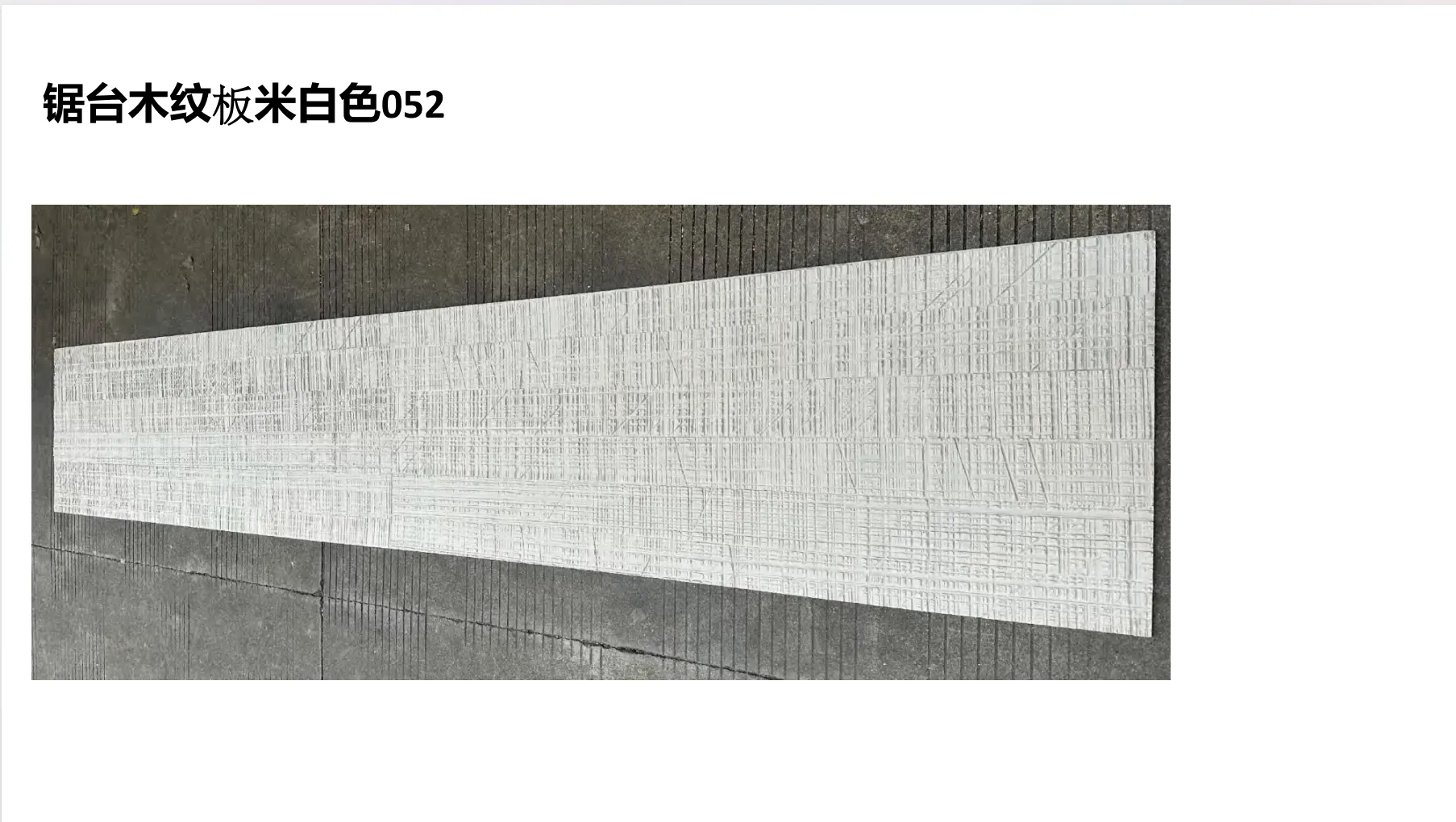
The Warmth of Tradition: The Enduring Allure of Sawing Wood Board Grain Patterns
Walk into a cozy cabin in the woods, a historic library, or even a modern minimalist home, and there's a good chance your eyes will linger on one element: the wood. Not just any wood, but wood with grain patterns that tell a story—of growth rings, of the tree's journey from sapling to maturity, of the hands that sawed, sanded, and shaped it into something functional and beautiful.
Sawing wood board
grain patterns are more than just a design choice; they're a connection to nature, a link to craftsmanship that spans centuries. There's a reason we call wood "warm"—it's not just about temperature. It's the way light dances along the grain, the subtle variations in color from heartwood to sapwood, the tactile satisfaction of running a hand over a smoothly sanded surface and feeling the slight ridges of the grain beneath your fingertips.
To understand the magic of
sawing wood board grain patterns, you first have to understand how they're made. When a tree is felled, the log is cut into boards using different sawing techniques—plain-sawn, quarter-sawn, rift-sawn—and each method reveals a unique pattern. Plain-sawn boards, for example, often showcase broad, sweeping curves and "cathedral" arches, created by cutting the log parallel to its growth rings. Quarter-sawn boards, by contrast, yield straighter, more uniform grains with flecks of color (called "ray flecks" in oak), a result of cutting the log at a 90-degree angle to the growth rings. No two boards are identical; even from the same tree, the grain shifts, twists, and turns, making each piece a one-of-a-kind work of art.
But it's not just about aesthetics. The grain pattern affects the wood's behavior, too. Straight grains are strong and stable, making them ideal for structural elements like beams and flooring. Curly or wavy grains, while visually striking, can be more prone to warping if not properly dried. This duality—beauty and function—has made
sawing wood board a staple in design for millennia. From the oak planks of medieval castles to the teak decks of luxury yachts, wood grain has been a silent partner in human progress, offering both utility and soul.
Yet, for all its charm, traditional
sawing wood board has its limitations. Wood is a natural material, and nature is imperfect. It swells in humidity, shrinks in dry air, and can warp or crack if exposed to extreme conditions. It's susceptible to pests like termites, to rot if not sealed properly, and to scratches and dents from daily wear and tear. Maintaining wood surfaces often means regular sanding, staining, and sealing—a labor of love that not everyone has the time or budget for. Then there's the sustainability question. While FSC-certified and reclaimed wood options exist, the demand for rare or exotic woods still drives deforestation in some regions, casting a shadow over wood's eco-friendly reputation. For designers and architects working on large-scale projects—think commercial buildings, high-traffic public spaces, or coastal properties where salt air is a constant threat—these limitations can be deal-breakers.
A Homeowner's Love-Hate Relationship with Sawed Wood Floors
Take Maria, a homeowner in Portland, Oregon, who renovated her 1920s bungalow with reclaimed oak flooring. "I fell in love with the grain patterns—each board has these deep, rich swirls, like little rivers," she says. "But after five years, the floors are scratched from our dog's nails, and there's a section near the kitchen that warped after a minor leak. I've had to refinish them twice, and it's not cheap. I still adore the way they look, but some days, I wonder if there's a material that can give me that same warmth without the upkeep."
The Rise of Innovation: Custom MCM Surface Designs Redefine Possibility
Enter
MCM flexible stone
and custom MCM surface designs—a revolution in materials science that's challenging the status quo. MCM, or Modified Composite Material, is exactly what it sounds like: a blend of natural minerals, polymers, and reinforcing fibers engineered to mimic the look and feel of traditional materials (wood, stone, metal) while overcoming their weaknesses. Think of it as nature, but better—lighter, stronger, more flexible, and infinitely customizable. And in the world of surface design, MCM has quickly become a favorite for architects, interior designers, and builders who refuse to choose between beauty and practicality.
So, what makes MCM so special? Let's start with the basics. Unlike solid wood or stone, MCM is a composite, meaning it's made in layers. Typically, there's a base layer for strength, a core layer with the design (whether it's wood grain, stone texture, or metallic finish), and a protective top layer that resists scratches, stains, and UV rays. This construction makes MCM incredibly thin—often just 3-6mm thick—and lightweight, weighing up to 80% less than natural stone. That thinness and flexibility are game-changers:
MCM flexible stone
can bend around curved walls, wrap columns, or even be applied to ceilings, opening up design possibilities that were once impossible with rigid materials like solid wood or marble.
One of the most exciting aspects of MCM is its ability to replicate natural materials with stunning accuracy—while still offering endless customization. Love the look of wood grain but hate the maintenance?
Wood grain board
, an MCM product, mimics the swirls, knots, and color variations of sawed wood, right down to the subtle sheen of polished oak or the matte texture of reclaimed pine. But unlike real wood, it won't warp, rot, or fade in sunlight. It's water-resistant, scratch-resistant, and requires nothing more than a quick wipe with a damp cloth to stay looking new. And because it's a composite, you can choose from hundreds of "wood" species—from classic oak and walnut to exotic teak and mahogany—without contributing to deforestation.
But MCM doesn't stop at wood. It can replicate stone, too—
travertine, marble, slate—with the same level of detail. Take
travertine (vintage silver)
, for example. Natural
travertine is a porous limestone with a distinct pitted texture and warm, earthy tones, but it's heavy, expensive, and requires regular sealing to prevent staining. MCM's take on
travertine (vintage silver) captures that same pitted texture and adds a modern twist: a cool, silvery hue that shimmers in light, perfect for a contemporary lobby or a sleek kitchen backsplash. And because it's flexible, it can be used to clad a curved or a feature wall without the need for heavy structural support.
For those craving something more metallic, MCM offers options like
foamed aluminium alloy board (vintage gold)
. Foamed aluminium is a lightweight, durable material with a unique cellular structure that gives it excellent sound and heat insulation properties. When finished in vintage gold, it mimics the warmth of aged brass or copper but with none of the tarnishing or weight. Imagine a restaurant exterior clad in panels of foamed aluminium alloy (vintage gold)—it catches the sunset, glows like a beacon, and stands up to rain, snow, and salt without losing its luster. That's the power of MCM: it takes the best of natural and metallic materials and leaves the drawbacks behind.
From Concept to Curved Wall: How MCM Transformed a Hotel Lobby
Architect Raj Patel faced a challenge when designing the lobby of a boutique hotel in Miami: the client wanted a feature wall that looked like stacked stone but could curve around a 90-degree corner. "Natural stone was out of the question—it's too heavy and rigid," Patel explains. "We considered wood, but with Miami's humidity, it would have warped in months. Then we found MCM flexible stone. We chose a slate-like texture in a deep charcoal gray, and the installers were able to bend the panels around the curve like they were paper. The result? A wall that looks like it's made of solid stone, but weighs a fraction of the real thing. Guests can't believe it's not natural—they run their hands over it, feeling for the texture, and are shocked when we tell them it's a composite."
Beyond the Binary: Blending Tradition and Innovation in Design
Here's the thing: choosing between
sawing wood board grain patterns and custom MCM surface designs doesn't have to be an either/or proposition. Some of the most compelling designs today blend the two, using the warmth of real wood in intimate spaces and the durability of MCM in high-impact areas. Imagine a restaurant where the dining tables are made of solid oak with stunning sawed grain patterns, while the walls are clad in
wood grain board
(MCM) that mimics the same oak but resists spills and scratches from busy servers. Or a home where the living room floor is reclaimed maple (sawed wood), and the outdoor patio is covered in MCM
travertine (vintage silver)
that looks like natural stone but stands up to rain, snow, and summer barbecues.
This blend of old and new speaks to a larger trend in design: the desire to honor tradition while embracing progress. We love the stories that natural materials tell, but we also crave the reliability and innovation that modern technology offers. MCM doesn't replace wood; it complements it, allowing designers to use wood in ways that were once impractical. For example, a designer might use thin slices of real wood veneer on cabinet doors (showcasing those beautiful grain patterns) and pair them with MCM
foamed aluminium alloy board (vintage gold)
for the cabinet frames, creating a look that's both warm and futuristic.
Sustainability, too, benefits from this hybrid approach. By using MCM for large, high-wear surfaces, we reduce the demand for natural materials, leaving more forests standing and more stone in the earth. When we do use real wood, we can reserve it for pieces that matter most—like a dining table where family meals are shared, or a headboard where we lay our heads at night—making the choice feel intentional and meaningful.
A Restaurant's "Best of Both Worlds" Design
Chef Elena Rodriguez wanted her new restaurant, "Roots & Metal," to reflect her cooking philosophy: honoring traditional techniques with a modern twist. "The space needed to feel warm and rustic, but also sleek and durable enough for a busy kitchen," she says. Her designer proposed a mix: reclaimed barn wood (sawed wood board) for the host stand and banquette backs, where guests would touch and interact with it daily, and MCM wood grain board for the walls and ceiling, which would withstand grease, steam, and constant cleaning. "The MCM wood grain is so realistic that guests often ask if the walls are real wood," Rodriguez laughs. "And the best part? I don't have to worry about the barn wood warping near the kitchen—we used it where it counts, and MCM takes care of the rest."
The Future of Design: Where Grain Meets Innovation
As we look ahead, it's clear that both
sawing wood board grain patterns and custom MCM surface designs have a place in the future of architecture and interior design. Wood, with its timeless warmth and emotional resonance, will always hold a special spot in our hearts. But MCM, with its flexibility, durability, and endless customization options, is opening doors to designs that were once only dreams—curved skyscrapers clad in stone-like panels, homes with walls that change color with the light, commercial spaces that feel natural but require zero maintenance.
The key, perhaps, is balance. We don't have to choose between the past and the future; we can have both. We can run our hands over a sawed wood tabletop and feel the history in its grain, then walk into a lobby clad in
MCM flexible stone and marvel at the innovation that made it possible. In doing so, we create spaces that are not just beautiful, but meaningful—spaces that tell stories of tradition and progress, of nature and human ingenuity.
So, whether you're renovating your home, designing a commercial building, or just daydreaming about your next project, take a moment to appreciate both sides of this design rivalry. The sawed wood board grain patterns that have warmed our spaces for centuries, and the custom MCM surface designs that are redefining what's possible today. Together, they're not competitors—they're collaborators, working to create a world that's as rich in history as it is in innovation.