
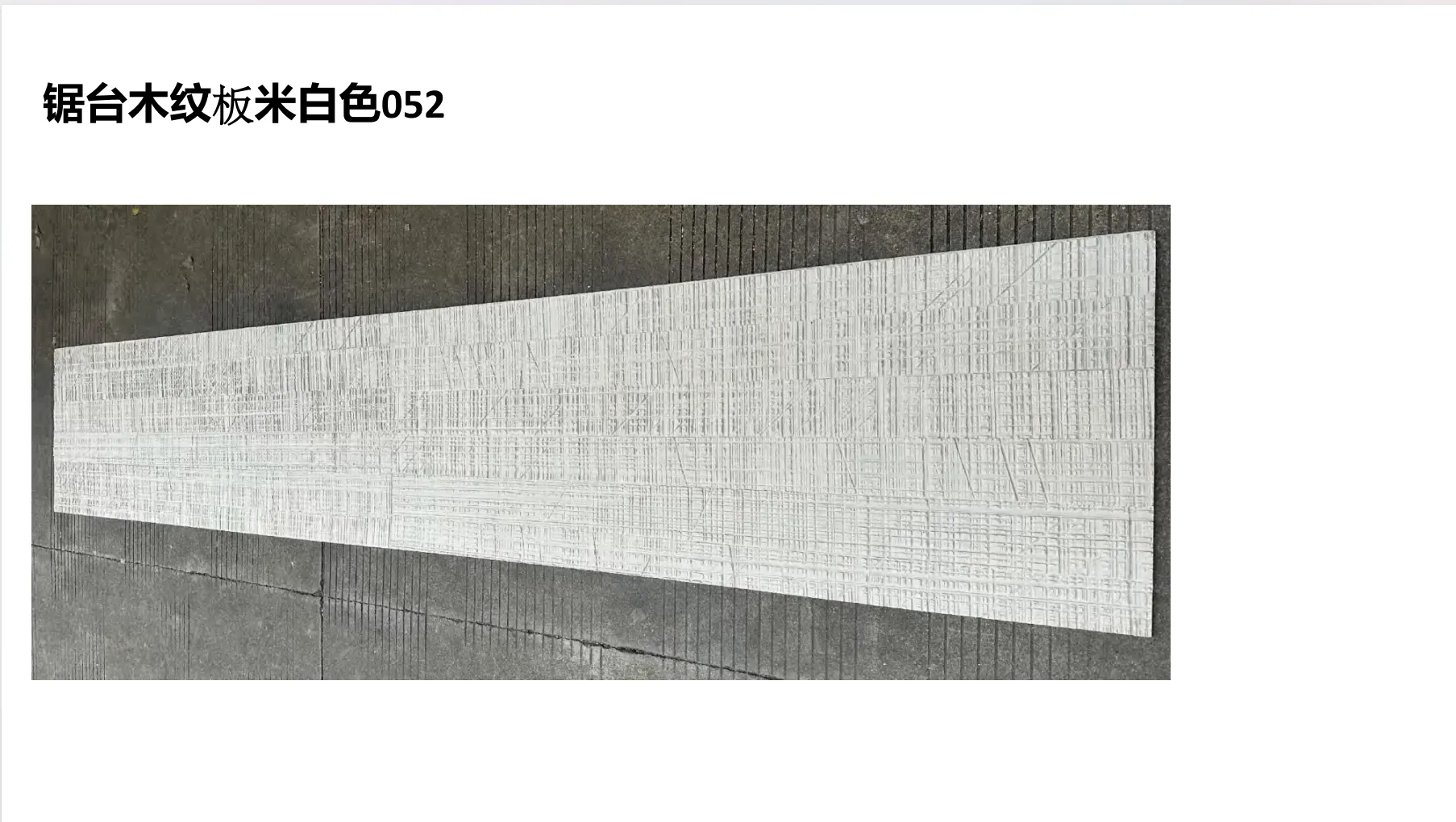
In the heart of Riyadh's bustling construction scene, a quiet shift is underway. For decades, sawing wood board—with its warm grains and timeless appeal—has been a staple in Saudi Arabia's architectural palette, gracing everything from luxury villas to boutique hotels. Yet as the kingdom embraces rapid urbanization, sustainability goals, and the harsh realities of its arid climate, a new generation of materials is stepping into the spotlight: Modified Composite Material (MCM) solutions. This article explores the evolving market for sawing wood board in Saudi Arabia, the trends reshaping its demand, and how MCM alternatives are redefining what's possible in design and durability.
Wood has long held a special place in Saudi design. Its natural texture adds warmth to minimalist spaces, while its versatility bridges traditional Najdi architecture and sleek modernism. From the intricate wooden latticework of heritage homes to the polished wood accents in Riyadh's skyline-defining skyscrapers, sawing wood board has been a go-to for architects aiming to balance aesthetics with familiarity.
Today, demand for sawing wood board remains steady, driven by several key factors. The kingdom's Vision 2030 initiative, which prioritizes tourism and luxury development, has spurred a boom in hospitality projects—hotels, resorts, and restaurants eager to create inviting, "home-like" environments. Residential developers, too, are leaning into wood's appeal, using it in flooring, wall cladding, and furniture to differentiate high-end properties in competitive markets like Jeddah and Dammam.
Yet beneath this demand lies a growing tension. Saudi Arabia's arid climate—scorching summers, low humidity, and occasional sandstorms—poses unique challenges for wood. Traditional sawing wood board is prone to warping, cracking, and termite infestations, requiring frequent maintenance and replacements. Add to that the fact that Saudi Arabia is not a major wood producer, relying heavily on imports from Europe, Africa, and Southeast Asia, and costs can skyrocket. For developers and homeowners alike, the "beauty" of wood often comes with a hidden price tag: time, money, and environmental guilt.
To understand the future of sawing wood board, we must first examine the trends driving its current demand—and where those trends might collide with reality.
Sustainability Takes Center Stage : As global awareness of deforestation grows, Saudi Arabia's construction industry is under pressure to adopt eco-friendly practices. Green building certifications like LEED and Estidama are becoming prerequisites for major projects, and traditional wood—often sourced from non-sustainable forests—fails to meet these standards. This has led developers to ask: Is there a way to get the "look" of wood without the environmental cost?
Durability in Extreme Climates : Saudi Arabia's average summer temperatures exceed 45°C (113°F), and UV radiation is intense. Sawing wood board, even when treated, struggles to withstand these conditions long-term. Homeowners in Riyadh report replacing exterior wood cladding every 5–7 years, a cycle that's both inconvenient and costly. Architects are now prioritizing materials that can "keep up" with the climate, without sacrificing style.
Design Versatility : Modern Saudi architecture is bold and experimental, blending futuristic skyscrapers with cultural motifs. Sawing wood board, while versatile, has limitations in terms of size, shape, and finish. Developers craving large-format panels, custom textures, or metallic accents are finding wood restrictive—opening the door for alternative materials that offer more creative freedom.
For all its charm, sawing wood board is increasingly falling short in Saudi Arabia's evolving market. Consider a recent project in Jeddah's waterfront district: a luxury hotel aimed to use reclaimed teak for its exterior cladding to align with sustainability goals. Within two years, the wood had faded significantly, warped at the edges, and required a full replacement—costing the developer over SAR 500,000. "We loved the look, but the maintenance was a nightmare," said the project's lead architect. "We needed something that could stand up to the sun and sand, but still feel warm and organic."
Another pain point? Cost. Imported hardwoods like oak or walnut can cost upwards of SAR 200 per square meter, before installation. When factoring in treatments, sealants, and future repairs, the total lifecycle cost often doubles. For mid-range projects, this is prohibitive—forcing developers to compromise on design or cut corners on quality.
This is where Modified Composite Material (MCM) steps in. MCM is a revolutionary category of cladding and paneling made from a blend of natural minerals, polymers, and fibers, engineered to mimic the look of traditional materials—wood, stone, marble—while offering superior durability, flexibility, and sustainability. In Saudi Arabia, MCM has quickly become the "secret weapon" for architects and developers seeking to balance aesthetics, performance, and cost.
MCM products are designed with the kingdom's climate in mind: they're UV-resistant, moisture-proof, and immune to termites. They're also lightweight, reducing transportation and installation costs, and can be customized in endless textures, colors, and sizes. Best of all, most MCMs are made from recycled or locally sourced materials, aligning with Saudi Arabia's sustainability goals. For those mourning the loss of wood's warmth, fear not: MCM manufacturers have mastered the art of replication, creating panels that look and even feel like real wood—without the headaches.
Let's dive into the MCM products that are stealing the show in Saudi Arabia, offering a compelling alternative to sawing wood board.
1. MCM Flexible Stone : If versatility is your priority, MCM flexible stone is a game-changer. As the name suggests, this material is bendable, making it ideal for curved surfaces, columns, or custom-shaped facades—areas where rigid wood board would crack. Available in wood-like textures (think oak, pine, and teak), it's UV-stable and water-resistant, perfect for both interior and exterior use. A recent project in Riyadh's King Abdullah Financial District used MCM flexible stone to clad a circular lobby wall, creating the illusion of a giant wooden drum—without a single piece of real wood.
2. MCM Big Slab Board Series : For developers craving seamless, large-scale designs, MCM big slab board series delivers. These panels come in sizes up to 1200x2400mm, minimizing grout lines and creating a sleek, modern look. Imagine a hotel lobby with 3-meter-tall "wood grain" walls that stretch from floor to ceiling—no seams, no warping, no maintenance. That's the power of MCM big slabs. They're also lighter than traditional wood boards, reducing structural load and cutting installation time by up to 40%.
3. Wood Grain Board : For purists who want the exact look of wood, wood grain board is the answer. Using advanced 3D printing technology, MCM manufacturers can replicate the intricate knots, grains, and color variations of real wood—down to the subtle imperfections that make it feel authentic. Unlike sawing wood board, however, wood grain board is scratch-resistant, fade-proof, and doesn't require sealing. A villa project in Al Khobar recently used wood grain board for its outdoor deck; after two years of exposure to sun and rain, the surface remains as vibrant as the day it was installed.
4. Bamboo Mat Board : For a touch of natural elegance with a sustainable twist, bamboo mat board is gaining traction. Bamboo is one of the fastest-growing plants on Earth, making it an eco-friendly alternative to hardwoods, and MCM bamboo mat board captures its unique, woven texture beautifully. It's popular in residential projects, particularly in bedrooms and living rooms, where its soft, organic look creates a calming atmosphere. Plus, it's moisture-resistant—ideal for Saudi bathrooms or kitchens.
5. Fair-Faced Concrete : Okay, it's not "wood-like," but fair-faced concrete deserves a spot here for its ability to complement wood-inspired designs. With its raw, industrial aesthetic, fair-faced concrete pairs stunningly with wood grain board, creating a modern, balanced look. It's also incredibly durable, heat-resistant, and cost-effective—making it a favorite for commercial spaces like cafes and co-working offices in Riyadh and Jeddah.
| Feature | Sawing Wood Board | MCM Alternatives (e.g., Wood Grain Board, MCM Big Slab) |
|---|---|---|
| Cost (per sqm) | SAR 150–300 (imported hardwoods) | SAR 80–180 (varies by product) |
| Durability in Saudi Climate | Low (prone to warping, cracking, termites) | High (UV-resistant, moisture-proof, termite-proof) |
| Maintenance | High (annual sealing, repairs every 5–7 years) | Low (occasional cleaning with water and mild soap) |
| Sustainability | Low (often non-sustainable sourcing, high carbon footprint from imports) | High (recycled materials, local production, low carbon footprint) |
| Design Versatility | Limited (fixed sizes, shapes, and finishes) | High (custom sizes, textures, colors, and flexibility for curved surfaces) |
The numbers speak for themselves, but it's the real-world impact that's convincing developers to make the switch. Take the case of a mixed-use development in Riyadh's Diplomatic Quarter: the project initially planned to use sawing wood board for its retail mall's interior cladding. After crunching the numbers, the team opted for MCM wood grain board instead. The result? A 30% reduction in material costs, a 50% faster installation, and zero maintenance issues after three years. "We were worried our customers wouldn't notice the difference," said the project manager. "Instead, they kept asking where we sourced the 'beautiful wood.' We had to tell them it wasn't wood at all!"
Another example: a luxury resort in Yanbu, a coastal city known for its high humidity. The resort's exterior was originally designed with teak cladding, but concerns about moisture damage led the architects to switch to MCM flexible stone with a wood grain finish. Today, the cladding remains intact, and guests rave about the "tropical, beachy vibe" it creates. "We've saved over SAR 2 million in maintenance costs alone," said the resort's facilities manager. "It was a no-brainer."
So, is sawing wood board dead in Saudi Arabia? Not entirely. For heritage projects or high-end custom builds where budget is no object, wood will always have a place. But for the majority of developers, homeowners, and architects, MCM is emerging as the smarter, more sustainable choice.
Looking ahead, we can expect to see even more innovation in MCM technology. Manufacturers are experimenting with new textures (think reclaimed wood, driftwood, or even petrified wood) and finishes (matte, gloss, metallic), giving designers endless options. We'll also see MCM integrated into smart buildings, with panels that reflect heat, insulate spaces, or even generate solar power—aligning with Saudi Arabia's push for energy efficiency.
At its core, the shift from sawing wood board to MCM is about more than just materials—it's about reimagining what's possible in Saudi architecture. It's about building spaces that are beautiful and resilient, sustainable and affordable, traditional and forward-thinking. In a kingdom that's rapidly transforming, MCM isn't just an alternative to wood—it's a symbol of progress.
Sawing wood board has served Saudi Arabia well, but as the kingdom grows, so too must its choice of building materials. MCM—with its durability, sustainability, and design flexibility—offers a path forward, one that honors the past while building for the future. Whether it's the warm grains of wood grain board, the sleek seamless look of MCM big slabs, or the eco-friendly charm of bamboo mat board, MCM is proving that "natural" doesn't have to mean "high-maintenance" or "unsustainable."
For developers, architects, and homeowners in Saudi Arabia, the message is clear: It's time to let go of the limitations of traditional wood and embrace the new "natural." Your projects, your budget, and the planet will thank you.
Recommend Products












