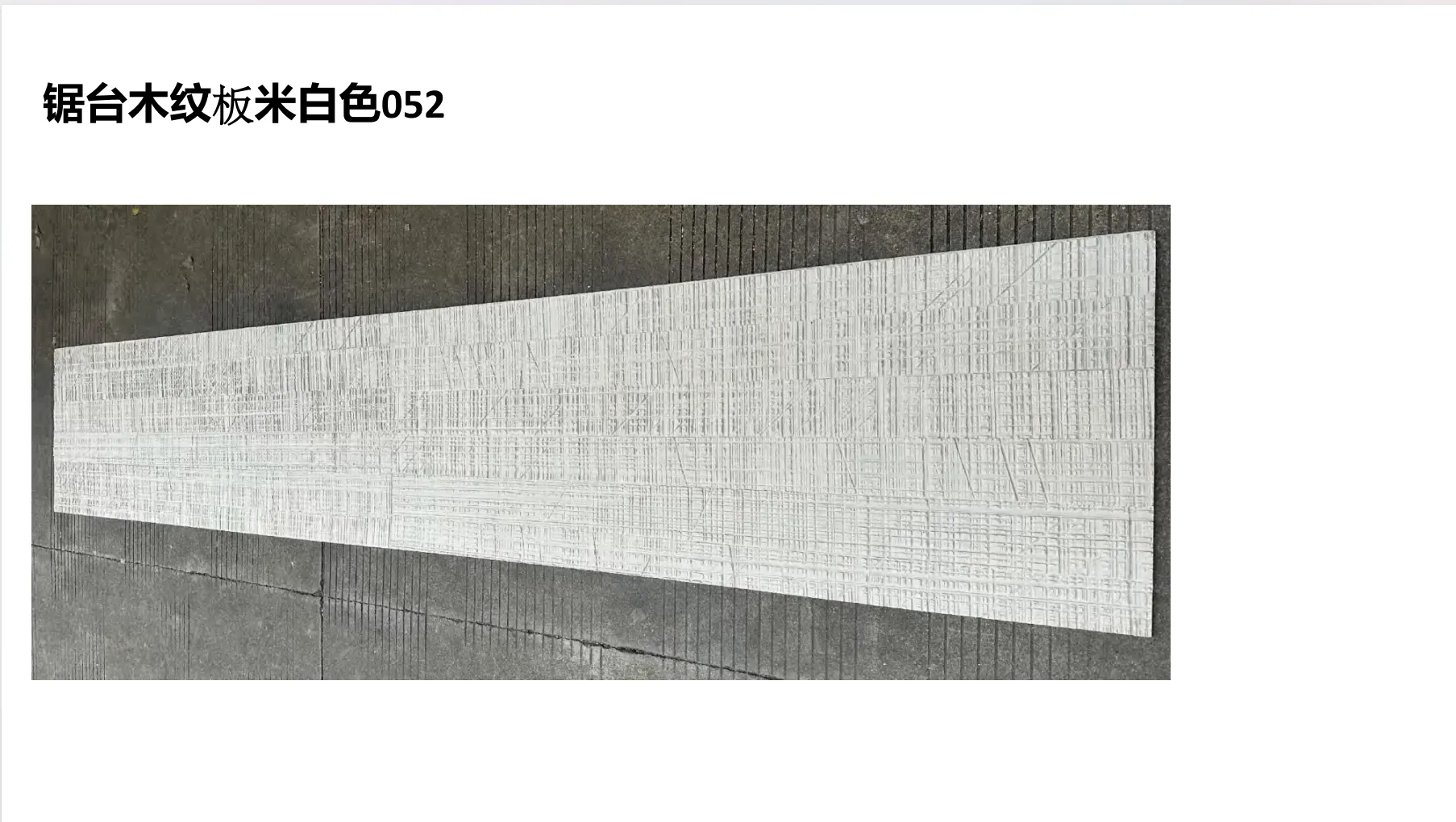
Let's talk numbers—because in construction, performance isn't just about looks. Saudi Arabia's climate is unforgiving: average summer temperatures hover around 45°C (113°F), with humidity spiking in coastal areas like Jeddah. Add in the occasional sandstorm, which bombards buildings with abrasive particles, and you've got a recipe for material failure. So how does MCM's
sawing wood board stack up?
First,
heat resistance
. Traditional wood expands and contracts with temperature changes, leading to gaps, warping, and even structural damage over time. MCM's composite formula, however, is designed to minimize thermal movement. Tests show the
sawing wood board maintains its shape even when exposed to temperatures ranging from -20°C to 70°C—well beyond Saudi's extreme weather. That stability is a lifesaver for exterior cladding, where temperature fluctuations are most severe.
Then there's
moisture resistance
. While Saudi is mostly arid, coastal regions like Jeddah experience high humidity, and unexpected rainstorms (yes, they happen!) can soak building materials. Solid wood absorbs moisture, leading to rot or mold. MCM's
sawing wood board, by contrast, has a water absorption rate of less than 2%, thanks to its polymer coating. "We used it in a beachfront villa in Yanbu," says Ahmed Khalid, a project manager with a Jeddah construction company. "Three years in, and the boards still look brand new—no swelling, no discoloration. Even after the winter rains, there's zero mold. That's unheard of with real wood here."
Durability
is another win. Sandstorms are a fact of life in Saudi, and their gritty winds can scratch or erode soft materials. MCM's
sawing wood board has a hardness rating of 3H on the pencil scale (for context, solid pine is around 2H), meaning it resists scratches and abrasions. It's also termite-proof—a crucial feature in a region where wood-boring insects can decimate traditional materials.