
In the world of architecture and interior design, the choice of building materials is more than just a practical decision—it's a storyteller. Materials shape spaces, evoke emotions, and leave lasting impressions. For decades, traditional options like sawing wood boards have been the backbone of construction, admired for their warmth and natural appeal. Yet, as the industry evolves toward sustainability, efficiency, and innovation, the cracks in the traditional supply chain are becoming harder to ignore. Enter Modified Composite Material (MCM) solutions: a new generation of building materials designed to redefine what's possible. Today, we'll explore the struggles of the sawing wood board supply chain and how MCM is stepping in to offer a seamless, one-stop alternative.
Sawing wood boards have long been cherished for their organic texture and timeless charm. From rustic cabins to modern offices, they add a touch of nature to built environments. But behind that charm lies a supply chain fraught with challenges—ones that architects, contractors, and even homeowners are increasingly struggling to overlook.
At the heart of the sawing wood board supply chain is a reliance on timber—a resource deeply intertwined with the health of our planet. Sourcing high-quality wood starts with logging, but this process is far from straightforward. Deforestation, driven by demand for hardwoods like oak and teak, has led to stricter regulations and sustainability concerns. Many regions now limit logging to certified forests, but this certification comes with higher costs and limited availability. Seasonal variations further complicate matters: wood harvested in wet seasons retains more moisture, leading to warping or cracking during drying, while dry-season timber may be scarcer. For suppliers, this means unpredictable lead times and inconsistent quality—hardly ideal for large-scale projects with tight deadlines.
Once timber reaches the mill, the journey from log to board is labor-intensive and prone to waste. Sawing wood boards require precision, but natural wood is inherently variable. Knots, grain patterns, and density differences mean no two boards are identical. This inconsistency forces manufacturers to sort through batches, discarding up to 20% of raw material as scrap—an expensive and environmentally costly byproduct. Even after sorting, the milling process itself is energy-heavy: large saws, drying kilns, and sanding machines consume significant electricity, driving up carbon footprints. For builders, this translates to higher material costs and the headache of matching boards on-site to avoid jarring visual discrepancies.
Transporting sawing wood boards is a logistical nightmare. Wood is heavy, bulky, and surprisingly fragile—even a minor bump during transit can cause splintering or warping. To protect boards, suppliers wrap them in layers of plastic and secure them to pallets, adding to packaging waste. Shipping costs are another pain point: wood's weight increases fuel consumption, and oversized loads often require special permits, delaying deliveries. For international projects, the challenges multiply. Wood is subject to strict quarantine regulations to prevent the spread of pests, leading to lengthy customs checks and additional fees. By the time boards reach the construction site, their final cost may have ballooned by 30% or more due to transportation alone.
For homeowners and businesses, the struggles don't end once the boards are installed. Wood is vulnerable to moisture, pests, and wear. In humid climates, it swells; in dry ones, it shrinks. Without regular maintenance—sanding, staining, sealing—wood boards fade, crack, or rot. Even with care, their lifespan is limited: a typical wood deck, for example, needs replacement every 10–15 years. This maintenance burden isn't just costly; it's a drain on time and resources. For designers aiming for durability and low upkeep, wood's natural beauty often comes with a hidden price tag.
Enter MCM: a category of building materials engineered to address the flaws of traditional options like sawing wood boards. Short for Modified Composite Material, MCM blends recycled polymers, natural minerals, and advanced manufacturing techniques to create products that mimic the look of wood, stone, or metal—without the associated supply chain headaches. From MCM flexible stone to MCM big slab board series , these materials are designed to be sustainable, consistent, and versatile. Let's break down how MCM is transforming the supply chain from start to finish.
Unlike sawing wood boards, which depend on virgin timber, MCM prioritizes recycled and abundant resources. Many MCM products incorporate recycled plastics, fly ash (a byproduct of coal combustion), or crushed stone—materials that would otherwise end up in landfills. Take foamed aluminium alloy board (vintage silver) or foamed aluminium alloy board (vintage gold) : these use lightweight, recycled aluminium, reducing reliance on mining. Even stone-look MCM, like travertine (starry green) or lunar peak silvery , avoids quarrying by blending natural mineral powders with binders. The result? A supply chain that's kinder to the planet and less vulnerable to resource scarcity.
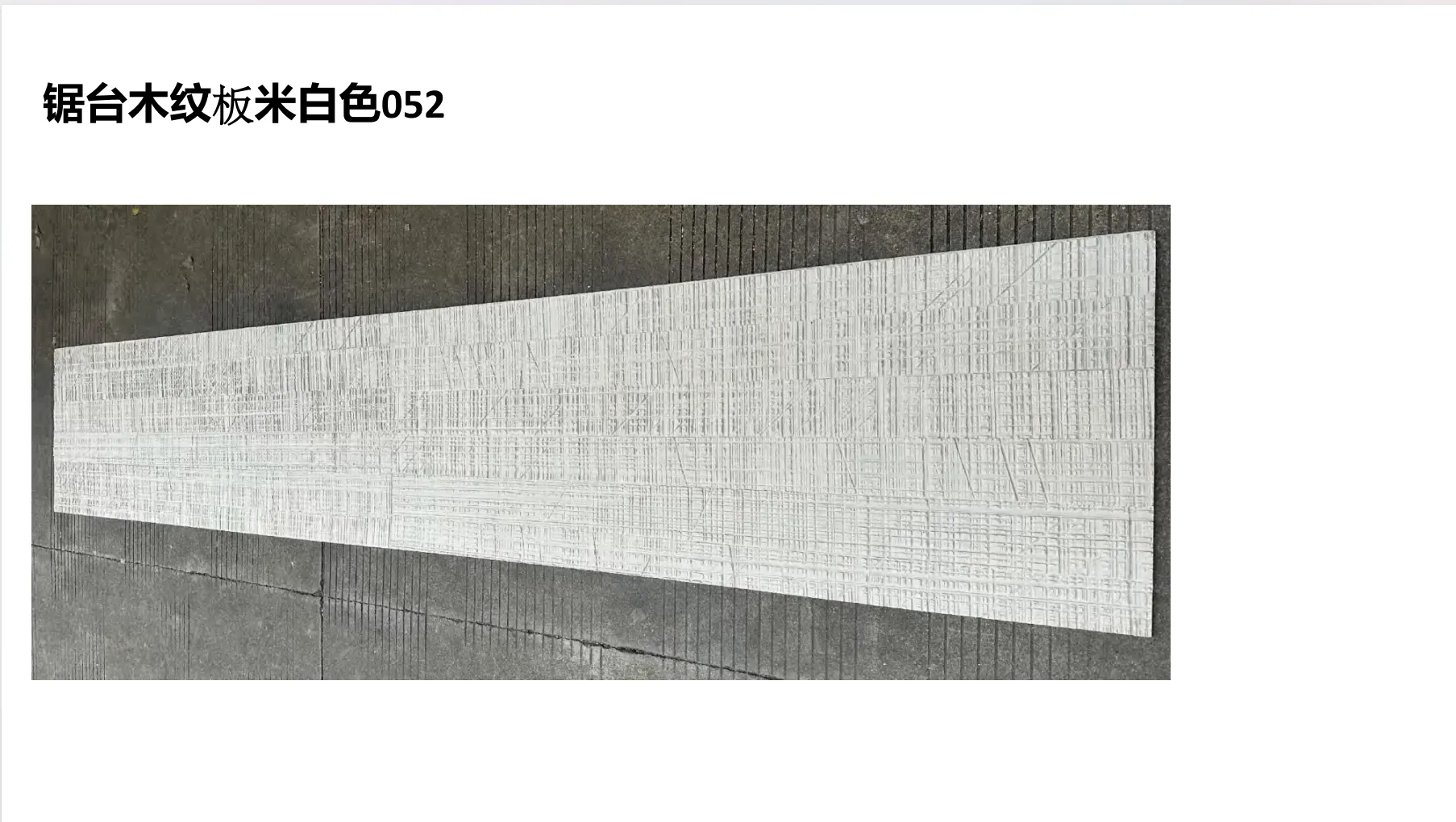
MCM manufacturing is a lesson in efficiency. Unlike the labor-intensive, wasteful process of sawing wood, MCM production leverages 3D printing and automated molding to create consistent, high-quality products. Take wood grain board , for example: MCM manufacturers can replicate the intricate patterns of oak, walnut, or pine with pinpoint accuracy, ensuring every board matches perfectly. There's no need for sorting or discarding imperfect pieces—each panel is identical in color, texture, and density. This precision reduces waste to less than 5% (compared to 20% for wood) and lowers production costs. For large projects, this means faster turnaround times and predictable budgets—no more surprises from inconsistent batches.
One of MCM's biggest advantages is its weight—or lack thereof. Traditional wood boards are heavy and fragile, but MCM panels are lightweight and flexible. MCM flexible stone , for instance, can bend up to 90 degrees without cracking, making it easy to roll and transport in bulk. Even large-format options like MCM big slab board series are lighter than their natural stone counterparts, reducing shipping costs by up to 40%. Since MCM is resistant to moisture, pests, and temperature changes, there's no need for excessive packaging—no plastic wraps or climate-controlled trucks. For international shipments, this translates to faster customs clearance and lower carbon emissions, as lighter loads require less fuel.
For designers and homeowners, MCM's benefits shine brightest in its performance. Unlike wood, which requires constant maintenance, MCM products are built to last. Fair-faced concrete MCM panels resist staining and fading, while travertine (starry green) won't etch or crack in humid environments. Even high-traffic areas, like commercial lobbies or outdoor patios, benefit from MCM's durability: rough granite stone (medium grey) or boulder slab (vintage black) can withstand heavy foot traffic without showing wear. And when it comes to design flexibility? MCM does it all. Want the warmth of wood without the upkeep? Choose wood grain board . Dreaming of a starry night accent wall? travertine (starry blue) or travertine (starry orange) delivers that cosmic texture. MCM doesn't just solve supply chain problems—it unlocks creative possibilities.
| Aspect | Sawing Wood Boards | MCM One-Stop Solutions |
|---|---|---|
| Raw Material Sourcing | Relies on virgin timber; vulnerable to deforestation regulations and seasonal scarcity. | Uses recycled materials (plastics, aluminium, minerals); reduces reliance on natural resources. |
| Manufacturing Consistency | Inconsistent due to natural wood variations (knots, grain, moisture); 20% waste rate. | Precision-engineered via 3D printing/molding; 5% waste rate; identical color/texture across batches. |
| Transportation | Heavy, fragile, and bulky; requires specialized packaging and climate control; high shipping costs. | Lightweight and flexible; can be rolled or stacked; lower fuel consumption and shipping fees. |
| Durability & Maintenance | Prone to warping, rotting, and pests; requires regular sanding, staining, and sealing. | Water-resistant, pest-proof, and fade-resistant; no maintenance beyond occasional cleaning. |
| Design Flexibility | Limited by natural wood properties; difficult to achieve custom colors or textures. | Mimics wood, stone, metal, and more (e.g., lunar peak golden , rust mosaic stone ); customizable patterns and sizes. |
| Sustainability | High carbon footprint due to logging, transportation, and waste. | Low carbon footprint; uses recycled materials; reduces landfill waste. |
| Cost-Efficiency (Lifecycle) | Lower upfront cost but high long-term expenses (maintenance, replacement). | Slightly higher upfront cost but minimal long-term expenses; longer lifespan (20+ years). |
MCM flexible stone is a game-changer for curved or irregular surfaces. Unlike rigid natural stone, this material bends and conforms to arches, columns, or rounded walls—all while mimicking the texture of travertine (starry green) or marble veil white . It's lightweight enough for ceiling installations yet durable enough for outdoor facades, making it a favorite for hotels and retail spaces aiming for drama without the weight.
For projects that demand grandeur, MCM big slab board series delivers. These large-format panels (up to 12 feet long) create seamless walls or floors with minimal grout lines, perfect for modern lobbies or open-concept homes. Choose from boulder slab (vintage gold) for a metallic sheen or fair-faced concrete for an industrial edge—all with the same consistency and durability MCM is known for.
Wood grain board is a love letter to traditional sawing wood boards—without the upkeep. Available in finishes that mimic oak, maple, or teak, it resists moisture, scratches, and fading. Use it in bathrooms, kitchens, or outdoor decks: unlike real wood, it won't warp or rot, even in humid climates. For designers clinging to wood's warmth but craving reliability, this is the solution.
The lunar peak silvery , lunar peak golden , and lunar peak black lineups bring celestial elegance to interiors. These MCM panels feature a textured, metallic finish that shimmers like moonlight on stone—ideal for accent walls or statement ceilings. Lightweight and easy to install, they add luxury without the cost of real metal or stone.
Foamed aluminium alloy board (vintage silver) and foamed aluminium alloy board (vintage gold) blend retro aesthetics with cutting-edge durability. These panels are lightweight, fire-resistant, and corrosion-proof, making them perfect for exterior cladding or industrial-chic interiors. Their vintage finish ages gracefully, developing a unique patina over time—without the rust or decay of real metal.
Sawing wood boards have served us well, but their supply chain challenges—from sourcing to sustainability—are no longer sustainable in a world that demands efficiency and responsibility. MCM solutions, with their focus on recycled materials, consistent manufacturing, and versatile design, offer a path forward. Whether you're drawn to the cosmic allure of travertine (starry green) , the industrial edge of fair-faced concrete , or the warmth of wood grain board , MCM proves that innovation and tradition can coexist.
For architects, contractors, and homeowners, this shift isn't just about materials—it's about peace of mind. No more worrying about warped boards, delayed shipments, or endless maintenance. With MCM, the supply chain becomes a partner, not a problem—one that delivers beauty, durability, and sustainability in equal measure. As we build the spaces of tomorrow, let's choose materials that honor the past while protecting the future. MCM isn't just a solution; it's the next chapter in the story of building materials.
Recommend Products












