
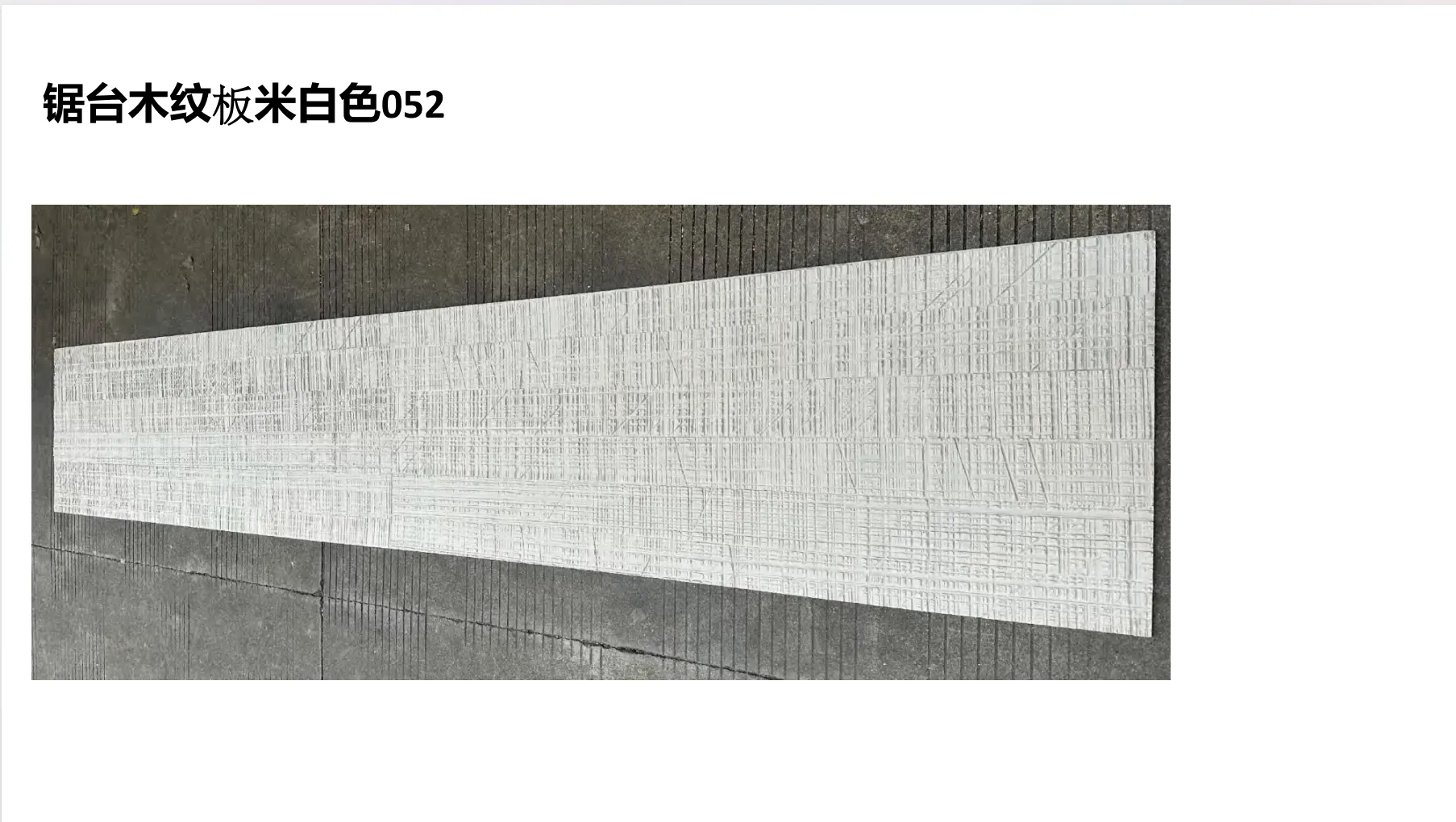
In a world where every choice feels like a ripple in the pond of our planet's health, the materials we build with carry more weight than we might think. Walk into any hardware store or flip through an architecture magazine, and you'll see a dizzying array of options—each promising durability, beauty, or affordability. But lately, there's a third factor stealing the spotlight: sustainability. Homeowners, architects, and builders alike are asking: What does this material take from the Earth? And what does it give back? Today, let's zero in on two contenders in the building materials ring: the classic sawing wood board and the innovative MCM (Modified Composite Material) products. We'll dig into their environmental stories, weigh their impacts, and maybe even help you decide which one deserves a spot in your next project.
Wood has been humanity's building companion for millennia. There's something inherently comforting about it—the way it warms a room, the grain patterns that tell a tree's life story, the soft creak of a wooden floor underfoot. It's no wonder we keep coming back to it. But when we talk about "sawing wood boards," we're talking about the process of cutting down trees, milling them into planks, and prepping them for construction. Let's peel back the layers of this process and see how it stacks up in the sustainability department.
Proponents of wood often highlight that it's a "renewable resource"—after all, trees can be replanted, right? But here's the catch: renewable doesn't always mean sustainable . Let's start with sourcing. Even with certified sustainable forestry practices (like FSC or PEFC), logging still disrupts ecosystems. Old-growth forests, which are biodiversity hotspots, are sometimes cleared for timber, and while replanting helps, a young tree can't replace the complex web of life that an ancient forest supports. Think about it: a single mature tree might host hundreds of species—birds, insects, fungi—many of which can't survive in a monoculture plantation of saplings.
Then there's the time factor. A pine tree might take 25-30 years to reach harvest size, while hardwoods like oak can take 100 years or more. In a world where construction demands are skyrocketing, can we really grow trees fast enough to keep up? And even if we could, the energy and resources needed to maintain plantations—water, fertilizers, pesticides—add another layer of environmental cost. A 2022 study by the European Environmental Agency found that intensive forestry for timber production contributes to soil degradation and water pollution in 30% of managed forest areas. That "renewable" label starts to feel a bit less straightforward.
Once a tree is cut down, the journey to becoming a sawing wood board is far from over. First, the logs are transported—often over long distances—to sawmills. Heavy trucks burning diesel, trains emitting CO2: that's the first hit to the carbon footprint. Then, milling: sawing, planing, sanding. Traditional sawmills use large, energy-hungry machines, and even modern facilities still consume significant electricity. A report by the U.S. Department of Energy estimates that wood product manufacturing accounts for 2-3% of industrial energy use in North America alone.
But it doesn't stop there. Most sawing wood boards need treatments to resist rot, pests, or fire. Pressure-treated wood often contains chemicals like copper azole or chromated copper arsenate (CCA), which, while effective, can leach into soil and water over time. Stains, paints, and sealants add more volatile organic compounds (VOCs) to the mix—harmful for both the environment and the people installing the boards. Even "natural" treatments, like linseed oil, require energy to process and transport. When you add it all up, the "simple" wood board has a surprisingly complex (and energy-heavy) backstory.
Here's a bitter truth: wood, for all its charm, isn't the most durable material out there. Exposed to rain, humidity, or pests, it warps, rots, or gets eaten by termites. Even treated wood has a lifespan—maybe 15-20 years for outdoor use, less in harsh climates. That means more frequent replacements, which translates to more trees cut, more energy used, and more waste. Old wood boards often end up in landfills, where they decompose and release methane, a potent greenhouse gas. While some wood is recycled into mulch or particleboard, the process isn't always efficient, and much of it still ends up as waste. The Environmental Protection Agency (EPA) reports that wood waste makes up 10% of all municipal solid waste in the U.S.—that's millions of tons each year, just from old boards, pallets, and construction scraps.
If sawing wood boards are the reliable old friend, MCM products are the innovative newcomer with a sustainability-focused mindset. MCM stands for Modified Composite Material—a blend of natural minerals, polymers, and recycled materials designed to mimic the look of traditional materials (like wood, stone, or metal) but with a fraction of the environmental impact. You might have heard of specific MCM lines: MCM flexible stone, foamed aluminium alloy board, or wood concrete board, to name a few. But what makes them different? Let's break it down.
At their core, MCM products are engineered to be lightweight, durable, and eco-friendly. Think of them as "smart composites"—they take the best properties of natural materials (like the texture of stone or the warmth of wood) and combine them with synthetic polymers to add strength and flexibility. The key here is that they use less of the resource-intensive raw materials. For example, MCM flexible stone might contain crushed marble or limestone dust (leftover from quarrying, which would otherwise be waste) mixed with a polymer binder. This means less mining, less energy, and less waste right from the start.
Take foamed aluminium alloy board, for instance. Traditional aluminium production is energy-intensive, but foamed aluminium uses a special process to inject gas into molten aluminium, creating a lightweight, porous structure. This reduces the amount of aluminium needed by up to 70% while maintaining strength. And because it's 100% recyclable, at the end of its life, it can be melted down and reused—no landfill destined for this material.
MCM production is designed with efficiency in mind. Unlike sawing wood boards, which require cutting, milling, and treating, MCM products are often made using low-temperature extrusion or compression molding. This uses far less energy than traditional manufacturing. For example, wood concrete board—a popular MCM product that looks like wood but is made from a mix of cement, wood fibers, and recycled plastics—cures at room temperature, eliminating the need for high-heat kilns. A study by the International Composite Materials Association found that MCM production emits 30-50% less CO2 compared to traditional stone or wood processing.
Another win? MCM products are lightweight. A standard MCM panel weighs 30-50% less than a comparable stone or wood panel. That means lower transportation costs (fewer trucks, less fuel) and easier installation (no need for heavy machinery, which saves on job site energy use). Imagine a construction crew installing cladding: with MCM flexible stone, they can carry panels by hand, reducing the need for cranes or forklifts. It's a small change, but multiplied across a project, it adds up to big energy savings.
MCM products are tough. Like, really tough. They're resistant to water, fire, pests, and UV rays—no warping, rotting, or termite damage here. Most MCM panels come with a 20-30 year warranty, but many last even longer. Compare that to a sawing wood board, which might need replacement every 15 years. Fewer replacements mean less demand for raw materials, less manufacturing energy, and less waste over time. It's the sustainability circle: longer lifespan = lower environmental impact.
Take wood concrete board again. It looks just like wood—warm, textured, with visible grain—but it won't swell in the rain or crack in the cold. A school in Portland, Oregon, installed wood concrete board siding 25 years ago, and it still looks brand new. No repainting, no repairs, no need to cut down more trees. That's the kind of durability that makes a difference for the planet.
To really see the difference, let's put sawing wood boards and MCM products head-to-head in a comparison table. We'll look at key sustainability metrics to get a clear picture:
| Metric | Sawing Wood Boards | MCM Products (e.g., MCM flexible stone, foamed aluminium alloy board, wood concrete board) |
|---|---|---|
| Raw Material Source | Requires harvesting trees; may involve deforestation or habitat loss. | Uses recycled or waste materials (e.g., stone dust, recycled plastics) and minimal virgin resources. |
| Production Energy Use | High: logging, milling, transportation, and chemical treatments all consume significant energy. | Low: low-temperature manufacturing, lightweight materials reduce transportation energy. |
| Durability/Lifespan | 15-20 years (outdoor use); prone to rot, pests, and warping. | 20-30+ years; resistant to moisture, pests, and UV damage. |
| Recyclability | Limited: treated wood often can't be recycled; ends up in landfills. | High: most MCM products (e.g., foamed aluminium alloy board) are 100% recyclable. |
| Carbon Footprint (per sq. meter) | Approx. 15-20 kg CO2e (source: Forest Stewardship Council). | Approx. 5-10 kg CO2e (source: International Composite Materials Association). |
Let's look at how MCM products are making a difference in real projects. The GreenWave Office Tower in Singapore, for example, used MCM flexible stone for its exterior cladding. The project team estimated that using MCM instead of natural stone reduced the building's carbon footprint by 40% during construction. Plus, the panels' light weight meant the tower's foundation could be smaller, saving concrete and reducing excavation waste.
Closer to home, a residential development in Colorado chose wood concrete board for its decking and siding. Homeowners love the wood-like look, but they're even happier with the low maintenance: no staining, no sealing, and no worries about termites. "We wanted something that looked natural but wouldn't require us to cut down trees or replace boards every few years," says Sarah Martinez, one of the homeowners. "Wood concrete board checked all the boxes."
And then there's the use of foamed aluminium alloy board in the renovation of an old factory in Detroit. The architects wanted to preserve the building's industrial vibe but needed a material that was fire-resistant and energy-efficient. Foamed aluminium fit the bill: its insulating properties reduced heating costs by 25%, and its vintage silver finish complemented the factory's original brickwork. "It's like having the best of both worlds—old character with new sustainability," says lead architect James Lin.
At the end of the day, the choice between sawing wood boards and MCM products isn't just about sustainability—it's about balance. Wood has a timeless appeal, and when sourced from truly sustainable forests (look for FSC-certified with zero deforestation claims), it can be a responsible choice for small projects. But for larger builds, high-traffic areas, or projects where durability and low maintenance are key, MCM products offer a clear environmental edge.
The good news is that MCM technology is only getting better. Manufacturers are experimenting with even more recycled materials—like ocean plastic or agricultural waste—and developing new finishes that mimic rare woods or stones without the environmental cost. Imagine a future where your home's siding is made from recycled coffee grounds and stone dust, or your kitchen backsplash is foamed aluminium alloy board that was once a soda can. It's not science fiction; it's already happening.
When you choose a building material, you're not just choosing a texture or a color—you're choosing a story. The story of where it came from, how it was made, and where it will go when its job is done. Sawing wood boards tell a story of tradition and nature, but it's a story with some heavy footnotes about deforestation and waste. MCM products, on the other hand, tell a story of innovation and responsibility—a story where we can have beauty, durability, and a healthy planet, all at once.
So the next time you're planning a project, take a moment to ask: What story do I want my materials to tell? If it's a story of sustainability, resilience, and care for the planet, MCM products might just be the plot twist we all need.
Recommend Products












