


It starts with a question we've all asked at some point: "Will this material hold up?" Whether you're a homeowner remodeling a kitchen backsplash, an architect finalizing a commercial facade, or a designer hunting for that perfect texture to tie a room together, the thickness of your building materials isn't just a number on a spec sheet. It's the difference between a project that feels solid and intentional, and one that wobbles under pressure—literally and figuratively.
For decades, sawing wood boards have been the go-to for that warm, organic vibe. But anyone who's wrestled with warped planks, splintered edges, or the sheer weight of thick hardwood knows the struggle. Enter MCM Big Slab Board Series—a line of modified composite materials that's quietly revolutionizing how we think about thickness, durability, and design freedom. Let's dive into why thickness matters, where traditional wood falls short, and how MCM's big slabs are changing the game.
Why Thickness Isn't Just About "How Thick"
Thickness in building materials is a balancing act. Too thin, and you risk fragility; too thick, and you're stuck with heavy, hard-to-install panels that drive up labor costs. For sawing wood boards, this balance has always been tricky. A 2-inch thick oak plank might feel sturdy, but try lifting 50 of them onto a second-story balcony. A ¼-inch thin veneer? It looks great until moisture seeps in, warping the wood beyond repair.
MCM (Modified Composite Material) flips the script. These aren't your average plastic panels or cheap imitations. They're engineered blends of natural minerals, polymers, and fibers—designed to mimic the look of stone, wood, or metal while offering a thickness range that adapts to your project, not the other way around. From 3mm ultra-thin sheets that bend around curves to 12mm rigid slabs that stand up to high-traffic areas, MCM Big Slab Boards let you pick thickness like you'd pick a paint color: based on mood, function, and vision.
The Trouble with Traditional Sawing Wood Boards
Let's get real about wood. We love its grain, its warmth, its story. But as a building material, it's high-maintenance. Traditional sawing wood boards come with three big headaches:
- Thickness = Weight = Headaches: A standard 1x6 pine board (¾ inch thick) weighs about 2.5 pounds per linear foot. Multiply that by a 10-foot wall, and you're looking at 25 pounds of wood per linear foot—before you even add nails or adhesive. Installation becomes a two-person job, and over time, that weight can strain structural supports.
- Moisture and Warping: Wood breathes, which sounds nice until it starts swelling in humidity or shrinking in dry air. A ½-inch thick board might start straight, but after a few seasons, it's bowed or cracked. Suddenly, that "rustic charm" becomes a gap between planks where dust and pests make themselves at home.
- Limited Design Flexibility: Thick wood boards are rigid. Want a curved accent wall? Good luck bending a 1-inch oak plank without snapping it. Thin veneers are flexible but lack depth, leaving surfaces feeling flat and cheap.
These aren't just minor inconveniences. They're project delays, budget overruns, and eventual regret when that "perfect" wood feature starts to fail.
MCM Big Slab Board: Thickness with a Brain (and a Heart)
MCM Big Slab Board Series was born from a simple idea: What if we could have the beauty of natural materials without the baggage? These slabs are the result of years of tweaking formulas, testing in extreme climates, and listening to designers who said, "We want more than just a panel—we want a partner."
Take the thickness range, for starters. Most MCM Big Slabs come in 3mm, 6mm, 9mm, and 12mm options. That might not sound like much, but let's put it in context: A 6mm MCM slab weighs about 4.4 pounds per square meter—less than half the weight of a ½-inch sawing wood board of the same size. Suddenly, a one-person installation isn't just possible; it's easy. And because MCM is moisture-resistant, you won't wake up to warped panels after a rainstorm.
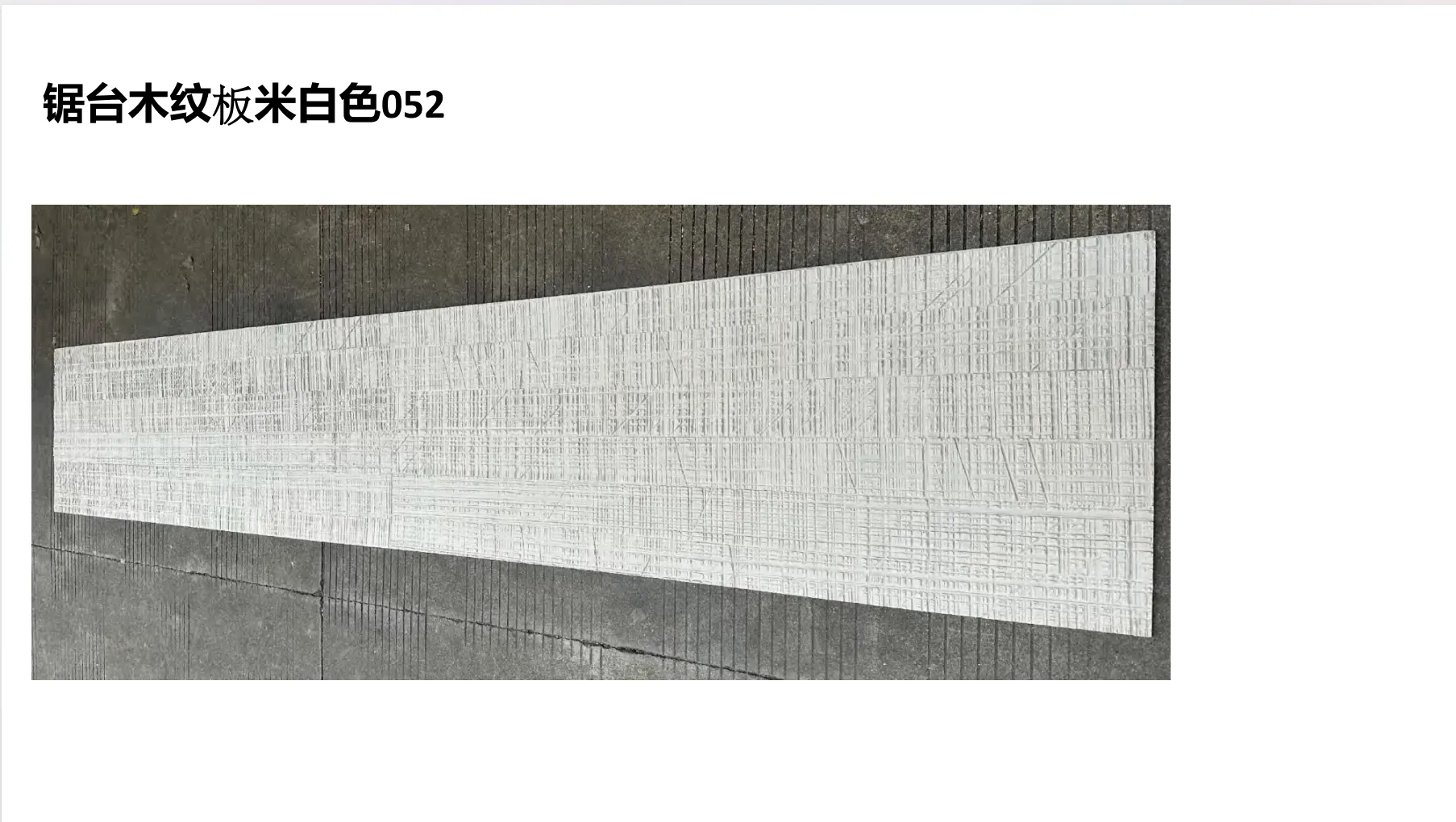
But the real magic? These slabs don't skimp on texture. Run your hand over a 9mm MCM Wood Grain Board, and you'll swear it's real oak—complete with the subtle knots and grain variations. That's because MCM uses 3D printing technology (hello, MCM 3D Printing Series) to replicate natural textures at a microscopic level, so thickness doesn't mean sacrificing detail.
The Advantages That Make Designers Swear By MCM Big Slabs
Let's break down why MCM Big Slab Boards are winning over architects and DIYers alike. We'll use a side-by-side comparison with traditional sawing wood boards to highlight the differences—because numbers tell a story, too.
| Feature | Traditional Sawing Wood Board (1/2 inch thick) | MCM Big Slab Board (6mm thick) |
|---|---|---|
| Weight per sqm | ~12 kg (heavy; requires 2+ installers) | ~4.4 kg (light; one-person installation) |
| Moisture Resistance | Poor; swells/warps in humidity | Excellent; impervious to water damage |
| Flexibility | Rigid; cracks under bending | Can bend up to 30° without breaking |
| Installation Time | 2-3 hours per 10 sqm (nailing, sealing edges) | 1 hour per 10 sqm (peel-and-stick or lightweight screws) |
| Longevity | 5-10 years (with regular sealing) | 20+ years (no sealing required) |
But numbers don't capture the feeling of working with MCM. Imagine finishing a bathroom renovation in a day instead of a weekend. Or standing back to admire a curved accent wall that would've been impossible with wood. That's the advantage that sticks with you—the confidence that your material isn't just a part of the project, but a partner in making it great.
Spotlight: Two MCM Stars That Redefine Thickness
Within the MCM Big Slab Board Series, two products stand out for how they leverage thickness to solve specific design problems: Wood Grain Board and Travertine (Starry Blue) .
Wood Grain Board: Warmth Without the Weight
For designers craving that "cozy cabin" vibe but working in a small space (think: a city apartment with thin walls), MCM's Wood Grain Board is a revelation. At 6mm thick, it's thin enough to install over existing drywall without adding bulk, but textured enough to mimic the look of sawn oak or pine. Unlike real wood, it won't splinter when cut, and its lightweight nature means you can even use it for ceiling panels—something you'd never risk with heavy sawing wood boards.
Pro tip: Pair the 9mm version with under-cabinet lighting in a kitchen. The thickness diffuses the light subtly, turning the backsplash into a soft, glowing accent that feels warm, not harsh.
Travertine (Starry Blue): Drama in Every Millimeter
Travertine is known for its porous, earthy texture, but MCM's Starry Blue variant takes it to another level. At 12mm thick, this slab has the heft to stand alone as a fireplace surround or outdoor patio tile, but its modified composite core makes it resistant to frost and UV rays—so that deep blue hue won't fade under the sun. The "starry" effect comes from tiny mineral flecks embedded in the material, which catch light differently depending on the slab's thickness. Thinner 3mm sheets? A subtle shimmer. Thicker 12mm slabs? A galaxy of texture that makes walls feel like they're alive.
Your Thickness Cheat Sheet: Which MCM Slab is Right for You?
Not sure which thickness to pick? Let's simplify:
- 3mm: Best for lightweight accents—think furniture wraps, cabinet doors, or curved surfaces (like a round mirror frame). So flexible, you can roll it up for transport!
- 6mm: The workhorse. Use it for backsplashes, interior walls, or ceiling panels. Balances durability and ease of installation.
- 9mm: High-traffic areas—hallways, retail storefronts, or kitchen countertops. Stands up to scratches and daily wear.
- 12mm: Heavy-duty exteriors—outdoor patios, facade cladding, or pool surrounds. Withstands rain, snow, and temperature swings.
And remember: MCM Big Slab Boards are customizable. Need a 7mm slab for a specific niche? Many suppliers can trim to size, so you're never stuck choosing between "too thin" and "too thick."
The Verdict: Thickness with Purpose
Sawing wood boards have their place—there's no denying the romance of a hand-hewn beam. But for most projects, MCM Big Slab Board Series offers something better: thickness that works for you, not against you. Lighter, stronger, and infinitely more flexible, these slabs turn the stress of "Will it hold up?" into the excitement of "What can I create next?"
So the next time you're staring at a stack of wood planks, ask yourself: "Am I choosing this material because it's what I've always used, or because it's what my project deserves?" With MCM, the answer might just surprise you.










