
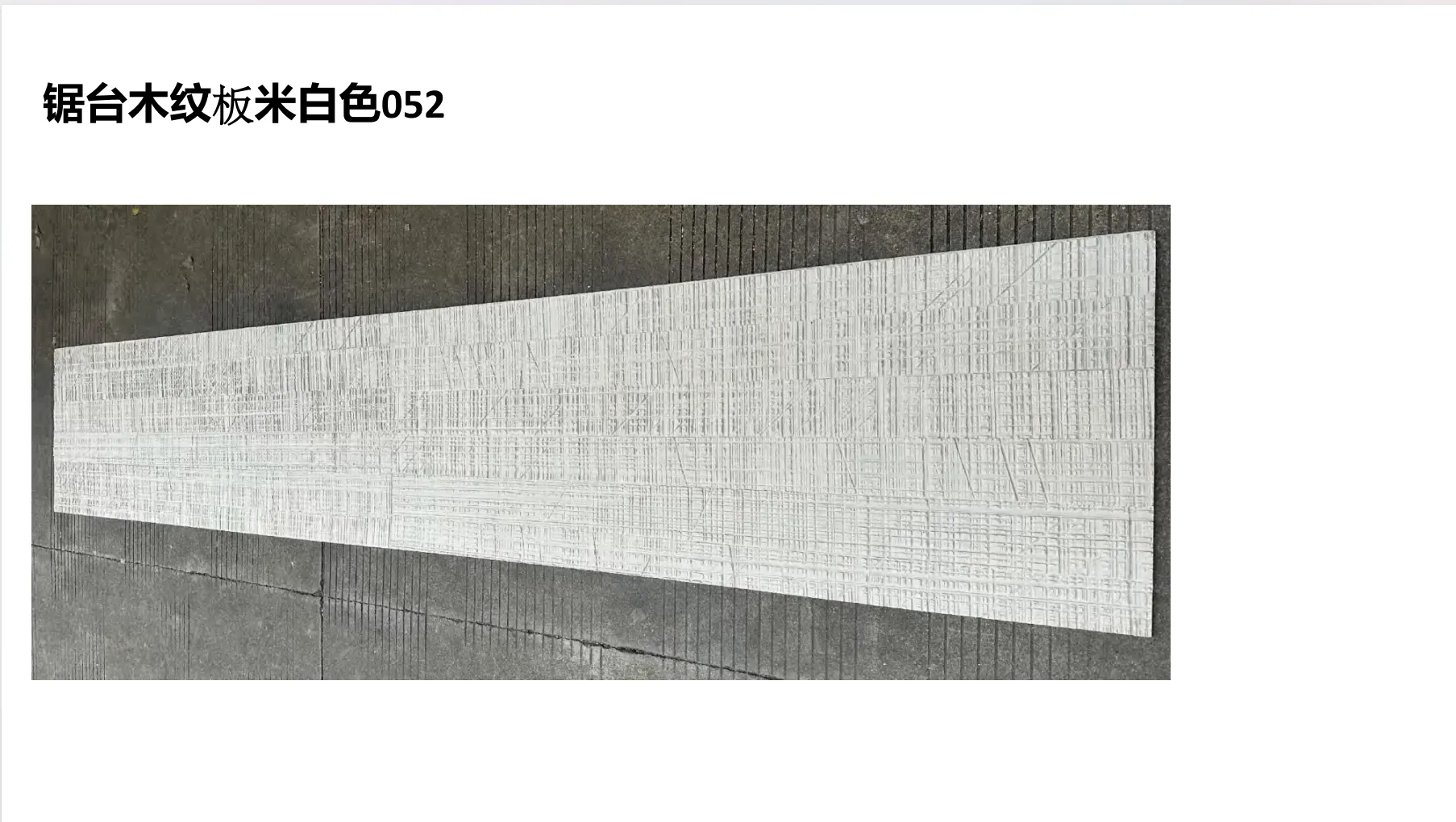
There's something inherently comforting about wood. Its grain tells a story of growth, its texture invites touch, and its warm tones soften even the starkest spaces. But beyond aesthetics, sawing wood board—crafted by precisely cutting solid wood into panels for walls, ceilings, or flooring—has long been valued for its acoustic properties. Let's break down why this natural material remains a go-to for designers aiming to create spaces that sound as good as they look.
First, wood is porous by nature. The tiny gaps between its fibers and the cellular structure of the material act like a sponge for sound waves. When sound hits a wood panel, those waves don't just bounce off; they get trapped in the pores, where friction converts them into heat (a process called absorption). This is why rooms with wood walls often feel "warmer" acoustically—less echo, less harshness, more of a gentle wrap-around sound. Take a traditional recording studio, for example: many still line their walls with pine or cedar sawing wood boards to reduce reverberation, letting musicians hear their own instruments with clarity.
But not all wood is created equal when it comes to acoustics. Softwoods like pine or spruce, with their looser grain and higher porosity, tend to absorb sound better than hardwoods like oak or maple, which are denser and more likely to reflect it. That said, hardwoods have their place too—think of a concert hall with hardwood floors. The density helps project sound across the room, ensuring the music reaches every seat without distortion. It's a balancing act: absorption for intimacy, reflection for reach.
Another factor is thickness. A thicker sawing wood board (say, 20mm or more) will naturally block more sound from passing through (a metric called sound transmission loss) than a thin one. This makes it ideal for spaces where privacy matters, like bedrooms or home offices. Imagine trying to take a work call while your neighbor blasts music next door—thick wood paneling on shared walls could mean the difference between frustration and focus. And because wood is a natural insulator, it also helps with thermal regulation, adding another layer of comfort to its acoustic benefits.
Of course, wood isn't without its quirks. It's susceptible to moisture, which can warp panels over time if not properly sealed. It also requires regular maintenance—polishing, staining, or sealing—to keep its acoustic (and aesthetic) properties intact. But for many, the trade-off is worth it. There's a reason historic libraries and cozy cabins alike rely on sawing wood board: it doesn't just manage sound; it creates an atmosphere. When you walk into a room with wood paneling, the sound feels "alive" but not overwhelming—like being wrapped in a blanket of calm.
If sawing wood board is the acoustic veteran, MCM flexible stone is the new kid on the block—but it's already making waves. Short for Modified Composite Material, MCM flexible stone is a game-changer in construction: a thin, lightweight panel made by blending natural stone particles (like marble or travertine), polymers, and reinforcing fibers. The result? A material that's flexible enough to bend around curves, durable enough to withstand the elements, and surprisingly adept at managing sound. Let's unpack why MCM is quickly becoming a favorite for architects and designers who refuse to choose between performance and style.
At first glance, stone might seem like the opposite of an acoustic material. Traditional stone is dense, hard, and highly reflective—think of a marble lobby where your voice echoes for seconds. But MCM flexible stone is different. Its secret lies in its structure: the composite blend creates a micro-porous surface, with tiny air pockets that act like mini sound traps. When sound waves hit an MCM panel, they penetrate these pores, bounce around, and lose energy—much like wood, but with a modern twist. This makes MCM surprisingly effective at absorbing mid-to-high frequency sounds, like the chatter of a busy office or the clatter of dishes in a restaurant.
But MCM's acoustic superpower isn't just absorption; it's versatility. Unlike solid wood, which is limited by its natural size and weight, MCM panels are thin (often 3-5mm thick) and lightweight, making them easy to install on walls, ceilings, or even furniture. This flexibility lets designers get creative with acoustic solutions. For example, a restaurant might use MCM flexible stone panels on the ceiling to soak up echo, while leaving the walls bare for a sleek, modern look. Or a home theater could line the back wall with curved MCM panels to reduce sound reflection and enhance surround sound quality.
Durability also plays into MCM's acoustic appeal. Unlike wood, it's resistant to moisture, mold, and temperature fluctuations—so it maintains its acoustic properties even in humid bathrooms or drafty commercial spaces. And because it's made with natural stone particles, it adds a touch of luxury without the weight or cost of full stone slabs. Imagine a hotel lobby with MCM panels that mimic the look of travertine but absorb sound so well that guests can converse comfortably, even during peak hours. It's the best of both worlds: high-end aesthetics and practical acoustics.
One thing to note: MCM's acoustic performance can be tailored. By adjusting the density of the polymer blend or the size of the stone particles, manufacturers can create panels optimized for specific frequencies. Need to block low-frequency bass from a music studio? A denser MCM formulation might do the trick. Want to soften high-pitched chatter in a classroom? A more porous version could be the answer. This customization makes MCM a Swiss Army knife for acoustic design—adaptable to almost any space.
Let's shift gears to a material that's less about warmth and more about precision: foamed aluminium alloy board. Made by injecting gas into molten aluminium to create a cellular, sponge-like structure, this metal panel is lightweight, strong, and surprisingly good at managing sound—though in a way that's distinct from wood or MCM. It's a favorite in high-end commercial and industrial projects where durability, modern aesthetics, and acoustic control are all non-negotiable.
Foamed aluminium's acoustic magic lies in its unique structure. The millions of tiny air pockets within the material act as dampers for sound waves. When sound hits the panel, it travels through these cells, bouncing off the walls and losing energy with each collision. This makes it effective at absorbing mid-to-high frequency sounds, though it's generally less porous than wood or MCM, so its absorption isn't as high. Where foamed aluminium really shines, though, is in sound blocking. Thanks to its metallic density, it's excellent at stopping sound from passing through—think of it as a rigid barrier that sound struggles to penetrate.
Take airports, for example. Terminal ceilings often use foamed aluminium alloy boards (vintage silver or gold finishes are popular for their sleek look) to reduce the roar of jet engines and the constant buzz of announcements. The material's lightweight nature also makes it easy to install over large areas, and its resistance to corrosion ensures it holds up in busy, high-moisture environments. Or consider a concert venue with foamed aluminium panels on the walls: they reflect some sound to enhance the music's richness while absorbing enough to prevent overwhelming echo.
Like MCM, foamed aluminium is customizable. The size of the cells, the thickness of the panel, and the alloy composition can all be adjusted to tweak acoustic performance. Thicker panels with smaller cells, for instance, offer better sound transmission loss, making them ideal for partition walls in office buildings. Thinner, more porous versions might be used in ceilings to absorb ambient noise. And because it's metal, it pairs well with other materials—think wood accents on foamed aluminium walls, combining natural warmth with industrial edge, and balancing absorption and reflection for a perfectly tuned acoustic environment.
Of course, foamed aluminium comes with trade-offs. It's not as naturally insulating as wood, so it may need additional layers for thermal control. It's also more expensive than MCM or wood, which can be a barrier for smaller projects. But for spaces where performance and longevity are top priorities—like hospitals, data centers (where equipment noise needs containment), or luxury retail stores—it's a investment that pays off in quieter, more comfortable environments.
To truly understand how these materials stack up, let's look at the numbers. Acoustic performance is measured using specific metrics, and comparing them side by side can help you decide which material fits your project. Below is a breakdown of key indicators: Sound Absorption Coefficient (SAC), which measures how much sound a material absorbs at a given frequency (1000Hz is a common benchmark for human speech); Sound Transmission Class (STC), which rates how well a material blocks sound from passing through (higher = better privacy); and Noise Reduction Coefficient (NRC), an average of absorption across mid frequencies (0 = no absorption, 1 = total absorption).
| Material | SAC at 1000Hz | STC (dB) | NRC | Key Acoustic Features |
|---|---|---|---|---|
| Sawing Wood Board (Pine, 20mm) | 0.3-0.4 | 30-35 | 0.3-0.4 | Natural porosity absorbs mid-high frequencies; warm, intimate sound; moderate sound blocking. |
| MCM Flexible Stone (Standard Density) | 0.4-0.5 | 35-45 | 0.4-0.5 | Micro-porous structure enhances absorption; customizable density for targeted frequencies; good balance of absorption and blocking. |
| Foamed Aluminium Alloy Board (Vintage Silver, 15mm) | 0.2-0.3 | 40-50 | 0.2-0.3 | Cellular structure dampens sound; high STC for blocking; reflects some sound for clarity in large spaces. |
As the table shows, MCM flexible stone often hits the sweet spot between absorption and blocking, making it a versatile choice for many spaces. Sawing wood board excels at creating warm, natural acoustics but may need additional layers for privacy. Foamed aluminium, meanwhile, is the heavyweight in blocking sound, though it absorbs less than the others. Of course, these are general ranges—specific products may vary, so always check manufacturer data for your project.
Your home should be a sanctuary, and acoustics play a huge role in that. Let's start with the bedroom: a space where quiet is non-negotiable. Sawing wood board on the walls adds warmth and absorbs enough sound to muffle street noise or a partner's late-night reading. Pair it with thick curtains, and you've got a recipe for better sleep. For the living room, MCM flexible stone panels (maybe in a travertine finish) can handle the echo of movie nights or family gatherings, keeping conversations clear without feeling muffled. And if you have a home theater, consider foamed aluminium alloy board on the ceiling to block sound from disturbing the rest of the house—those action movie explosions won't wake the kids!
Open-plan offices are popular for collaboration, but they're also breeding grounds for distraction—ringing phones, chatty coworkers, the hum of printers. Here, MCM flexible stone really shines. Install it as partition walls (STC 40+ means conversations stay private) or ceiling panels to absorb ambient noise. For meeting rooms, add sawing wood board accents to soften the space acoustically and visually—employees will feel more relaxed and focused. In high-traffic areas like lobbies, foamed aluminium alloy board (vintage gold for a touch of elegance) can handle the constant foot traffic while keeping noise levels in check, making the space feel welcoming but not overwhelming.
Libraries, museums, and auditoriums have unique acoustic needs—they must handle large crowds while preserving quiet or enhancing sound clarity. In a library, sawing wood board shelves and ceiling panels absorb the rustle of books and hushed conversations, creating a serene atmosphere. Museums might use MCM flexible stone to mimic stone walls (for that classic, timeless look) but with better absorption, so visitors can enjoy exhibits without echo. Auditoriums, on the other hand, often use a mix: foamed aluminium alloy board for reflective surfaces that project sound, paired with wood paneling for absorption, ensuring every seat hears the speaker or performance clearly.
Acoustics are crucial, but they're rarely the only factor in choosing building materials. Let's consider other elements that might influence your decision, from sustainability to budget to design vision.
Sustainability: Sawing wood board, when sourced from FSC-certified forests, is renewable and biodegradable—a great choice for eco-conscious projects. MCM flexible stone often uses recycled stone particles and low-VOC polymers, reducing its environmental footprint. Foamed aluminium alloy board is 100% recyclable and has a long lifespan, though its production requires energy-intensive processes. If green building certifications like LEED are a priority, wood or MCM might edge out aluminium.
Budget: Wood is generally affordable, though rare hardwoods can drive up costs. MCM flexible stone is mid-range—more expensive than basic drywall but cheaper than full stone slabs. Foamed aluminium is the priciest, especially custom finishes like vintage gold or silver. For small projects, wood or MCM makes sense; for large-scale commercial builds where durability is key, the investment in aluminium might be justified.
Design Flexibility: Wood offers natural variation and warmth, perfect for rustic, Scandinavian, or traditional styles. MCM can mimic stone, concrete, or even metal, making it ideal for modern, industrial, or luxury designs. Foamed aluminium alloy board has a sleek, futuristic look that pairs well with minimalist or high-tech aesthetics. Think about the mood you want to create—cozy and inviting? Sleek and modern? Bold and industrial? Your material should align with that vision.
Maintenance: Wood needs regular sealing to prevent moisture damage and staining. MCM is low-maintenance—just wipe clean with mild soap. Foamed aluminium is virtually maintenance-free, resistant to scratches and corrosion. If you're short on time for upkeep, MCM or aluminium might be better than wood.
Recommend Products












