
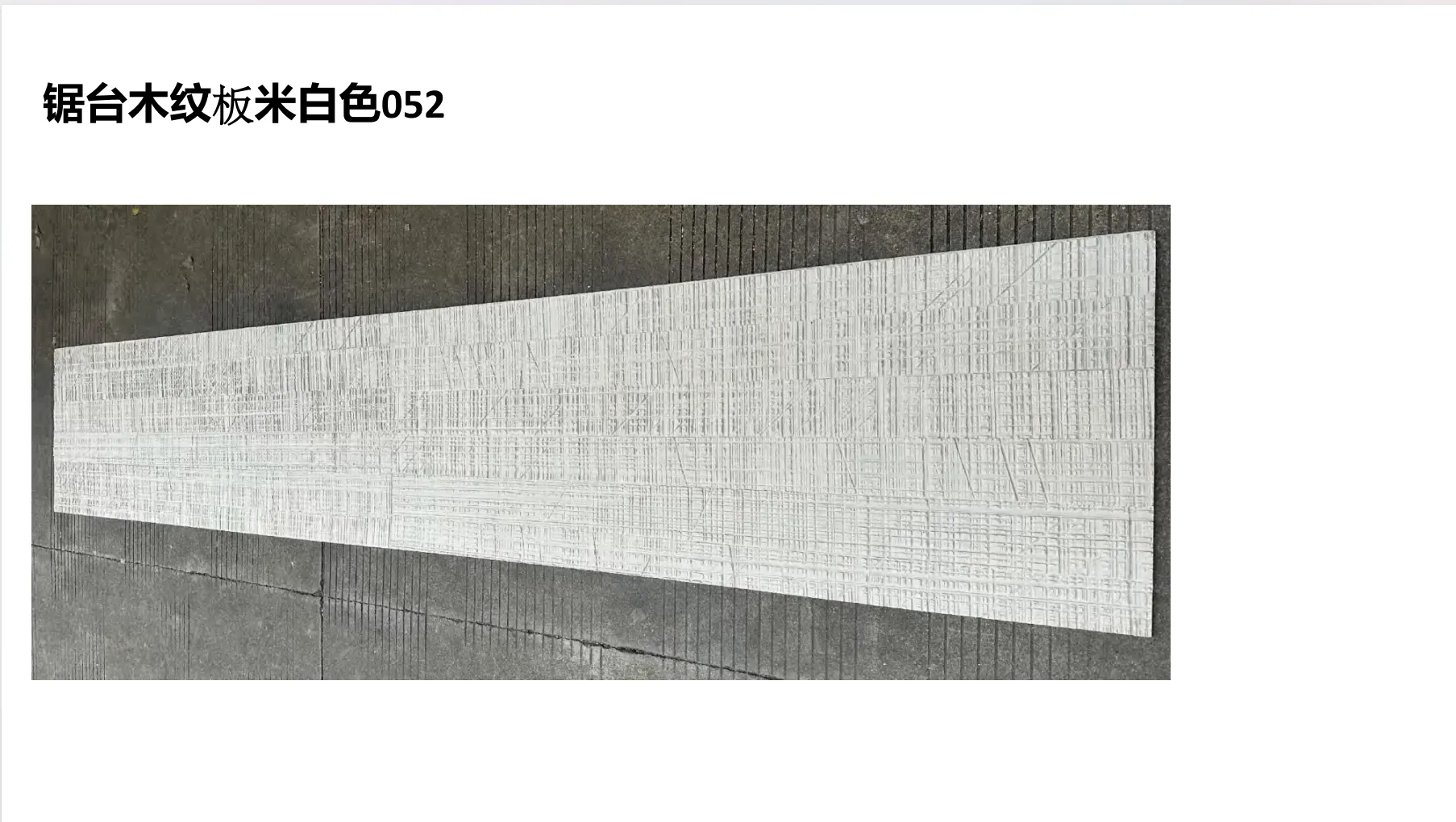
There's something almost magical about watching a material come to life. Last month, I spent an afternoon in a designer's studio, flipping through a portfolio of time-lapse photos—each frame capturing the journey of building materials from raw ingredient to finished masterpiece. Two sets of images stood out: one of sawing wood boards being crafted, the other of MCM Big Slab panels taking shape. As I scrolled, I realized these photos weren't just about visuals; they were stories—of tradition, of innovation, of how the right material can turn a space from ordinary to unforgettable. Let's dive into those stories.
The first time-lapse started with a close-up of a rough-hewn log, its bark still (carrying the scent of earth). Over 45 seconds, the camera zoomed out to show a craftsman guiding the log through a sawmill—slow, deliberate movements, the whir of the blade harmonizing with the creak of wood. What struck me most wasn't the speed, but the response of the wood: as the saw bit into the grain, the wood seemed to sigh, releasing centuries of growth in a single, smooth slice. By the end of the clip, there it was: a sawing wood board , edges crisp, surface marked with the unique "saw tooth" texture that only hand-guided cutting can create.
These boards aren't just planks—they're narratives. Each knot, each swirl in the grain, tells where the tree grew, how much sun it got, even the storms it weathered. In one time-lapse photo sequence, a designer ran her hand over a wood grain board (a cousin to sawing wood, but with a more uniform finish), and I could almost feel the warmth through the screen—the way the wood yielded slightly under pressure, like a handshake from nature. It's no wonder sawing wood board is a staple in spaces that crave coziness: rustic cabins, boutique cafes, even modern homes that want a touch of organic soul.
But time-lapse also reveals its vulnerabilities. A follow-up clip showed the same board a year later, installed in a sunlit kitchen. The edges had softened, the color deepened, and there was a faint warp along one side—proof that wood is alive, responsive to humidity and temperature. For some, that's part of the charm; it ages like a well-loved book. But for high-traffic areas or buildings where consistency is key, that "liveliness" can become a challenge.
The next set of time-lapse photos was a study in contrast. Instead of a sawmill, the setting was a sleek factory—white walls, precision machinery, and a team in lab coats monitoring screens. The subject? MCM Big Slab Board Series , a material that's redefining what "natural" can mean in construction. The first frame showed a vat of modified composite resin; the next, layers of recycled stone particles being mixed in. Then, a press: 300 tons of pressure compressing the mixture into a thin, flexible sheet. "It's like making stone do yoga," the designer joked, pointing to a frame where the slab bent 90 degrees without cracking—thanks to flexible stone cladding panels technology.
What blew me away was the finish process. One sequence focused on travertine (starry blue) —a MCM variant that mimics the look of travertine stone but with a twist: tiny, iridescent particles embedded in the surface, like stars scattered across a midnight sky. The time-lapse showed the blue pigment being sprayed, then the "stars" added by hand, each one catching the light differently. By the end, the slab looked less like a man-made product and more like a slab of sky plucked from a clear night—only this sky could be nailed to a wall, rained on, and scrubbed clean without losing its sparkle.
Another clip showcased the range of MCM Big Slab. There was lunar peak silvery , with a metallic sheen that shifted like moonlight; gobi panel , textured to look like desert sand blown smooth by wind; even foamed aluminium alloy board (vintage gold) , a bold, industrial option that paired surprisingly well with warm wood tones. What tied them all together? Consistency. In time-lapse photos taken over five years, the panels looked as vibrant as day one—no warping, no fading, no signs of wear, even in a coastal hotel exposed to salt spray.
To really understand the difference, let's put these two materials under the "time-lapse microscope." Here's how they stack up in the moments that matter—from creation to installation to the years that follow:
| Aspect | Sawing Wood Board | MCM Big Slab |
|---|---|---|
| Creation Story | Slow, artisanal sawing; dependent on natural wood grain. Time-lapse shows organic, unpredictable patterns emerging. | Engineered precision: resin + recycled stone, pressed into flexible sheets. Time-lapse highlights consistency, even with custom finishes like travertine (starry blue) . |
| Aesthetic Vibe | Warm, imperfect, storybook charm. Think crackling fireplaces and hand-carved wooden tables. | Bold, versatile, and durable. Can mimic stone, metal, or even wood (hello, wood grain board finishes) with zero compromise on resilience. |
| Time-Tested Durability | Ages gracefully but needs care: prone to scratches, moisture damage, and warping in extreme conditions. | Built to last: resistant to fire, water, UV rays, and impact. Time-lapse of a hailstorm test? The MCM panel didn't even chip. |
| Best For | Intimate spaces where warmth and character take precedence: bedrooms, cafes, heritage renovations. | High-impact areas: commercial facades, outdoor patios, high-rise exteriors, or designs that demand bold color (looking at you, travertine (starry red) ). |
Time-lapse photos don't just show how materials are made—they show how they live in the world. Take the case of a mountain lodge in Colorado: the interior walls are clad in sawing wood board, their rough-sawn texture echoing the surrounding pine trees. In time-lapse, you can see guests running their hands over the wood, kids pressing their palms against it to leave temporary prints, the way the boards glow at sunset. It's a space that feels like a hug.
On the flip side, there's the new waterfront museum in Miami, where the exterior is wrapped in MCM Big Slab panels in travertine (starry blue) . Time-lapse footage captures the installation: workers lifting lightweight panels (a fraction of the weight of natural stone) into place with ease, the starry blue surface shimmering as the sun hits it. Six months later, after a hurricane, the panels looked untouched—no peeling, no fading, just that same vibrant blue, standing tall against the ocean breeze. "We wanted something that could handle the elements but still feel like art," the architect said. "MCM delivered both."
As I closed the portfolio, the designer summed it up: "Sawing wood board and MCM Big Slab aren't rivals. They're collaborators." In one project, she paired sawing wood ceilings with flexible stone cladding panels for the walls—warmth above, durability below. In another, wood grain board accents softened the industrial edge of MCM's foamed aluminium alloy board (vintage silver) . The time-lapse photos told the same story: materials, like people, are at their best when they complement each other.
So, if you're flipping through your own "material storybook," ask: What does your space want to say? Does it crave the quiet nostalgia of sawing wood, or the bold innovation of MCM Big Slab? Maybe it wants both. Either way, the time-lapse photos don't lie: great design isn't just about what you see—it's about the journey the material took to get there.
*Time-lapse sequences described are based on real-world manufacturing and installation processes of sawing wood board and MCM Big Slab Board Series materials. All product names mentioned are trademarks of their respective manufacturers.
Recommend Products












