
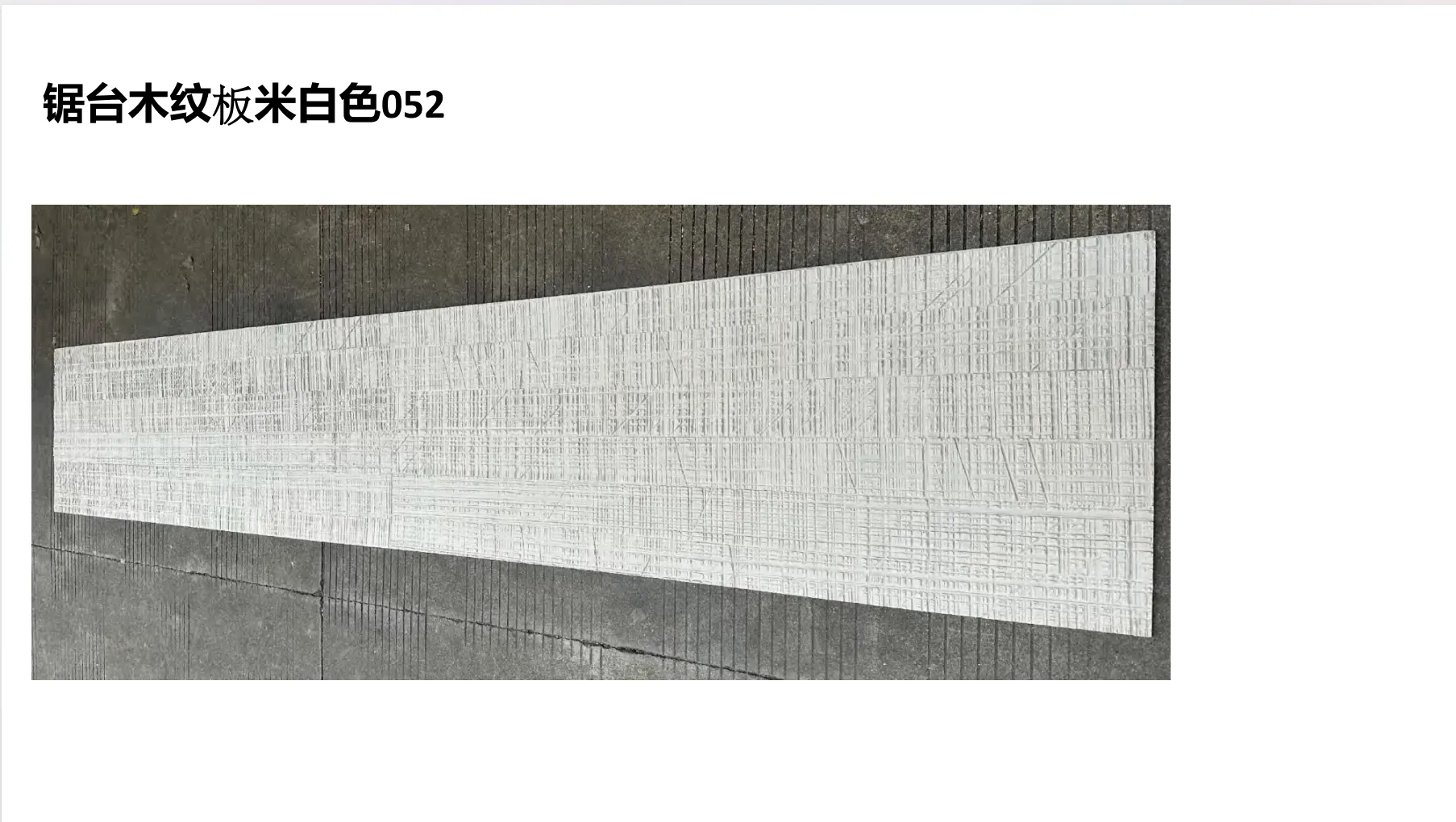
There's a quiet magic in the details of design—those small, intentional choices that turn a space from "nice" to "unforgettable." Edge finishing, often overlooked, is one of those details. It's the soft curve of a wooden countertop that invites you to run your hand along it, or the crisp, geometric edge of a modern wall panel that adds sharpness to a minimalist room. Today, we're diving into two materials that shape these moments: the warm, time-honored sawing wood board and the innovative, versatile MCM board. Let's explore how their edge finishing techniques differ, why it matters, and how to choose the right one for your next project.
Before we jump into edges, let's get clear on the stars of the show. Sawing wood board is the old soul here—crafted from natural timber, cut into planks, and finished to highlight the wood's unique grain, knots, and character. Think of the oak shelves in your grandmother's kitchen or the cedar cladding on a cozy cabin; these are wood boards doing what they do best: bringing warmth and organic texture.
Then there's MCM board —short for Modified Composite Material—a modern marvel born from blending polymers, minerals, and advanced manufacturing. MCM boards (like the MCM flexible stone or 3D printing series ) mimic the look of natural materials—stone, wood, concrete—but with superpowers: they're lighter, more durable, and infinitely customizable. Imagine a wall panel that looks like rough-hewn stone but bends around a curved staircase, or a countertop that mimics marble but won't stain with a spilled glass of red wine. That's MCM.
Wood has been a design staple for centuries, and its edge finishing is a craft as old as the material itself. The goal? To enhance the wood's natural beauty while ensuring durability. Let's walk through the techniques that make wood edges feel like a hug rather than a sharp corner.
Every wood edge starts with sanding. It's the first step to taming rough cuts and revealing the wood's true texture. For a wood grain board , sanding isn't just about smoothness—it's about direction. Run the sandpaper with the grain, and you'll get a buttery-smooth finish; go against it, and you'll leave tiny scratches that catch the light (not in a good way). Craftsmen often start with 80-grit sandpaper for rough cuts, then move to 120-grit, 180-grit, and even 220-grit for a polish that feels like silk. I once watched a carpenter spend an hour sanding the edge of a cherry wood table—he said, "You can't rush it. The wood tells you when it's ready."
Once smooth, routing lets you shape the edge into something more than a straight line. A chamfer (a 45-degree angle) adds a subtle modern twist, while a roundover (a soft curve) feels approachable and kid-friendly. For something dramatic, a ogee (an S-shaped curve) brings old-world elegance—think of a Victorian mantelpiece. The challenge? Wood is unpredictable. A knot or a soft spot in the grain can cause the router bit to catch, leaving a ragged edge. That's why experienced woodworkers test cuts on scrap pieces first—better to ruin a small offcut than a whole board.
Edge finishing isn't just about shape—it's about protection. A stained edge deepens the wood's color, making the grain pop, while a sealant (like polyurethane or beeswax) locks out moisture and prevents chips. Picture a pine bookshelf: without sealing, the edges would soak up spills, swell, and lose their crispness. With a clear seal, though, that edge stays sharp for years, and the wood's natural variations—those little knots and mineral streaks—become the room's favorite conversation piece.
Wood is alive, even after it's cut. It expands and contracts with humidity, which can warp edges over time. A perfectly sanded edge might develop tiny cracks in a dry winter, or a routed profile could splinter if the wood shrinks. That's the trade-off for natural beauty—wood needs care, but that care is part of its charm. As one designer put it, "Wood edges age like a well-loved book; they get character, not just wear."
If wood edge finishing is a handwritten letter—personal, a little imperfect—MCM edge finishing is a laser-printed masterpiece: precise, consistent, and full of surprises. Thanks to advanced manufacturing (hello, 3D printing series !), MCM edges can be anything from ultra-sleek to wildly creative.
MCM boards are made in factories with computer-controlled tools, so cutting edges is a breeze. A CNC router can slice through MCM like butter, creating edges so straight they look painted on, or intricate patterns that would take a woodworker days to carve. Want a wave panel edge that mimics ocean swells? Or a thread -thin groove that catches light? MCM handles it without breaking a sweat.
The MCM 3D printing series takes edge finishing to a new level. Imagine an edge that's not just a shape, but a texture—like the rough surface of a rough granite stone or the woven pattern of a basket. 3D printers can lay down layers of MCM to create edges that are tactile and visually stunning. I visited a café once where the bar counter had MCM edges printed to look like stacked (cobblestones)—you could run your finger over the "stones" and feel every bump, but the edge was smooth enough to rest your elbow on. It was playful and practical, all at once.
One of MCM's superpowers is flexibility, and that shines in edge finishing. Unlike wood, which cracks if bent too far, MCM flexible stone can curve around corners, creating seamless edges that wood simply can't match. Think of a retail store with a curved wall—instead of wood edges that meet at a clunky angle, MCM bends to follow the curve, making the whole space feel fluid and intentional.
MCM edges don't just look good—they stay good. No warping, no splintering, no staining. Spill coffee on a MCM countertop edge? Wipe it off. Bang a chair against a MCM wall panel edge? It might not even scratch. That's why commercial spaces—restaurants, airports, hotels—love MCM: it keeps looking fresh, even with heavy foot traffic and daily wear.
To make it easy, here's a quick comparison of edge finishing for sawing wood board and MCM board. Whether you're a DIYer or a designer, this table will help you weigh your options:
| Aspect | Sawing Wood Board | MCM Board |
|---|---|---|
| Common Techniques | Sanding, routing, chamfering, staining, sealing | CNC cutting, 3D printing, embossing, bending |
| Tools Needed | Sandpaper, router, stain, sealant (hand or power tools) | Computer-controlled cutters, 3D printers, heat presses |
| Durability | Good, but prone to warping/splintering with moisture/age | Excellent—resistant to moisture, scratches, and warping |
| Aesthetic Options | Organic, warm, unique (grain, knots, natural variations) | Precision, versatility (mimics stone, wood, concrete; 3D patterns) |
| Best For | Cozy homes, rustic spaces, projects where "character" is key | Modern designs, commercial spaces, curved/wet areas (baths, kitchens) |
Edge finishing isn't just about tools and techniques—it's about how a space feels. Let's walk through a few real-world examples to see how these edges play out.
Take a family kitchen. If you're going for a "homey" vibe, wood grain board countertops with rounded, sanded edges make sense. They're soft enough for kids to lean against, and the natural wood warmth makes morning coffee feel like a retreat. On the flip side, a downtown loft might call for MCM board with sharp, 90-degree edges in fair-faced concrete finish. It pairs perfectly with metal accents and large windows, creating a cool, industrial look that says "modern living."
Cafés thrive on atmosphere, and edges play a big role. A neighborhood spot might use wood board tabletops with chamfered edges—inviting, easy to clean, and full of character. A high-end boutique, though, might opt for MCM 3D printing series wall panels with embossed edges that mimic rough granite stone . The edges catch the light, drawing the eye to displays and making the space feel luxurious and unique.
At the end of the day, the "right" edge finishing depends on your project. Here are a few questions to guide you:
And remember: you don't have to choose one or the other! Many designers mix wood and MCM for the best of both worlds. Imagine a living room with a wood fireplace mantel (warm edges) and MCM wave panel walls (sleek edges)—it's tradition meeting innovation, and it works beautifully.
Edge finishing is more than just a technical step—it's how your space speaks. A wood edge whispers, "I've been loved." A MCM edge declares, "I'm built for the future." Both have their place, and both can turn a ordinary project into something extraordinary.
So whether you're refinishing your kitchen cabinets with sawing wood board edges that honor the home's history, or designing a cutting-edge office with MCM edges that push the boundaries of what's possible, remember: the details matter. And when it comes to edges, the best choice is the one that makes you smile every time you run your hand along it.
*P.S. If you're still unsure, grab a sample! Run your fingers along a wood edge and a MCM edge. Which one feels like "you"? Trust that feeling—that's your space speaking.
Recommend Products












