
Choosing materials that stand the test of time—without breaking the bank
Picture this: You're standing in an empty room, blueprint in hand, dreaming of the space it will become. Maybe it's a cozy café where locals will sip coffee for decades, a family home where your kids will grow up, or a commercial building that will define a neighborhood skyline. The walls, floors, and exterior cladding you choose today won't just shape how the space looks next year—they'll impact your budget, your stress levels, and even the planet for 30, 50, or 100 years to come.
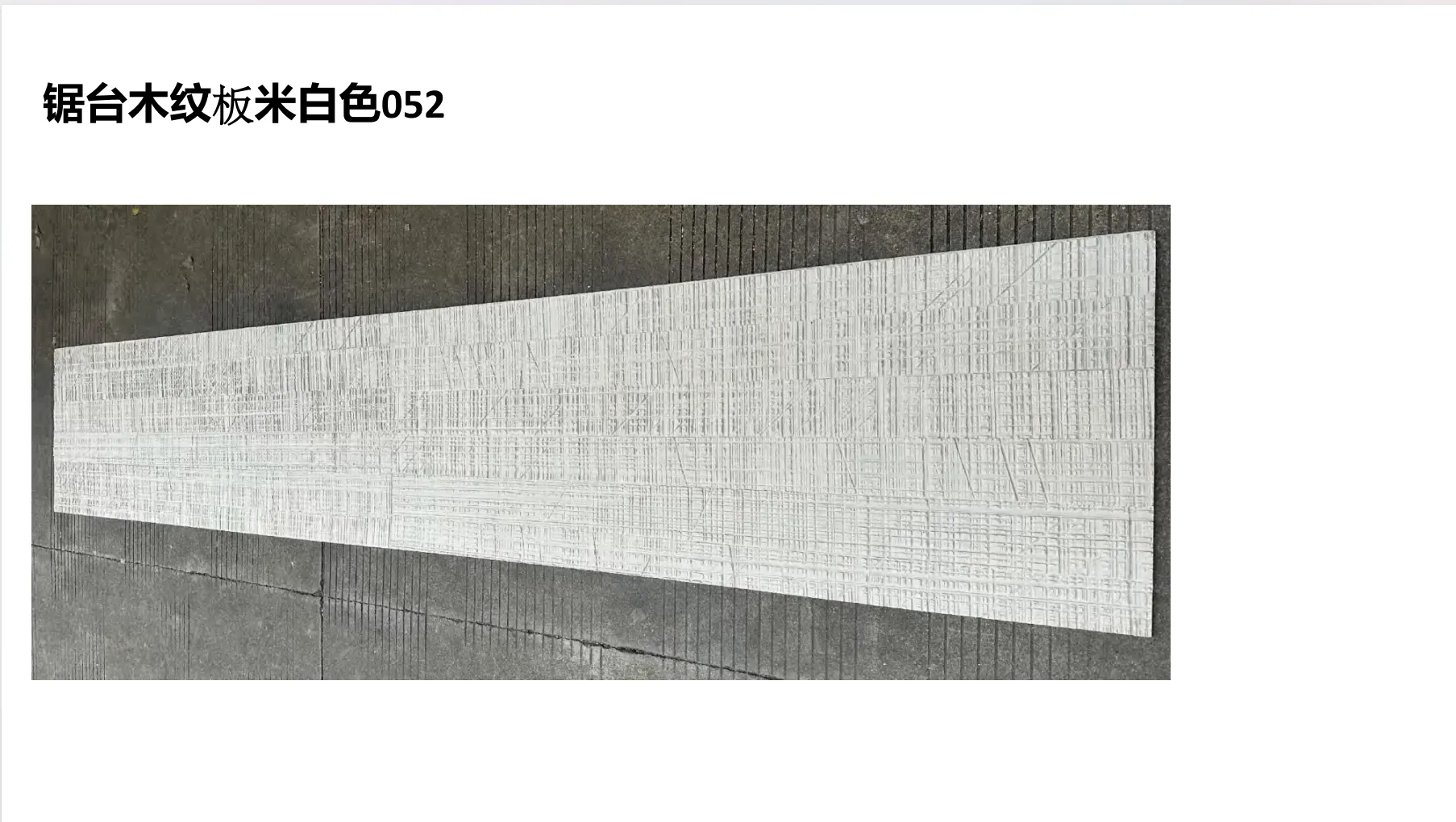
In the world of construction and design, two materials often rise to the top of the debate: Sawing Wood Board , with its timeless warmth and natural charm, and MCM (Modified Composite Material) products like MCM flexible stone , which blend durability with stunning versatility. Both promise to elevate a project—but which one truly delivers when it comes to long-term cost-effectiveness?
Let's dive in. We'll explore their aesthetic appeal, durability, maintenance needs, environmental footprint, and yes—those all-important dollar signs. By the end, you'll have a clearer sense of which material deserves a spot in your next long-term project.
First impressions matter, and when it comes to design, materials set the tone. Let's start with the obvious: Sawing Wood Board is a crowd-pleaser. There's something inherently comforting about wood—its unique grain patterns, the way it softens light, the subtle variations that make no two boards identical. It's the material of cabins, libraries, and heritage buildings; it whispers "timeless" and "handcrafted." A restaurant owner might lean into wood for a rustic, homey vibe, hoping customers feel like they're dining in a friend's kitchen.
But here's the catch: Wood's beauty is also its limitation. Its color fades with sun exposure, its grain can warp with humidity, and while stains and sealants can tweak the shade, you're still confined to the natural palette of tree species. If you crave bold hues, metallic finishes, or the look of travertine (beige) or fair-faced concrete without the weight, wood can't deliver.
Enter MCM flexible stone . This isn't your grandma's plastic siding. MCM mimics the texture of natural materials—wood, stone, even metal—with uncanny accuracy, but with a twist: it's customizable. Want the warmth of wood? Opt for wood grain board MCM, which replicates oak, maple, or teak without the risk of termites. Dreaming of a sleek, modern exterior? Choose fair-faced concrete MCM panels that look like they were poured on-site but weigh a fraction of the real thing. Love the organic look of travertine (beige) ? MCM captures its porous, earthy texture in a panel that won't crack in freeze-thaw cycles.
Designers rave about MCM's flexibility. "I used to limit clients to wood for 'cozy' spaces," says Maria, an interior designer with 15 years of experience. "Now, with MCM, I can give them the warmth of wood in a bathroom (where real wood would rot) or the look of travertine (beige) in a high-traffic lobby (where real stone would scratch). It's like having a Swiss Army knife for aesthetics."
Let's talk about the elephant in the room: how long your material will last. For long-term projects, durability isn't a nice-to-have—it's a must. A material that looks great today but crumbles in 10 years isn't just a disappointment; it's a financial disaster.
Wood is a living material, and that means it reacts to its environment. In humid climates, it swells and warps; in dry regions, it shrinks and cracks. Termites, carpenter ants, and wood-boring beetles see it as a buffet. Even with regular maintenance—sealing every 1–2 years, staining every 3–5 years—wood's lifespan tops out at 15–20 years for exterior use and 20–30 years indoors, assuming ideal conditions.
Take a coastal home, for example. Salt air eats away at wood, turning once-rich mahogany into a gray, splintered mess in under a decade. A restaurant with wood paneling in the kitchen? Steam and grease will seep into the grain, leading to mold and discoloration. Every repair or replacement isn't just costly—it disrupts business. "I had a client who replaced their wood deck three times in 25 years," recalls John, a contractor in Florida. "Each time, they thought, 'This time we'll maintain it better.' But wood in the tropics is a losing battle."
MCM, on the other hand, is engineered for resilience. Made from a blend of minerals, polymers, and recycled materials, it's water-resistant, fireproof (rated Class A in most cases), and impervious to pests. Manufacturers often back it with 20–30 year warranties, but real-world tests show it can last 50+ years with minimal upkeep.
How does it hold up in harsh conditions? A ski lodge in Colorado used lunar peak silvery MCM panels for its exterior. After 12 winters of heavy snow, freezing temperatures, and UV exposure, the panels still look brand-new. A beachfront hotel in Bali chose bali stone MCM cladding; salt spray and humidity haven't caused a single crack or fade. Maintenance? A quick rinse with a hose once a year, and you're done. No sanding, no staining, no replacing rotted boards.
Let's get numerical. At first glance, Sawing Wood Board often seems cheaper. You might pay $8–$12 per square foot for quality wood, while MCM starts at $12–$18 per square foot. But "cheaper upfront" rarely equals "cheaper over time." Let's break it down over 50 years—the lifespan of a well-built structure.
| Factor | Sawing Wood Board | MCM Flexible Stone |
|---|---|---|
| Initial Cost (per sq ft) | $8–$12 | $12–$18 |
| Lifespan (years) | 15–20 (exterior); 20–30 (interior) | 50+ |
| Maintenance Cost (over 50 years) | $3–$5 per sq ft/year (sealing, staining, repairs) | $0.20–$0.50 per sq ft/year (occasional cleaning) |
| Replacement Cycles (50 years) | 2–3 (exterior); 1–2 (interior) | 0 |
| Total Cost (50 years, per sq ft) | $43–$77 | $22–$33 |
Let's plug in real numbers for a 1,000 sq ft project. Wood would cost $8,000–$12,000 upfront, but with maintenance and replacements, that balloons to $43,000–$77,000 over 50 years. MCM, at $12,000–$18,000 initially, tops out at $22,000–$33,000 total. That's a savings of $21,000–$44,000. For commercial projects—say, a 10,000 sq ft retail space—the gap widens to $210,000–$440,000. Suddenly, that "expensive" MCM looks like a steal.
And let's not forget indirect costs: downtime during repairs, the hassle of scheduling maintenance, and the risk of project delays. A hotel replacing wood siding can't rent out rooms during construction; a homeowner dealing with a rotted wood floor loses peace of mind. MCM eliminates those headaches.
Sustainability isn't just a buzzword—it's a responsibility. Both wood and MCM have green credentials, but their long-term footprints tell different stories.
Wood is renewable, right? It can be—if it's sourced from FSC-certified forests, where trees are replanted as they're harvested. But the reality is messier. Illegal logging, deforestation, and transportation emissions (shipping wood from distant forests) take a toll. Plus, wood treatments often use toxic chemicals like formaldehyde or arsenic, which leach into soil and water over time.
Then there's waste. Every time you replace rotted wood, you're sending tons of material to landfills. Even "sustainable" wood can't escape the fact that its short lifespan means more frequent harvesting and disposal.
MCM manufacturers prioritize sustainability. Many use recycled stone dust, glass, and polymers in their panels, reducing reliance on virgin materials. Production facilities often run on solar power, and MCM's lightweight design cuts transportation emissions (a truck can carry 10x more MCM panels than stone or wood, lowering fuel use).
Perhaps most importantly, MCM's longevity means less waste. A single MCM panel replaces multiple cycles of wood, stone, or concrete, reducing the need for constant resource extraction. And when it does reach the end of its life (after 50+ years), many MCM products are recyclable, closing the loop.
LEED-certified projects frequently choose MCM for its low VOC emissions and energy efficiency. A school in California used foamed aluminium alloy board (vintage silver) MCM for its exterior, earning points for sustainable materials and reducing the building's cooling costs by 15% (thanks to MCM's insulating properties).
Theory is one thing—real projects tell the full story. Let's look at two case studies where choosing MCM over wood paid off.
A small café in Vermont wanted a "rustic chic" vibe. The owner initially leaned toward Sawing Wood Board for the walls and ceiling. But after crunching numbers with their contractor, they switched to wood grain board MCM. "I loved the look of wood, but the thought of sealing it every year during our busy season? No thanks," the owner said. Five years later, the café's interior still looks brand-new, even with daily humidity from coffee steam. Maintenance? "I hose down the exterior MCM panels once a month—done." The owner estimates saving $5,000 in upkeep alone.
A commercial developer in Miami needed cladding for a 10-story office building. Wood was off the table (salt air = rapid decay), so they considered stone—but it was too heavy for the structure. They chose travertine (starry blue) MCM panels. Ten years later, the building's exterior hasn't faded, cracked, or required repairs. "We get compliments daily on how 'timeless' the stone looks," the developer noted. "Little do people know it's MCM—and we saved $2 million compared to real stone over the building's lifespan."
Let's be clear: Sawing Wood Board has its place. If you're building a temporary structure, a cabin you'll renovate in 10 years, or a space where the fleeting beauty of natural wood is worth the upkeep, go for it. But for projects meant to last—where cost, durability, and peace of mind matter— MCM flexible stone is the smarter choice.
MCM delivers on aesthetics, with options that mimic wood, travertine (beige) , and fair-faced concrete (and more). It outlasts wood by decades, slashes maintenance costs, and reduces environmental impact. The upfront investment pays off in lower long-term expenses, fewer headaches, and a space that looks as good in 50 years as it does today.
So, when you're standing in that empty room with your blueprint, remember: the material you choose isn't just about today's trends. It's about the memories, the budgets, and the future you're building. For projects that matter—ones that will outlive fads and stand as testaments to smart planning—MCM is more than a material. It's an investment in longevity.
Recommend Products












