
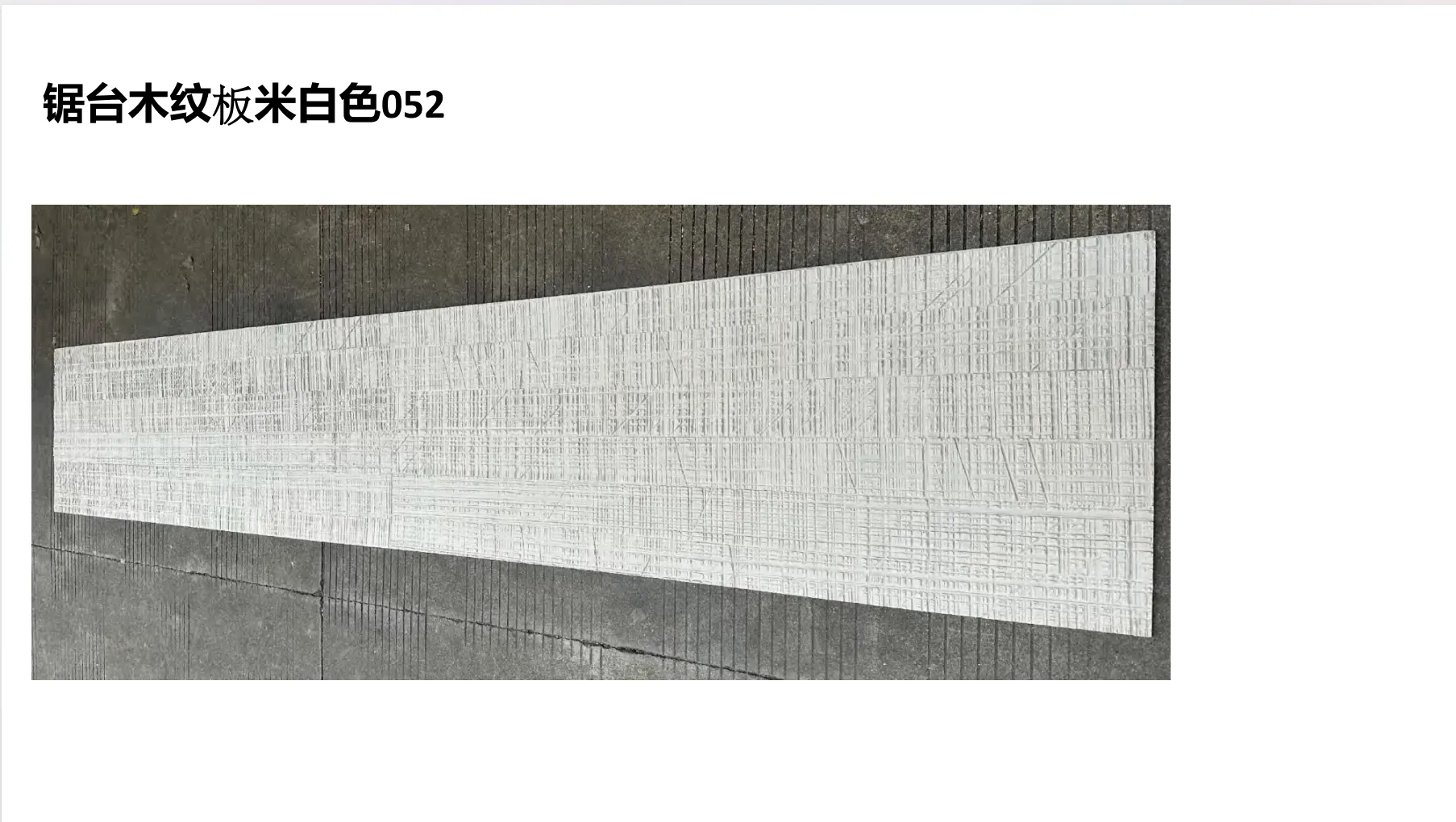
Sawing Wood Board is exactly what it sounds like: real wood, cut into thin, manageable boards with a sawn (rather than sanded or polished) finish. Think of it as the "rustic cousin" of hardwood flooring—raw, textured, and full of character. It's made from solid wood (often oak, pine, or cedar) that's milled to a consistent thickness, usually 12–20mm, and left with visible saw marks that add depth. You'll find it in cabins, restaurants going for a "farmhouse chic" vibe, and outdoor decks where that natural wood grain is the star.
But here's the thing about wood: it's alive. Even after being cut, it can warp, splinter, or absorb moisture, which is why how it cuts matters. A clean cut means fewer splinters to sand down, less waste, and a tighter fit during installation.
MCM Flexible Stone is a different beast entirely. Short for "Modified Composite Material," it's a mix of natural stone powder (think marble, travertine, or granite), fiberglass mesh, and a polymer binder that makes it flexible—yes, flexible. Unlike rigid natural stone slabs that crack under stress, MCM bends slightly, making it perfect for curved walls, uneven surfaces, or high-traffic areas where durability is key. It comes in endless styles: from Travertine (Starry Green) with its swirled green veins to Lunar Peak Silvery with metallic flecks that catch the light, and even mimics like Wood Grain Board for that wood look without the upkeep.
But flexibility doesn't mean fragility. MCM is designed to be tough, but how does that translate when you run a saw through it? That's what we're here to find out.
To keep things fair, we tested both materials under the same conditions. Here's how we set it up:
| Feature | Sawing Wood Board | MCM Flexible Stone (Travertine Starry Green) |
|---|---|---|
| Crosscut Edge Quality | Splintered edges with tear-out; requires sanding | Smooth, no chipping; veining/speckles intact |
| Miter Cut Edge Quality | Jagged end grain; frayed fibers | Sharp, clean angle; no visible flaws |
| Splintering | Moderate (worse on end grain) | None |
| Dust Type | Fine, lightweight, airborne | Coarse, heavy, falls straight down |
| Time for 2 Cuts | 2 minutes (plus sanding time) | 1.5 minutes (no extra prep needed) |
| Best Blade Type | Carbide-tipped (24–40 teeth) | Diamond-tipped (40+ teeth) |
You're after that authentic wood feel. Nothing beats the warmth of real wood grain, the way it ages with patina, or the sound of feet on it. It's perfect for indoor walls, ceilings, or low-moisture floors where you can embrace its quirks (like minor splinters). Just budget extra time for sanding and sealing to prevent warping.
You want durability and design freedom. It's water-resistant, so it works in bathrooms, kitchens, and outdoor patios. The flexible nature means you can wrap it around columns or curve it over an archway without cracking. And with styles like Lunar Peak Silvery (metallic) or Wood Grain Board (wood-look without the upkeep), you get the look you want without the hassle of splinters or sanding. Plus, those clean cuts mean your project goes faster—Juan estimates he could save 2–3 hours on a typical wall cladding job with MCM.
Recommend Products












