
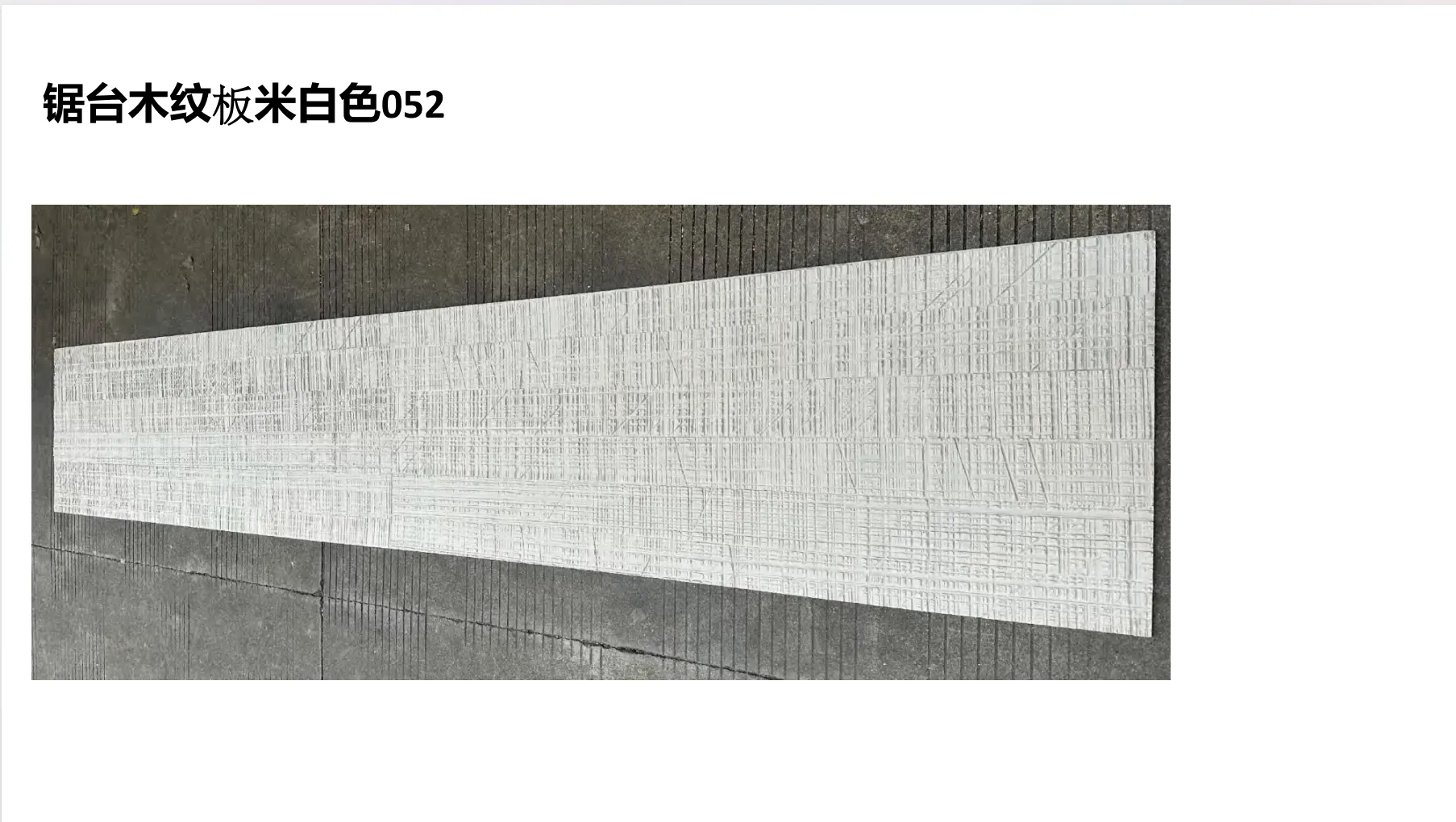
Let's talk about the unsung hero of any construction or renovation project: the cutting process. You can fall in love with a material's texture or color in a catalog, but when your team is on-site, saw in hand, and the clock is ticking, how that panel behaves under the blade becomes the real star. Today, we're putting two contenders head-to-head: the time-tested Sawing Wood Board and the modern marvel, MCM Project Board Series . We'll lean on real-world insights—think contractor war stories and "sawing wood board real photos" you might find in a job site log—and break down which one earns its keep when the sawdust flies.
If you've ever walked into a rustic café or a cabin in the woods, you've probably seen Sawing Wood Board in action. It's the OG of natural materials—think real wood planks, often with visible grain, knots, and that warm, organic feel that makes a space feel lived-in. These boards are typically milled from solid wood or engineered wood composites, designed to mimic the look of hand-sawn timber. They're a favorite for accent walls, ceiling panels, or exterior cladding where that "earthy" vibe is non-negotiable. But here's the catch: wood is a living material, and living materials can be unpredictable—especially when you cut them.
I spoke with Mark, a contractor with 20 years under his belt, who summed it up: "You never really know what you're gonna get with wood boards. One plank might cut like butter, the next? It's got a knot that fights the blade like a stubborn mule. And those 'sawing wood board real photos'? Half the time, they're showing off the perfect cut, but the outtakes? Splinters, tear-out, edges that look like a raccoon chewed 'em. You learn to budget extra sanding time."
Enter MCM Project Board Series—short for Modified Composite Material. This isn't your granddad's composite, though. MCM boards are engineered from a blend of minerals, polymers, and fibers, designed to be lightweight, flexible, and tough as nails. What makes them stand out? They can mimic just about any texture under the sun: stone, concrete, metal, and yes, even wood. Take the wood grain board variant, for example—it the swirls and knots of real wood but without the fuss. And unlike traditional materials, MCM is consistent. No hidden knots, no warping, no surprises.
"I switched to MCM for a hotel lobby project last year, and my crew still talks about it," says Lena, a project manager specializing in commercial builds. "We were using the wood grain MCM panels, and cutting them? It was like slicing through a well-made cake—clean, even, no drama. No more stopping to sand splinters or fix tear-out. Just… done."
To really put them to the test, let's imagine a typical scenario: a 10-foot length of Sawing Wood Board (let's say a pine-based engineered board with visible grain) and a 10-foot MCM Project Board (wood grain finish, to keep the aesthetic comparable). Same circular saw, same carbide-tipped blade, same operator—John, a carpenter with 15 years of experience. Here's how it went down:
| Aspect | Sawing Wood Board | MCM Project Board Series (Wood Grain) |
|---|---|---|
| Initial Resistance | Uneven—John noted "soft spots" where the grain ran parallel to the cut, then sudden "jamming" at a knot. | Consistent, light resistance—"Like cutting through a dense foam core, but with more structure," John said. |
| Sound & Vibration | Loud, rattly—"The board vibrated in the clamp; you could feel it in the handle." | Quieter, smoother hum—"Minimal vibration. The blade didn't chatter once." |
| Edge Quality Post-Cut | Rough with splinters along the grain; small tear-out near a knot (common in "sawing wood board real photos"). | Crisp, clean edge—no splinters, no fraying. The wood grain pattern stayed intact without smudging. |
| Dust Type | Fine, powdery wood dust that clung to clothes and tools. | Coarser, granular dust that was easier to sweep up (less airborne). |
| Post-Cut Prep Time | 10 minutes: Sanding edges, vacuuming dust, checking for loose splinters. | 2 minutes: Quick wipe with a cloth—no sanding needed. |
The differences in cutting performance boil down to what each material is made of. Sawing Wood Board, even engineered versions, is still wood at its core—organic, with inconsistencies in density and grain direction. Those knots? They're denser than the surrounding wood, so the blade has to work harder, leading to vibration and tear-out. The result? Edges that need TLC before they're ready for paint or sealant.
MCM Project Board Series, on the other hand, is a composite designed for uniformity. Its mineral-polymer blend means no hidden surprises—density is consistent across the board, so the blade glides through without fighting. That clean edge isn't just about looks; it translates to faster installation. Lena's team, for example, saved nearly 2 hours on a 50-panel job just by skipping the sanding step.
And let's not overlook weight. MCM boards are significantly lighter than solid wood—John estimated the MCM panel was about 40% lighter than the Sawing Wood Board of the same size. "Lifting 50 of these? My back would've thanked me at the end of the day," he laughed.
So, if MCM Project Board Series cuts like a dream, why would anyone still pick Sawing Wood Board? It's all about the project's priorities.
Go with Sawing Wood Board if… You're chasing that authentic, tactile wood experience. Think a heritage home restoration where "character" means embracing a few splinters and imperfections. Or a small accent wall where the budget is tight, and you don't mind investing extra labor time. Just be ready for the learning curve—Mark recommends testing a scrap piece first to map out grain direction and knots.
Opt for MCM Project Board Series if… Consistency, speed, and durability are non-negotiable. High-rise exteriors, commercial spaces with tight deadlines, or areas prone to moisture (hello, bathrooms or coastal homes) benefit from MCM's resistance to warping, rotting, or insect damage. And with finishes ranging from wood grain to fair-faced concrete to metallic, you don't have to sacrifice style for performance.
At the end of the day, there's no "winner"—just better fits. Sawing Wood Board brings warmth and tradition, warts and all. MCM Project Board Series brings innovation and reliability, with the bonus of looking just as good (if not better) in photos as it does in person.
Next time you're poring over samples, ask yourself: What's my team's experience level? How tight is the installation timeline? And—maybe most importantly—am I okay with a few splinters in the name of charm? For John, Lena, and Mark, the answer often leans MCM for big jobs, but never counts out the classic wood board for those special, small-scale projects where imperfection is part of the beauty.
And if you're still on the fence? Track down some "sawing wood board real photos" online—you'll see the splinters, the tear-out, the raw honesty. Then compare them to MCM cutting videos (yes, they exist!). The difference, as they say, is in the details… and the dust.
Recommend Products












