
Walk into any construction site, and you'll likely spot piles of discarded material—scraps of wood, broken tiles, chunks of drywall. It's a silent problem that eats into budgets, clogs landfills, and tugs at the conscience of anyone who cares about sustainability. Among the biggest offenders? Traditional sawing wood boards. From residential renovations to commercial builds, the process of cutting, trimming, and fitting these boards generates staggering amounts of waste. But what if there was a material that flipped the script—minimizing waste while maximizing efficiency? Enter MCM, or modified composite material, a game-changer in the world of construction and design. Today, we're diving into the showdown between sawing wood board waste and the efficiency of MCM materials like MCM flexible stone and MCM big slab board series. Let's unpack why this shift isn't just good for the planet, but for your bottom line too.
Let's start with the familiar: wood boards. For decades, they've been a staple in construction, loved for their natural warmth and versatility—think wood grain board for accent walls or wood line details in flooring. But behind that charm lies a messy truth: waste. When you cut a wood board to size, you're rarely left with a clean, exact fit. There's the trim from the edges, the off-cuts from angled corners, and the inevitable mistakes (we've all measured twice and cut once… only to still get it wrong). Add in natural defects—knots, splits, or warping—and suddenly, a significant portion of that lumber ends up in the dumpster.
Consider a small home renovation using wood grain board for a feature wall. A standard 4x8-foot sheet might require cutting into strips, trimming to avoid knots, and adjusting for wall irregularities. By the end, it's not uncommon for 15-20% of the material to go unused. Scale that up to a commercial project—a hotel lobby with wood line accents—and the waste balloons into hundreds of pounds. That's not just material lost; it's money down the drain. Every scrap represents time spent cutting, hauling, and disposing, plus the cost of the original lumber. And let's not forget the environmental impact: each discarded wood board traces back to a tree, and when it ends up in a landfill, it decomposes to release methane, a potent greenhouse gas.
The problem isn't just carelessness—it's the nature of wood itself. It's rigid, prone to splitting, and varies in quality. Even with precise measurements, sawing wood boards often feels like a game of chance, where the margin for error translates directly to waste. For contractors and designers, this has long been an accepted hassle. But what if it didn't have to be?
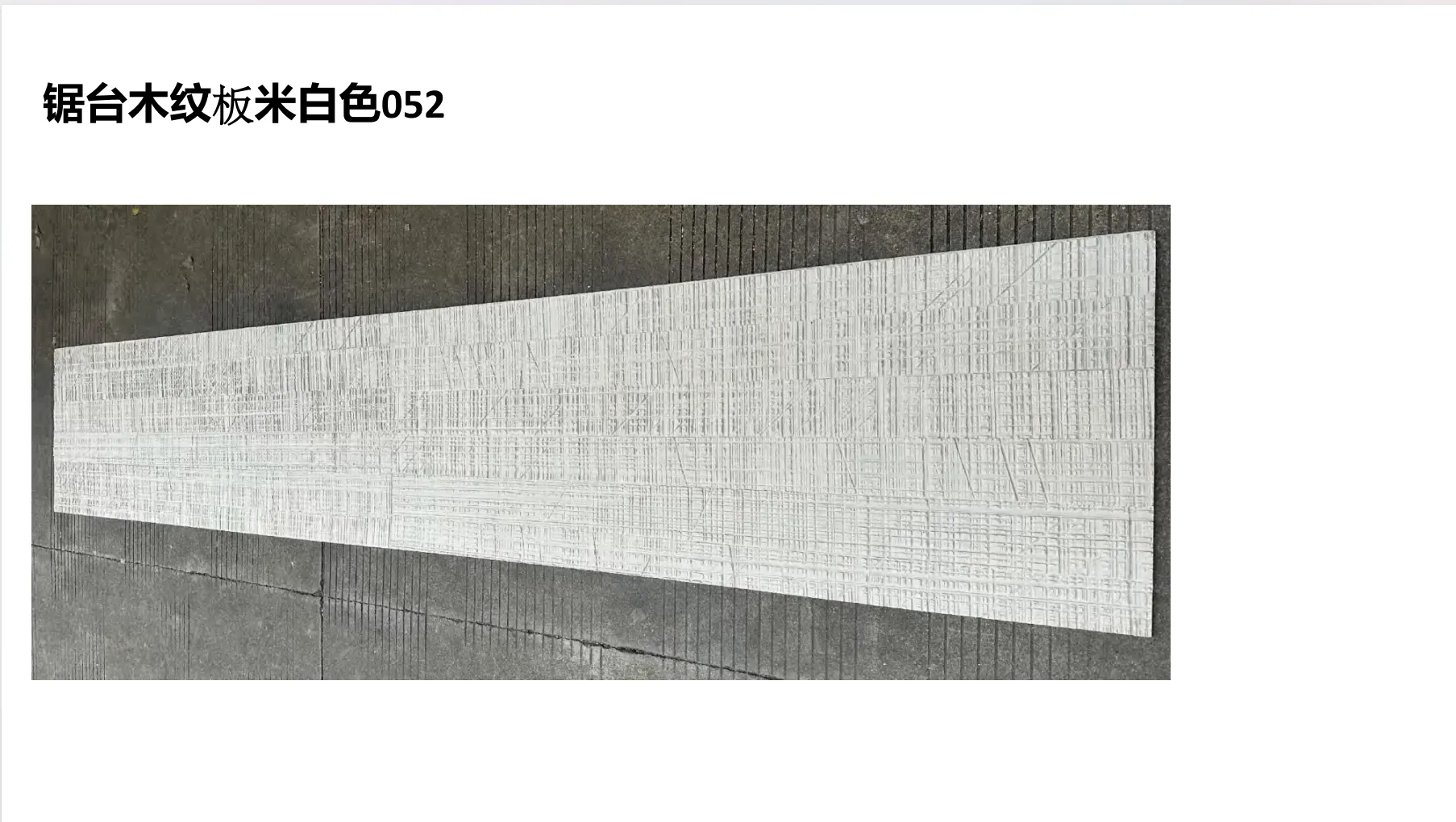
If wood boards are the old guard, MCM is the new frontier. Short for modified composite material, MCM is a blend of polymers, resins, and natural minerals engineered for performance. But here's what sets it apart: it's designed with efficiency in mind, from the factory floor to the installation site. Take MCM flexible stone, for example. It mimics the look of natural stone—think travertine or marble—but with a flexibility that wood can only dream of. Then there's the MCM big slab board series, which comes in large, seamless panels that cut down on seams and waste. These aren't just materials; they're solutions to the very problems that plague traditional wood boards.
Let's start with how MCM is made. Unlike wood, which requires harvesting entire trees, MCM uses a fraction of natural resources. Its composite structure means manufacturers can precisely control the mix, minimizing raw material waste. And with technologies like the MCM 3D printing series, customization is taken to a new level. Need a specific texture or pattern? 3D printing allows for on-demand production, so you only make what you need—no excess, no scraps. It's like ordering a tailored suit instead of buying a generic size and hacking it to fit.
Installation is where MCM truly shines. Remember how wood splits when cut? MCM flexible stone bends without breaking. Its lightweight, pliable nature means you can trim it with a utility knife—no power saw required—and it conforms to curves, corners, and uneven surfaces with ease. That means fewer mistakes, fewer off-cuts, and less time spent adjusting. The MCM big slab board series takes this further: imagine covering a 20-foot wall with just a few large panels instead of dozens of small wood boards. Fewer seams mean less cutting, less waste, and a cleaner finish. It's efficiency in action, turning a day-long installation into a morning's work.
Numbers tell the story best. Let's break down how sawing wood boards stack up against MCM materials in key areas:
| Category | Sawing Wood Boards | MCM Materials (Flexible Stone & Big Slab Series) |
|---|---|---|
| Waste Generation | 15-20% of material lost to cutting, defects, and trimming | Less than 5% waste, thanks to precision manufacturing and flexible cutting |
| Durability | Prone to warping, rotting, and insect damage; needs frequent replacement | Weather-resistant, UV-stable, and scratch-proof; lasts 20+ years with minimal upkeep |
| Installation Time | Slow; requires careful measuring, sawing, and fitting to avoid splits | Fast; lightweight panels cut with basic tools, flexible enough to conform to surfaces |
| Environmental Impact | High; linked to deforestation, landfill waste, and methane emissions | Low; uses recycled materials, minimal resource extraction, and is fully recyclable |
| Long-Term Cost | Higher; includes material waste, frequent replacements, and disposal fees | Lower; upfront cost offset by reduced waste, durability, and lower labor time |
Don't just take our word for it. Let's look at a real project: a boutique hotel in downtown Portland that wanted to revamp its exterior cladding. Originally, the design called for wood grain board to achieve a rustic, natural look. But after crunching the numbers, the contractor estimated they'd generate over 500 pounds of wood waste—enough to fill two dumpsters. That's when they switched to MCM flexible stone in a wood line texture. The result? Waste dropped to just 30 pounds (less than 5% of the original estimate), and installation took half the time. The hotel saved $8,000 in material and labor costs, and the cladding now withstands rain, wind, and sun without warping or fading. It's a small example, but it illustrates a big shift: MCM doesn't just reduce waste—it transforms projects from wasteful to efficient.
MCM's benefits stretch far beyond cutting down on scraps. For starters, it's a sustainability powerhouse. Its low-VOC (volatile organic compound) formula means better indoor air quality, and its recyclable nature keeps it out of landfills at the end of its life. Plus, because it's lightweight, transporting MCM uses less fuel than hauling heavy wood boards—another win for the planet.
Designers love it too. MCM comes in a dizzying array of textures and colors, from the warmth of wood line to the elegance of travertine or the industrial chic of fair-faced concrete. Want a wall that looks like weathered stone? MCM flexible stone has you covered. Dreaming of a seamless, modern facade? The MCM big slab board series delivers. It's like having a palette of natural materials without the natural limitations. And because it's so durable, it reduces the need for replacements—meaning less waste over time, not just during installation.
For contractors, the math is simple: less waste + faster installation = higher profits. When you're not spending hours cleaning up wood scraps or reordering materials, you can take on more projects or finish existing ones ahead of schedule. It's a win-win for everyone involved—contractors, clients, and the planet.
Sawing wood boards have been a staple for generations, but traditions evolve. As we face growing pressure to build sustainably and efficiently, MCM materials like MCM flexible stone and the MCM big slab board series aren't just alternatives—they're necessities. They represent a shift from "good enough" to "better": better for the environment, better for budgets, and better for the people who build and design our spaces.
So the next time you're standing in front of a pile of wood scraps, ask yourself: What if we didn't have to accept waste as part of the process? What if our materials worked with us, not against us? MCM isn't just a material; it's a promise—a promise that building can be efficient, beautiful, and kind to the planet. And that's a future worth sawing for.
Recommend Products












