
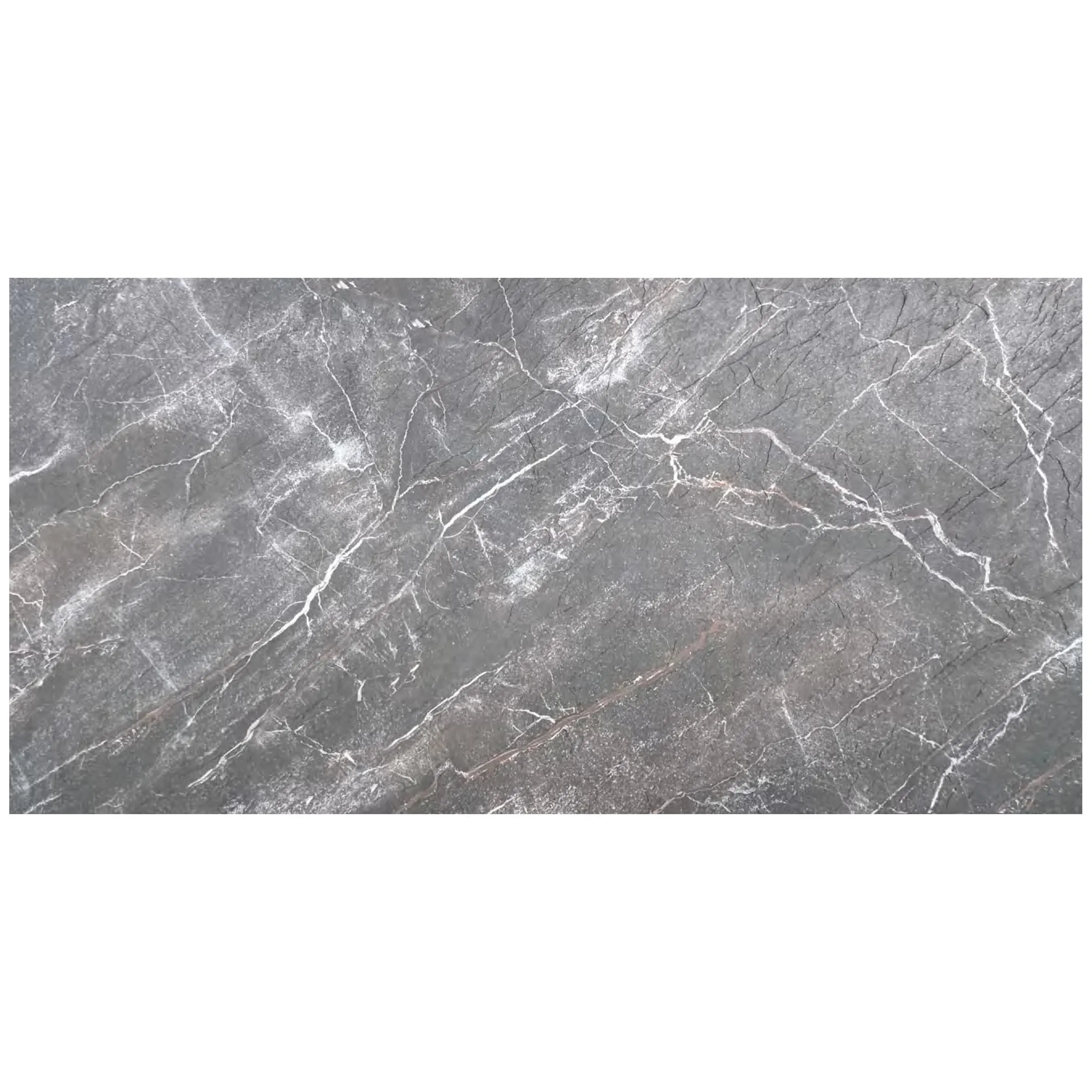
If you've ever stepped into a high-end restaurant, a luxury boutique, or a swanky office lobby and found yourself pausing to admire the walls—chances are, you've encountered Slate Portoro. With its deep, midnight-black base swirled with golden veins that catch the light like liquid sunshine, it's the kind of natural stone that feels less like a building material and more like a work of art. For decades, architects and designers have turned to Slate Portoro to add that "wow" factor, the kind that makes a space feel timeless and opulent. But here's the thing about art: it's not always easy to come by. And in 2025, Slate Portoro's beauty is becoming harder to afford—and harder to rely on.
Let's start with the numbers. In January 2025, industry reports pegged the average price of Slate Portoro at $120–$150 per square foot, depending on thickness and finish. By June, that number had jumped to $170–$200. And by October? Some suppliers were quoting as high as $230 per square foot for premium slabs. For a mid-sized commercial project—say, a 5,000-square-foot hotel lobby wall—that's a cost increase of nearly $300,000 in less than a year. To put it bluntly: Slate Portoro isn't just expensive anymore. It's unpredictable .
What's driving this volatility? Let's break it down. First, supply chain chaos. Slate Portoro is quarried primarily in Italy, and 2025 has been a year of labor strikes, shipping delays, and stricter environmental regulations that have slowed mining operations to a crawl. One quarry owner in Tuscany told industry publication Stone World that production is down 40% compared to 2024, thanks to new laws limiting excavation hours to protect local ecosystems. "We can't just dig faster—we're legally capped," he said. "And when supply drops, prices spike. It's basic economics."
Then there's demand. Post-pandemic, the global construction industry is booming, with luxury real estate and hospitality projects flooding the market. Everyone wants that "premium" look, and Slate Portoro has long been the gold standard. But here's the catch: natural stone is a finite resource. There's only so much Slate Portoro in the earth, and as the easiest-to-reach deposits get exhausted, mining deeper becomes more expensive and time-consuming. Add in geopolitical tensions—like tariffs on European stone imports in some regions—and you've got a perfect storm for price instability.
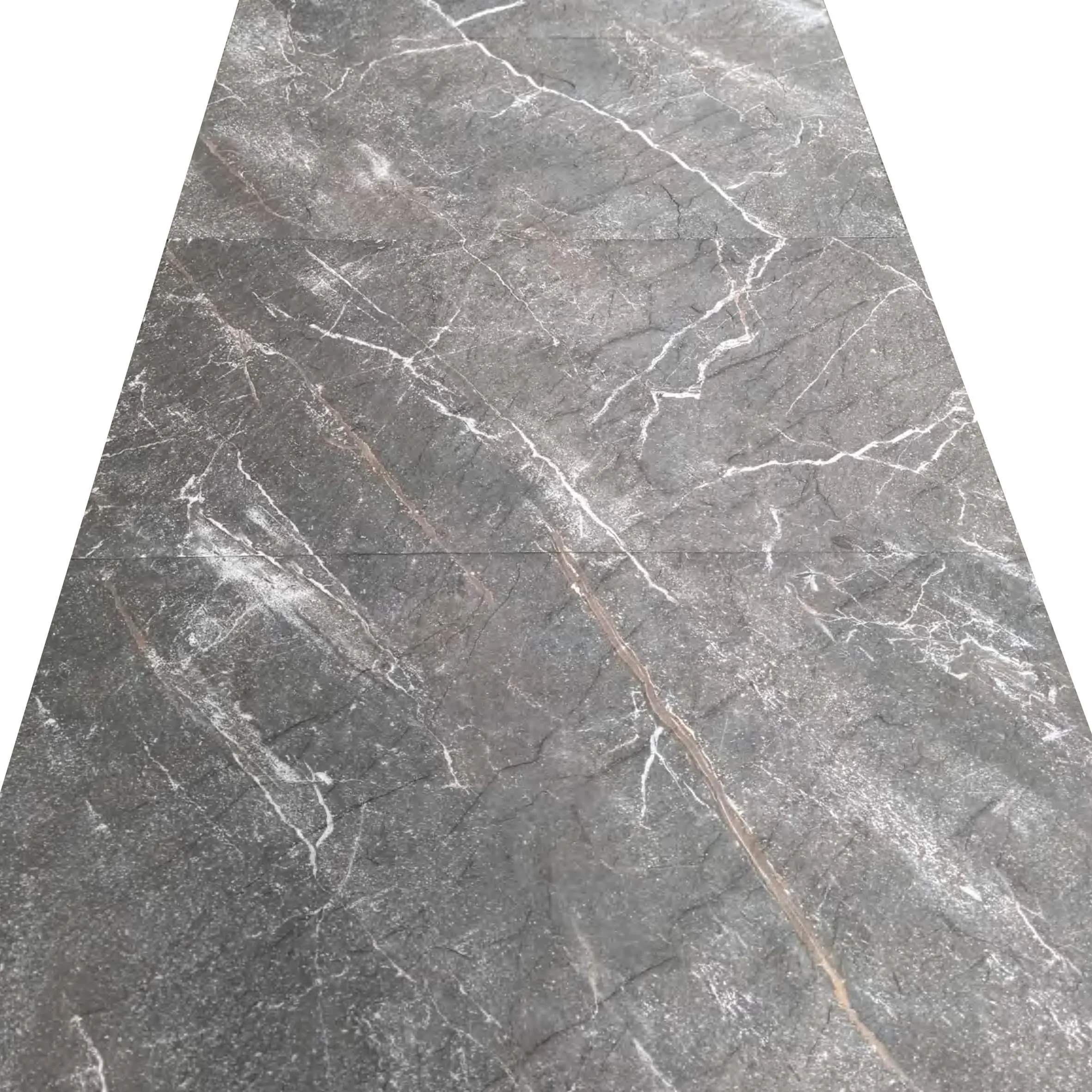
Price hikes are frustrating, but they're not the only issue with relying on Slate Portoro—or many natural stones, for that matter. Let's talk about consistency . No two slabs of Slate Portoro are identical (that's part of its charm), but in 2025, the variation has become extreme. One batch might have thick, bold gold veins; the next could be almost solid black. For designers trying to create a cohesive look across a large space, this inconsistency is a logistical nightmare. "We ordered 50 slabs last spring, and 10 of them looked like they came from a different quarry," said a project manager at a New York design studio. "We had to mix and match, and the client noticed. It was embarrassing."
Then there's durability. Natural stone is tough, but it's not invincible. Slate Portoro is porous, meaning it stains easily if not sealed properly. In high-traffic areas—like a hotel hallway or a restaurant wall—it can chip, scratch, or fade under UV light. And repairs? They're costly. Replacing a single damaged slab often requires special-ordering a match, which, in 2025, can take 12–16 weeks. "We had a client whose Slate Portoro wall got water damage from a leaky pipe," said a contractor in Miami. "By the time we got a replacement slab, the project was three months behind schedule. The client was livid."
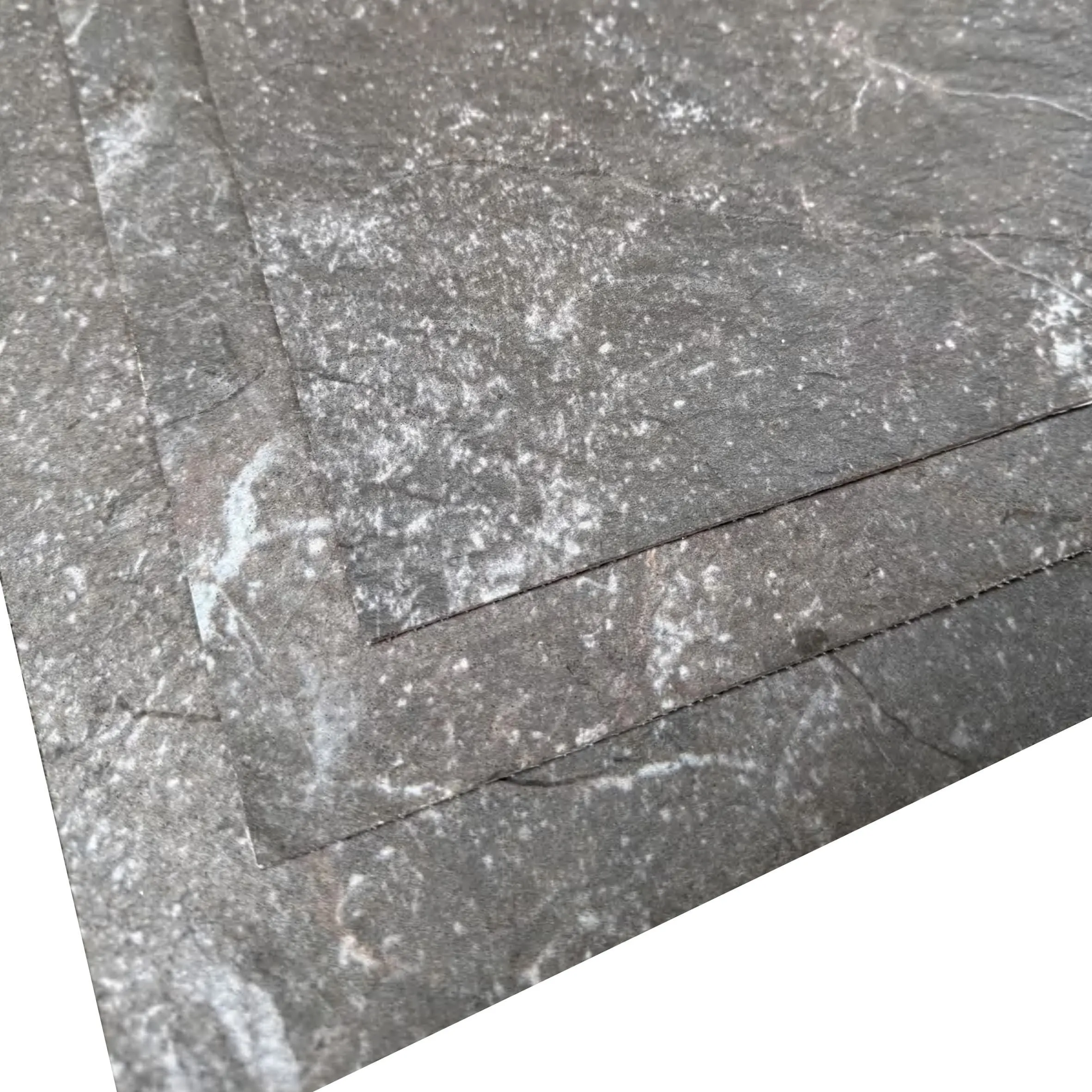
So, what if there was a material that offered the beauty of Slate Portoro—those rich, dynamic textures, that depth of color—but without the price spikes, supply delays, or durability issues? That's where MCM comes in. Short for Modified Composite Material, MCM is a revolutionary cladding solution that's been quietly gaining traction in the architecture world for years. But in 2025, as natural stone prices spiral, it's finally stepping into the spotlight.
At its core, MCM is a blend of natural minerals (like stone powder and fiber) and advanced polymers, pressed into thin, flexible panels. Think of it as "stone with a backbone"—it looks and feels like natural stone, but it's lighter, stronger, and infinitely more adaptable. And here's the kicker: MCM products—like MCM flexible stone and the MCM big slab board series —are designed to mimic the look of premium stones like Slate Portoro, travertine, and marble, but at a fraction of the cost and with none of the supply chain headaches.
First, price stability . Unlike natural stone, MCM is manufactured in factories, not quarried. That means production isn't at the mercy of weather, strikes, or finite resources. "We source raw materials globally—stone powder from Italy, polymers from Germany, fibers from Japan—and our factories run 24/7," explained a product manager at MCM manufacturer StoneTech. "We can scale production up or down based on demand, so our prices stay consistent. In 2025, our MCM flexible stone panels have increased by just 5%—not 50% like Slate Portoro." For budget-conscious developers, that stability is a game-changer.
Second, durability . MCM panels are water-resistant, scratch-proof, and UV-stable. They won't fade in sunlight, stain from coffee spills, or chip if someone bumps into them with a luggage cart. In fact, most MCM products come with a 20-year warranty—something you'll never get with natural stone. "We installed MCM big slab boards in a busy airport terminal three years ago," said a contractor in Chicago. "They've been through snow, salt, thousands of passengers dragging suitcases—and they still look brand new. You can't say that about Slate Portoro."
Third, design flexibility . Natural stone is heavy and rigid—you can't bend it, curve it, or install it on high-rise exteriors without expensive structural support. MCM? It's lightweight (about 70% lighter than natural stone) and flexible enough to wrap around columns, arches, or even curved facades. Want a 20-foot-tall seamless wall? The MCM big slab series offers panels up to 12 feet wide and 16 feet tall, eliminating the need for grout lines. And the design options? They're endless. MCM can mimic not just Slate Portoro, but also travertine (starry blue) (with flecks of blue that look like a night sky), lunar peak silvery (a sleek, metallic finish), or even wood grain or concrete. It's like having a paint palette of textures at your fingertips.
Fourth, sustainability . Let's talk about the elephant in the room: natural stone mining is hard on the planet. Quarrying disrupts ecosystems, uses massive amounts of water, and generates tons of waste. MCM, on the other hand, uses recycled stone powder (leftover from natural stone processing) and requires 90% less water to produce. Plus, because it's lightweight, shipping MCM panels emits far less CO2 than shipping heavy stone slabs. For developers chasing LEED certification or eco-conscious clients, MCM is a no-brainer.
| Factor | Slate Portoro (Natural Stone) | MCM (Modified Composite Material) |
|---|---|---|
| Price (2025 Average) | $170–$230 per sq. ft. | $45–$75 per sq. ft. |
| Price Stability (2024–2025) | +58% increase | +5% increase |
| Supply Lead Time | 12–16 weeks (unreliable) | 2–4 weeks (guaranteed) |
| Durability | Porous, prone to staining/chipping; no warranty | Water/scratch/UV-resistant; 20-year warranty |
| Design Flexibility | Rigid, heavy; limited to flat surfaces | Lightweight, flexible; curved/wrapped installations possible |
| Sustainability | High carbon footprint; finite resource | Recycled materials; low water/energy use in production |
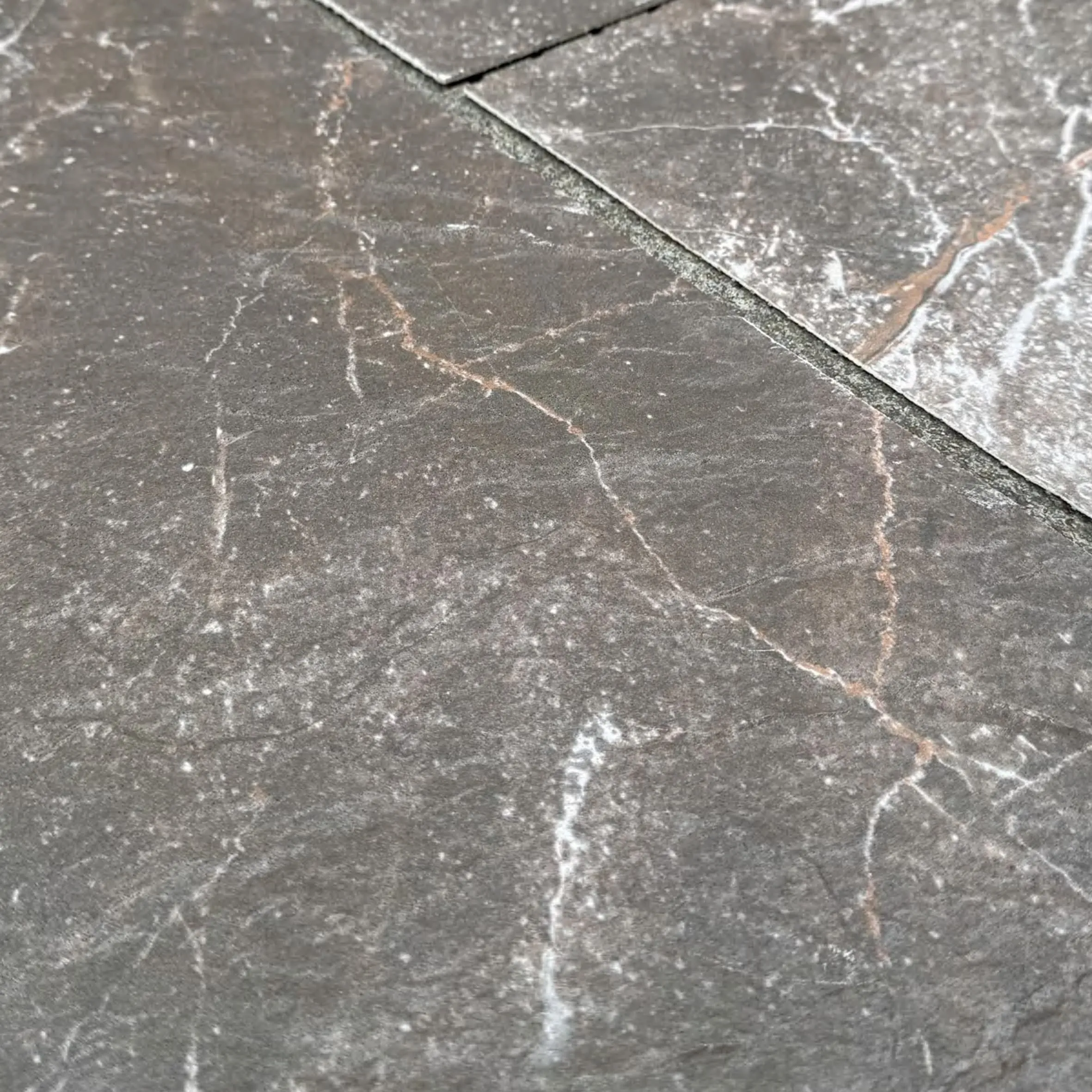
One of the biggest misconceptions about MCM is that it only mimics "basic" stones. But today's MCM lines are shockingly sophisticated. Take the travertine (starry blue) panels, for example. They replicate the pitted texture of natural travertine, but with a twist: embedded glass particles that catch the light, creating a "starry" effect that shimmers like a night sky. It's a look that would be impossible to achieve with natural stone—unless you hand-place thousands of tiny glass beads, which would cost a fortune.
Or consider the lunar peak silvery series. These panels mimic the rough, cratered surface of the moon, with a metallic silver sheen that adds industrial-chic flair to restaurants and offices. Designers love them because they're bold but not overwhelming—unlike Slate Portoro, which can dominate a space if overused. "We paired lunar peak silvery MCM with warm wood accents in a tech startup office," said an interior designer in Austin. "The contrast is stunning, and the client was thrilled they didn't have to blow the budget on natural stone."
And for those who still crave the "natural" look, MCM's wood grain boards and bamboo mat boards offer the warmth of timber without the risk of rot or termites. "I had a client who wanted a 'rustic cabin' vibe for their hotel, but we're in Miami—real wood would warp in the humidity," said a designer in Florida. "MCM's bamboo mat boards solved the problem. They look exactly like woven bamboo, but they're waterproof and maintenance-free. The guests can't tell the difference, and the client saved 60% on materials."
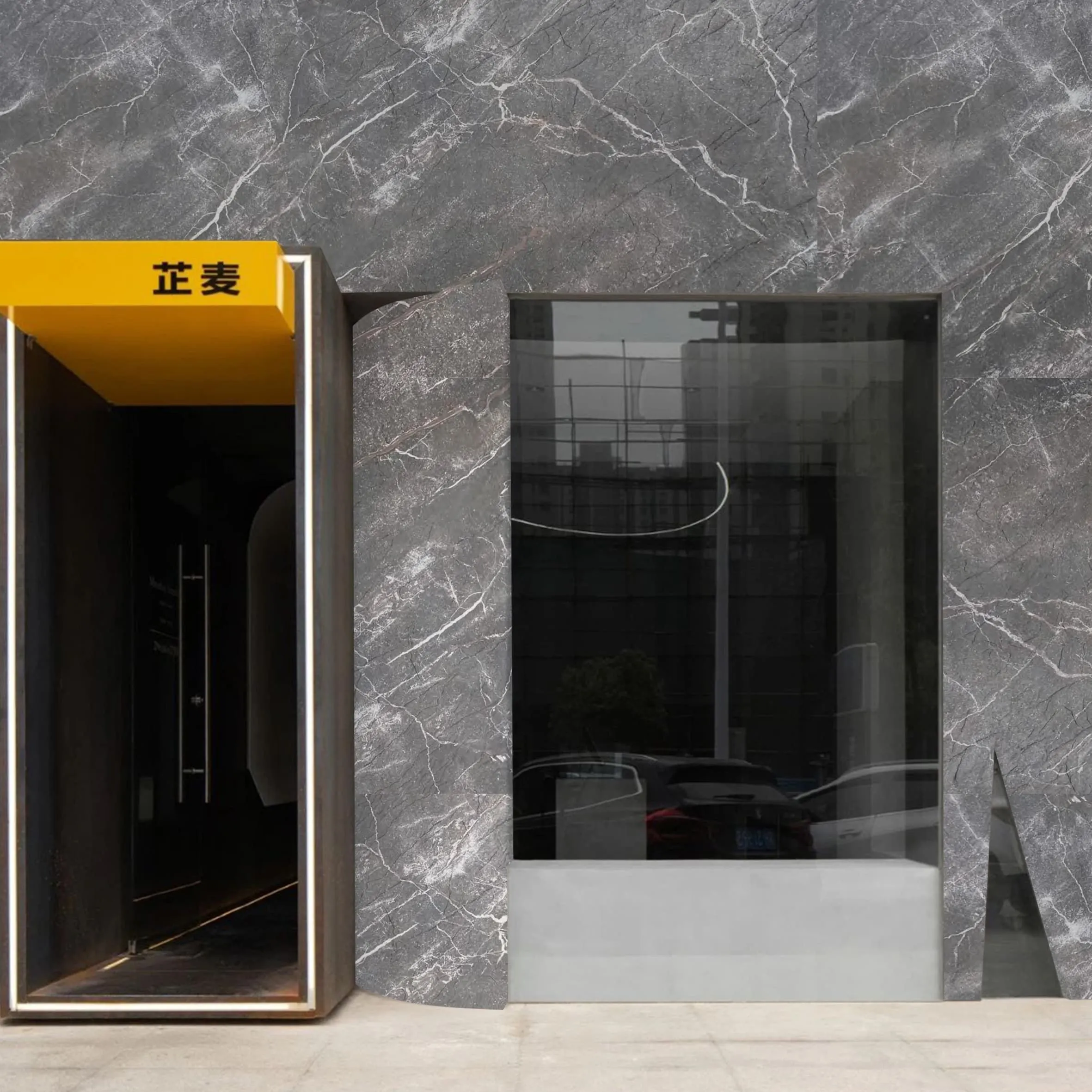
Let's address the elephant in the room: Some designers and clients still see MCM as "fake" stone—a lesser alternative to the "real thing." I get it. There's a romanticism around natural stone: the idea that each slab has been forming for millions of years, that it carries the history of the earth in its veins. But here's the truth: MCM isn't trying to replace natural stone. It's trying to complement it—offering a solution for projects where budget, durability, or logistics matter more than the "story" of the material.
Take healthcare facilities, for example. Hospitals can't afford to wait 16 weeks for Slate Portoro, nor can they risk stains or bacteria growth in porous stone. MCM's non-porous, easy-to-clean panels are a no-brainer. Or high-rise residential buildings: installing natural stone on the 25th floor requires reinforcing the structure to support the weight. MCM panels weigh so little that they can be installed with standard mounting brackets, saving tens of thousands of dollars in structural engineering costs.
And let's talk about sustainability. In 2025, clients are asking harder questions about the environmental impact of their projects. "Is this stone quarried responsibly?" "What's the carbon footprint of shipping it from Italy?" MCM answers those questions with transparency: recycled materials, local manufacturing (in many cases), and a fraction of the carbon emissions of natural stone. "We had a client who refused to use natural stone on principle," said a developer in Portland. "MCM let us give them the high-end look they wanted, without the guilt."
Let's cut to the chase: For most projects in 2025, yes. MCM offers price stability, supply chain reliability, durability, and design flexibility that Slate Portoro simply can't match. It's not that Slate Portoro is "bad"—it's just that in a world of rising costs and tight deadlines, it's no longer the practical choice for most commercial or residential builds.
That said, there will always be a place for natural stone. If you're designing a luxury villa for a client who wants "the real thing" and has an unlimited budget, Slate Portoro will always deliver that timeless elegance. But for everyone else—for developers watching the bottom line, for designers juggling tight deadlines, for clients who care about sustainability—MCM is a revelation. It's not just a "cheaper" alternative. It's a smarter one.
As one architect put it: "I used to specify Slate Portoro because I thought there was no other option for that level of beauty. Now? I specify MCM because I can have beauty and peace of mind. And in 2025, peace of mind is priceless."
Recommend Products












