
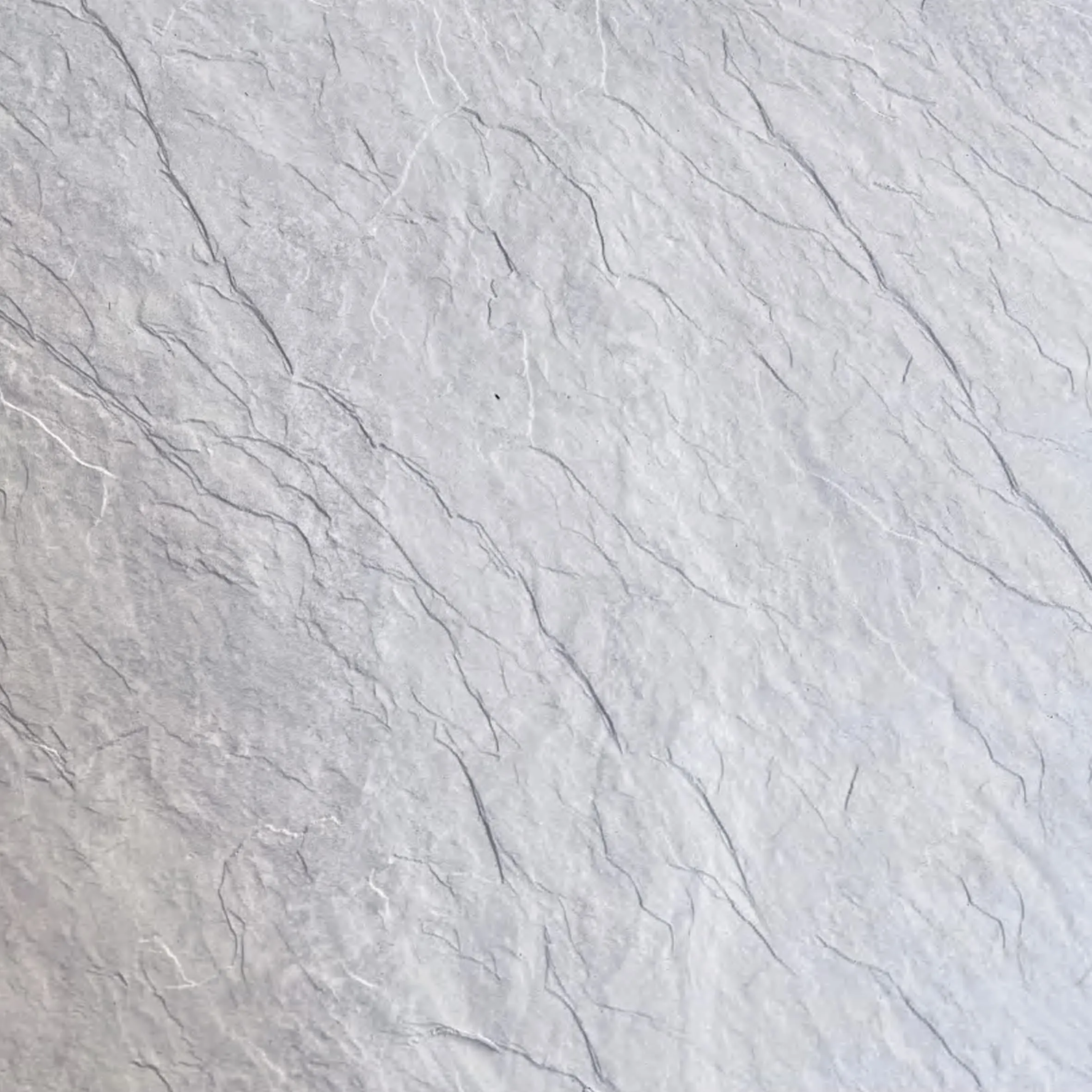
In the world of architecture and design, there's a quiet rebellion happening. It's not about grand gestures or flashy trends, but about something more fundamental: the materials we build with. As architects and designers push the boundaries of what's possible—dreaming up curved walls that flow like music, structures that seem to breathe, and spaces that feel less like buildings and more like experiences—they're discovering a truth: traditional building materials often can't keep up. Enter Slate Veil White Flexible Stone , a material that's not just keeping up, but leading the charge. Part of the innovative MCM flexible stone family, it's redefining how we think about walls, curves, and the very idea of "structure."
Let's start with the basics: what *is* it? At its core, Slate Veil White is a product of advanced material science. It's part of the modified composite material (MCM) category, which blends natural stone aggregates—think the essence of real slate—with high-performance polymers. The result? A material that has the look, texture, and durability of natural stone, but with a flexibility that feels almost magical. Imagine holding a sheet of stone that bends in your hands without cracking. That's the reality here.
Traditional stone, for all its beauty, is rigid. Marble, granite, even travertine (beige) —they're heavy, brittle, and unforgiving when it comes to curves. Wood, while warm, can warp or rot. Fair-faced concrete , a staple of modern design, offers a sleek, industrial look but is dense and hard to shape into organic forms. Slate Veil White, though? It's lightweight (we're talking 3–4 kg per square meter, compared to 20+ kg for traditional stone slabs), thin (as little as 3mm thick), and remarkably flexible. It can bend to a radius as tight as 50cm without losing structural integrity. For anyone who's ever tried to clad a curved wall with traditional materials, that number alone is a game-changer.
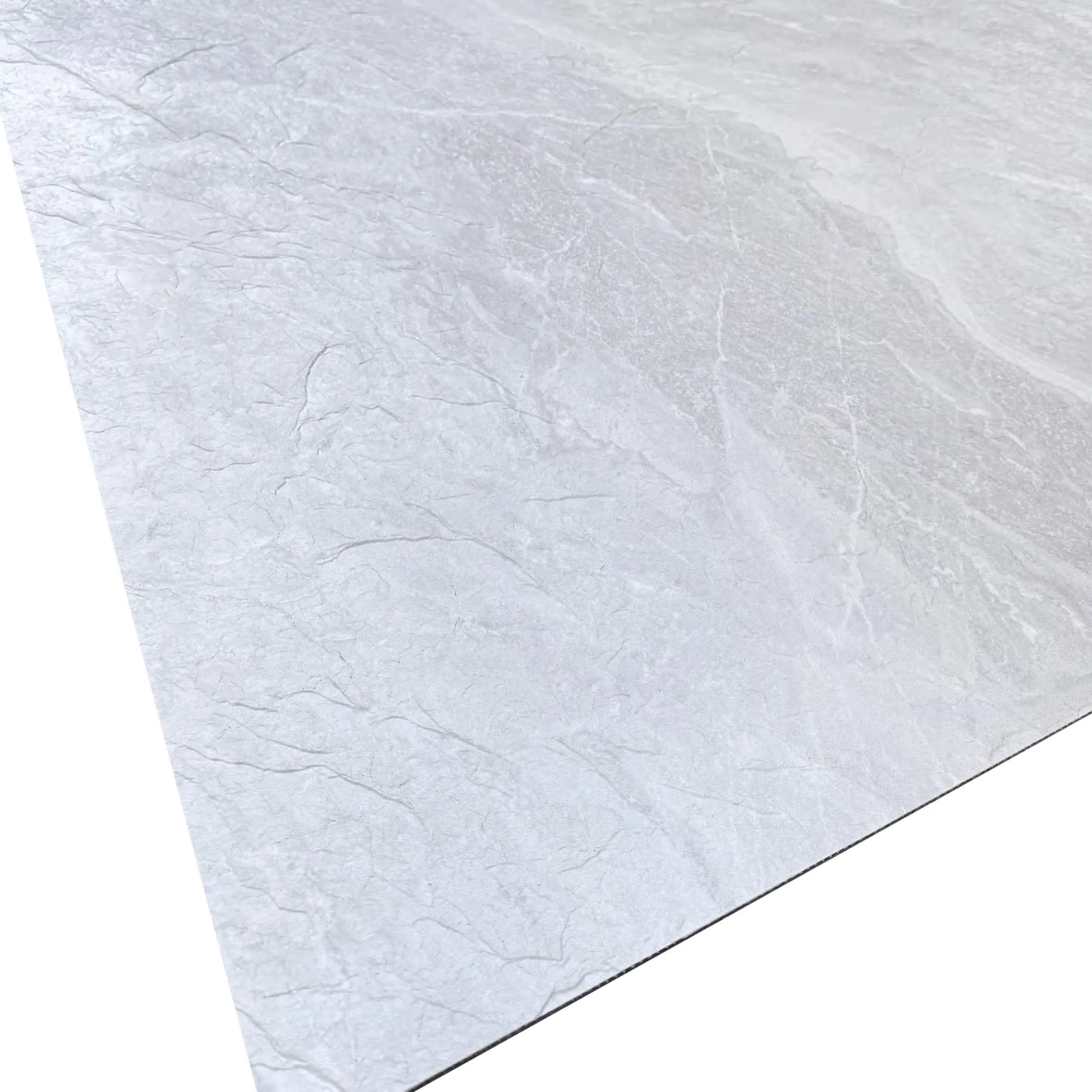
Curved walls are more than just a design choice—they're a way to soften spaces, guide movement, and create a sense of flow. But for decades, they've been a headache for builders. Traditional stone slabs require precise cutting, heavy support structures, and often result in visible seams that break the curve's continuity. Brick or concrete? They demand extensive formwork, and even then, achieving a smooth, seamless curve is tricky. Wood? It might work indoors, but outdoors, it's prone to weathering and warping, which can ruin the curve over time.
Slate Veil White solves these problems with elegance. Because it's flexible, it hugs curves naturally, eliminating the need for complex cutting or. Installation is a breeze compared to traditional materials: no heavy machinery, no massive scaffolding, just lightweight sheets that can be cut on-site with standard tools and adhered directly to surfaces. The result? A curved wall that looks like it was carved from a single piece of stone, with no unsightly gaps or breaks. It's the difference between a wall that *has* a curve and a wall that *is* a curve—organic, fluid, and utterly intentional.
| Material | Flexibility (1–5) | Weight (kg/sqm) | Installation Ease | Best For |
|---|---|---|---|---|
| Slate Veil White Flexible Stone | 5/5 (bends to 50cm radius) | 3–4 | Easy (cut on-site, direct adhesion) | Curved walls, unique organic structures |
| Fair-Faced Concrete | 1/5 (rigid) | 22–25 | Complex (requires formwork, curing time) | Industrial, linear designs |
| Wood Grain Board | 3/5 (limited flexibility) | 7–9 | Moderate (prone to warping if not sealed) | Warm, rustic interiors |
| Travertine (Beige) | 2/5 (brittle, minimal flex) | 18–20 | Challenging (heavy, requires structural support) | Classic, rigid facades |
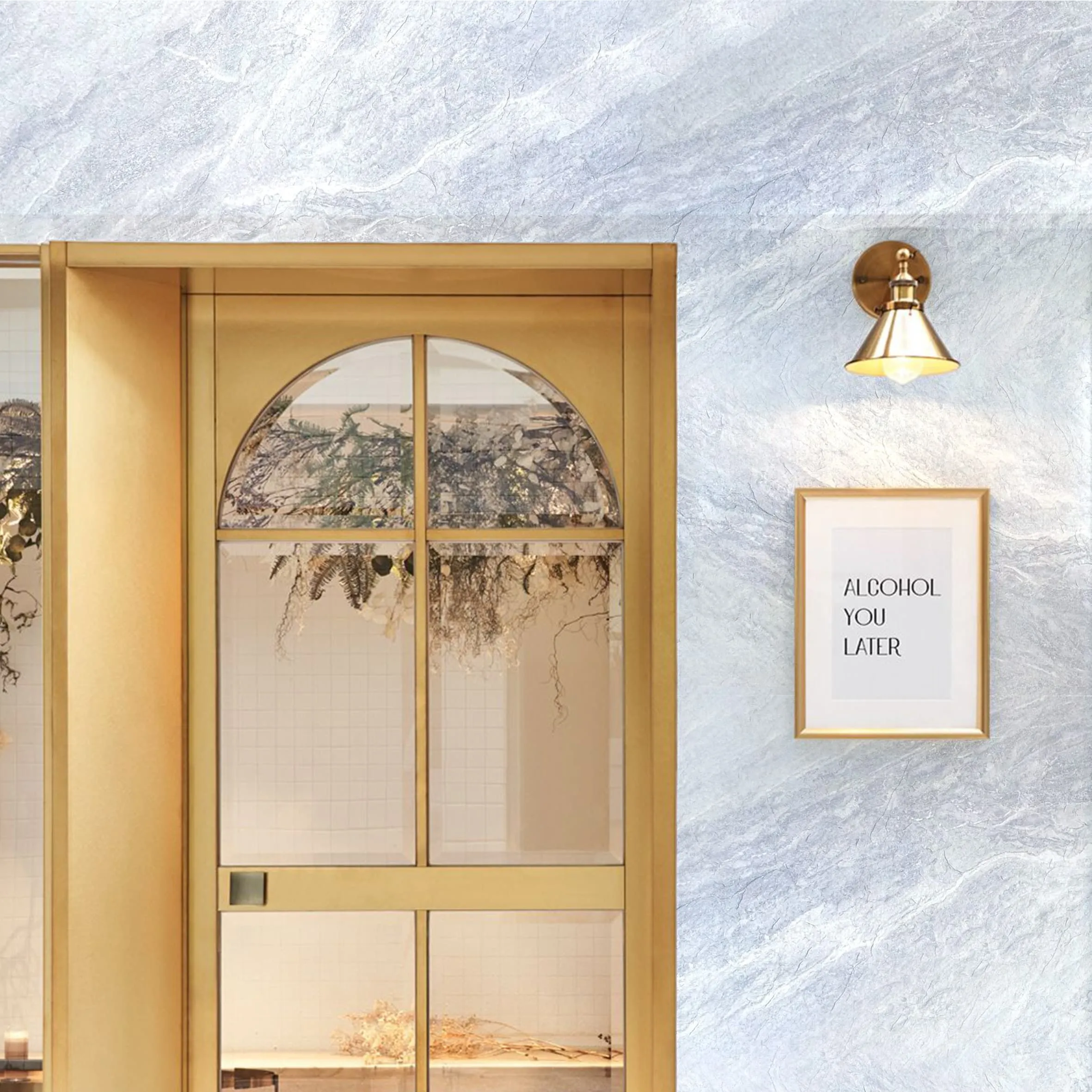
Curved walls are just the beginning. Slate Veil White's flexibility opens the door to a world of unique structures that were once little more than pipe dreams. Think about a museum with a facade that undulates like a wave, mimicking the rhythm of the art inside. Or a boutique hotel lobby where the walls rise and fall in gentle peaks, creating intimate nooks and grand spaces in one fluid motion. Even retail spaces are getting in on the action—imagine a clothing store where the fitting rooms are enclosed in soft, curved walls of Slate Veil White, turning a functional space into a design moment.
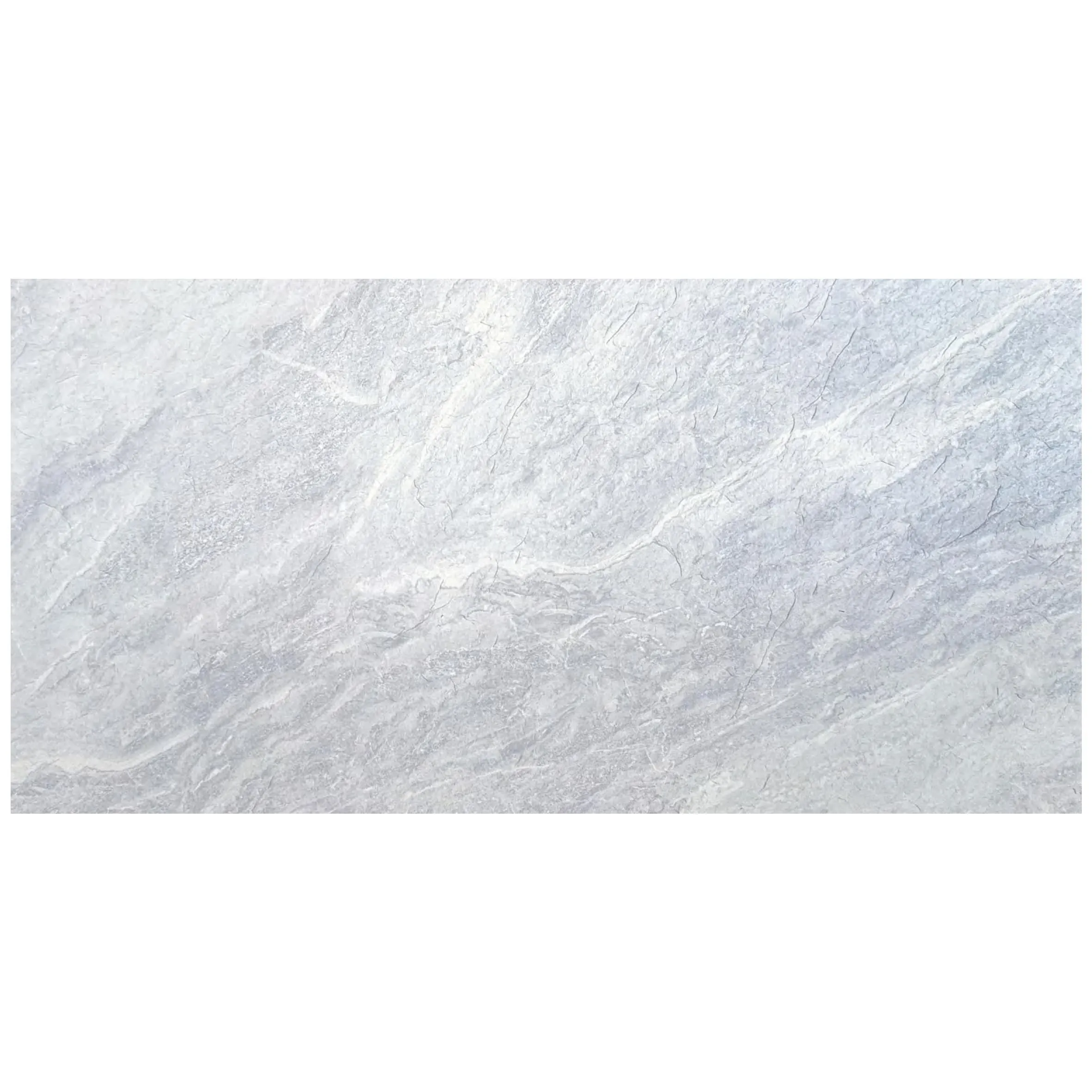
What makes these structures work isn't just the flexibility, but the aesthetics. Slate Veil White isn't a "one-note" material. Its color—"veil white"—is a study in subtlety. It's not the stark, clinical white of a hospital wall, but a soft, warm white with hints of pale gray and delicate veining, like sunlight filtering through a thin layer of clouds. Run your hand over it, and you'll feel a texture that's matte but not flat—slightly porous, with the gentle irregularities of natural stone. It's a material that invites touch, that changes with the light, and that adds depth to even the simplest space.
Compare that to wood grain board , which brings warmth but can feel busy in large doses, or the cool uniformity of fair-faced concrete. Slate Veil White strikes a balance: it's modern without being cold, organic without feeling rustic. It plays well with other materials, too—paired with metal accents, it feels industrial-chic; mixed with warm woods, it softens into something cozy; even alongside bold colors, its neutral palette lets other elements shine.
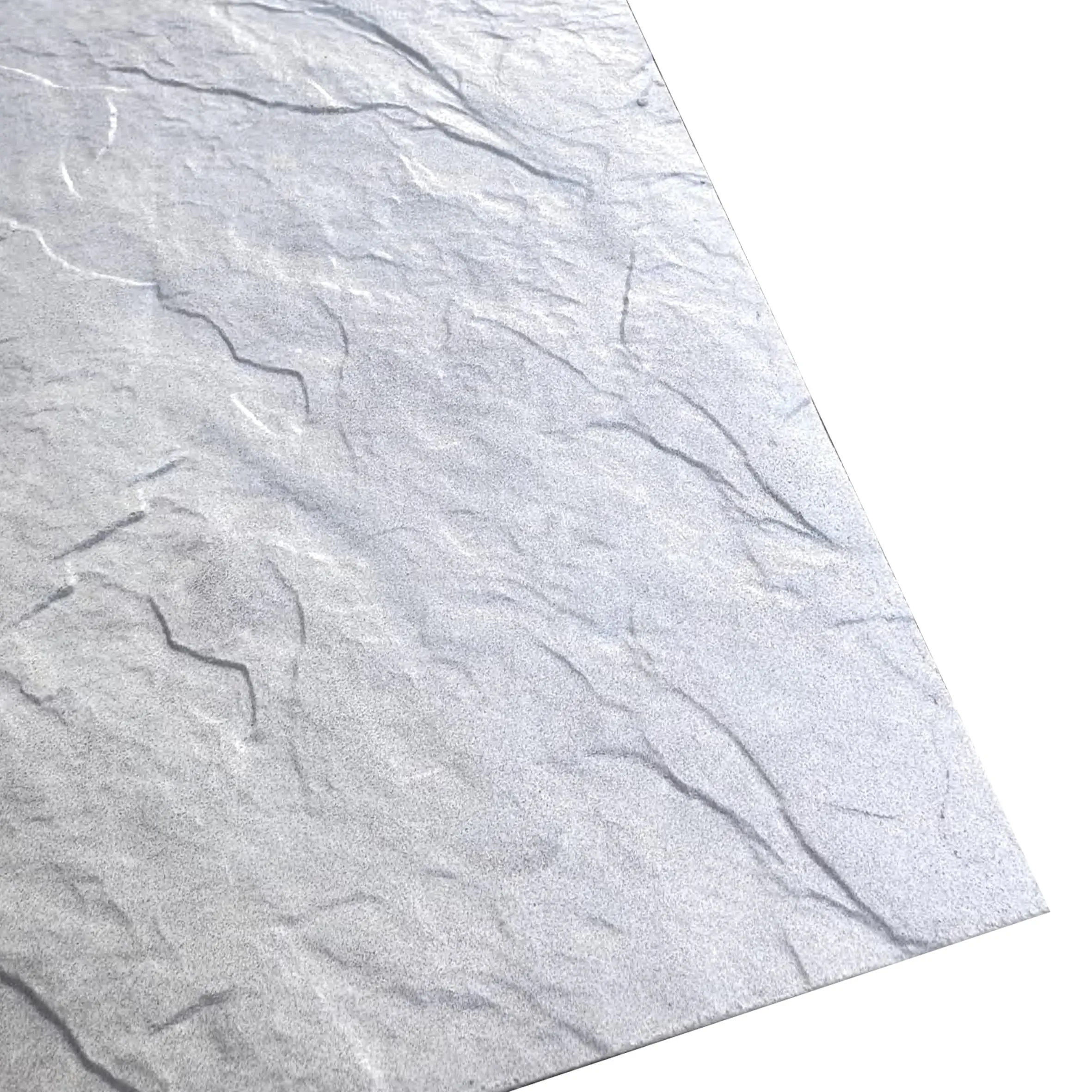
None of this would be possible without the innovation of MCM flexible stone technology. Unlike traditional stone, which is quarried and cut, Slate Veil White is engineered at the molecular level. Its base is a blend of natural slate aggregates and a proprietary polymer matrix, which gives it both strength and flexibility. The manufacturing process, often integrated with 3D printing series techniques, ensures that every sheet has consistent thickness, texture, and flexibility—critical for large-scale projects where uniformity matters.
This precision is a game-changer for designers. When you're working on a 50-foot curved wall or a multi-story facade, you need to trust that every piece of material will behave the same way. With Slate Veil White, there's no guesswork. The 3D printing process allows for microscopic control over the material's structure, ensuring that even the thinnest sheets (3mm) have the tensile strength to withstand weather, impact, and time. It's a material that's as reliable as it is beautiful—a rare combination in the world of design.
Slate Veil White isn't picky about where it lives. While it's making waves in exterior design—cladding curved building facades, accent walls, and even outdoor pavilions—it's equally at home indoors. Imagine a restaurant with a curved bar front wrapped in Slate Veil White, catching the light and creating a focal point. Or a home office with a backdrop of soft, curved walls that make long workdays feel less stressful. Even bathrooms and kitchens benefit from its durability: it's water-resistant, stain-proof, and easy to clean, making it a practical choice for high-traffic areas.
One of the most exciting things about this material is how it blurs the line between "interior" and "exterior." A wall that starts outside, curving gently as it moves indoors, can now be clad in the same material, creating a seamless transition that makes spaces feel larger and more connected. Traditional materials often can't handle both environments—wood rots outdoors, some stones fade in sunlight—but Slate Veil White thrives, retaining its color and texture whether it's baking in the sun or sheltered from the rain.
In an era where "sustainability" is more than a buzzword, Slate Veil White has another trick up its sleeve: it's kind to the planet. Because it uses natural stone aggregates efficiently—recycling waste from traditional quarrying and manufacturing— it reduces the environmental impact of stone extraction. Its lightweight nature also cuts down on transportation emissions; fewer trucks are needed to haul materials, and installation requires less energy than heavy stone or concrete. Even better, its durability means it won't need to be replaced every decade, reducing long-term waste.
Compare that to traditional stone quarrying, which can disrupt ecosystems and generate massive amounts of waste, or wood products that contribute to deforestation. Slate Veil White proves that innovation and sustainability don't have to be enemies. It's a material that lets us build beautifully *and* responsibly—a win-win for designers, builders, and the planet.
At the end of the day, Slate Veil White Flexible Stone is more than a material. It's a tool for creativity. It's for the architect who's been sketching curved walls for years but could never find the right material to build them. It's for the designer who wants a space to feel alive, not just functional. It's for anyone who believes that buildings should inspire—and that the materials we use should keep up with our imaginations.
In a world where so much of design feels repetitive, Slate Veil White offers something rare: freedom. Freedom to curve, to flow, to create structures that don't just stand there, but *move*—visually, emotionally, and spatially. It's a reminder that the best innovations in design aren't about what's new, but about what's possible. And with Slate Veil White, the possibilities are endless.
So the next time you walk into a space with a curved wall that takes your breath away, or a structure that feels more like art than architecture, take a closer look. Chances are, you're looking at the future—and it's wearing Slate Veil White.
Recommend Products












