
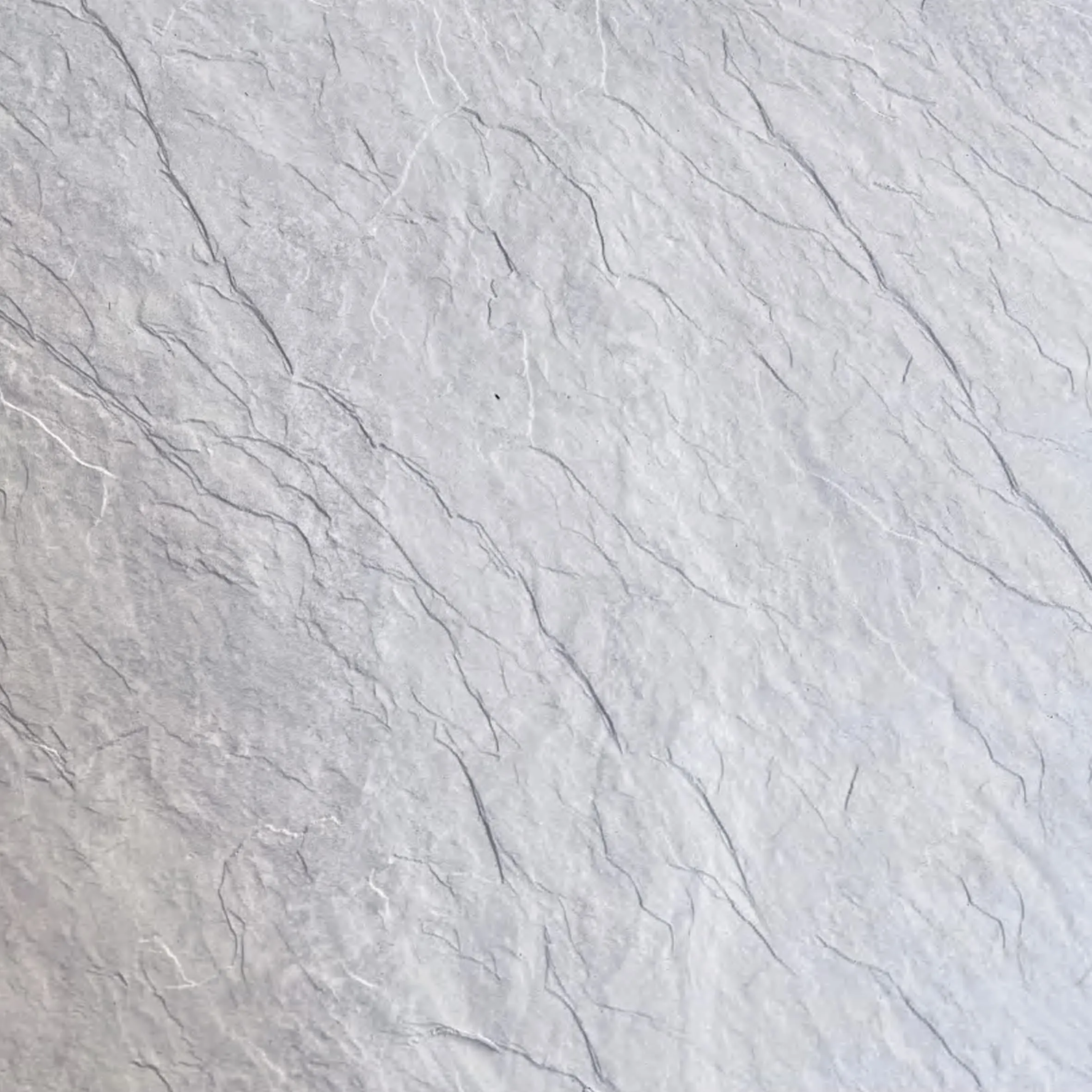
In the world of architecture and design, the search for materials that blend innovation, aesthetics, and functionality is never-ending. Every project—whether a boutique hotel, a modern home, or a public art space—deserves elements that tell a story, stand out from the ordinary, and adapt to the vision of its creators. Enter the MCM 3D Printing Series , a game-changing lineup that's redefining what's possible in architectural surfaces. At the heart of this series lies a material that's as elegant as it is versatile: Slate Veil White . Let's dive into how this unique material, paired with cutting-edge 3D printing technology, is empowering designers to turn bold ideas into tangible, breathtaking spaces.
First, let's break down the basics. MCM stands for Modified Composite Material—a blend of natural minerals, polymers, and fibers engineered to mimic the look and feel of natural stone, wood, or metal, but with supercharged benefits. Traditional building materials often come with trade-offs: natural stone is heavy and hard to customize; concrete can feel cold and industrial; wood requires constant maintenance. MCM flips the script by being lightweight, durable, and infinitely adaptable. And when you add 3D printing to the mix? That's where the magic happens.
The MCM 3D Printing Series takes this composite material and merges it with additive manufacturing technology. Instead of being limited to standard slabs or tiles, designers can now 3D-print MCM into intricate shapes, textures, and patterns. Think flowing curves that mimic natural rock formations, precise geometric latticework, or even custom embossed designs—all with the authentic look of materials like slate, marble, or wood. It's like giving architects a digital sculpting tool that prints in stone-like durability.
Pro Tip: Unlike traditional 3D printing with plastics or metals, MCM 3D printing uses MCM Flexible Stone as its base. This means the final product isn't just rigid—it has a slight flex that makes installation easier (no more cracking during transport!) and allows for use on curved surfaces, like rounded walls or domed ceilings. It's durability with a little give—perfect for real-world construction.
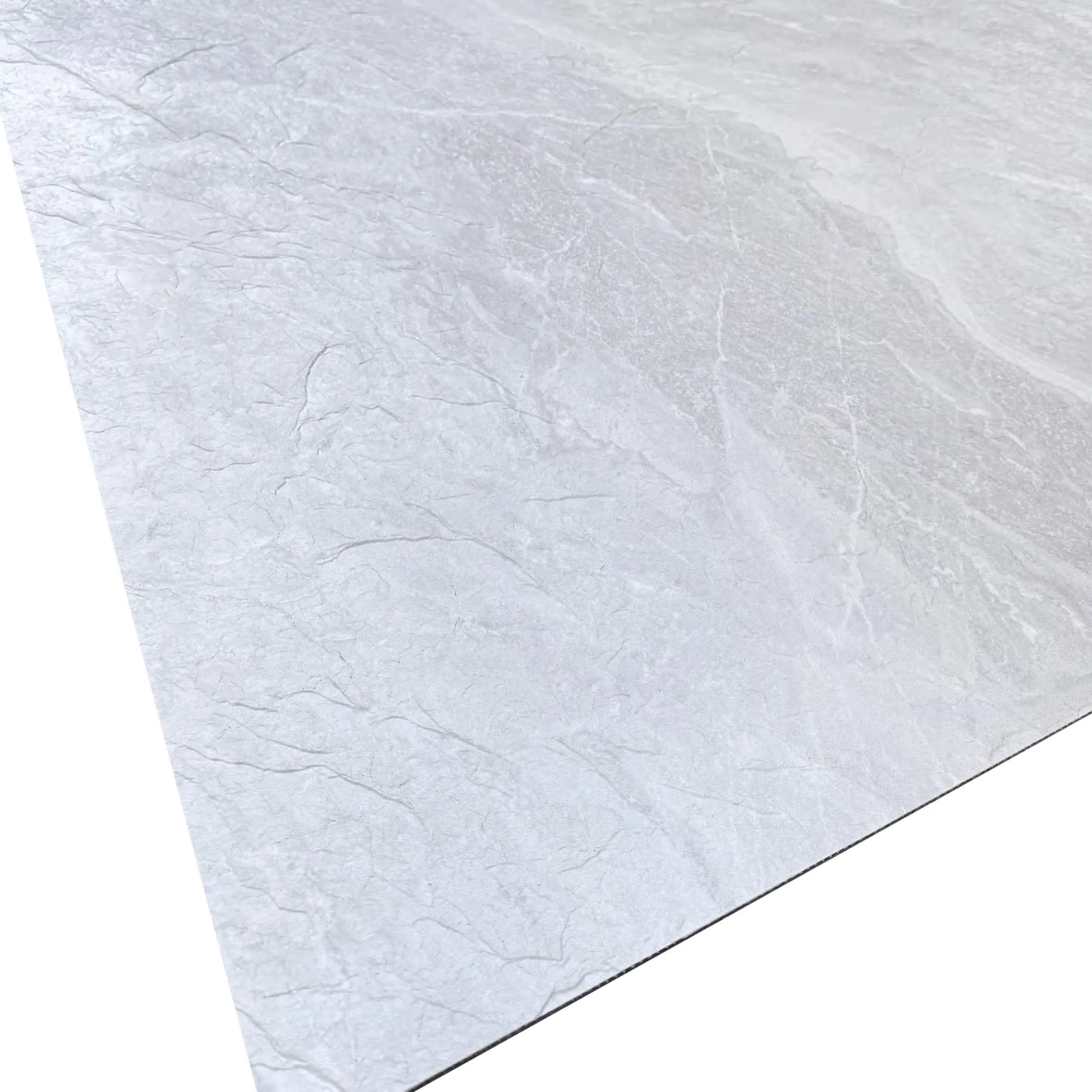
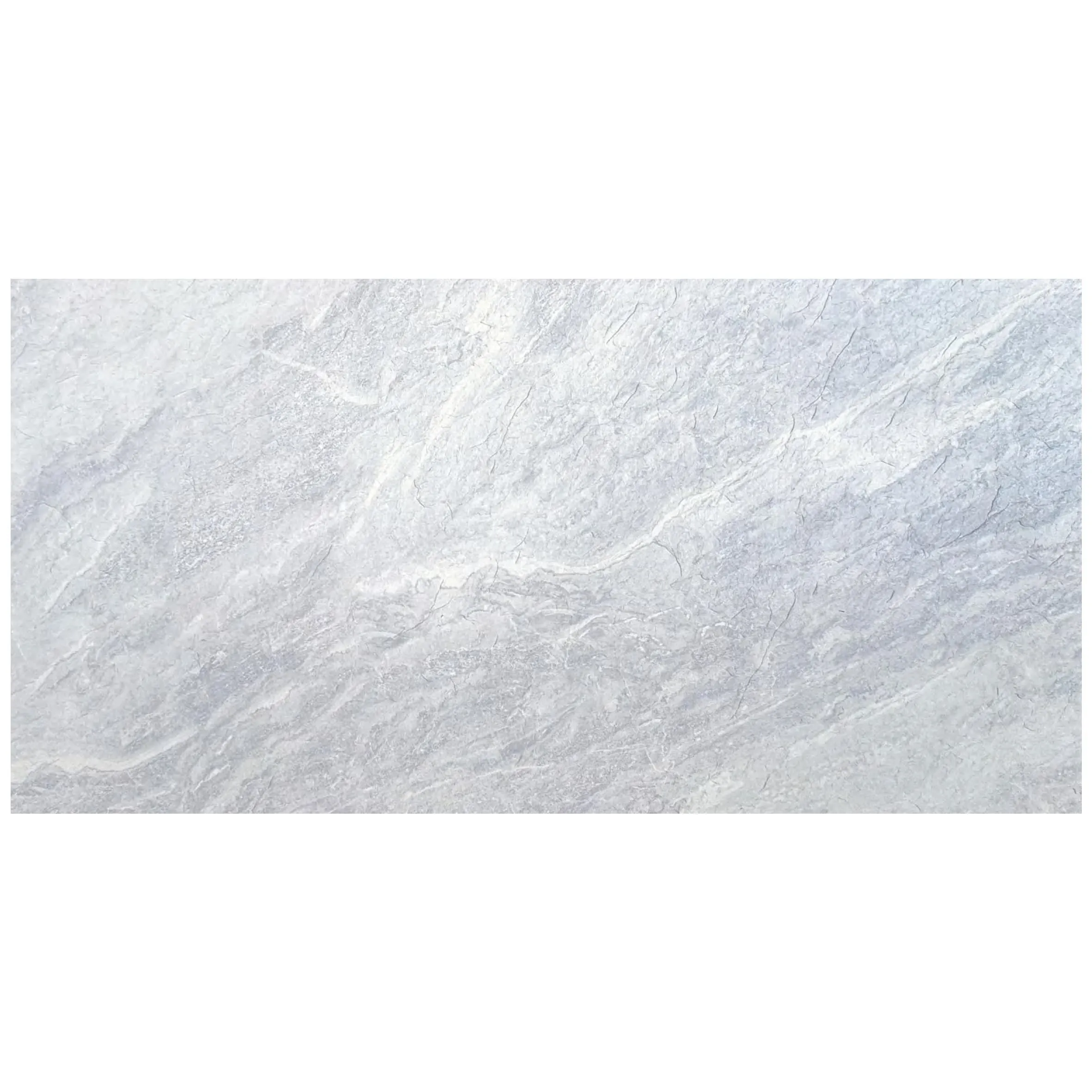
If the MCM 3D Printing Series is a symphony, Slate Veil White is its standout soloist. This material isn't just "white slate"—it's a masterclass in subtlety and depth. Imagine the soft glow of moonlight filtering through thin clouds, casting delicate shadows on a bed of snow. That's the vibe: a creamy, off-white base swirled with wispy gray veils that look like they were painted by wind. The texture? Smooth to the touch, but with enough grain to feel organic, like running your hand over weathered stone.
What makes Slate Veil White so special? It's all in the details. Thanks to 3D printing, those veils aren't random—they're customizable. Want the veining to be thicker in some areas, thinner in others? Or maybe you'd like to add a hint of silver (hello, Lunar Peak Silvery vibes) to mimic starlight? The 3D printing process lets you tweak every nuance, ensuring the material aligns perfectly with your project's theme. It's not just a surface—it's a canvas.
But aesthetics are only half the story. Slate Veil White is built to last. It's resistant to UV rays, so it won't fade in direct sunlight (great for exterior facades). It's water-resistant, making it ideal for bathrooms or pool surrounds. And because it's MCM, it's lightweight—about 70% lighter than natural slate—so it reduces structural load on buildings. No more reinforcing walls just to hang a feature panel! Plus, it's fire-retardant and low-maintenance: a quick wipe with a damp cloth is all it takes to keep it looking fresh for decades.
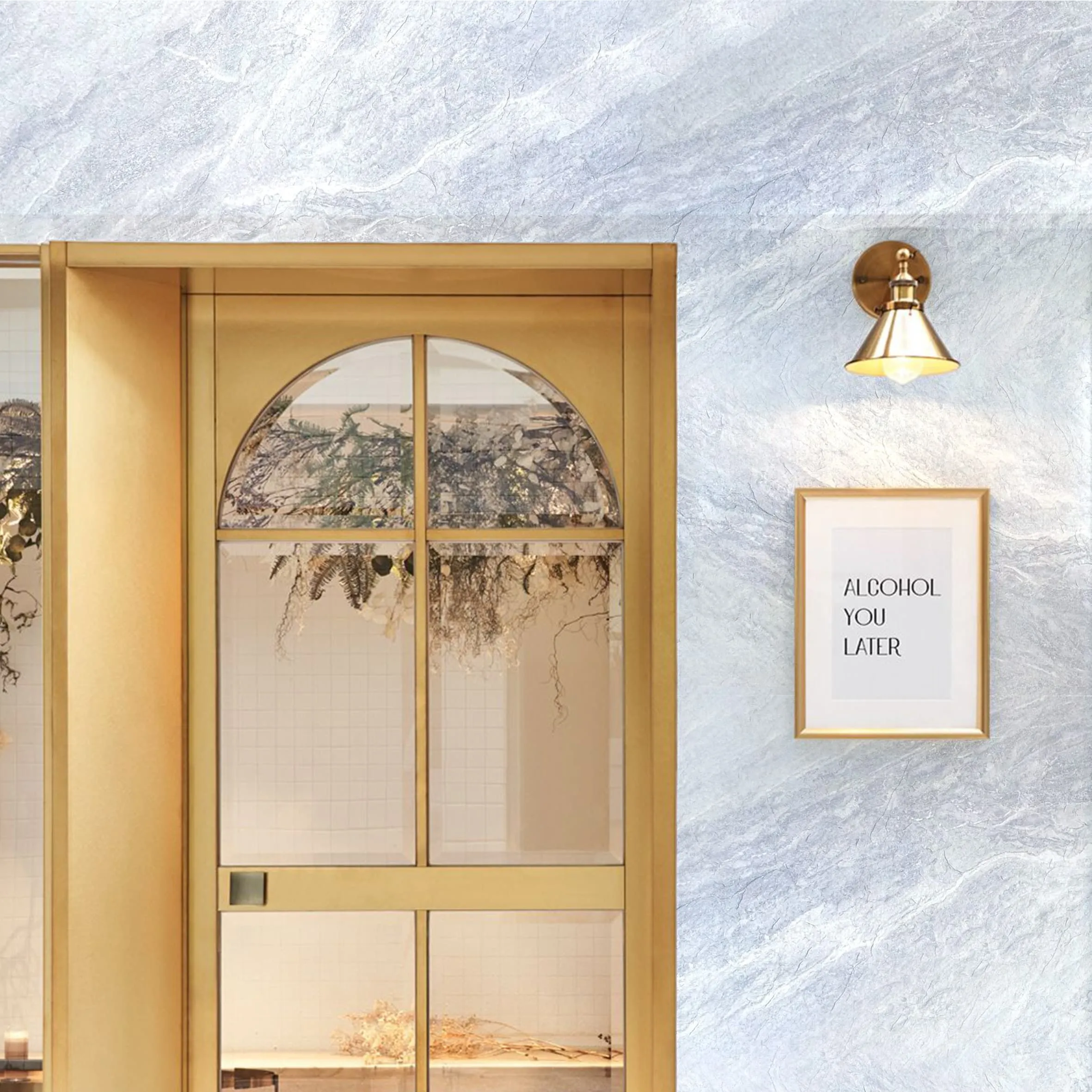
Here's the truth: generic materials lead to generic spaces. In a world where Instagram-worthy design is almost a requirement, "cookie-cutter" just doesn't cut it. Slate Veil White, powered by MCM 3D printing, solves this by putting customization front and center. Let's say you're designing a yoga studio and want the walls to feel like a calm mountainscape. With 3D printing, you could print Slate Veil White panels with undulating, wave-like textures (think wave panel inspiration) that mimic rolling hills. Or maybe you're working on a tech startup office and want a futuristic edge—add geometric 3D-printed patterns that look like digital code frozen in stone.
The possibilities are endless, but let's get specific. Here are just a few ways designers are using Slate Veil White's customization:
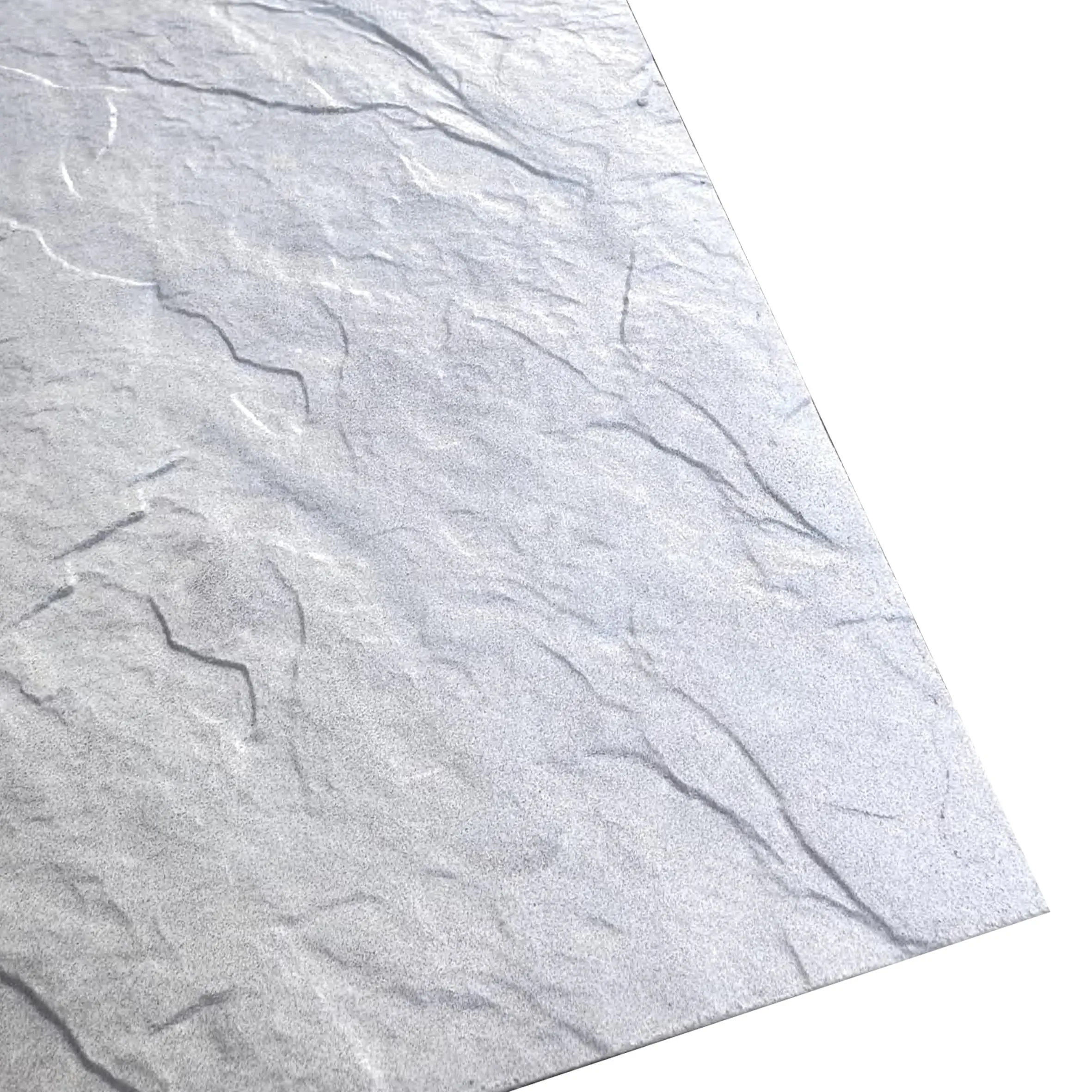
Curious how Slate Veil White compares to other popular architectural materials? Let's put it head-to-head with two classics: Fair-Faced Concrete and Lunar Peak Silvery (another standout in the MCM lineup).
| Material | Key Aesthetic | Customization Level | Best For | Standout Feature |
|---|---|---|---|---|
| Slate Veil White (MCM 3D Printed) | Soft white with gray veils; organic, ethereal texture | ★★★★★ (3D-printed shapes, custom veining, texture) | Modern homes, luxury hotels, art galleries | Lightweight yet stone-like; perfect for curved surfaces |
| Fair-Faced Concrete | Raw, industrial gray; matte, uniform finish | ★★☆☆☆ (limited to molds; hard to customize post-casting) | Warehouse conversions, minimalist offices | Durable and cost-effective for large-scale projects |
| Lunar Peak Silvery (MCM) | Metallic silver with subtle grain; futuristic sheen | ★★★☆☆ (custom sizes, but 2D-only; less texture variety) | Tech spaces, retail storefronts, accent walls | Reflective surface that adds light to dark rooms |
The verdict? While Fair-Faced Concrete and Lunar Peak Silvery have their strengths, Slate Veil White shines when uniqueness and versatility are priorities. It's the material for designers who refuse to compromise between beauty and practicality.
Let's move from theory to practice. What does Slate Veil White look like in action? Here are a few hypothetical (but realistic!) examples of how it's elevating spaces:
Case Study 1: The "Calm Suite" Boutique Hotel
A boutique hotel in Bali wanted to create a "Calm Suite" where guests could unwind. The designer chose Slate Veil White 3D-printed panels for the bedroom walls, printed with gentle, wave-like textures (echoing the nearby ocean) and veining that mimics the island's misty mornings. The panels were curved to wrap around the headboard, creating a cocoon-like feel. Paired with
Wood Grain Board
accents (another MCM favorite), the room feels both modern and rooted in nature—no heavy stone required.
Case Study 2: The "Starry Lobby" Office Building
A tech company in Seattle wanted its lobby to feel "inspired by the night sky." The solution? Slate Veil White panels 3D-printed with tiny, indented "stars" (using the MCM 3D printer's precision) and veining in deep grays and subtle silvers (a nod to
Lunar Peak Silvery
). The panels were installed in a staggered pattern, creating a mural-like effect that changes as natural light shifts throughout the day. Employees now call it "the wall that tells time."
Case Study 3: The "Artisan Café" Community Space
A small café in Portland aimed to celebrate local craftsmanship. The owner worked with a designer to 3D-print Slate Veil White counter tops with custom engravings of local landmarks (a bridge, a famous tree) along the edges. The veining was adjusted to match the warm tones of the café's wooden tables, creating a cohesive, homey vibe. Even better? The lightweight MCM meant no need for extra structural support under the counters—saving on construction costs.
We're living in a moment where people crave connection—even with the spaces around them. "Tactile design"—spaces that invite touch, evoke emotion, and feel "human"—is trending, and materials like Slate Veil White are leading the charge. Unlike cold, smooth surfaces that feel sterile, Slate Veil White's subtle texture (think: the soft roughness of weathered slate) invites interaction. Run a hand over it, and you'll feel the depth of the veining, the precision of the 3D-printed patterns. It's a material that engages more than just the eyes—it engages the senses.
And in a world of digital overload, there's something deeply satisfying about a physical surface that feels "real." Slate Veil White doesn't just look like natural stone—it feels like it, but without the hassle. It's the best of both worlds: the authenticity of nature, the innovation of technology.
At the end of the day, architecture is about more than just building walls—it's about creating experiences. Whether you're designing a home that feels like a sanctuary, a workplace that sparks creativity, or a public space that brings people together, the materials you choose matter. The MCM 3D Printing Series , and Slate Veil White in particular, isn't just a material—it's a tool for storytelling.
So why settle for "good enough" when you can have "extraordinary"? With Slate Veil White, you're not just installing a surface—you're adding a chapter to your project's story. A chapter that says, "We cared about the details. We dared to be different. We built something that matters."
Ready to start writing that chapter? The future of architectural design is here—and it's veiled in white, printed in 3D, and waiting for your vision.
Recommend Products












