
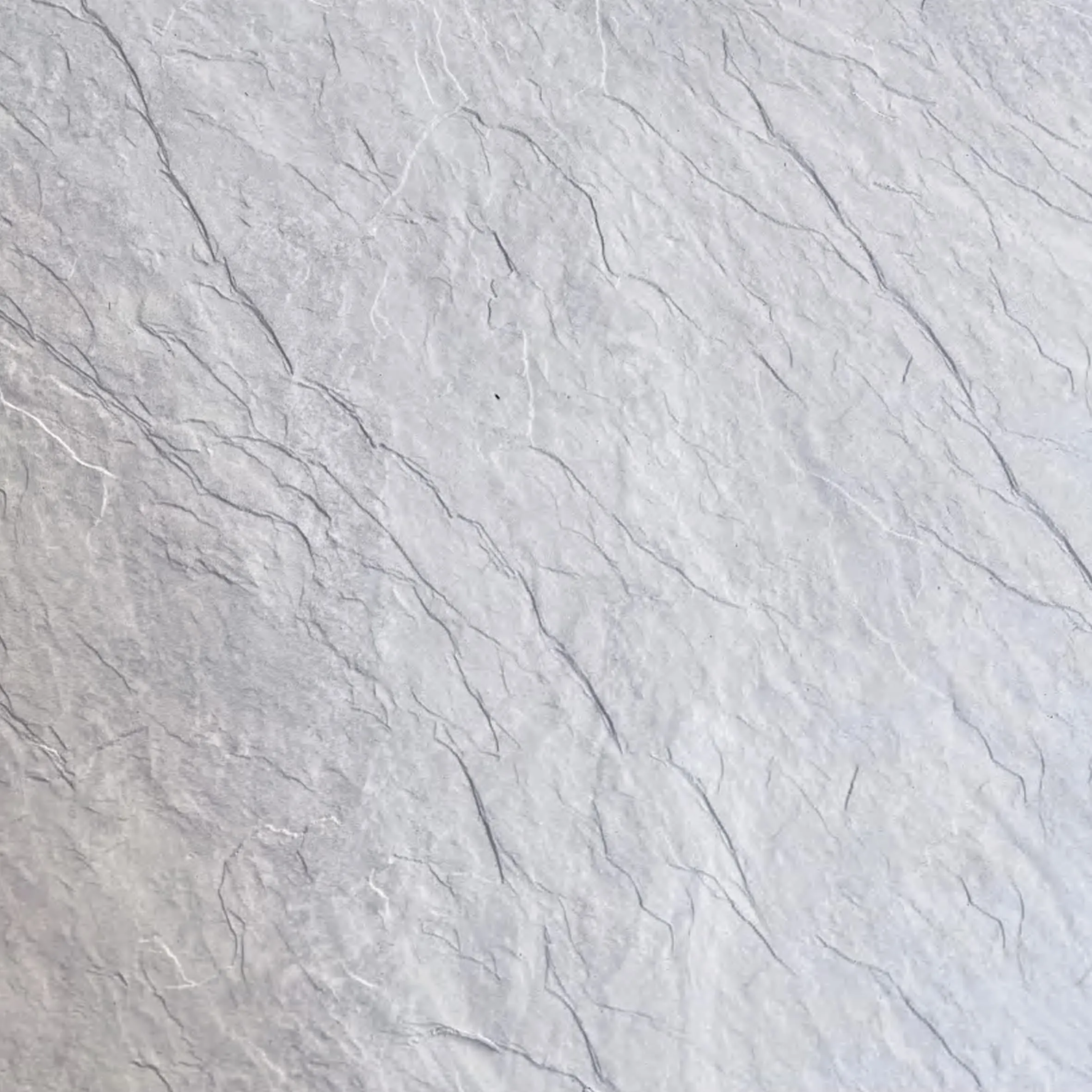
Picture this: You're standing at the foot of a newly completed cultural center, its exterior rising like a silent monument to human creativity. The walls are smooth, almost ethereal, with soft white veining that catches the light like sunlight through clouds. There are no awkward seams breaking the flow, no heavy stone weighing down the structure, just a seamless expanse that feels both grand and approachable. Chances are, what you're looking at isn't traditional marble or concrete—it's the Slate Veil White MCM Big Slab Board Series, a game-changer in the world of large-scale architectural cladding. For architects, builders, and designers tackling grand projects, this isn't just a material; it's the key to turning bold visions into tangible, breathtaking reality.
Grand projects—whether they're museums, corporate headquarters, convention centers, or luxury hotels—come with grand challenges. Architects dream of sweeping facades, uninterrupted by small, disjointed panels. They want materials that can span vast surfaces without sacrificing durability. Builders worry about weight: traditional stone slabs, while stunning, can weigh 20-30 kg per square meter, straining structural supports and driving up installation costs. Designers crave consistency: natural stone is beautiful, but its variability (think mismatched veining or color shifts) can derail a cohesive aesthetic. And in today's world, sustainability isn't just a buzzword—it's a requirement, pushing teams to avoid resource-heavy materials with high carbon footprints.
Take, for example, the hypothetical Riverfront Arts Complex, a 10-story building with a curved facade meant to mimic the flow of the river beside it. The lead architect, Maria, had a clear vision: a light, airy exterior that would glow at dusk, with a texture that felt organic yet modern. But when she first considered traditional materials, the numbers didn't add up. Natural marble slabs were too heavy for the curved structure; fair-faced concrete, while durable, offered limited design flexibility; and wood grain board, though warm, couldn't stand up to the city's harsh winters and humid summers. It was a classic case of "want vs. workable"—until someone mentioned the MCM Big Slab Board Series.
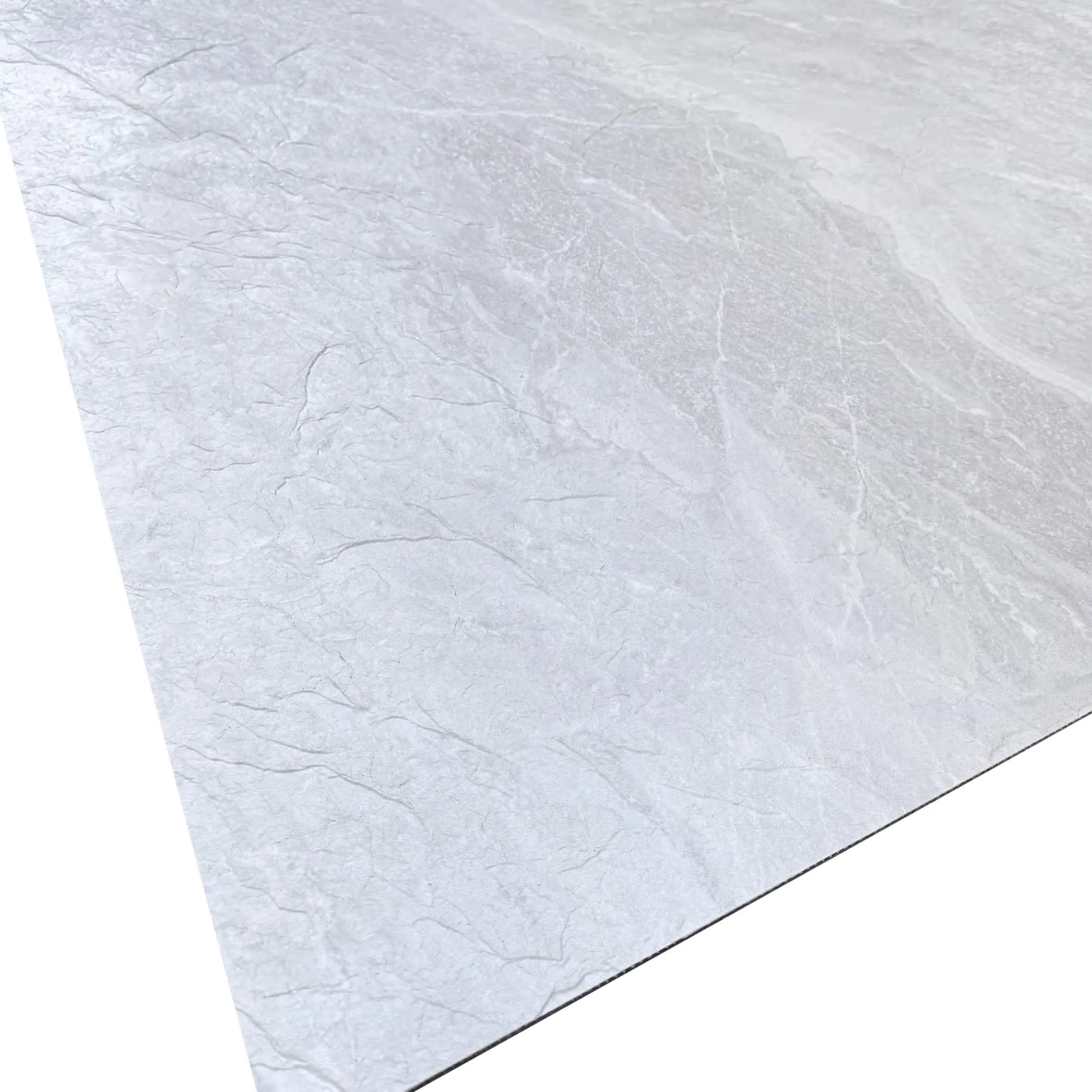
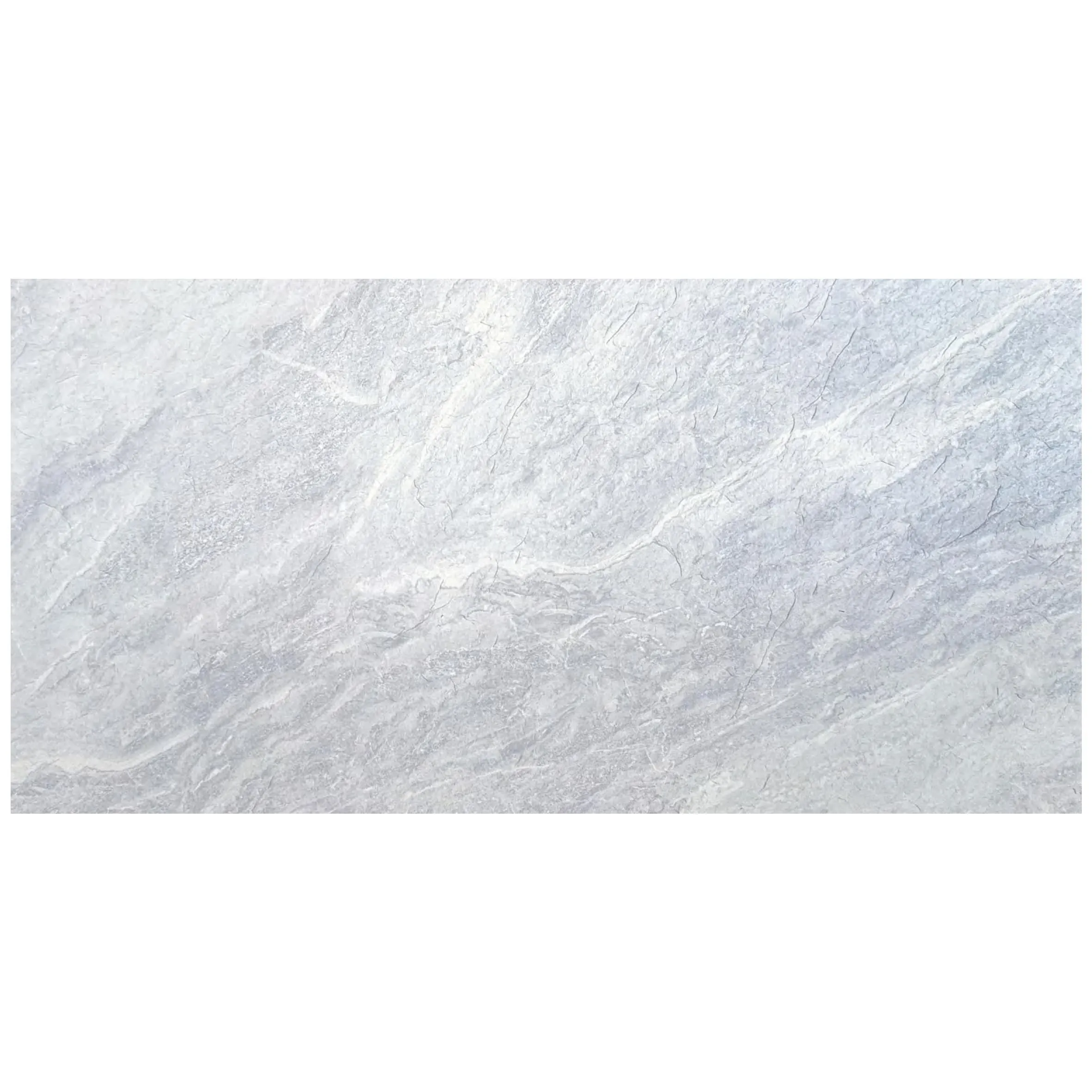
So, what exactly is Slate Veil White? At its core, it's part of the MCM (Modified Composite Material) Big Slab Board Series, a family of cladding solutions engineered to bridge the gap between aesthetics and practicality. MCM itself is a blend of natural minerals, recycled polymers, and fiberglass reinforcement, baked into thin, lightweight panels that mimic the look and feel of natural stone—without the drawbacks. Slate Veil White, in particular, takes inspiration from the soft, veined beauty of natural slate, but with a consistency and performance that nature alone can't match.
Let's break down what makes it stand out. First, the "big slab" part: these panels come in sizes up to 3 meters by 1.5 meters, meaning fewer joints, fewer interruptions, and that seamless look architects like Maria crave. Imagine covering a 500-square-meter facade with panels that are 3x1.5 meters each—you'd need just over 110 panels, compared to hundreds of smaller tiles. Fewer panels mean less labor, faster installation, and a cleaner, more intentional design. For the Riverfront Arts Complex, that meant Maria's curved facade could finally be realized without unsightly seams breaking the flow.
Then there's the weight. At just 8-10 kg per square meter, Slate Veil White is up to 70% lighter than natural stone. For builders, that's a game-changer. Lighter panels mean less stress on the building's structure, which can reduce the need for heavy-duty support systems and cut down on foundation costs. For installers, it means fewer workers are needed to lift and position each slab, and specialized lifting equipment becomes optional, not mandatory. "We installed the entire west facade of the Arts Complex in three days with a crew of four," says Carlos, a construction foreman with 20 years of experience. "With natural stone, that same job would've taken a week and a half, and we would've needed a crane on-site the whole time. Slate Veil White made us look like rockstars."
Durability is another non-negotiable. Grand projects aren't just about looking good on opening day—they need to stand the test of time. Slate Veil White is engineered to resist UV rays (so no fading, even in sunny climates), moisture (no warping or mold), and temperature extremes (from -40°C to 80°C, perfect for both desert and arctic locations). Unlike wood grain board, which might crack or rot over time, or even some types of concrete that can spall in freeze-thaw cycles, MCM panels are built to last. In fact, most MCM manufacturers offer warranties of 15-20 years, a testament to their confidence in the material's longevity.
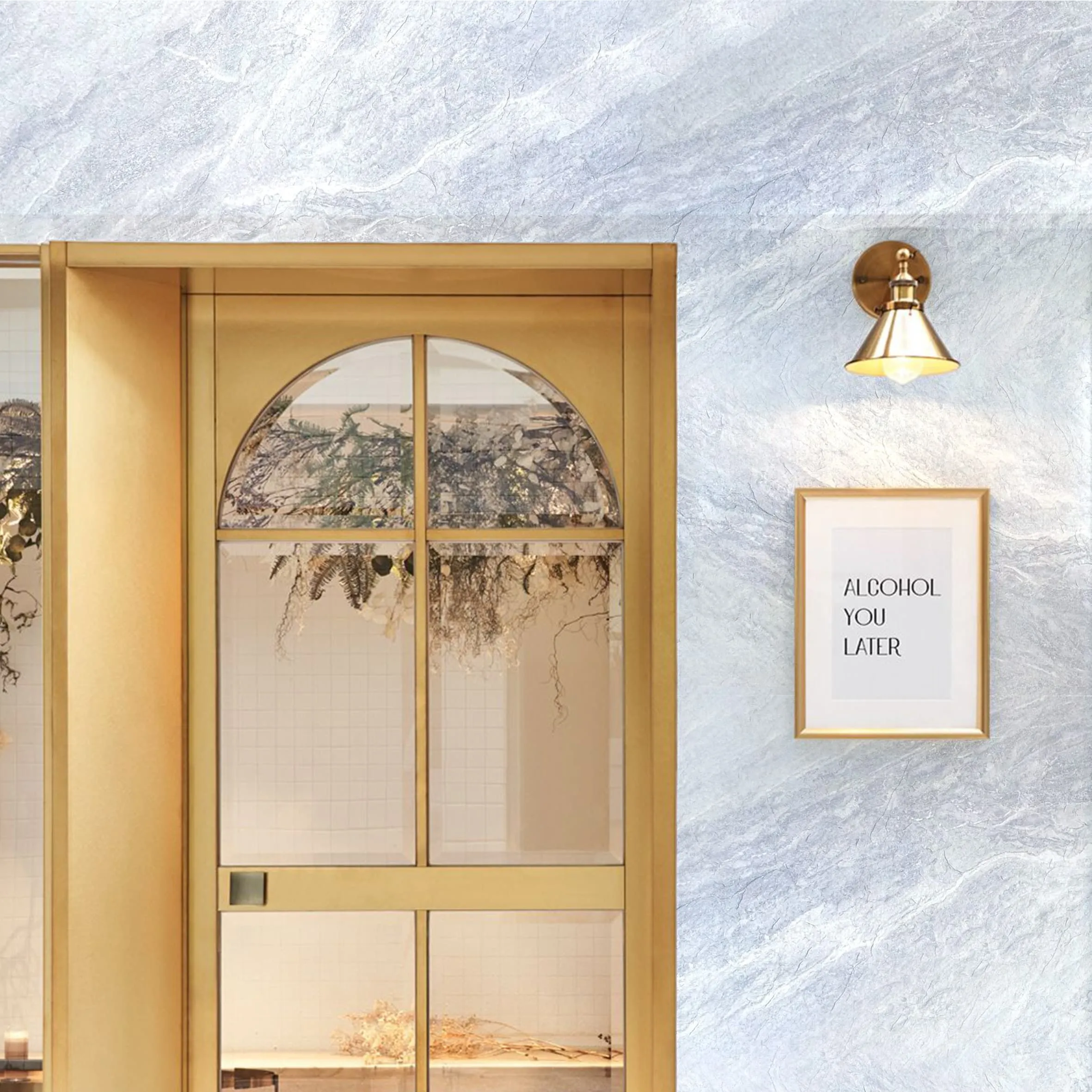
If you ask designers what they love most about Slate Veil White, the answer is almost always "consistency." Natural stone is beautiful, but it's also unpredictable. One slab might have a bold gray vein, the next a faint one, and the third a splotch of color that throws off the entire palette. Slate Veil White, by contrast, is manufactured with precision, so every panel has the same soft white base and subtle gray veining. That means architects can plan their color schemes with confidence, knowing the final result will match their renderings down to the last detail.
But consistency doesn't mean monotony. Slate Veil White plays well with others, making it a versatile choice for mixed-material designs. Take the example of the Lunar Heights Office Tower, a sleek, modern building in a tech hub. The design team wanted a facade that felt futuristic but grounded, so they paired Slate Veil White with accents of Lunar Peak Silvery—another MCM series with a metallic, almost otherworldly sheen. The contrast is striking: the soft white of Slate Veil White balances the cool silver of Lunar Peak, creating a facade that shifts with the light, from bright and crisp at noon to warm and inviting at sunset. It's a reminder that great design isn't about one material doing all the work—it's about materials working together.
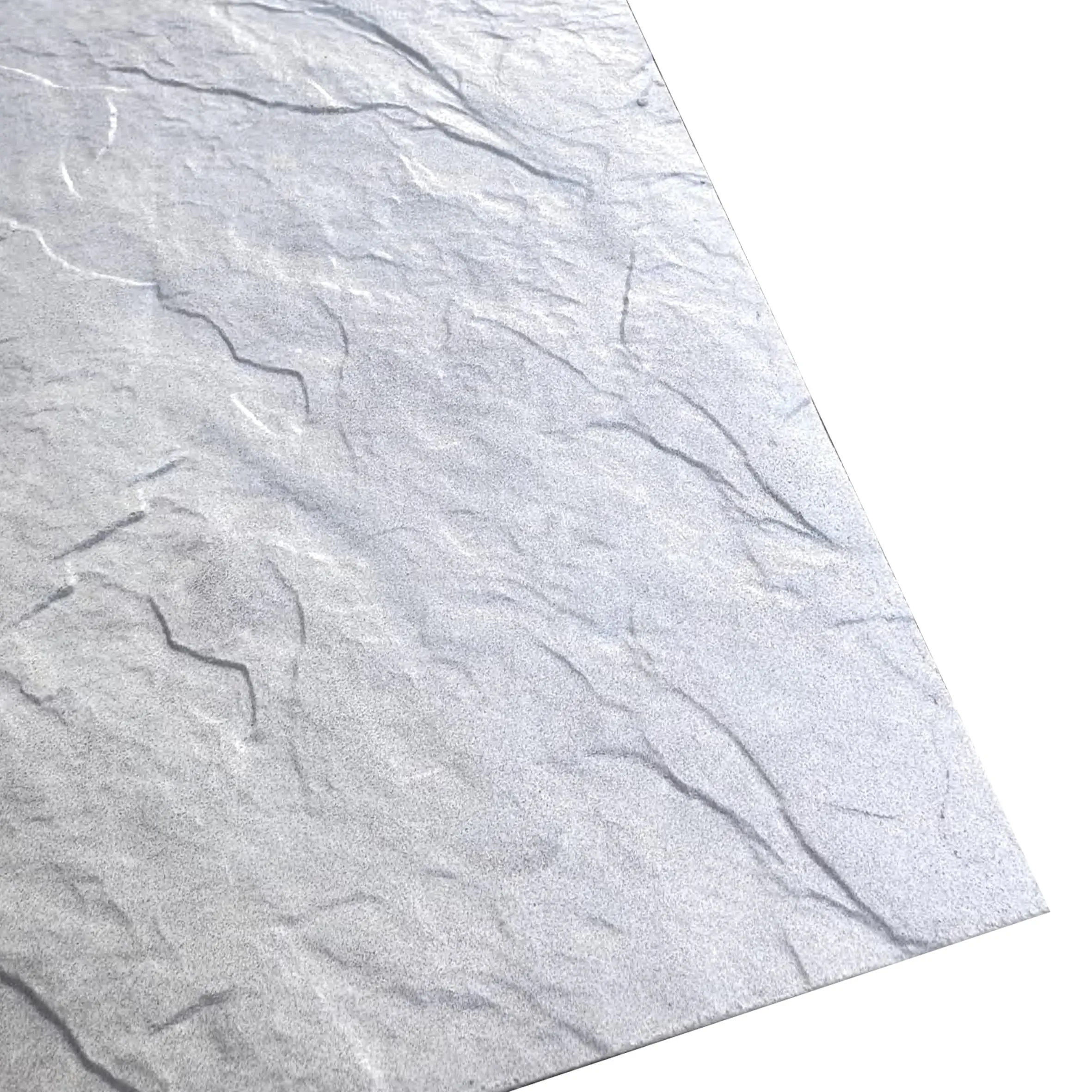
And let's not forget texture. Slate Veil White isn't just a flat, lifeless panel. The surface is embossed to mimic the subtle texture of natural slate, with a matte finish that avoids the harsh shine of polished stone. Run your hand over it, and you'll feel the gentle ridges and valleys, a tactile quality that adds depth to large surfaces. For public buildings, this texture also serves a practical purpose: it's slip-resistant, making it safe for exterior walkways or balcony floors. It's the kind of detail that makes a building feel intentional, not just functional.
In an era where "green building" is no longer optional, Slate Veil White checks the sustainability box, too. MCM panels are typically made with 20-30% recycled materials, including post-consumer plastics and industrial byproducts, reducing the need for virgin resources. Unlike natural stone, which requires quarrying (a process that can disrupt ecosystems and generate significant waste), MCM manufacturing is far less resource-intensive. What's more, because the panels are lightweight, transporting them generates fewer carbon emissions than hauling heavy stone slabs. For projects aiming for LEED or BREEAM certification, these factors can make a big difference in scoring points.
The Riverfront Arts Complex, for instance, was aiming for LEED Gold, and Slate Veil White helped them hit key targets in the "Materials and Resources" category. "We were able to source the panels from a local manufacturer, cutting down on transportation miles, and the recycled content meant we reduced our embodied carbon footprint by nearly 30% compared to using natural stone," says James, the project's sustainability consultant. "Plus, because MCM doesn't require sealing or harsh chemical treatments for maintenance, the building's long-term environmental impact is lower, too. It's a win-win: good for the planet, good for the project budget."
Still on the fence? Let's put Slate Veil White head-to-head with two common alternatives: fair-faced concrete and wood grain board. The table below breaks down key factors like weight, installation time, durability, design options, and sustainability—all from the perspective of a project manager trying to balance vision with practicality.
| Factor | Slate Veil White (MCM Big Slab) | Fair-Faced Concrete | Wood Grain Board |
|---|---|---|---|
| Weight (per sq.m) | 8-10 kg | 22-25 kg | 12-15 kg |
| Installation Time (100 sq.m) | 1-2 days (4 workers) | 3-4 days (6 workers) | 2-3 days (5 workers) |
| Durability (UV, Moisture, Impact) | High (20-year warranty) | High (but prone to staining) | Medium (needs sealing every 2-3 years) |
| Design Flexibility | High (custom cuts, curves, colors) | Low (limited textures/colors) | Medium (wood patterns, limited colors) |
| Sustainability | High (recycled materials, low carbon footprint) | Medium (high embodied carbon, but durable) | Low (depends on wood source; may require deforestation) |
| Cost (per sq.m, installed) | $$ (mid-range) | $$$ (high, due to labor) | $$ (mid-range, but higher long-term maintenance) |
As the table shows, Slate Veil White holds its own—and often outperforms—traditional options. It's lighter than both fair-faced concrete and wood grain board, faster to install, more durable than wood, and more sustainable than concrete. For the Riverfront Arts Complex, the choice was clear: "We crunched the numbers, and even with the upfront cost of MCM, we saved money in labor and long-term maintenance," says Carlos, the foreman. "Plus, Maria got the design she wanted. That's the real win."
Of course, numbers and specs only tell part of the story. To truly understand Slate Veil White's impact, let's look at a few fictional but realistic projects where it shined.
The Starlight Museum of Natural History: This museum, dedicated to astronomy and geology, needed an exterior that felt both timeless and cosmic. The design team chose Slate Veil White as the primary cladding, pairing it with Travertine (Starry Blue) panels—smaller, iridescent MCM panels that mimic a starry night sky—around the main entrance. The result? A building that looks like a slab of moon rock by day, with "stars" twinkling around the doors after dark. "The Slate Veil White was perfect because it's so neutral; it lets the starry blue panels be the focal point without competing," says Raj, the lead designer. "And because the big slabs are so consistent, we could create a pattern of 'crater-like' indentations using custom-cut panels—something we never could've done with natural stone."
The Heritage Hotel & Spa: Located in a historic district, this boutique hotel needed to blend modern luxury with old-world charm. The solution? Slate Veil White for the main facade, paired with warm, earthy travertine (vintage gold) accents on the windows and roofline. The contrast between the cool white and rich gold creates a sense of balance, while the MCM panels' lightweight nature meant the hotel's original, century-old structure didn't need costly reinforcements. "Guests often comment on how the building feels 'new but not out of place,'" says the hotel manager, Elena. "That's the magic of Slate Veil White—it respects the past while embracing the future."
The Innovation Hub: A tech company's headquarters with an open-concept design that blurs the line between indoors and out. The exterior features floor-to-ceiling glass walls framed by Slate Veil White panels, with integrated planters and outdoor workspaces. "We wanted a material that would complement the glass without overwhelming it," says the architect, Tom. "Slate Veil White is so light and bright that it makes the whole building feel more open. Even on cloudy days, the facade reflects what light there is, keeping the interior spaces cheerful."
It's natural to have doubts. Any new material comes with questions, and Slate Veil White is no exception. Let's tackle a few of the most common ones:
"Is it as strong as real stone?" Short answer: Yes, in many ways. While natural stone is denser, MCM panels are reinforced with fiberglass, making them resistant to impact, bending, and cracking. In third-party tests, Slate Veil White panels have withstood hail storms, high winds, and even accidental impacts from construction equipment without significant damage. Plus, unlike natural stone, they won't chip or flake over time.
"What about fire resistance?" MCM panels are inherently fire-retardant, thanks to their mineral-based core. Most meet or exceed ASTM E84 Class A standards for flame spread and smoke development, making them suitable for commercial and residential buildings alike. For projects in high-risk fire zones, manufacturers can even add extra fire-resistant layers.
"Can it be repaired if damaged?" Absolutely. Unlike natural stone, which often requires replacing an entire slab if cracked, MCM panels can be patched or, in extreme cases, replaced individually. Because the panels are lightweight, repairs are quick and minimally disruptive—no need to shut down a whole section of the building.
"Is it suitable for cold climates?" More than suitable. Slate Veil White is freeze-thaw resistant, meaning it won't absorb water, expand, and crack in below-freezing temperatures. In fact, it's been used successfully in projects in Canada, Scandinavia, and other cold-weather regions with zero issues.
"I was skeptical at first—how could something so thin and light be as good as stone?" admits Mark, a contractor who worked on the Heritage Hotel. "But after installing Slate Veil White, I'm a convert. It's tough, it looks great, and it made my job easier. I've recommended it to every architect I know."
As architecture continues to push boundaries—taller buildings, more complex shapes, bolder designs—the materials that bring these visions to life need to evolve, too. Slate Veil White and the MCM Big Slab Board Series represent that evolution: a marriage of technology and artistry, practicality and passion. They're not just for "grand" projects in the traditional sense, either. Even mid-sized buildings can benefit from the seamless look, durability, and sustainability of MCM big slabs. Whether you're designing a community center, a university campus, or a retail complex, the goal is the same: create spaces that inspire, function, and endure.
For Maria, the architect behind the Riverfront Arts Complex, Slate Veil White wasn't just a material choice—it was a turning point. "When I first saw the mock-ups, I cried," she says. "It was exactly what I'd imagined, but better. The building doesn't just stand there; it breathes. It feels alive. And knowing that we did it without compromising on sustainability or budget? That's the cherry on top."
So, to all the architects, builders, and designers out there with grand visions: don't let traditional materials limit what you can create. Slate Veil White MCM Big Slab Board Series isn't just a cladding option—it's a partner in turning "what if" into "what is." It's time to build bigger, bolder, and more beautifully than ever before. The future of architecture is light, it's seamless, it's sustainable—and it's wrapped in Slate Veil White.
Recommend Products












