The Desert's Unforgiving Grip: Why Building in Saudi Arabia Feels Like a Battle
Step into the heart of Riyadh in July, and the sun beats down with an intensity that feels almost tangible. Temperatures soar past 45°C, turning asphalt into sticky tar and making even short walks outdoors a test of endurance. But it's not just the heat—sandstorms roll in unexpectedly, carrying grit that scratches car paint and stings exposed skin. Humidity spikes along the coast in Jeddah, while the inland deserts swing between scorching days and surprisingly chilly nights. For architects and builders here, the desert isn't just a backdrop; it's an adversary.
Traditional building materials have long struggled to keep up. Limestone (beige), a staple in Middle Eastern architecture for centuries, cracks under thermal expansion—expanding under the sun, contracting at night, until hairline fractures turn into gaping holes. Granite, heavy and rigid, struggles with the region's seismic activity, while wood warps and rots within years, even with treatments. The result? Buildings that look stunning on day one but start showing wear within a decade, requiring constant repairs that drain budgets and disrupt businesses.
"We used to joke that building in Riyadh is like trying to grow a garden in the desert—you pour in resources, but the environment fights back," says Lina Hassan, a Riyadh-based architect with over 15 years of experience. "I once worked on a hotel project where the limestone facade began peeling after just three years. The client was furious, and honestly, I couldn't blame them. We needed something that didn't just look good, but outsmarted the desert."
Enter MCM: The Desert-Proof Revolution
In the past decade, a quiet revolution has been unfolding across Saudi Arabia's construction scene: Modified Composite Material, or MCM. Unlike traditional stone or concrete, MCM isn't a single material—it's a hybrid, combining natural minerals with advanced polymers to create something stronger, lighter, and smarter. Think of it as the desert's kryptonite: built to withstand its extremes while retaining the beauty of natural stone.
At the forefront of this revolution is
MCM flexible stone
—a line of products that's redefining what building materials can do. Flexible yet tough, lightweight yet durable, it's designed to bend without breaking, resist heat without warping, and repel sand without scratching. And among its many variants, one has emerged as a favorite in Saudi Arabia:
Slate Veil White.
Slate Veil White MCM: More Than Just a Pretty Face
The Beauty of Understatement
Walk up to a building clad in
Slate Veil White, and the first thing you notice is its subtlety. Unlike the bold veins of marble or the flashy shimmer of polished granite,
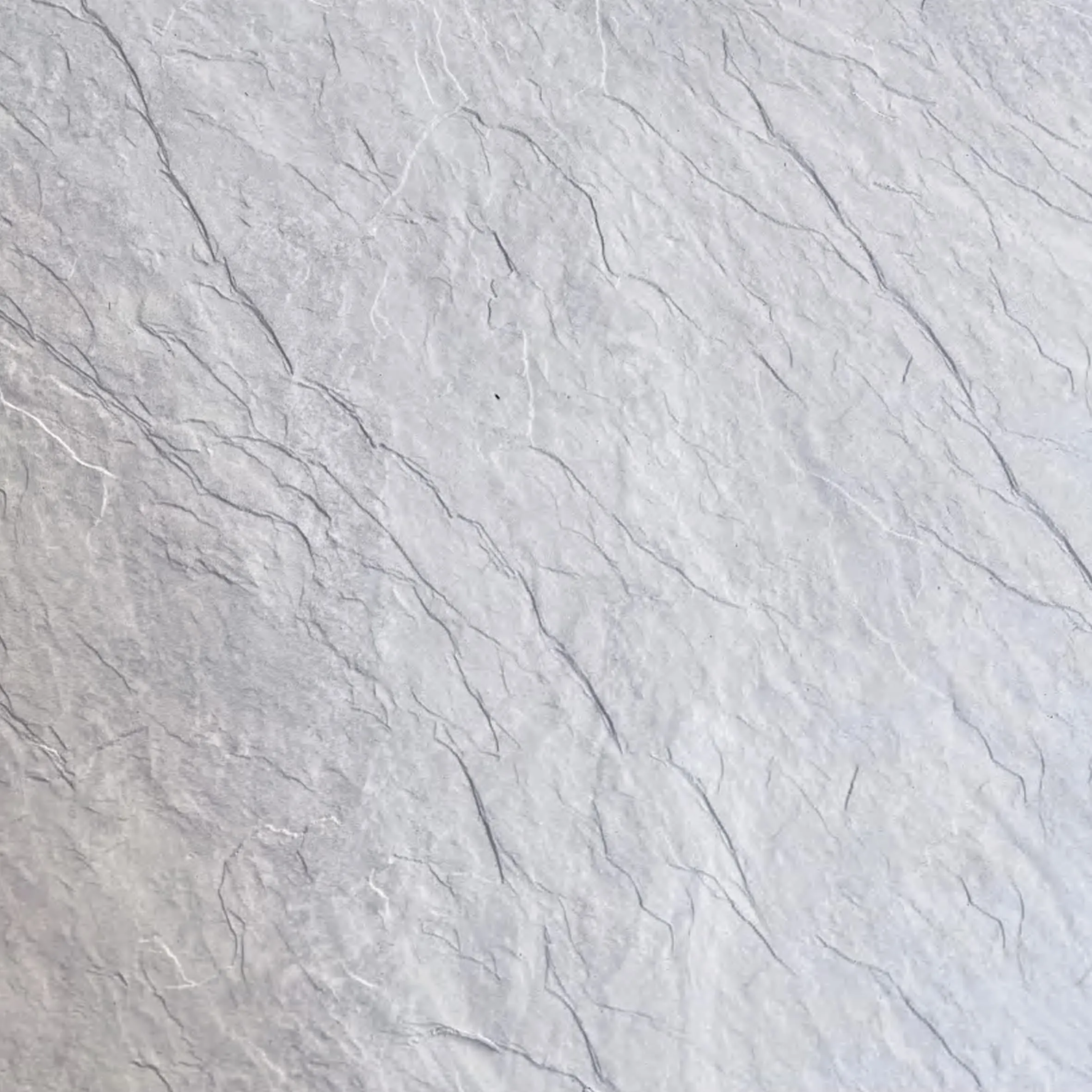
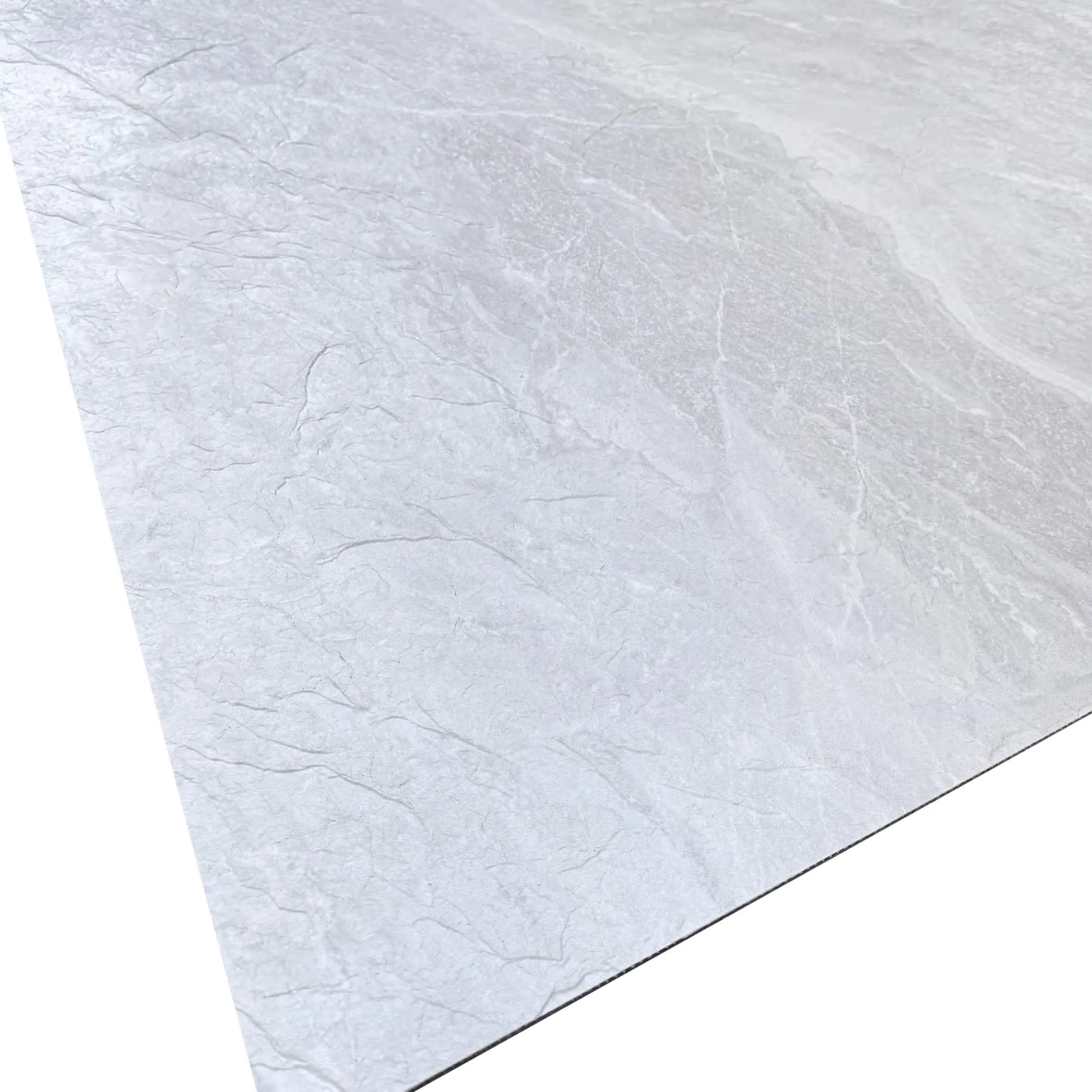
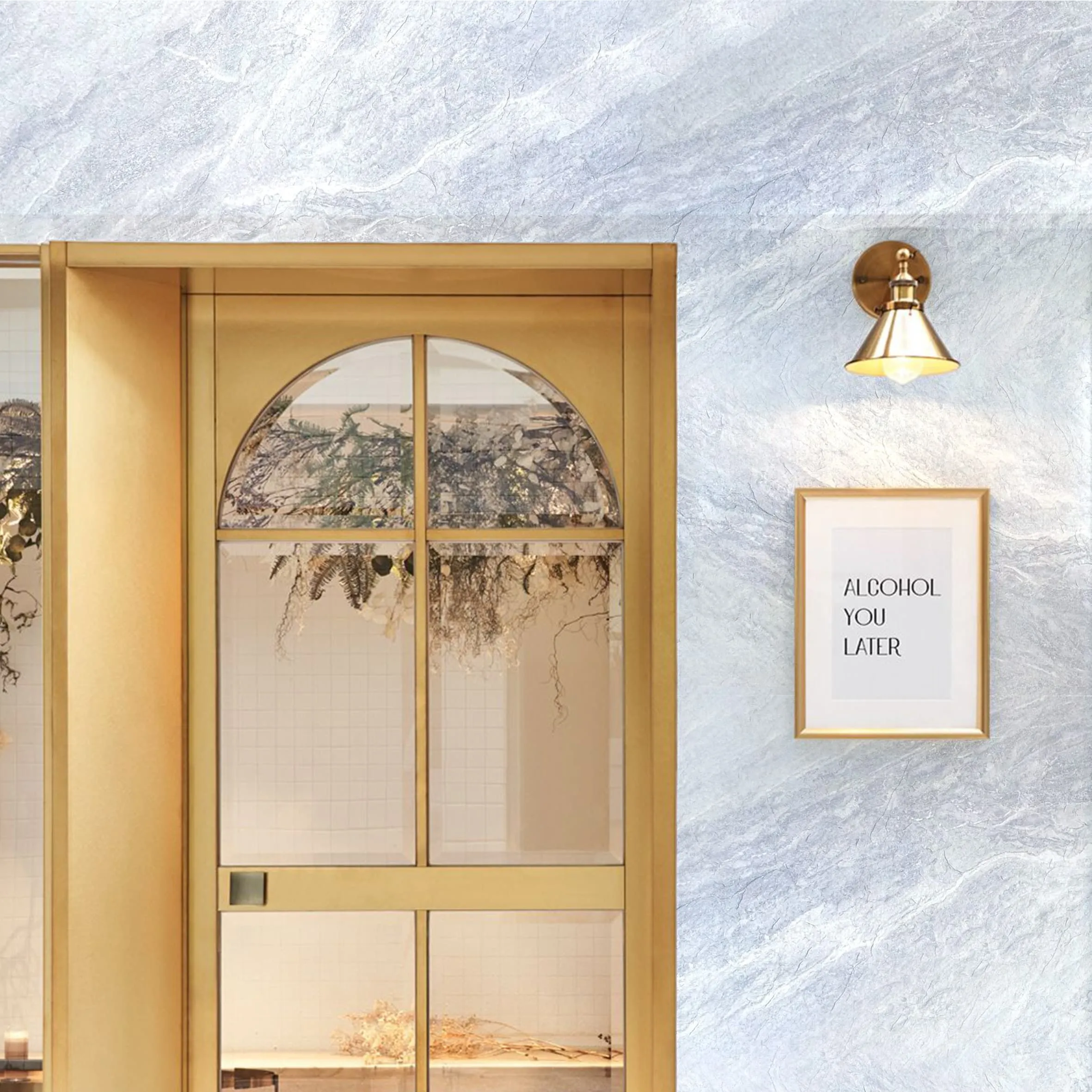
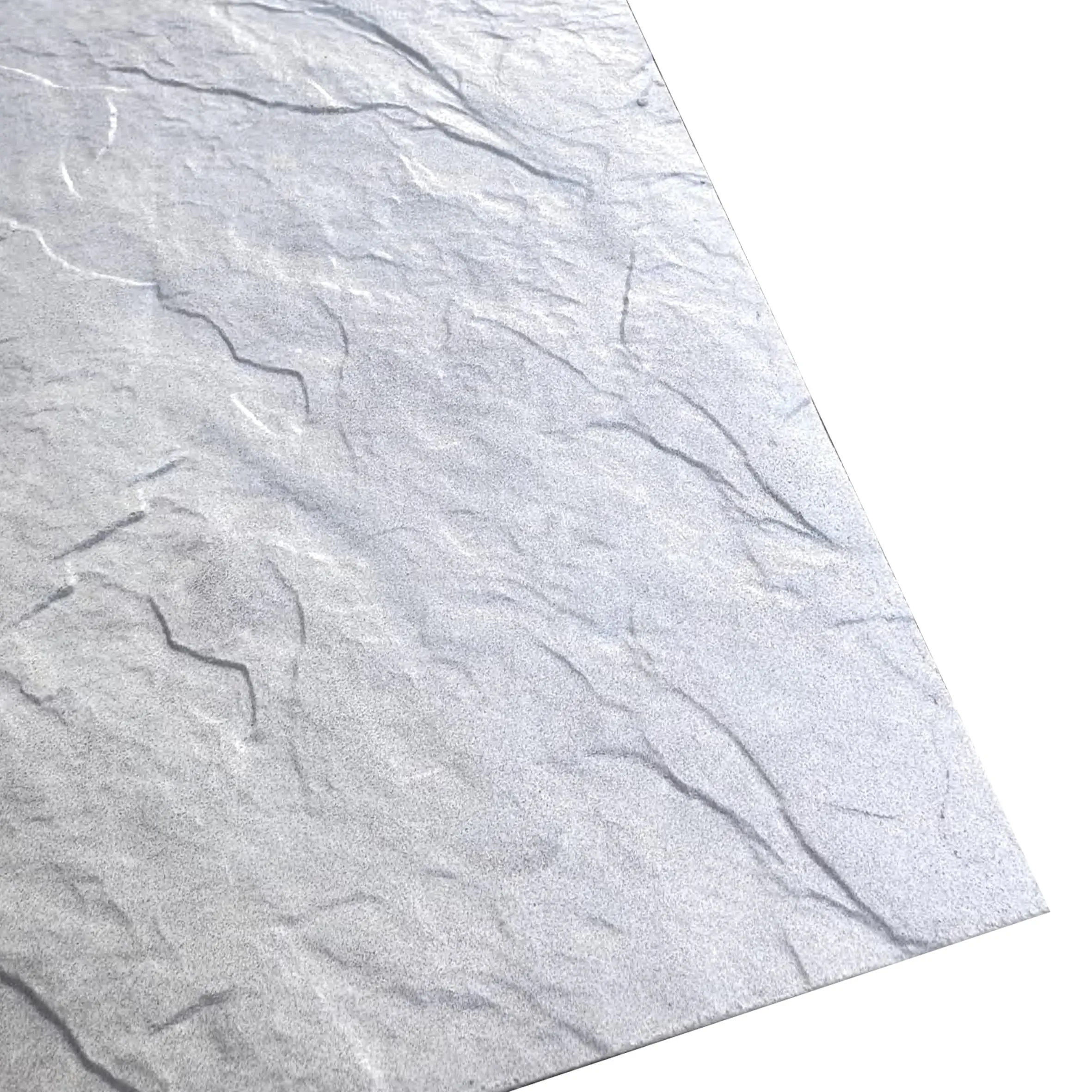
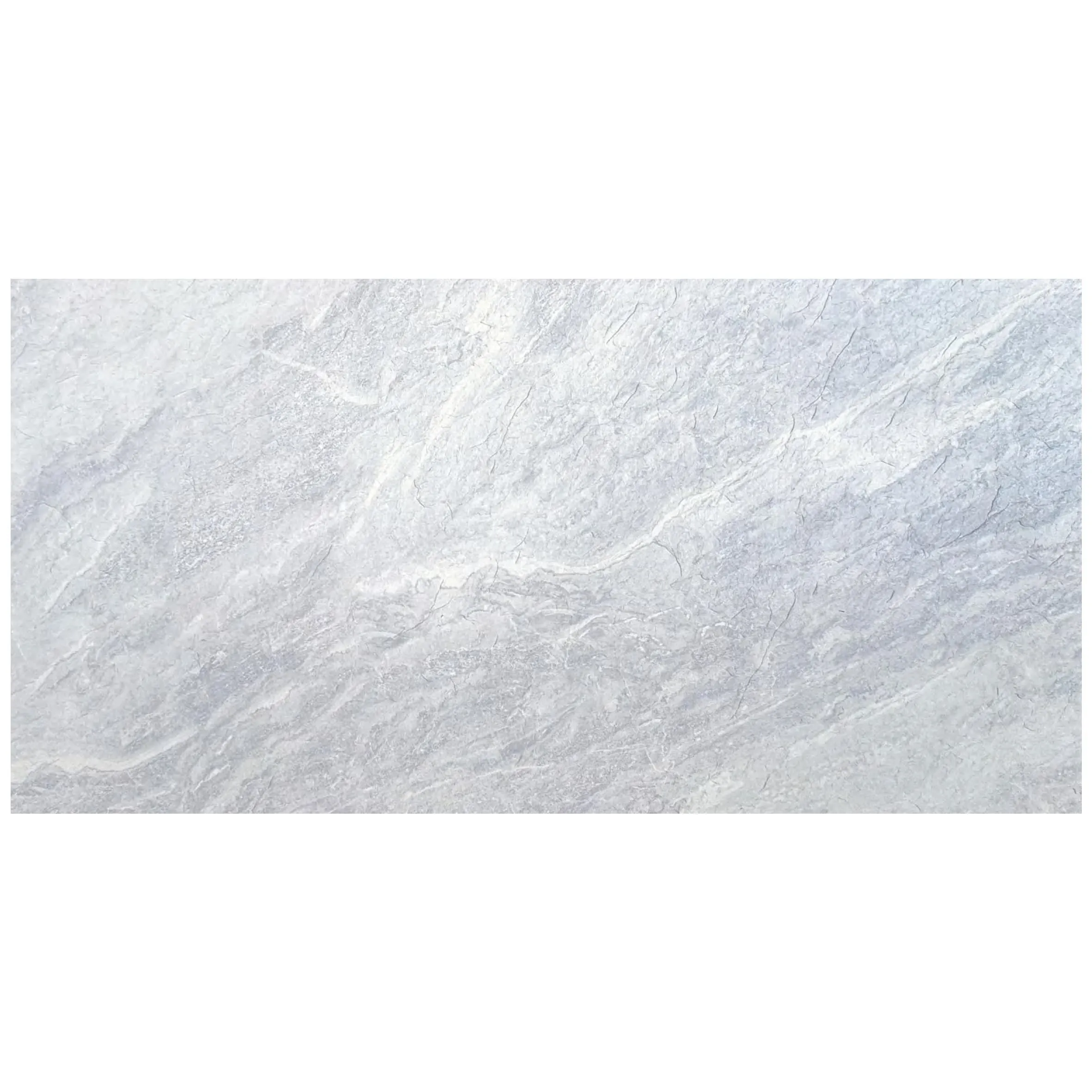
Slate Veil White has a quiet elegance—a soft, matte finish that mimics the look of natural slate, with delicate gray veining that seems to drift across its surface like wispy clouds. It's the kind of material that doesn't scream for attention but elevates everything around it, making it perfect for both modern skyscrapers and traditional-style villas.
"Saudi clients love materials that balance tradition and modernity," explains Hassan. "
Slate Veil White hits that sweet spot. It has the warmth of natural stone, which feels familiar, but the clean lines work with contemporary designs. I used it on a residential complex in Dhahran last year, and the homeowners still stop me to say how much they love how it catches the morning light."
Built for the Desert: The Science Behind the Strength
But
Slate Veil White's real magic isn't in its looks—it's in its performance. Let's break down why it's become the go-to choice for desert resilience:
Thermal Shock Resistance:
The desert's temperature swings are brutal, but
Slate Veil White laughs them off. Its composite structure expands and contracts minimally—up to 70% less than traditional slate—thanks to a polymer core that acts as a buffer. In lab tests, it's been subjected to cycles of 60°C heat and -10°C cold for 1,000 hours with no visible damage. For context, that's like simulating 20 years of Saudi weather in a month.
Sandstorm Survival:
Sandstorms here aren't gentle. The gritty particles act like sandpaper, wearing down exposed surfaces.
Slate Veil White's surface is treated with a nano-coating that repels dust and resists abrasion. In field tests in Riyadh, panels exposed to six months of seasonal sandstorms showed no pitting or discoloration—just a quick hose-down was enough to make them look brand new.
Lightweight and Flexible:
Weighing in at just 4-5 kg per square meter,
Slate Veil White is up to 70% lighter than natural slate. That means less stress on building frames, easier installation (no need for heavy machinery), and lower transportation costs. Its flexibility is another win—panels can bend up to 5 degrees without cracking, making them ideal for curved facades, a trend that's blowing up in Saudi architecture right now.
Humidity and Mold Resistance:
Coastal cities like Jeddah battle high humidity, which turns traditional stone into a breeding ground for mold and mildew.
Slate Veil White's non-porous surface ( < 0.1%) prevents moisture from seeping in, so even in Jeddah's sticky summers, it stays clean and mold-free.
How Slate Veil White Stacks Up: A Real-World Comparison
To truly understand
Slate Veil White's, let's put it head-to-head with two common alternatives: traditional limestone (beige) and
fair-faced concrete. The table below, based on data from the Saudi Building Research Institute, tells the story:
|
Feature
|
Slate Veil White MCM
|
Limestone (Beige)
|
Fair-Faced Concrete
|
|
Weight (kg/m²)
|
4-5
|
22-25
|
20-22
|
|
Thermal Expansion (mm/m/°C)
|
0.02
|
0.08
|
0.06
|
|
Sandstorm Abrasion Resistance (ASTM D4060)
|
Class 1 (Minimal wear)
|
Class 4 (Significant pitting)
|
Class 3 (Moderate scratching)
|
|
Expected Lifespan (Years)
|
50+
|
15-20
|
25-30
|
|
Installation Time (100m²)
|
1-2 days
|
3-4 days
|
2-3 days
|
|
Maintenance Cost (10 years)
|
~$500
|
~$3,000
|
~$1,500
|
The numbers speak for themselves.
Slate Veil White isn't just more durable—it's also more cost-effective in the long run. "Clients used to hesitate at the upfront cost, but when we show them the maintenance savings over 10 years, it's a no-brainer," says Khalid Al-Mansoori, a project manager at a Riyadh construction firm. "One client told me switching to MCM saved them enough to fund a whole new wing of their hotel."
Beyond Slate Veil White: Exploring MCM's Desert-Ready Family
Slate Veil White might be the star, but it's part of a larger MCM family that's taking Saudi Arabia by storm. Let's shine a light on a few siblings that are making waves in local projects:
If
Slate Veil White is the quiet elegance of clouds,
Lunar Peak Silvery
is the shimmer of moonlight on desert sand. Its metallic silver finish, with subtle texture that mimics the moon's craters, adds a futuristic edge to buildings. Architects love it for commercial projects—think tech offices in Riyadh's King Abdullah Financial District or luxury boutiques in Jeddah's Corniche. "It reflects heat, which helps keep interiors cooler," notes Al-Mansoori. "On a 50°C day, that's not just a luxury—it's a necessity."
Travertine (Starry Blue): Bringing the Night Sky Down to Earth
For projects that want to stand out,
travertine (starry blue)
is a showstopper. It mimics the look of natural
travertine but with a twist: tiny, iridescent flecks embedded in the surface that catch the light like stars in a dark sky. "I used it on a cultural center in Medina last year," says Hassan. "At night, the facade glows subtly, and people stop to take photos. It's become a local landmark." And yes, it's just as tough as
Slate Veil White—same thermal resistance, same sandstorm resilience, but with a dash of magic.
Fair-faced concrete
has long been loved for its industrial-chic vibe, but traditional
fair-faced concrete stains easily in the desert's dusty air. MCM's take on it? A pre-finished panel that looks just like raw concrete but resists stains and fading. It's perfect for warehouses converted into lofts or minimalist villas in Al Ula, where the desert landscape demands understated design. "Clients who want that 'rough luxe' look no longer have to sacrifice durability," says Al-Mansoori.
Real Projects, Real Results: Slate Veil White in Action
Talk is cheap—let's look at how
Slate Veil White has performed in real Saudi projects:
The Al Hamra Tower Extension, Riyadh
Completed in 2023, the Al Hamra Tower's new west wing features over 10,000 square meters of
Slate Veil White MCM. The design team wanted a material that would complement the original tower's limestone facade but require less maintenance. Two years in, the feedback is glowing. "We haven't had to touch the facade once," says project engineer Amjad Al-Zahrani. "Even after the 2024 sandstorm that damaged nearby buildings, the
Slate Veil White panels just needed a quick wash. It's been a game-changer for our maintenance budget."
Villa Compound in Al Khobar
For a luxury villa compound in Al Khobar, architect Lina Hassan chose
Slate Veil White for the exterior walls and
travertine (starry blue)
for accent walls. "The homeowners were worried about the humidity near the coast," she recalls. "Three years later, there's zero mold, zero peeling, and the color hasn't faded. One family even told me their electricity bills are lower because the MCM reflects heat better than their old stone walls."
Why Saudi Builders Are Making the Switch
So, what's driving the MCM boom in Saudi Arabia? It boils down to three key factors:
Long-Term Cost Savings:
While MCM panels cost more upfront than traditional stone, the savings on maintenance and repairs add up fast. A 2023 study by the Saudi Construction Authority found that MCM-clad buildings have 60% lower 10-year maintenance costs compared to limestone or granite.
Sustainability:
Saudi Arabia's Vision 2030 prioritizes green building, and MCM fits the bill. It's lightweight, reducing transportation emissions, and many variants (including
Slate Veil White) are made with recycled materials. Plus, its durability means less waste from replacements. "We're seeing more clients ask for LEED certification, and MCM helps them hit those sustainability targets," says Hassan.
Design Freedom:
MCM panels come in large sizes (up to 1.2m x 2.4m), which means fewer seams and a cleaner look. They can also be cut into custom shapes, making curved walls, intricate patterns, and even 3D designs possible. "With traditional stone, you're limited by what nature gives you," says Al-Mansoori. "With MCM, you can design first and build later—no compromises."
The Verdict: Slate Veil White MCM—Desert-Proof, Design-Forward, and Here to Stay
Building in Saudi Arabia will always be a challenge. The desert doesn't care about trends or budgets; it cares about resilience. For too long, builders here had to choose between beauty and durability—between materials that looked good and materials that lasted.
Slate Veil White MCM changes that. It's a material that speaks to the desert, not fights it—adapting to its extremes, thriving under its sun, and emerging stronger for it.
Whether you're designing a skyscraper in Riyadh, a villa in Jeddah, or a cultural center in Medina,
Slate Veil White isn't just a choice—it's an investment. An investment in a building that will still look stunning in 20 years, that won't drain your budget with repairs, and that respects the desert's power while standing firm against it.
As Lina Hassan puts it: "The desert is our home. We shouldn't have to battle it to build here. With
Slate Veil White, we're finally building in harmony with it." And in a place as beautiful and brutal as Saudi Arabia, that's the ultimate win.