
Stand at the corner of a bustling downtown street and let your gaze drift upward. Notice how the older buildings wear their facades like stiff suits—uniform, unyielding, designed more for function than feeling. Then your eye catches something different: a newer structure where the exterior seems to ripple, as if the stone itself is breathing. Sunlight plays across its surface, revealing textures that shift from rough to smooth, colors that deepen and lighten with the angle of the sun. This isn't just construction—it's conversation. And at the heart of this dialogue between design and emotion lies Starmoon Stone, reimagined through the precision of 3D printing.
For architects and designers, the facade has always been the building's first impression. It's the part that greets passersby, sets the mood for the space within, and whispers hints about what lies beyond. But for too long, that first impression was limited by the tools and materials available. Heavy slabs of stone, rigid concrete panels, and one-size-fits-all designs left little room for personality. That's where the mcm 3d printing series steps in—not just as a technology, but as a collaborator, turning bold ideas into tangible, touchable reality.
Picture an architect hunched over a desk, sketching a facade that curves like a wave, dotted with indentations that mimic wind-eroded rock. Five years ago, that sketch might have stayed on the page—too complex, too costly, too difficult to mass-produce. Today, thanks to the mcm 3d printing series, that same architect can see their vision come to life in weeks, not years. 3D printing isn't just about speed; it's about freedom. It lets designers move beyond straight lines and right angles, creating forms that feel organic, almost alive.
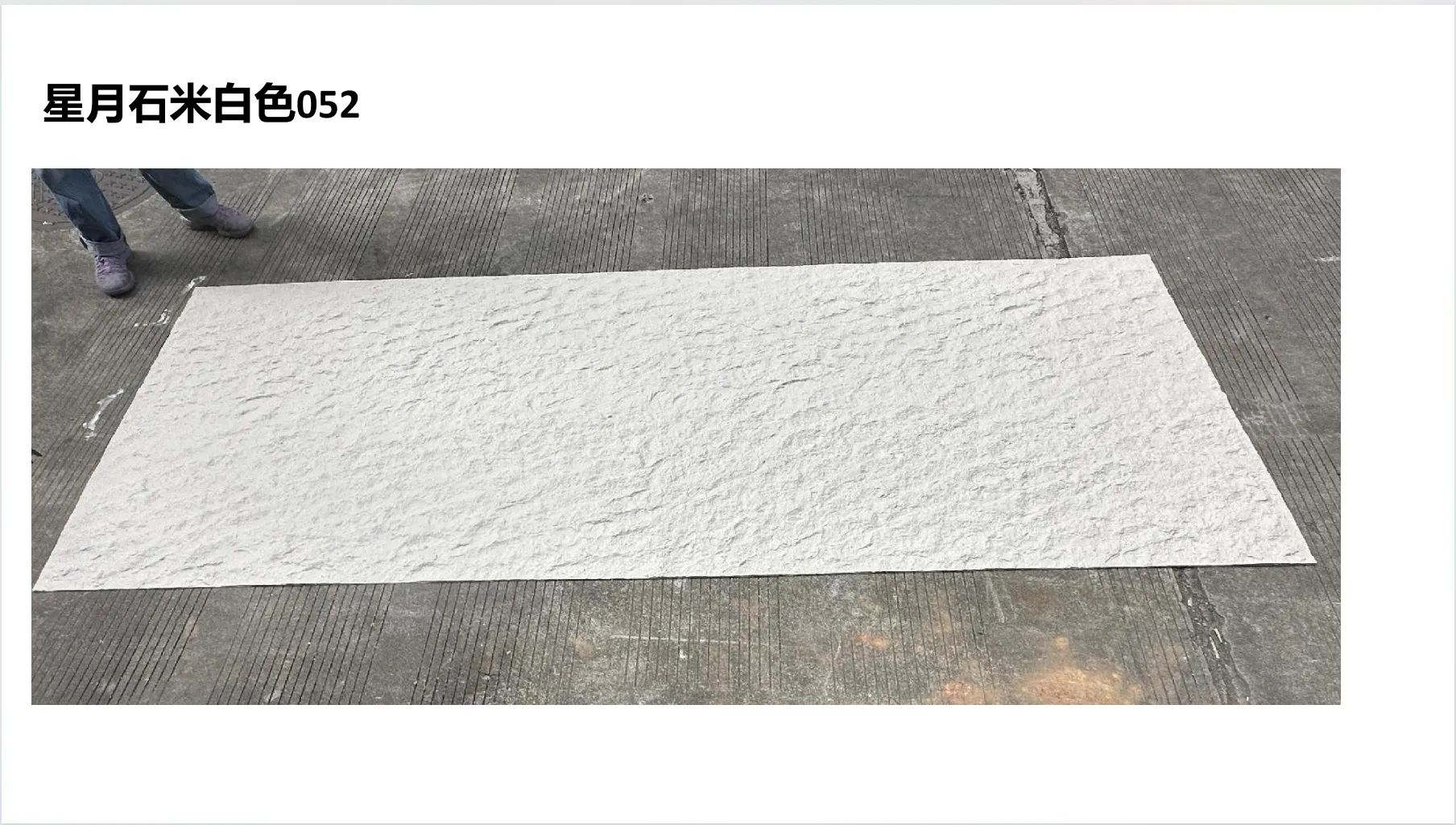
What makes this possible? The marriage of cutting-edge printing technology with materials built for flexibility. Enter mcm flexible stone—a material that defies the traditional image of stone as heavy and brittle. Imagine holding a panel of it in your hands: it's surprisingly lightweight, thin enough to bend slightly under pressure, yet tough enough to withstand rain, wind, and the daily grind of urban life. This isn't just stone—it's stone with adaptability, able to follow the most intricate 3D-printed curves without cracking or compromising durability.
Take, for example, the recently completed Riverfront Arts Center in Portland. Its facade, printed using the mcm 3d printing series and clad in mcm flexible stone, undulates like the nearby Willamette River. From a distance, it looks like a sheet of water frozen in motion; up close, the texture reveals thousands of tiny peaks and valleys, each printed with pinpoint accuracy. Local artist Mia Carter, who collaborated on the design, put it best: "We wanted the building to feel like it belonged to the river, not just next to it. With 3D printing, we could capture the chaos of water—those little eddies and currents—in a way that traditional stone cutting never could."
Starmoon Stone isn't a single material—it's a palette. Open its catalog, and you'll find options that read like poetry: travertine (starry green) with its deep emerald base flecked with silver "stars" that glow at dusk; lunar peak silvery, which shimmers like moonlight on water; foamed aluminium alloy board (vintage silver), with a weathered finish that feels both industrial and elegant. Each variant tells a different story, and architects are learning to mix and match them like painters with a color wheel.
Travertine (starry green) has become a favorite for public spaces, and it's easy to see why. Run your hand along a panel, and you'll feel the cool, slightly porous surface—like touching a smooth river stone—interrupted by tiny, iridescent particles. These particles catch light differently throughout the day: bright silver at noon, soft gold during sunset, and a subtle greenish glow under streetlights. At the Central Library extension in Seattle, designers used starry green travertine for the children's wing facade. "Kids press their hands against it, tracing the stars," says lead architect James Lin. "It turns a building into something interactive, something they want to explore. That's the magic of a material that doesn't just sit there—it engages."
Then there's lunar peak silvery, a material that seems to bridge earth and sky. Its surface mimics the moon's craters and ridges, with a silvery sheen that shifts from matte to metallic as you walk past. When paired with warm woods or earthy tones, it adds a touch of otherworldly elegance—like bringing a piece of the night sky down to street level. The boutique hotel Luna in Aspen uses lunar peak silvery panels for its exterior, reflecting the surrounding snow-capped mountains by day and the starry sky by night. Guests often comment on how the facade makes them feel "grounded and inspired at the same time," says hotel manager Elena Torres.
A beautiful facade means nothing if it can't stand up to the elements. That's where mcm flexible stone truly shines. Traditional stone facades often crack under stress—expanding in heat, contracting in cold, or shifting with the building's natural movement. mcm flexible stone, however, bends without breaking. It's like comparing a rigid ceramic tile to a thin, flexible shingle—both protect, but one adapts to the roof's curves while the other fights against them.
This flexibility is a game-changer for coastal areas, where salt air and high winds can wreak havoc on buildings. The Seaside Community Center in Miami, for example, features a facade printed with mcm flexible stone in a wave pattern. During Hurricane Irma, while neighboring buildings suffered cracked concrete and loose bricks, the center's facade flexed with the wind, emerging unscathed. "It's not just about surviving storms," says structural engineer Carlos Mendez. "It's about longevity. A flexible facade needs less maintenance, lasts longer, and keeps looking good year after year—saving communities money and preserving that 'new building' feeling."
| Material | Core Strengths | Emotional Impact | Perfect For |
|---|---|---|---|
| mcm flexible stone | Bendable up to 12 degrees, weather-resistant, lightweight | Feels organic, almost alive—like stone with a pulse | Curved facades, coastal buildings, dynamic designs |
| Travertine (starry green) | Iridescent particles, slip-resistant, thermal insulation | Evokes wonder—kids and adults alike stop to trace the "stars" | Libraries, schools, public plazas, art centers |
| Lunar peak silvery | Corrosion-resistant, reflective, UV-protected | Creates calm—feels like standing under a moonlit sky | Hotels, spas, meditation centers, luxury residences |
| Foamed aluminium alloy board (vintage silver) | Industrial durability, soundproofing, fire-resistant | Nostalgic yet modern—like finding a vintage treasure in a sleek space | Loft apartments, creative offices, urban cafes |
Not every project calls for futuristic shine. Sometimes, the goal is to honor the past while embracing the future. That's where materials like foamed aluminium alloy board (vintage silver) come into play. With its slightly worn finish—like silver that's been polished by time—it bridges the gap between industrial heritage and modern design. The Old Mill District in Denver, a former factory complex turned mixed-use space, uses vintage silver panels alongside reclaimed brick. The contrast is striking: the warm, rough texture of the brick grounding the cool, smooth sheen of the aluminium. "We wanted to keep the mill's soul but give it a new voice," says developer Sarah Hughes. "The vintage silver panels don't hide the building's history—they celebrate it, showing how old bones can wear new skin."
This blend of old and new is especially powerful in historic districts, where strict preservation rules often limit design freedom. The mcm 3d printing series allows architects to replicate traditional textures—like hand-chiseled stone or weathered wood—with modern materials that meet contemporary safety standards. In Boston's Beacon Hill, a row of 19th-century townhouses was renovated with Starmoon Stone panels printed to mimic the original granite's rough-hewn texture. From the street, you'd never know the difference. But inside, residents enjoy better insulation, lighter walls, and a facade that won't crumble with age. "It's like giving an old friend a new lease on life," says preservation architect Thomas Gray.
Stand in a room full of architects, and you'll hear the same question: "What if?" What if a facade could change color with the seasons? What if it could harvest rainwater or generate solar power? What if it could heal itself when cracked? With Starmoon Stone and 3D printing, these "what ifs" are edging closer to "what is." Researchers are already experimenting with integrating micro-LEDs into printed panels, turning facades into dynamic displays that can show art, community messages, or even weather updates. Imagine walking past a building that greets you by name (via a connected app) or displays a local artist's work for a month—all while maintaining the warmth of natural stone.
Sustainability is also driving innovation. The mcm flexible stone line now includes panels made with 40% recycled materials, and the 3D printing process uses 70% less waste than traditional stone cutting. Architects are pairing these eco-friendly materials with living systems, like vertical gardens that grow in 3D-printed pockets, turning facades into carbon-absorbing, oxygen-producing ecosystems. The GreenSpire Tower in Vancouver, set to open next year, will feature just that: Starmoon Stone panels printed with recessed planters for native succulents, creating a facade that changes with the seasons and supports local pollinators. "It's not just about looking green," says lead designer Lisa Wong. "It's about being green—proving that beauty and sustainability don't have to be trade-offs."
At the end of the day, we don't remember buildings for their square footage or their LEED certifications. We remember how they make us feel. The way sunlight filters through a facade and paints patterns on the sidewalk. The sound of rain hitting a textured surface, different from the harsh patter on glass. The quiet pride of walking into a space that feels uniquely yours, because its exterior reflects the community inside. Starmoon Stone 3D printed facades aren't just changing how buildings look—they're changing how they connect with us.
So the next time you pass a building that makes you pause, that makes you reach out and touch the wall, that makes you think, "I've never seen anything like that before," remember: it's not just stone and technology. It's a story. A story of innovation, of collaboration, of designers who refused to accept "good enough." And as that story continues to unfold, one printed panel at a time, our cities are becoming more than just collections of buildings. They're becoming collections of experiences—spaces that breathe, adapt, and remind us that even in the concrete jungle, there's room for wonder.
Recommend Products












