
Walk into any modern city today, and you'll notice a quiet revolution happening on its skyline. Glass facades gleam under the sun, not just for show, but because they're designed to trap heat in winter and reflect it in summer. Rooftops burst with greenery, filtering rainwater and absorbing carbon dioxide. Even the stones and metals cladding these buildings tell a new story—one of sustainability, not just strength or beauty. This is the era of green building, and it's not a passing trend. It's a necessary shift, driven by a planet that can no longer afford the environmental cost of traditional construction.
Here's the hard truth: buildings account for roughly 39% of global energy-related carbon emissions, according to the World Green Building Council. They guzzle resources, generate waste, and often prioritize short-term aesthetics over long-term planetary health. But as climate concerns mount and regulations tighten, developers, architects, and homeowners are waking up to a simple fact: how we build matters just as much as what we build. Enter green building certifications, and none shines brighter than LEED.
LEED—Leadership in Energy and Environmental Design—isn't just a label. It's a promise. A promise that a building was designed with the planet in mind, from the materials used in its walls to the air quality inside its rooms. For over two decades, LEED has set the gold standard for sustainable construction, guiding projects toward lower emissions, reduced water use, and healthier living spaces. But to meet LEED's rigorous standards, builders need more than good intentions. They need innovative materials that marry performance, aesthetics, and eco-consciousness. And that's where materials like Starmoon Stone come into play.
If you've ever heard someone brag that their office is "LEED Platinum," you might have wondered what that actually means. Let's break it down. LEED, developed by the U.S. Green Building Council (USGBC), is a third-party certification program that evaluates buildings based on how sustainably they're designed, built, and operated. Think of it as a report card for green building—one that rewards innovation and accountability.
LEED certifications come in four levels: Certified (40-49 points), Silver (50-59 points), Gold (60-79 points), and Platinum (80+ points). To earn these points, projects are judged across several categories, including: Energy and Atmosphere (EA), Materials and Resources (MR), Indoor Environmental Quality (IEQ), Water Efficiency (WE), Sustainable Sites (SS), and Innovation (IN). Each category has specific credits; for example, using recycled materials might earn points under MR, while installing energy-efficient HVAC systems could boost EA scores.
Why does LEED matter? For developers, it's a marketing tool—tenants and buyers increasingly prioritize sustainability, and LEED buildings often command higher rents or resale values. For occupants, it translates to healthier spaces: better air quality, natural light, and lower utility bills. For the planet, it's a step toward reducing the built environment's carbon footprint. In short, LEED isn't just good for business; it's good for people and the planet. And at the heart of every LEED-certified building? Smart material choices.
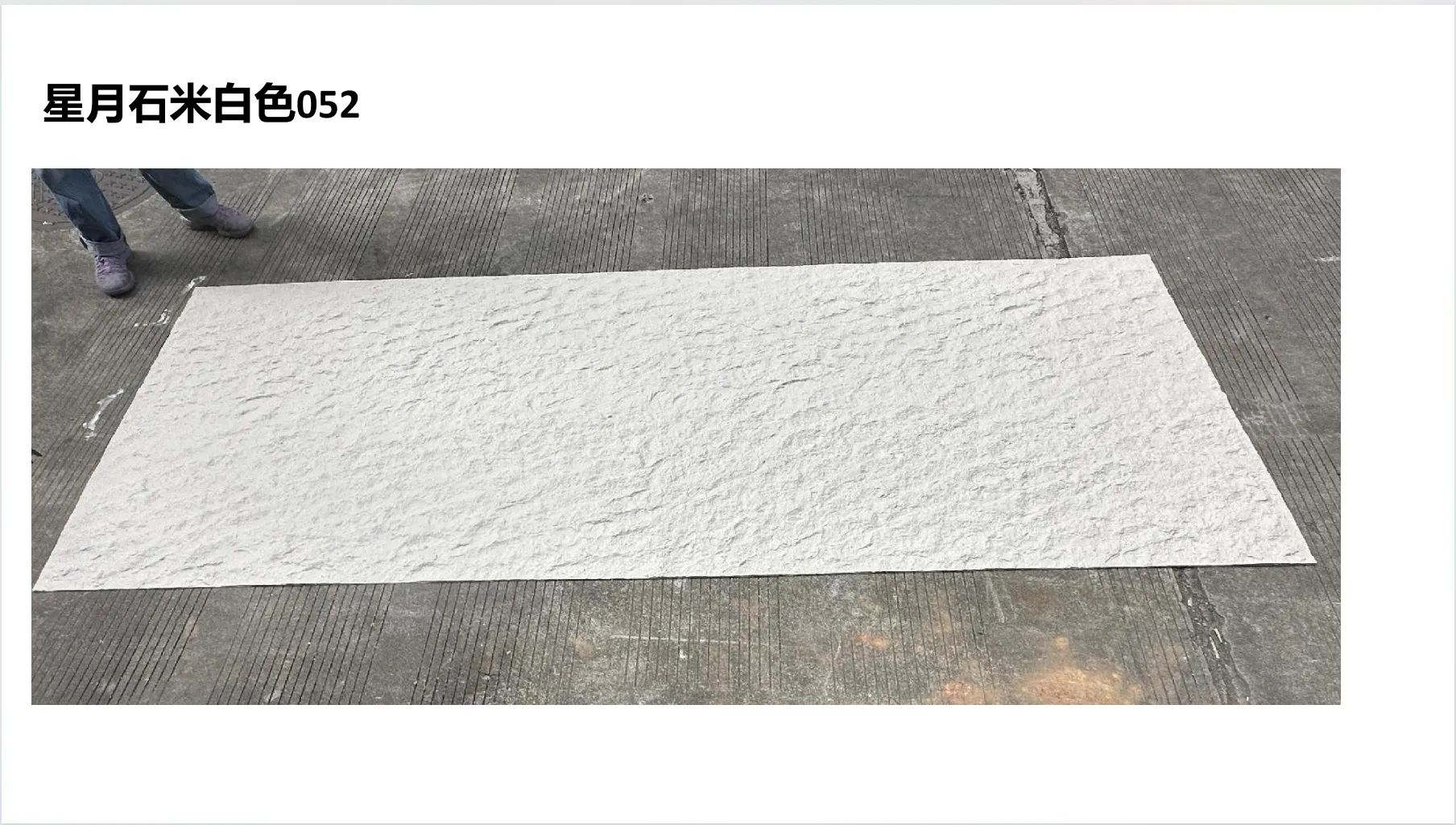
Let's talk about Starmoon Stone—a material that's been turning heads in sustainable construction circles. At first glance, it might look like a polished natural stone, with a subtle shimmer that catches the light like distant stars (hence the "Starmoon" name). But dig deeper, and you'll find it's a prime example of how innovation can reimagine traditional building materials for the better.
So, what exactly is Starmoon Stone? It's a modified composite material, blending natural minerals with recycled aggregates and a low-VOC (volatile organic compound) binder. Unlike quarried stone, which requires heavy machinery, water, and energy to extract and process, Starmoon is manufactured using a controlled process that minimizes waste and emissions. Picture this: instead of blasting a mountainside to get raw stone, manufacturers repurpose waste from construction sites or old buildings—think crushed concrete, discarded glass, or even recycled ceramics—and mix it with natural minerals like limestone or marble dust. The result? A material that's 30-40% recycled content, with a manufacturing process that uses 50% less water and 40% less energy than traditional stone production.
But sustainability isn't just about how a material is made—it's about how long it lasts. Starmoon Stone scores big here, too. It's resistant to cracks, fading, and weathering, even in harsh climates. In tests, it's held up to extreme temperatures, heavy rain, and UV exposure better than many natural stones, meaning buildings clad in Starmoon won't need frequent repairs or replacements. That's a big deal for sustainability: the longer a material lasts, the fewer resources are needed to replace it over a building's lifetime.
And let's not forget end-of-life considerations. When a building eventually reaches the end of its useful life, Starmoon Stone doesn't end up in a landfill. It can be crushed and reused as aggregate in new construction materials, closing the loop on its lifecycle. Compare that to some synthetic cladding materials, which often contain toxic chemicals and can't be recycled—Starmoon is a clear winner for circularity.
But here's the best part: Starmoon doesn't force builders to choose between sustainability and beauty. It comes in a range of finishes, from matte to high-gloss, and can mimic the look of marble, granite, or even wood. Architects love it because it offers design flexibility without compromising their green goals. Homeowners love it because it adds a touch of luxury to their spaces, knowing it's not harming the planet. It's a rare win-win.
Starmoon Stone is a standout, but sustainable building isn't a one-material show. To hit LEED's high bars, projects often need a toolkit of eco-friendly options, each shining in different areas. Let's explore three more materials that are making waves alongside Starmoon: MCM Flexible Stone, Foamed Aluminium Alloy Board (Vintage Silver), and Travertine (Starry Blue).
If Starmoon is the "durable star," MCM Flexible Stone is the "versatile chameleon" of sustainable materials. MCM stands for Modified Composite Material, and as the name suggests, it's a flexible, thin panel that can mimic almost any surface—stone, wood, brick, even leather—while weighing a fraction of the real thing. Traditional stone cladding can weigh 20-30 kg per square meter; MCM Flexible Stone? Just 3-5 kg/m². That might not sound like a big difference, but for buildings, lighter materials mean less structural support is needed. Less steel, less concrete, fewer emissions from manufacturing and transporting those heavy materials. It's a ripple effect of sustainability.
MCM's flexibility is another superpower. It can bend around curves, wrap columns, or even be used on ceilings—places where rigid stone would be impossible. This opens up design possibilities while reducing waste: since MCM panels are cut to size in factories, there's minimal on-site trimming, unlike natural stone, which often results in 10-15% waste during installation. And like Starmoon, MCM is low on VOCs and high on recycled content, making it a favorite for LEED projects aiming for Materials and Resources credits.
Now, let's talk about metal—but not the heavy, energy-guzzling kind. Foamed Aluminium Alloy Board (Vintage Silver) is redefining what metal can do in sustainable construction. Traditional aluminium is already a recyclable material, but foamed aluminium takes it a step further. Through a specialized process, manufacturers inject air bubbles into molten aluminium, creating a material that's 60-80% air by volume. The result? A board that's lightweight (about 1/5 the weight of solid aluminium) but surprisingly strong, with excellent insulation properties.
Why does this matter for green building? For starters, lightweight materials reduce transportation emissions—trucks can carry more panels per trip, cutting down on fuel use. Then there's energy efficiency: foamed aluminium's air pockets act as natural insulators, helping buildings stay cool in summer and warm in winter. That means lower heating and cooling costs, which translates to fewer emissions from power plants. And let's not forget recyclability: aluminium is 100% recyclable, and foamed aluminium is no exception. Even better, recycling aluminium uses just 5% of the energy needed to produce new aluminium, making it a poster child for circular economy.
The "Vintage Silver" finish is the cherry on top. Instead of toxic paints or coatings, the finish is achieved through anodization—a process that uses electricity and natural acids to create a protective, corrosion-resistant layer. No harmful chemicals, no off-gassing, just a sleek, industrial-chic look that fits modern and traditional designs alike. It's sustainability with style.
Natural stone lovers, rejoice—you don't have to sacrifice tradition for sustainability. Take Travertine (Starry Blue), a variant of the classic travertine stone known for its unique "starry" pattern. Those tiny, shimmering flecks? They're natural mineral inclusions like pyrite or mica, formed over millions of years as mineral-rich water evaporated in hot springs. It's nature's art, and when sourced responsibly, it can be a sustainable choice, too.
The key here is "sourced responsibly." Traditional travertine quarrying has a mixed reputation, with some operations causing habitat destruction or excessive water use. But forward-thinking quarries are changing that. They use solar-powered machinery, restore landscapes post-extraction, and limit water use by recycling process water. Some even partner with local communities to ensure fair labor practices and economic benefits. When travertine is quarried this way, it becomes a low-impact material with a low embodied carbon footprint (the total emissions from its extraction to delivery).
Travertine (Starry Blue) also scores points for durability. Like Starmoon Stone, it's resistant to wear and tear, making it ideal for high-traffic areas like lobbies, floors, or outdoor patios. And because it's a natural material, it doesn't off-gas VOCs, contributing to healthier indoor air quality—a big plus for LEED's Indoor Environmental Quality credits. Plus, when it does eventually wear out, it can be crushed and used as gravel or landscaping stone, avoiding the landfill.
With so many sustainable materials on the market, how do you choose the right one for your project? Let's compare Starmoon Stone, MCM Flexible Stone, Foamed Aluminium Alloy Board (Vintage Silver), and Travertine (Starry Blue) across key sustainability metrics. This table breaks down their embodied carbon, recycled content, durability, maintenance needs, and aesthetic features to help you see how they stack up:
| Material | Embodied Carbon (kg CO2e/m²)* | Recycled Content (%) | Expected Lifespan (Years) | Maintenance Level | Key Aesthetic Features |
|---|---|---|---|---|---|
| Starmoon Stone | 25-35 | 30-40 | 50+ | Low (occasional cleaning) | Subtle shimmer, customizable finishes (matte to gloss), mimics natural stone |
| MCM Flexible Stone | 20-30 | 25-35 | 40-50 | Low (resistant to fading/weathering) | Thin, flexible panels; mimics wood, brick, or stone; lightweight appearance |
| Foamed Aluminium Alloy (Vintage Silver) | 30-40 | 40-50 | 60+ | Very Low (corrosion-resistant, no painting needed) | Industrial-chic metallic finish, lightweight, sleek modern look |
| Travertine (Starry Blue) | 40-50 | 0 (natural stone) | 75+ | Medium (sealing every 3-5 years) | Natural starry mineral flecks, warm earthy tones, timeless texture |
*Embodied carbon estimates based on industry averages for sustainable manufacturing processes. Actual values may vary by manufacturer.
As you can see, each material has its strengths. Starmoon and MCM lead in low embodied carbon, while foamed aluminium boasts the highest recycled content and longest lifespan. Travertine, though it has no recycled content, offers unmatched longevity and natural beauty when sourced responsibly. The takeaway? There's no one "perfect" sustainable material—instead, combining them can maximize a project's sustainability and design potential.
Now, let's get practical: how do materials like Starmoon Stone, MCM Flexible Stone, foamed aluminium, and travertine (Starry Blue) actually help projects earn LEED points? Let's break it down by LEED category, so you can see exactly where these materials shine.
LEED's MR category rewards projects that reduce waste, use recycled materials, and source locally. Starmoon Stone and MCM Flexible Stone are MVPs here, thanks to their high recycled content (30-40% for Starmoon, 25-35% for MCM). Using these materials can help earn MR Credit 4: Recycled Content, which awards points based on the percentage of recycled materials used. Foamed aluminium alloy (Vintage Silver) is even better, with 40-50% recycled content, potentially netting more points.
Local sourcing is another MR credit opportunity. If these materials are manufactured within 500 miles of the project site, they can contribute to MR Credit 5: Regional Materials, which rewards reducing transportation emissions. Many Starmoon and MCM manufacturers are expanding local production facilities, making this easier than ever.
Energy efficiency is a cornerstone of LEED, and these materials play a role here, too. Foamed aluminium alloy's insulation properties are a standout—its air pockets reduce heat transfer, meaning buildings need less energy to heat and cool. This can contribute to EA Credit 1: Optimize Energy Performance, which awards points for exceeding baseline energy standards. Similarly, MCM Flexible Stone's lightweight nature reduces a building's structural load, allowing for smaller, more energy-efficient HVAC systems (since the building has less mass to heat or cool).
LEED prioritizes spaces that are healthy for occupants, and low-VOC materials are key here. Starmoon Stone, MCM Flexible Stone, and travertine (Starry Blue) all have low or zero VOC emissions, as they're made with natural or low-toxicity binders. Foamed aluminium's anodized finish also contains no VOCs. This helps earn IEQ Credit 4: Low-Emitting Materials, which ensures indoor air quality by limiting harmful chemicals from paints, adhesives, and flooring.
Travertine and Starmoon also offer natural light reflection, which can reduce the need for artificial lighting (another IEQ plus). Imagine a lobby with travertine (Starry Blue) floors—those shimmering mineral flecks bounce light around the room, creating a bright, welcoming space without extra energy use.
LEED loves innovation, and materials like Starmoon Stone are often recognized here. If a project uses a new, cutting-edge sustainable material that's not yet in LEED's standard credits, it can apply for IN Credit 1: Innovation in Design. Starmoon, with its high recycled content and low embodied carbon, is a frequent candidate for this credit, especially when paired with other innovative strategies like rainwater harvesting or solar panels.
Enough theory—let's look at how these materials are being used in real projects. One standout example is the Azure Tower, a 20-story mixed-use building in Dubai that achieved LEED Platinum certification in 2024. The project's architects wanted a building that was both visually striking and ecologically responsible, and they turned to Starmoon Stone, MCM Flexible Stone, and foamed aluminium alloy (Vintage Silver) to make it happen.
The Azure Tower's exterior is clad in Starmoon Stone, chosen for its durability and low embodied carbon. "We needed a material that could withstand Dubai's extreme heat and sandstorms without fading or cracking," says lead architect Maria Gonzalez. "Starmoon checked that box, and its subtle shimmer adds a dynamic element—during the day, it reflects sunlight to keep the building cool, and at night, it glows under the city lights." The stone's 35% recycled content also helped the project earn MR Credit 4, contributing to its Platinum status.
Inside, MCM Flexible Stone was used for wall cladding in the lobby and common areas. "Traditional stone would have been too heavy for the upper floors," Gonzalez explains. "MCM allowed us to create the same high-end look without adding structural weight. We even used it to mimic reclaimed wood on the elevator interiors—no trees cut down, just recycled composites." The lightweight panels also reduced installation time by 30%, cutting down on construction emissions.
Foamed aluminium alloy (Vintage Silver) was deployed for the building's sunshades, which extend outward from the facade to block harsh midday sun. "The sunshades needed to be strong enough to withstand wind but light enough to not overload the structure," says Gonzalez. "Foamed aluminium was the perfect solution. Its insulation properties also mean less heat enters the building, reducing our HVAC load by 25% compared to similar towers."
And in the building's rooftop restaurant, travertine (Starry Blue) was used for the flooring and bar top. "We wanted a natural material that felt luxurious but aligned with our sustainability goals," says Gonzalez. "The travertine was sourced from a quarry in Turkey that uses solar power and restores the landscape after extraction. Our clients love the starry pattern—it's become a talking point, and it's all natural."
The result? The Azure Tower uses 30% less energy than Dubai's baseline building code, has indoor air quality 40% better than average, and has become a model for sustainable design in the region. "These materials didn't just help us get LEED Platinum—they made the building better," Gonzalez adds. "Better for the planet, better for our tenants, and better for our bottom line."
Sustainable materials like Starmoon Stone and MCM Flexible Stone are game-changers, but they're not without challenges. Let's be honest: transitioning to green building materials isn't always easy, and addressing these hurdles is key to widespread adoption.
First up: cost. There's no denying that many sustainable materials have higher upfront costs than traditional options. Starmoon Stone, for example, can be 15-20% more expensive than standard ceramic tile or vinyl cladding. Foamed aluminium alloy might cost 25% more than regular steel. For developers on tight budgets, this can be a tough pill to swallow. But here's the missing piece of the puzzle: lifecycle cost. While traditional materials are cheaper upfront, they often need replacement every 10-15 years, require frequent maintenance, and contribute to higher energy bills. Starmoon Stone, by contrast, lasts 50+ years with minimal upkeep, and its insulation properties reduce energy costs. Over a building's 50-year lifespan, studies show that sustainable materials like Starmoon can actually save 20-30% compared to traditional options. It's a classic case of "pay more now, save more later."
Then there's availability. Even if a developer wants to use Starmoon or MCM, finding local suppliers can be a challenge, especially in regions with less developed green building markets. This can drive up costs due to transportation, or force projects to compromise on material choices. The good news? As demand grows, manufacturers are expanding. Major players in the MCM and modified composite space are opening factories in Asia, Europe, and North America, making these materials more accessible. Governments can help, too—by offering grants or tax breaks to local manufacturers who produce sustainable materials, they can boost supply and lower costs.
Finally, education. Many contractors and installers are used to working with traditional materials like brick, concrete, or natural stone. Sustainable materials often require different installation techniques—for example, MCM Flexible Stone needs special adhesives, and foamed aluminium cuts differently than solid metal. Without proper training, installers might make mistakes that compromise performance or durability. To fix this, manufacturers are stepping up, offering certification programs and on-site training for contractors. The USGBC also offers LEED workshops that include sessions on sustainable materials, helping architects and builders stay informed.
So, what's next for Starmoon Stone and other sustainable materials? The future looks bright, with innovation and policy driving even more eco-friendly options. Here are a few trends to watch:
First, bio-based binders. Currently, Starmoon Stone uses a low-VOC synthetic binder. But researchers are experimenting with bio-based alternatives made from plant oils, algae, or even mushroom mycelium. These binders would be carbon-negative (absorbing more CO2 than they emit) and fully biodegradable, taking Starmoon's sustainability to the next level. Early tests show promise, with bio-based Starmoon prototypes matching the strength and durability of the original.
Second, circular manufacturing. Imagine a closed-loop system where old Starmoon panels are collected, ground up, and reused to make new panels—no waste, no new raw materials. Some manufacturers are already piloting this, partnering with demolition companies to recover their materials. If scaled, this could reduce Starmoon's embodied carbon by another 20-30%.
Third, smart materials. What if Starmoon Stone could do more than just look good and last long? Researchers are exploring adding conductive materials or sensors to MCM and Starmoon panels, turning them into "smart skin" for buildings. These panels could monitor temperature, humidity, or even structural stress, sending data to building management systems to optimize energy use or flag maintenance needs. It's sustainability meets technology, and it's closer than you think.
Policy will also play a big role. As more countries adopt net-zero building codes (like the EU's 2030 "zero-emission buildings" mandate), demand for materials like Starmoon will skyrocket. Governments are likely to offer incentives—tax breaks, faster permitting, or grants—to projects that use innovative sustainable materials, making them even more attractive to developers.
At the end of the day, green building isn't about one material or one certification. It's about a mindset—a commitment to building in harmony with the planet, not at its expense. Starmoon Stone, MCM Flexible Stone, foamed aluminium alloy (Vintage Silver), and travertine (Starry Blue) are more than just building materials; they're tools to turn that mindset into reality. They prove that sustainability doesn't require sacrificing beauty, performance, or profitability. In fact, it enhances them.
LEED certification is the roadmap, but materials like these are the vehicles that get us there. They help reduce emissions, conserve resources, and create spaces that are healthier for people and the planet. And as innovation continues—bio-based binders, circular manufacturing, smart materials—the future of sustainable building looks even brighter.
So, whether you're an architect designing the next Azure Tower, a developer looking to attract eco-conscious tenants, or a homeowner planning a renovation, remember: every material choice matters. Choose Starmoon Stone, and you're not just building a wall—you're building a legacy. A legacy of responsibility, innovation, and hope for a greener tomorrow.
The stars (and the moon) are aligning for sustainable building. Let's build something amazing together.
Recommend Products












