
In the heart of the Middle East, Saudi Arabia is undergoing a transformation unlike any other. Vision 2030, the kingdom's ambitious blueprint for the future, isn't just about economic diversification or cultural renaissance—it's a promise to build a world where progress and sustainability walk hand in hand. At its core lies a commitment to environmental stewardship, green infrastructure, and creating spaces that honor both tradition and innovation. For architects, developers, and dreamers across the nation, this vision demands more than just ideas; it requires materials that can turn those ideas into reality without compromising the planet. Enter Starmoon Stone: a brand that doesn't just sell building materials, but crafts solutions designed to breathe life into Vision 2030's sustainable dreams.
Sustainable development in construction isn't a trend here—it's a necessity. As cities like Riyadh, NEOM, and Jeddah expand, the demand for materials that reduce carbon footprints, minimize waste, and stand the test of time has never been higher. Starmoon Stone, with its portfolio of eco-conscious products, has emerged as a quiet leader in this space. From lightweight panels that cut transportation emissions to natural stone alternatives that honor traditional craftsmanship, the brand's offerings are a testament to how innovation and sustainability can coexist. Let's dive into how Starmoon Stone is not just supplying materials, but partnering with Saudi Arabia to build a legacy that future generations will be proud to inherit.
Vision 2030, launched in 2016, is Saudi Arabia's roadmap to a post-oil future. Among its key pillars is a focus on "Environmental Sustainability," with goals to reduce carbon emissions, protect natural resources, and promote green building practices. The kingdom aims to generate 50% of its energy from renewable sources by 2030 and has pledged to plant 10 billion trees as part of its Green Saudi Initiative. For the construction sector, this means a shift away from resource-heavy materials and towards solutions that are energy-efficient, recyclable, and locally sourced.
Take, for example, the construction of NEOM—a futuristic city in the Tabuk Province designed to be a hub of innovation and sustainability. NEOM's master plan emphasizes "zero-carbon" buildings, and every material used in its development is scrutinized for its environmental impact. This is where Starmoon Stone steps in. The brand's products aren't just about aesthetics; they're engineered to meet the strictest sustainability standards, making them a natural fit for projects that aim to redefine what "green construction" looks like.
Starmoon Stone's philosophy is simple: great buildings shouldn't come at the expense of the planet. For over a decade, the brand has invested in research and development to create products that are both high-performance and eco-friendly. From sourcing raw materials responsibly to optimizing manufacturing processes to reduce waste, every step of Starmoon's journey is guided by a commitment to sustainability. This isn't just good for the environment—it's good for business, too. As Saudi Arabia's construction sector pivots towards green building, Starmoon's forward-thinking approach has made it a trusted name among architects, developers, and government entities alike.
What sets Starmoon apart is its ability to balance sustainability with beauty. In a region known for its grand architectural heritage—from the mud-brick houses of Najd to the modern skyscrapers of Riyadh—aesthetics matter. Starmoon's materials don't just check the "green" box; they elevate spaces, turning ordinary buildings into works of art. Whether it's the iridescent glow of travertine (starry blue) or the earthy texture of rammed earth board (matcha green) , each product tells a story of harmony between nature and design.
Let's take a closer look at some of Starmoon Stone's standout products and how they align with Vision 2030's sustainability goals. These aren't just materials—they're tools for building a greener, more beautiful Saudi Arabia.
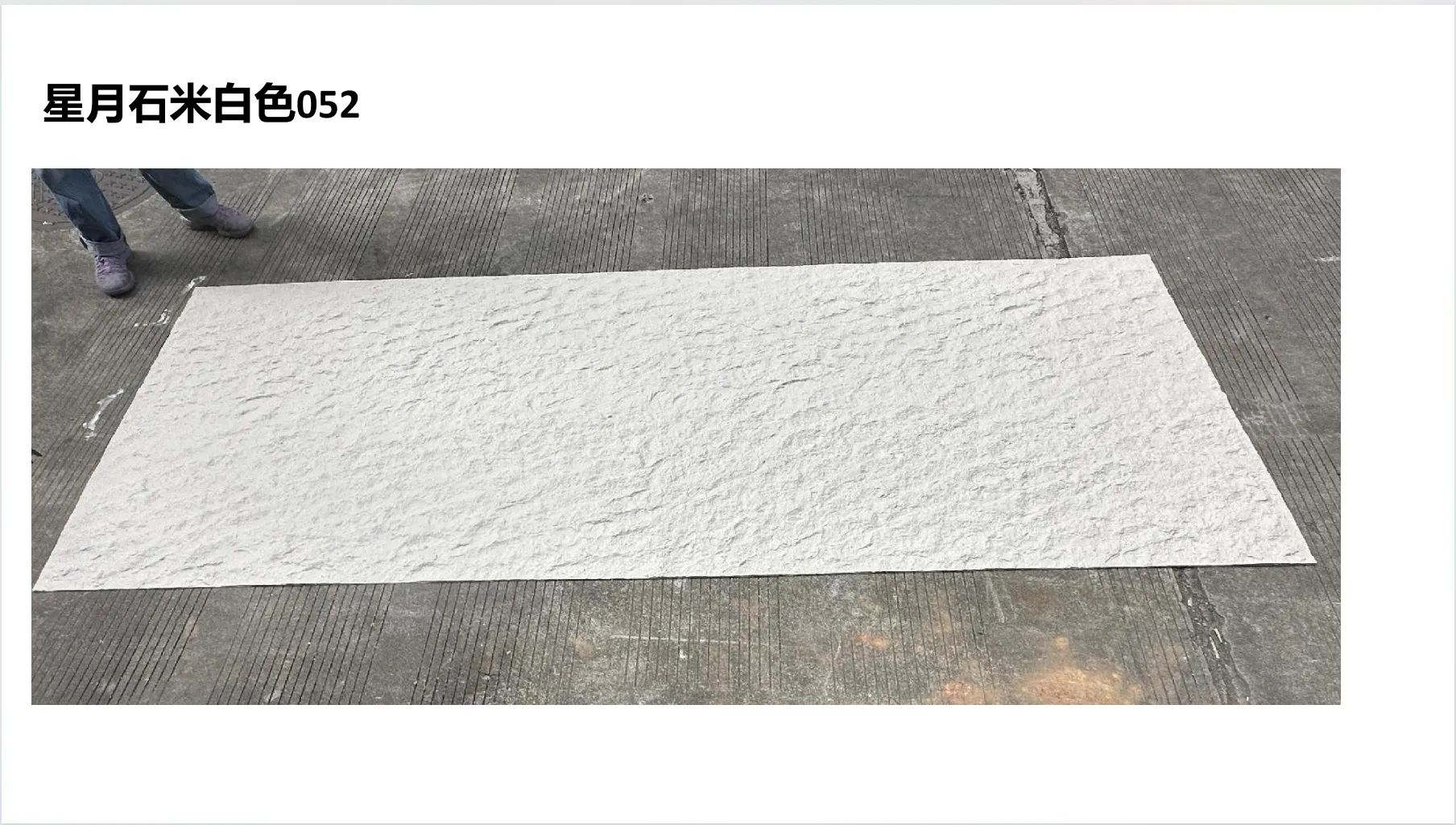
At the top of the list is MCM flexible stone —a game-changer for sustainable construction. Traditional stone cladding is heavy, requiring massive support structures and increasing transportation emissions. MCM (Modified Composite Material) flexible stone, however, is up to 80% lighter than natural stone, reducing the need for energy-intensive foundations and cutting fuel usage during transport. But don't let its lightness fool you: it's incredibly durable, resistant to weathering, and fire-retardant, making it ideal for Saudi Arabia's harsh climate.
What truly makes MCM flexible stone a sustainability star is its manufacturing process. Starmoon uses recycled stone powder and natural resins, minimizing waste and reducing reliance on virgin materials. For projects like the King Abdullah Financial District (KAFD) in Riyadh, which aims to be a "sustainable urban center," MCM flexible stone has become a go-to choice. It allows architects to achieve the luxurious look of natural stone without the environmental cost.
Next up are foamed aluminium alloy board (vintage silver) and its counterparts in vintage gold and gold. Aluminium is one of the most recyclable materials on the planet, and Starmoon's foamed aluminium boards take this a step further. The foaming process creates a lightweight, high-strength material that's perfect for cladding, ceilings, and decorative panels. Unlike traditional aluminium, which can be energy-intensive to produce, Starmoon's foamed aluminium uses 75% less energy in manufacturing and is 100% recyclable at the end of its life cycle.
These boards aren't just sustainable—they're stunning. The vintage silver finish adds a touch of modern elegance, while the gold variants bring warmth to any space. Imagine a boutique hotel in Jeddah, its exterior clad in foamed aluminium alloy boards catching the sunset—beautiful, durable, and kind to the planet. It's exactly the kind of material that aligns with Vision 2030's goal of enhancing quality of life through beautiful, sustainable design.
For those who crave the warmth of natural materials, rammed earth board (matcha green) is a revelation. Rammed earth has been used in construction for centuries, and Starmoon has reimagined it for the modern era. These boards are made by compressing natural earth, clay, and a small amount of binder, resulting in a material that's breathable, thermally efficient, and virtually carbon-neutral. Unlike concrete, which releases large amounts of CO2 during production, rammed earth requires minimal processing, making it one of the lowest-carbon building materials available.
The matcha green variant, with its soft, earthy hue, is particularly popular in Saudi Arabia's wellness and hospitality sectors. Imagine a yoga retreat in the Asir Mountains, its walls made of rammed earth boards that blend seamlessly with the surrounding landscape. The material's thermal mass helps regulate indoor temperatures, reducing the need for air conditioning—critical in a country where summer temperatures can exceed 45°C. It's sustainability that feels like home.
No discussion of Starmoon's sustainable lineup would be complete without travertine (starry blue) . Travertine is a natural stone known for its unique porous texture, but Starmoon has elevated it with the "starry" finish—tiny, iridescent particles that catch the light, creating a celestial effect. What makes this variant sustainable is Starmoon's commitment to responsible sourcing. The brand partners with quarries that use water recycling systems and limit blasting to minimize environmental impact. Additionally, travertine is a durable material that requires little maintenance, reducing the need for replacements and extending the life of buildings.
Starry blue travertine has become a favorite for public spaces, such as museums and cultural centers. In Riyadh's King Abdulaziz Center for World Culture (Ithra), for example, a wall clad in starry blue travertine serves as a focal point, drawing visitors in while telling a story of sustainability. It's a reminder that beauty and responsibility don't have to be mutually exclusive.
To better understand the impact of these materials, let's compare their key sustainability features:
| Material | Carbon Footprint | Recyclability | Durability | Key Sustainability Benefit |
|---|---|---|---|---|
| MCM Flexible Stone | Low (80% lighter than natural stone) | High (recyclable stone powder) | Excellent (weather and fire-resistant) | Reduces transportation emissions |
| Foamed Aluminium Alloy Board (Vintage Silver) | Medium (75% less energy in production) | 100% recyclable | High (corrosion-resistant) | Closed-loop recycling system |
| Rammed Earth Board (Matcha Green) | Very Low (minimal processing) | Biodegradable | High (resistant to decay) | Thermal efficiency reduces energy use |
| Travertine (Starry Blue) | Medium (responsible sourcing) | Reusable (can be repurposed) | Excellent (long lifespan) | Water recycling in quarrying |
To see these materials in action, look no further than Al-Muna Village, a residential complex in north Riyadh that opened in 2024. Designed with Vision 2030's sustainability goals in mind, Al-Muna Village uses a mix of Starmoon Stone products to create a community that's both eco-friendly and livable.
The complex's exterior cladding features MCM flexible stone, reducing the building's overall weight and cutting construction time by 30%. The community center, a hub for residents, is clad in foamed aluminium alloy boards (vintage silver), which reflect sunlight and keep the interior cool. Inside, the lobby walls are made of rammed earth board (matcha green), creating a calming atmosphere that connects residents to nature. And the courtyard features a fountain surrounded by travertine (starry blue) tiles, adding a touch of magic to evening gatherings.
The result? Al-Muna Village has reduced its carbon footprint by 40% compared to traditional residential complexes, and residents report lower utility bills thanks to the materials' energy-efficient properties. It's a living example of how Starmoon Stone's products aren't just building materials—they're building better communities.
As Saudi Arabia marches towards Vision 2030, the demand for sustainable building materials will only grow. Starmoon Stone is already looking to the future, with plans to expand its product line to include even more eco-friendly options. The brand is currently researching a new line of 3D-printed stone panels, which would allow for custom designs with minimal waste, and exploring partnerships with local Saudi suppliers to reduce transportation emissions further.
But Starmoon's impact goes beyond products. The brand is also investing in education, hosting workshops for architects and developers on sustainable building practices. By sharing knowledge, Starmoon is helping to build a workforce that's equipped to carry Vision 2030's sustainability goals forward for decades to come.
Saudi Arabia's Vision 2030 is more than a plan—it's a promise to future generations. It's a promise of cleaner air, greener cities, and a more sustainable way of life. Starmoon Stone, with its commitment to eco-friendly materials and innovative design, is helping to keep that promise. From MCM flexible stone to travertine (starry blue), each product is a step towards a world where progress and sustainability aren't competing ideals, but partners in building a better future.
So the next time you walk through a new development in Riyadh, or visit a hotel in NEOM, take a moment to look at the walls. Chances are, you'll see more than just stone or metal—you'll see the future of Saudi Arabia, built with care, creativity, and a deep respect for the planet. And that's a future worth building.
Recommend Products












