
In the world of architecture and interior design, there's a quiet revolution happening—one that prioritizes seamlessness over segmentation, flow over fragmentation. Today's designers aren't just building spaces; they're crafting visual experiences where every line, texture, and surface feels intentional, unbroken, and harmonious. Yet, for decades, one element has consistently disrupted this vision: the humble joint. Those tiny gaps between tiles, panels, or slabs might seem insignificant, but in a world that craves minimalism and monolithic beauty, they can feel like visual static, pulling the eye away from the bigger picture.
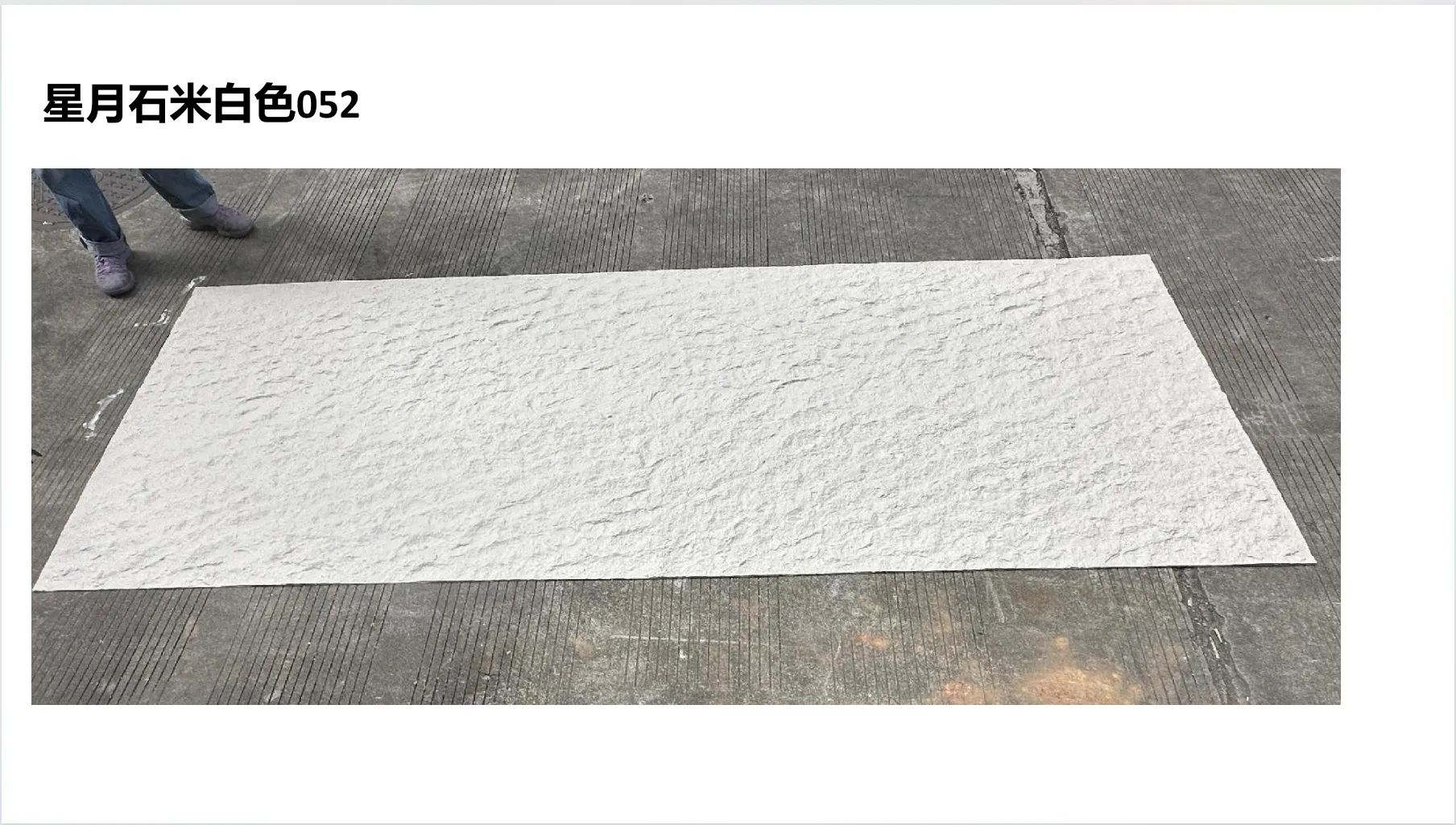
Enter Starmoon Stone Big Slab —a material that's quickly becoming the darling of architects and designers who refuse to compromise on aesthetics. Part of the innovative MCM big slab board series , this engineered stone isn't just another cladding option; it's a solution to the joint problem. By offering larger, more durable slabs that can span greater distances with fewer breaks, Starmoon Stone Big Slab is redefining what's possible in seamless design. In this article, we'll dive deep into how this material works, why minimizing joints matters more than ever, and the techniques that make near-jointless installations a reality. Whether you're a designer dreaming of a monochromatic facade or a homeowner craving a bathroom that feels like a spa retreat, this is your guide to achieving the seamless look you've been chasing.
Before we can talk about minimizing joints, we need to understand the star of the show: Starmoon Stone Big Slab. This material isn't just a larger version of traditional stone cladding; it's a product of advanced engineering, designed to balance size, strength, and flexibility in ways that were once impossible. As part of the MCM big slab board series —a line of modified composite materials known for their lightweight durability—Starmoon Stone Big Slab stands out for its unique aesthetic and performance.
So, what exactly is it made of? Starmoon Stone is crafted from a blend of natural stone aggregates, high-performance polymers, and reinforcing fibers. This combination gives it the best of both worlds: the authentic look and feel of natural stone, paired with the resilience and workability of modern composites. Unlike heavy natural stone slabs, which can be cumbersome to transport and install, Starmoon Stone Big Slab is surprisingly lightweight, making it suitable for both interior and exterior applications. Its flexibility also means it can adapt to subtle substrate movements, reducing the risk of cracking—a common issue with rigid materials.
But perhaps its most compelling feature is its size. While traditional stone cladding often comes in smaller tiles (think 12x12 inches or 30x30 cm), Starmoon Stone Big Slab is available in dimensions that stretch far beyond: 4x8 feet, 5x10 feet, or even custom sizes tailored to a project's needs. This large format is the first step toward minimizing joints—fewer slabs mean fewer seams. But size alone isn't enough. To truly achieve seamless aesthetics, we need to dig deeper into the why and how of joint minimization.
To appreciate the value of minimizing joints, let's start by examining the problems they solve—or rather, the problems they create. In traditional cladding systems, joints are a necessary evil. Smaller tiles require more seams to cover a surface, and each seam is a potential weak point. Visually, these joints can fragment a space, creating a busy, cluttered look that clashes with today's minimalist and monolithic design trends. Imagine a sleek, modern kitchen backsplash covered in tiny subway tiles: the grid of grout lines can feel like a distraction, pulling focus from the countertop or cabinetry. Now imagine that same backsplash covered in a single, unbroken slab of Starmoon Stone—the difference is night and day.
Beyond aesthetics, joints also bring practical challenges. Dirt, grime, and moisture love to settle in those tiny gaps. Over time, this can lead to discoloration, mold growth, and even structural issues. In exterior applications, water seepage through joints can damage the substrate, causing rot or corrosion. For homeowners and facility managers, this means more frequent cleaning, regrouting, and repairs—costs that add up over time. Joints also disrupt the continuity of a surface, making it harder to clean; a seamless slab can be wiped down in seconds, while a tiled surface requires careful scrubbing between grout lines.
Modern design trends have only amplified the need for fewer joints. From the rise of "total design" concepts, where interiors and exteriors flow into one another, to the popularity of monochromatic color palettes and texture-driven surfaces, today's projects demand a level of visual continuity that traditional cladding can't deliver. Think of the work of architects like John Pawson, whose minimalist interiors rely on unbroken surfaces to create a sense of calm and spaciousness. Or the iconic facades of buildings like the Apple Store Fifth Avenue, where glass panels meet with near-invisible seams to mimic a floating cube. In these spaces, joints are the enemy of immersion.
Starmoon Stone Big Slab addresses this by flipping the script: instead of working around joints, it's designed to minimize them from the start. By using larger slabs, advanced installation techniques, and precision engineering, it allows designers to create surfaces that feel almost sculptural—like the stone was carved from a single block, rather than assembled from pieces. The result? Aesthetic harmony, reduced maintenance, and a surface that truly becomes the canvas for the rest of the design.
Minimizing joints with Starmoon Stone Big Slab isn't just about using larger slabs—it's a holistic process that combines material selection, precision manufacturing, and skilled installation. Let's break down the techniques that make near-seamless results possible.
The first step to minimizing joints is ensuring that each Starmoon Stone slab is cut to exact specifications. Even a slight variance in size can lead to uneven gaps or overlapping edges, which disrupt the seamless look. To achieve this, manufacturers use advanced CNC (Computer Numerical Control) cutting machines, which can trim slabs to within 0.1mm of the desired dimensions. This level of precision ensures that when two slabs are placed side by side, the joint between them is barely visible—often less than 1mm wide.
But precision isn't just about the cutting process; it starts with the design phase. Architects and designers must work closely with manufacturers to create detailed layouts that account for the space's dimensions, corners, and openings (like windows or doors). By custom-sizing slabs to fit these areas, installers can avoid unnecessary cuts that would create additional joints. For example, a 10-foot wall might be covered with two 5-foot slabs, rather than three smaller ones, eliminating an extra seam.
Even the largest slabs need to be secured to the substrate, and the adhesive used plays a critical role in joint minimization. Traditional mortars or thinset can shrink as they cure, creating tiny gaps between the slab and the substrate. Over time, this shrinkage can cause the slab to shift, widening the visible joint. Starmoon Stone installations, however, rely on high-performance, low-shrink adhesives specifically formulated for large-format panels. These adhesives bond quickly and evenly, creating a strong, stable connection that reduces the need for wide grout lines to hide imperfections.
Another advantage of these adhesives is their flexibility. Unlike rigid mortars, which can crack under stress, flexible adhesives allow for minor movement between the slab and substrate (due to thermal expansion or building settling). This flexibility prevents the slabs from pulling apart, which would otherwise create gaps. When combined with the inherent flexibility of Starmoon Stone itself, these adhesives create a system that can adapt to real-world conditions without sacrificing seamlessness.
How you hang or attach the slabs also impacts joint visibility. Traditional drywall or tile installations often use mechanical fasteners (like screws or clips) that require holes in the slabs, which can create unsightly blemishes or require larger joints to cover. Starmoon Stone Big Slab, however, often uses advanced installation systems that minimize or eliminate visible fasteners.
One popular method is the "hidden rail system," where aluminum rails are mounted to the substrate, and the slabs are secured to these rails using concealed clips. This system allows for precise alignment of the slabs, as the clips can be adjusted horizontally and vertically to ensure a tight fit. Since the rails are hidden behind the slabs, there's no need for visible fasteners, and the joints between slabs remain clean and narrow.
For exterior applications, such as facades, "ventilated cladding systems" are often used. These systems create a small air gap between the Starmoon Stone slabs and the substrate, allowing for drainage and ventilation. While this might sound like it would require larger joints, modern ventilated systems use precision-engineered brackets that hold slabs in place with minimal spacing—often less than 2mm between panels. The result is a facade that looks seamless from a distance, with joints that are only visible upon close inspection.
Even with perfectly sized slabs and precise installation, the quality of the slab edges can make or break a seamless look. Rough or uneven edges will create visible gaps, even if the slabs are aligned perfectly. That's why Starmoon Stone Big Slab undergoes meticulous edge finishing before it leaves the factory. Most slabs are finished with a "polished edge," which creates a smooth, reflective surface that blends seamlessly with adjacent slabs. For a more subtle look, some designers opt for a "honed edge," which has a matte finish that minimizes light reflection and hides minor imperfections in the joint.
In some cases, installers may use a "chamfered edge"—a slight bevel along the edge of the slab—to create a shadow line that softens the joint. While this doesn't eliminate the joint, it makes it less noticeable by turning it into a design feature rather than a flaw. The key is to choose an edge finish that complements the overall design aesthetic while minimizing visual disruption.
Even the best slabs and adhesives can't overcome a uneven substrate. If the wall or floor is wavy, sloped, or bumpy, the Starmoon Stone slabs will follow those contours, creating gaps between them. That's why substrate preparation is perhaps the most critical step in minimizing joints. Before installation begins, installers must ensure the substrate is flat, clean, and stable.
This process often involves using laser leveling tools to identify high and low spots, then grinding down protrusions or filling in depressions with a self-leveling compound. For exterior applications, waterproofing the substrate is also essential to prevent moisture from causing warping or rot, which could lead to slab movement and joint widening. By taking the time to prepare the substrate properly, installers create a stable foundation that allows slabs to sit flush against one another, with minimal gaps.
While Starmoon Stone Big Slab makes minimizing joints easier than ever, it's not without challenges. From handling large slabs to accounting for environmental factors, installers must navigate several hurdles to achieve seamless results. Let's explore these challenges and the solutions that make near-jointless installations possible.
Starmoon Stone Big Slab's size is its greatest asset for minimizing joints, but it also makes handling a challenge. A single 5x10-foot slab can weigh upwards of 150 pounds, and even a small mistake during transport or installation can lead to cracks or chips—damage that would require cutting the slab, creating additional joints. To overcome this, installers use specialized equipment like vacuum lifters, which attach to the slab's surface and allow for safe, controlled movement. These tools distribute the slab's weight evenly, reducing the risk of breakage.
Training is also key. Installers must be trained to handle large slabs properly, using proper lifting techniques and communication to avoid accidents. Many companies also use "team lifting" protocols, where two or more installers work together to maneuver slabs into place. By prioritizing safety and precision, teams can avoid damage and keep the number of slabs (and joints) to a minimum.
All materials expand and contract with temperature changes, and Starmoon Stone is no exception. In exterior applications, slabs can be exposed to extreme heat (from sunlight) and cold (from winter weather), causing them to expand and shrink. If this movement isn't accounted for, slabs can push against each other, leading to buckling or cracking—or pull apart, creating gaps. To prevent this, installers must include "expansion joints" in strategic locations, typically every 20-30 feet. While these joints are necessary, they can be designed to be as inconspicuous as possible—often hidden in corners, behind trim, or aligned with architectural features like window mullions.
For interior applications, thermal movement is less extreme, but still a consideration. Installers may use flexible grout (instead of rigid mortar) in the few joints that are necessary, allowing for minor expansion without cracking. This grout is often color-matched to the Starmoon Stone slabs, making the joints almost invisible.
Minimizing joints with Starmoon Stone Big Slab isn't a job for novice installers. It requires a deep understanding of the material's properties, as well as experience with precision installation techniques. A team that's used to working with small tiles may struggle with the logistics of large slabs, leading to misalignments, uneven joints, or damaged materials. That's why many manufacturers offer certification programs for installers, teaching them the best practices for handling, cutting, and installing Starmoon Stone.
In addition to technical skills, communication is key. Installers must work closely with designers and contractors to ensure everyone is on the same page about the layout, joint locations, and aesthetic goals. Regular site meetings, detailed installation plans, and mock-ups (small-scale tests of the installation) can help catch potential issues before they lead to visible joints.
To see these techniques in action, let's look at a real-world example: the lobby renovation of the Lunar Peak Hotel in downtown Chicago. The hotel's design team wanted to create a space that felt luxurious, modern, and immersive—qualities they felt were being undermined by the lobby's existing cladding: small, beige ceramic tiles with visible grout lines that gave the space a dated, fragmented look. Their solution? Starmoon Stone Big Slab in lunar peak silvery —a light, metallic finish that mimics the glow of the moon.
The project covered approximately 1,200 square feet of wall space, including a feature wall behind the reception desk. The design team opted for 4x8-foot Starmoon Stone slabs, custom-cut to fit around the lobby's large windows and architectural columns. To minimize joints, the installation team used CNC-cut slabs with polished edges, a high-performance flexible adhesive, and a hidden rail system for mounting. The substrate was prepared using laser leveling and self-leveling compound, ensuring a perfectly flat surface.
The result? A lobby that feels like it's wrapped in a single, continuous sheet of stone. From a distance, the walls appear monolithic, with the lunar peak silvery finish catching the light and creating a sense of movement. Up close, the joints are barely visible—less than 0.5mm wide—and color-matched grout ensures they blend into the background. Hotel guests and staff alike have praised the space for its "calming" and "spacious" feel, with many commenting that they didn't even notice the joints until they were pointed out.
The project wasn't without challenges. The lobby's high ceiling required the use of scaffolding, and the large slabs were difficult to maneuver in the tight space. However, by using vacuum lifters and a certified installation team, the project stayed on schedule and within budget. Today, the Lunar Peak Hotel lobby stands as a testament to the power of Starmoon Stone Big Slab in creating seamless, immersive spaces.
Starmoon Stone Big Slab isn't the only option for achieving seamless aesthetics—materials like fair-faced concrete , marble, and even travertine (starry blue) are also used to create unbroken surfaces. But how do they stack up when it comes to joint minimization, cost, and performance? Let's compare them in the table below.
| Material | Typical Slab Size | Joint Width (Standard) | Joint Width (Optimized) | Challenges for Seamlessness | Best For |
|---|---|---|---|---|---|
| Starmoon Stone Big Slab | 4x8 ft – 5x10 ft | 1-2mm | 0.5-1mm | Thermal expansion, handling large slabs | Interior/exterior walls, feature walls, facades |
| Fair-Faced Concrete | Cast in place (unlimited size) | 5-10mm (construction joints) | 3-5mm (with specialized formwork) | Formwork costs, cracking, color inconsistency | Industrial-style interiors, exterior walls |
| Marble | 3x6 ft – 4x8 ft | 2-3mm | 1-2mm | Heavy weight, porosity (staining), high cost | Luxury interiors, countertops, floors |
| Travertine (Starry Blue) | 2x4 ft – 3x6 ft | 3-4mm | 2-3mm | Natural pits (require filling), limited slab size | Accent walls, backsplashes, outdoor patios |
| Flexible Stone Cladding Panels | 2x4 ft – 4x8 ft | 2-3mm | 1-2mm | Less rigid than Starmoon Stone, potential for warping | Curved surfaces, temporary installations |
As the table shows, Starmoon Stone Big Slab offers the smallest optimized joint width, thanks to its large slab size, precision cutting, and flexible installation systems. While fair-faced concrete can be cast in place for unlimited size, it requires expensive formwork and often has visible construction joints. Marble and travertine (starry blue) are beautiful but come with higher costs and limitations in slab size and durability. Flexible stone cladding panels are lightweight and adaptable but lack the rigidity of Starmoon Stone, making them more prone to warping and visible joints over time.
For designers prioritizing both seamless aesthetics and practical performance, Starmoon Stone Big Slab emerges as the clear choice. It combines the best of size, strength, and flexibility, all while keeping joints to a minimum.
Achieving a seamless look with Starmoon Stone Big Slab is just the first step—maintaining it requires ongoing care. While the material is durable, neglecting maintenance can lead to stained joints, cracked slabs, or discoloration, which will disrupt the seamless aesthetic. Here are some tips to keep your Starmoon Stone installation looking its best:
Starmoon Stone's non-porous surface makes it easy to clean—no special cleaners required. For daily maintenance, simply wipe the surface with a soft, damp cloth to remove dust and dirt. For more stubborn stains (like grease or wine), use a mild detergent mixed with warm water, then rinse thoroughly and dry with a clean cloth. Avoid abrasive cleaners or scouring pads, which can scratch the surface and make joints more visible.
Even with minimal joints, it's important to inspect them annually for signs of wear. Look for cracks in the grout, discoloration, or gaps that have widened over time. If you notice any issues, repair them promptly using a color-matched grout or sealant. This will prevent moisture from seeping behind the slabs and causing more extensive damage.
While Starmoon Stone is durable, it's not indestructible. Heavy impacts (like a falling object) can chip or crack a slab, which would require replacement and create a new joint. To prevent this, avoid placing heavy furniture or equipment directly against Starmoon Stone walls, and use bumpers or padding on items that might scratch the surface.
For exterior Starmoon Stone installations, annual sealing is recommended to protect against moisture, UV rays, and pollution. Choose a breathable, water-based sealer that won't yellow over time. This will help maintain the slab's color and prevent water from seeping into joints and causing damage.
As design trends continue to favor minimalism and immersion, the demand for seamless cladding solutions will only grow. Starmoon Stone Big Slab and the broader MCM big slab board series are poised to lead this charge, with ongoing innovations in material science and installation technology. Here are a few trends to watch:
First, 3D printing is likely to play a bigger role in customization. Imagine being able to design slabs with unique textures or patterns that flow seamlessly from one panel to the next, with joints that are hidden in the design itself. While 3D-printed stone is still in its early stages, the technology is advancing rapidly, and it could one day revolutionize how we think about seamless cladding.
Second, sustainability will become a key focus. MCM materials like Starmoon Stone are already more eco-friendly than traditional stone, as they use recycled aggregates and require less energy to produce. Future iterations may incorporate even more sustainable materials, such as plant-based polymers or carbon-negative adhesives, making seamless design not just beautiful, but also kind to the planet.
Finally, smart integration with building systems could become a reality. Imagine Starmoon Stone slabs embedded with sensors that monitor temperature, moisture, or structural stress, alerting building managers to potential issues before they lead to visible joints or damage. While this is still speculative, the convergence of construction and technology suggests it's only a matter of time.
Starmoon Stone Big Slab installation isn't just about minimizing joints; it's about embracing a design philosophy that values continuity, immersion, and intentionality. In a world filled with noise and distraction, seamless surfaces offer a sense of calm and clarity—a reminder that sometimes, less is more. Whether you're designing a luxury hotel lobby, a modern home, or a commercial facade, Starmoon Stone Big Slab provides the tools to create spaces that feel whole, unbroken, and deeply human.
From precision cutting and advanced adhesives to skilled installation and ongoing maintenance, every step in the process is focused on one goal: making the joints disappear. And while challenges exist—from thermal expansion to material handling—the results speak for themselves: spaces that inspire, delight, and stand the test of time.
So, the next time you walk into a room with seamless stone walls, take a moment to appreciate the invisible work that went into making it possible. Behind that unbroken surface is a team of designers, engineers, and installers who refused to let joints get in the way of beauty. And with Starmoon Stone Big Slab, that beauty is now more accessible than ever.
Recommend Products












