
When it comes to building or renovating a space—whether it's the cozy living room of your first home or the bustling lobby of a downtown office building—there's one factor that should always rise to the top of your priority list: safety. Fires can strike unexpectedly, and the materials we choose to construct our spaces with play a critical role in how well they stand up to such emergencies. Too often, though, safety and aesthetics feel like opposing forces. We want materials that protect us, but we don't want to sacrifice the beauty, warmth, or personality that makes a space feel like "ours." That's where innovations like Starmoon Stone come in—a building material that proves you don't have to choose between safety and style, especially when it comes to fire resistance.
Think about the last time you walked into a new building. Chances are, you noticed the design—the color of the walls, the texture of the floors, the way light filters through the windows. What you probably didn't think about was how those materials would behave if a fire broke out. But the truth is, every material in that space has a "fire personality": some ignite quickly, others release toxic smoke, and a rare few stand strong, slowing the spread of flames and protecting what's inside. For commercial buildings—hotels, hospitals, shopping malls—fire safety isn't just a preference; it's a legal requirement, with strict codes dictating everything from exit routes to the flammability of cladding materials. For homeowners, it's personal: it's about protecting your family, your memories, and the place you call home.
Traditional building materials often fall short here. Wood, for all its warmth and natural charm, is highly flammable. Vinyl siding, a common choice for homes, can melt and release harmful fumes when exposed to heat. Even concrete, a staple in commercial construction, can crack under extreme temperatures, compromising structural integrity. So what's the alternative? Enter Starmoon Stone—a material designed from the ground up to address these gaps, blending cutting-edge technology with a deep understanding of what builders, designers, and homeowners really need.
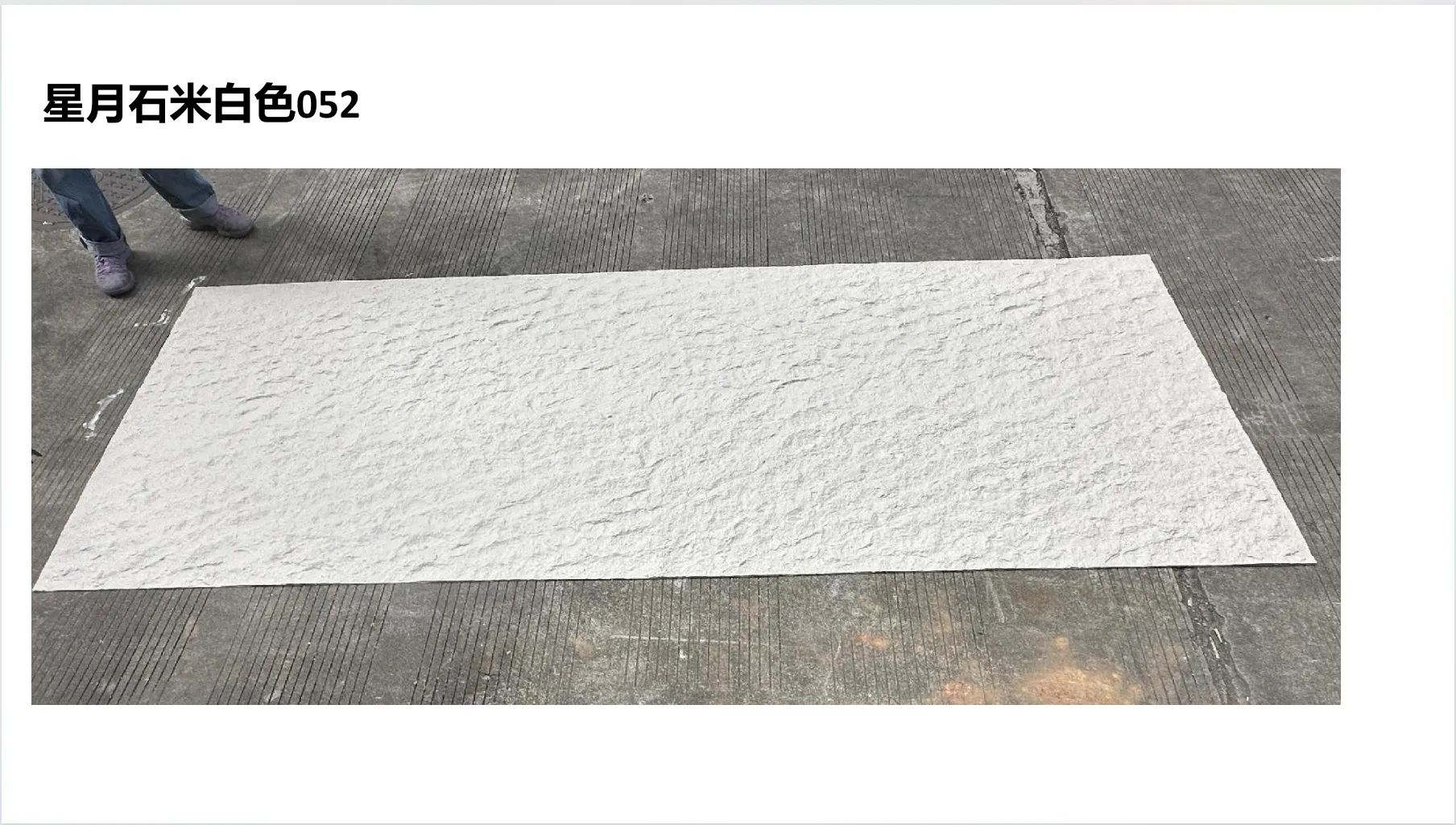
Starmoon Stone isn't just another pretty face in the world of building materials. It's part of the innovative MCM Flexible Stone family—a line of products that have been turning heads in the construction industry for their lightweight, durable, and versatile properties. MCM, or Modified Composite Material, is a game-changer: it combines the best of natural minerals with advanced engineering to create materials that are strong, flexible, and, in the case of Starmoon Stone, incredibly fire-resistant.
So, what makes Starmoon Stone so good at standing up to fire? Let's break it down. At its core, it's crafted from a mix of inorganic minerals—think crushed stone, glass fibers, and ceramic particles—bound together by a high-strength, heat-resistant resin. This unique composition creates a material that's inherently non-combustible. Unlike wood or plastic, it won't catch fire when exposed to flames. Even at temperatures exceeding 1,000°F (538°C)—hot enough to melt aluminum—Starmoon Stone remains stable, maintaining its shape and structural integrity. That's a big deal: in a fire, every second counts, and a material that doesn't fuel the flames can be the difference between a small incident and a full-blown disaster.
But fire resistance isn't just about not burning. It's also about smoke. Many fire-related deaths aren't caused by burns but by toxic smoke inhalation. Starmoon Stone addresses this, too. Because it contains no organic or volatile compounds, it releases minimal smoke when exposed to extreme heat—far less than materials like plywood or vinyl. This low-smoke characteristic is critical for occupant safety, as it improves visibility during evacuations and reduces the risk of respiratory harm.
To put this in perspective, Starmoon Stone has earned a Class A fire rating under ASTM E84, the industry standard test for measuring surface burning characteristics. A Class A rating means it has a flame spread index of 0-25 (the lowest possible) and a smoke developed index of less than 450. For context, untreated wood has a flame spread index of 75-450 (Class C), while some types of insulation can exceed 1,000. In short, Starmoon Stone doesn't just meet fire safety standards—it sets them.
Of course, Starmoon Stone isn't the only building material on the market. To truly understand its value, let's compare it to a few popular alternatives—materials you might be considering for your next project. The table below breaks down key factors like fire resistance, smoke emission, durability, and aesthetic options:
| Material | Fire Resistance Rating | Smoke Emission | Durability (Lifespan) | Aesthetic Options |
|---|---|---|---|---|
| Starmoon Stone | Class A (ASTM E84) | Very Low (No toxic fumes) | 50+ years | Wide range: Starry Green, Starry Blue, Lunar Peak finishes, wood grain, and more |
| Fair-faced Concrete | Class B | Moderate (Can release silica dust when heated) | 30-40 years (prone to cracking) | Limited (mostly gray, rough texture) |
| Wood Grain Board | Class D (Highly flammable) | High (Releases carbon monoxide) | 10-15 years (prone to rot, pests) | Natural wood look (limited color range) |
| Lunar Peak Silvery (MCM Series) | Class A | Low | 40+ years | Sleek metallic finish, modern design |
As the table shows, Starmoon Stone outperforms traditional options in nearly every category. It matches the fire resistance of specialized materials like Lunar Peak Silvery (another standout in the MCM family) while offering far more aesthetic flexibility. And compared to fair-faced concrete—a material often praised for its industrial chic—it's not only safer but also more durable and visually versatile. For designers and homeowners, this is a game-changer: you no longer have to choose between a material that keeps you safe and one that makes you happy to walk through the door.
Let's be honest: even the safest material in the world won't get far if it's ugly. No one wants their home or office to look like a bunker. That's why Starmoon Stone's designers put just as much thought into aesthetics as they did into fire resistance. The result? A material that can mimic the look of natural stone, wood, metal, or even concrete—all while retaining its top-tier safety properties.
Take, for example, the Travertine (Starry Green) variant. Travertine is a beloved natural stone known for its earthy tones and unique veining, but traditional travertine is heavy, expensive, and (surprisingly) not as fire-resistant as you might think. Starmoon Stone's take on Travertine (Starry Green) captures that same organic beauty—warm, mossy green hues with subtle, star-like flecks that shimmer in the light—but in a lightweight, fire-safe format. It's perfect for accent walls in a living room or as a backsplash in a kitchen, adding a touch of nature without the risk.
Or consider the Lunar Peak series, which includes Lunar Peak Silvery, Golden, and Black. These options lean into modern design, with sleek, metallic finishes that evoke the look of polished metal without the fire risk (traditional metal cladding can conduct heat, making it less ideal for high-fire zones). Lunar Peak Silvery, in particular, has become a favorite for commercial lobbies and high-end restaurants, where its cool, reflective surface adds a touch of sophistication while keeping safety front and center.
But Starmoon Stone's benefits don't stop at looks. It's also incredibly practical. Thanks to its MCM Flexible Stone base, it's up to 70% lighter than natural stone, making it easier to transport, handle, and install. This light weight is a huge advantage for both new construction and renovations, as it reduces strain on the building's structure and cuts down on labor costs. Unlike natural stone, which can crack during installation, Starmoon Stone is flexible, bending slightly to fit curved surfaces or uneven walls—a feature that architects love for creating unique, eye-catching designs.
Durability is another win. Starmoon Stone is resistant to scratches, dents, and moisture, so it holds up well in high-traffic areas like hallways or entryways. It's also UV-resistant, meaning it won't fade in sunlight—a big plus for exterior cladding or outdoor patios. And because it's non-porous, it's easy to clean: a quick wipe with soap and water is usually all it takes to keep it looking new. No sealing, no special treatments, no constant maintenance—just a beautiful, safe surface that lasts for decades.
To truly understand Starmoon Stone's value, let's look at how it's being used in real buildings today. Take the Azure Hotel, a 12-story boutique hotel in Seattle that opened in 2024. The hotel's design team wanted to create a space that felt luxurious and welcoming, but they also had to meet strict fire codes for high-rise buildings. After considering dozens of materials, they chose Starmoon Stone for both exterior cladding and interior accent walls.
"We needed something that could withstand Seattle's rainy weather, meet the city's fire safety standards, and still look amazing," says Maria Gonzalez, the hotel's lead architect. "Starmoon Stone checked all those boxes. We went with Lunar Peak Golden for the exterior—it has this warm, golden glow that stands out against the gray skies—and Travertine (Starry Blue) for the lobby walls. Guests often comment on how 'cozy' the lobby feels, which is funny because they're standing in front of a material that's basically fireproof. It's the best of both worlds."
On the residential side, consider the Thompson family, who built their dream home in California's wine country—a region prone to wildfires. "We wanted a home that felt open and connected to the landscape, but we also knew we needed to prioritize fire safety," says Mark Thompson, the homeowner. "Our contractor suggested Starmoon Stone for the exterior siding and the fireplace surround. We went with the Wood Grain Board texture, which looks just like cedar siding, but without the fire risk. Last summer, there was a small brush fire nearby, and while we evacuated, we came back to find our home completely unscathed. The Starmoon Stone siding didn't char, warp, or melt. It gave us peace of mind we never thought we'd have in a wildfire zone."
As climate change continues to increase the risk of wildfires, and as cities grow more densely populated, fire safety in construction will only become more important. Materials like Starmoon Stone represent the future of building—solutions that don't just react to safety standards but anticipate them, offering protection without compromise. They also align with the growing demand for sustainable construction. Starmoon Stone's long lifespan (50+ years, according to industry tests) means less frequent replacement, reducing waste. Its production process minimizes water and energy use compared to traditional stone quarrying, making it a greener choice for eco-conscious builders.
For homeowners, Starmoon Stone is an investment in both safety and resale value. In areas prone to fires, homes built with fire-resistant materials often sell faster and at higher prices, as buyers increasingly prioritize safety. For businesses, it's a way to protect employees, customers, and assets while creating spaces that reflect their brand's identity. And for architects and designers, it's a tool to push creative boundaries—no longer limited by the safety constraints of traditional materials.
At the end of the day, building materials are more than just parts of a structure—they're part of the stories we tell in our spaces. They're the walls that hold our family photos, the floors that carry the sound of laughter, the lobbies that welcome strangers and turn them into guests. Starmoon Stone understands this. It's a material that doesn't just protect those stories; it enhances them, proving that safety and beauty can coexist.
So the next time you're planning a project—whether it's a tiny bathroom renovation or a sprawling commercial complex—take a moment to think about the materials you choose. Ask yourself: Does this material keep me safe? Does it make me happy? With Starmoon Stone, the answer to both questions can be a resounding yes. It's not just a building material; it's a promise—a promise that your space will be as safe as it is beautiful, for years to come.
Recommend Products












