
In the heart of the Arabian Peninsula, Saudi Arabia's skyline is undergoing a transformation as bold as its deserts and as timeless as its heritage. From the gleaming towers of Riyadh to the cultural districts of Jeddah, and the futuristic projects of NEOM, the kingdom is redefining modern architecture while honoring its roots. But behind every striking facade and innovative structure lies a critical question: How do we build materials that speak to Saudi Arabia's unique climate, culture, and vision? Enter COLORIA GROUP—a name synonymous with bridging global expertise and local insight through building materials designed for the Saudi landscape. At the forefront of this mission is Starmoon Stone , a flagship product that has become a cornerstone of the kingdom's architectural renaissance. Yet, Starmoon Stone is just one thread in a rich tapestry of localized solutions, including treasures like lunar peak golden , mcm flexible stone , and bali stone , each crafted to tell Saudi Arabia's story in stone, metal, and texture.
Saudi Arabia is not just a market—it's a land of extremes. Days soar to 50°C in summer, sandstorms test durability, and humidity lingers along the coast. Meanwhile, its architectural identity is a delicate dance: preserving the geometric patterns of Najdi mud-brick homes, the grandeur of Islamic art, and the minimalism of Bedouin design, all while embracing cutting-edge sustainability and innovation. Imported materials often fall short here. They may lack the heat resistance needed for Riyadh's summers, fail to complement the warm desert palette, or carry unsustainable carbon footprints from long-haul shipping. Localization isn't just about "made nearby"—it's about materials that understand the land. They must be tough enough to withstand the elements, beautiful enough to honor tradition, and smart enough to meet the kingdom's green building goals. This is where COLORIA GROUP steps in, turning global material science into solutions that feel like they've always belonged in Saudi Arabia.
Consider this: A typical commercial building in Riyadh requires exterior cladding that can reflect sunlight to reduce cooling costs, resist sand abrasion, and still look elegant decades later. A heritage restoration project in Diriyah needs materials that mimic the texture of ancient stone but with modern durability. A luxury resort on the Red Sea might crave warmth and organic texture to blend with coastal landscapes. COLORIA's localized approach ensures each of these needs is met—not with a one-size-fits-all product, but with materials engineered for the moment, the place, and the people.
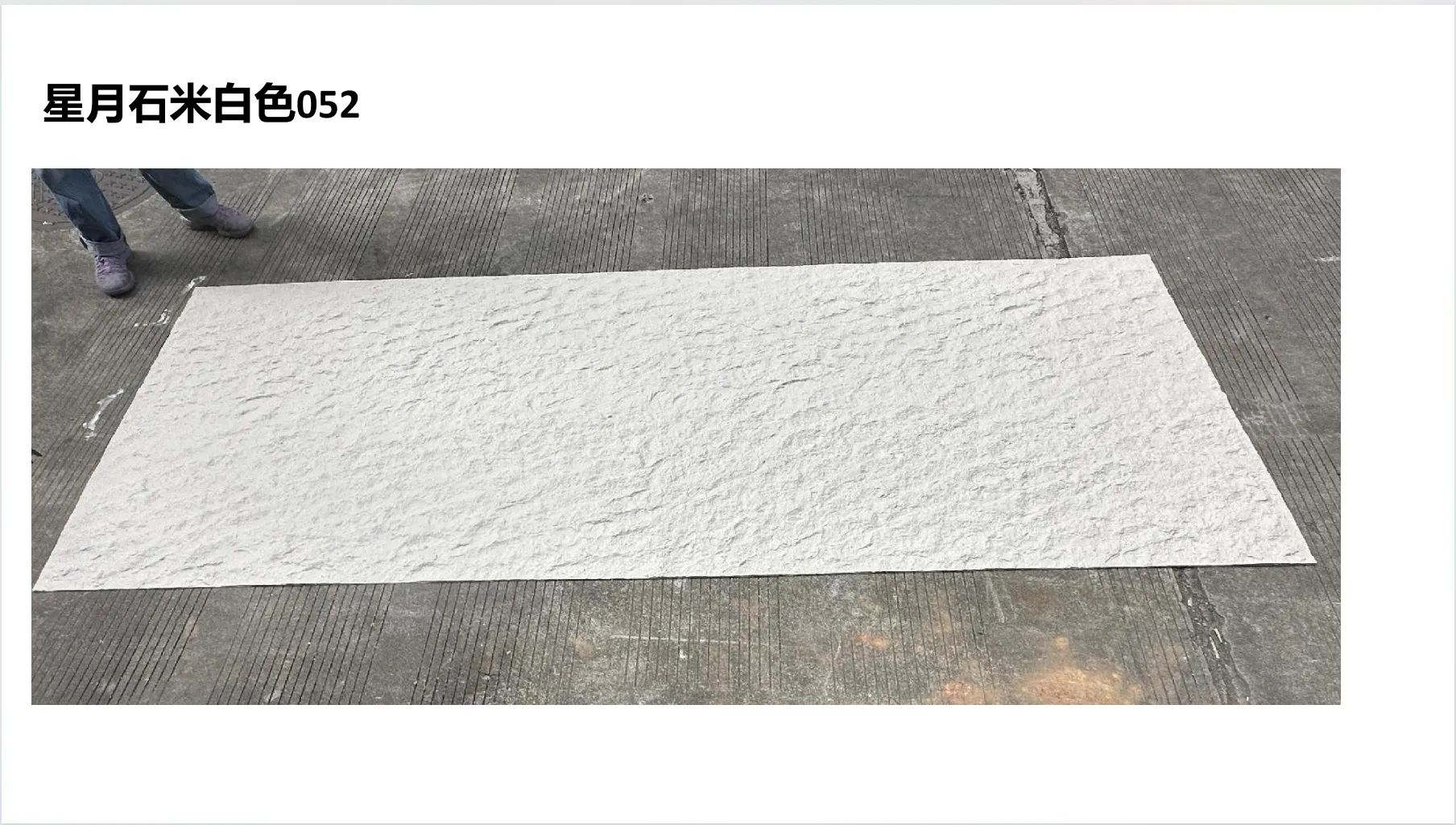
If Saudi Arabia's architecture had a crown jewel, it might well be Starmoon Stone. Named for the way its surface shimmers like desert stars under moonlight, this material is more than just a cladding option—it's a narrative. Inspired by the night skies of the Empty Quarter, where Bedouins once navigated by stars, Starmoon Stone features subtle, iridescent flecks embedded in a base of natural stone, creating a effect that shifts with the sun. In daylight, it glows softly, echoing the golden hues of the dunes; at dusk, it deepens, mirroring the twilight sky. But its beauty is more than skin-deep.
Starmoon Stone is engineered for Saudi Arabia's climate first. Its core is a blend of locally sourced minerals and reinforced polymers, giving it a high thermal resistance (up to 60°C) and low water absorption rate (less than 0.5%), critical for withstanding humidity and sudden rainfalls. Unlike traditional marble or granite, it's lightweight—around 18kg per square meter—reducing structural load on buildings, and its surface is treated with a nano-coating that repels sand and dust, cutting maintenance costs for busy facilities. For architects, Starmoon Stone is a canvas. It's available in three regional variants: Starry Green (with cool, earthy undertones for mountainous regions like Taif), Starry Red (a nod to the red deserts of Tabuk), and Starry Blue (inspired by the Red Sea coast). Each variant is to complement its local environment, ensuring buildings feel rooted in their surroundings.
Take, for example, the Al-Nour Cultural Center in Riyadh. Completed in 2024, its facade is clad in Starmoon Stone (Starry Green), the flecks of iridescence catching the light to mimic the play of sunlight on palm fronds. Inside, the stone lines the auditorium walls, its acoustic properties softening sound—a happy byproduct of its layered composition. "Starmoon Stone didn't just meet our aesthetic goals," says lead architect Lina Al-Mansoori. "It solved our biggest challenge: how to make a modern building feel like it's been part of Riyadh's landscape for generations."
Starmoon Stone may steal the spotlight, but COLORIA's lineup reads like a love letter to Saudi Arabia's diversity. Let's explore a few standouts:
If Starmoon Stone is the night sky, lunar peak golden is the desert at dawn. This material, part of the broader Lunar Peak series (which also includes silvery and black variants), is a celebration of Saudi Arabia's golden hour—the moments just after sunrise when the sand dunes glow like liquid metal. Lunar Peak Golden is a composite of aluminum alloy and natural stone particles, giving it a warm, metallic sheen that never fades, even under harsh UV rays. Its applications are as versatile as the desert itself: it adorns the facade of the King Abdullah Financial District's newest office tower, where its reflective surface reduces solar heat gain by 30%, and lines the walkways of a luxury resort in AlUla, where its texture mimics wind-carved sandstone. What makes it truly local? Its color is calibrated to match the specific wavelengths of Saudi sunlight, ensuring that "golden" never turns brassy or dull—a detail that imported metallic claddings often miss.
Traditional stone is rigid, heavy, and hard to shape—traits that can limit design creativity. MCM flexible stone shatters those limitations. Short for "Modified Composite Material," MCM Flexible Stone is a lightweight, bendable panel that mimics the look of natural stone (think limestone, travertine, or even ancient Najdi brick) but weighs up to 70% less than solid stone. This flexibility is a game-changer for Saudi architects. Imagine a curved mosque dome clad in stone that would traditionally require custom-cut blocks—with MCM Flexible Stone, it's as easy as bending a sheet. Or a heritage site in Jeddah's historic Al-Balad district, where the stone needs to match the weathered texture of 19th-century coral buildings; MCM Flexible Stone can replicate that texture exactly, right down to the tiny pits and grooves, without harming original structures. Its durability is equally impressive: it resists salt spray (ideal for coastal Jeddah), doesn't crack in temperature swings, and is fire-rated for high-rise safety. For a kingdom that values both innovation and preservation, MCM Flexible Stone is the ultimate problem-solver.
While Saudi Arabia is known for deserts, its Red Sea and Arabian Gulf coasts are havens of luxury and leisure. Here, bali stone shines. Named for its organic, beachy texture (though it's engineered in Saudi Arabia, not imported), Bali Stone is a blend of natural sand, resin, and mineral pigments, creating a surface that feels like smooth, sun-warmed pebbles. It's a favorite for resorts, villas, and waterfront promenades, where its non-slip surface and resistance to saltwater make it both safe and stunning. In the Red Sea Project's eco-resorts, Bali Stone lines pool decks and outdoor showers, its soft beige and taupe tones blending seamlessly with the surrounding sand and turquoise water. "It's not just about looking good," says a project manager with a leading hospitality group. "It's about creating a sense of place. When guests step onto Bali Stone, they feel like they're walking on the shores of the Red Sea, not a generic resort."
| Product Name | Core Features | Climate Adaptability | Top Applications |
|---|---|---|---|
| Starmoon Stone (Starry Green) | Iridescent flecks, natural stone base, lightweight (18kg/m²), acoustic properties | Heat-resistant (up to 50°C), low water absorption, sand abrasion resistance | Cultural centers, heritage restorations, high-end residential facades |
| Lunar Peak Golden | Metallic golden finish, aluminum alloy composite, UV-stable pigments | Reflective (reduces cooling costs), corrosion-resistant, sandstorm-tested | Commercial towers, luxury resorts, public plazas |
| MCM Flexible Stone | Bendable (up to 90° curves), 70% lighter than solid stone, customizable textures | Saltwater-resistant, temperature swing tolerance (-10°C to 60°C) | Curved architecture, heritage replications, coastal buildings |
| Bali Stone | Pebble-like texture, non-slip surface, natural sand blend | Saltwater-resistant, UV-stable, easy to clean (resists algae growth) | Resort pool decks, waterfront promenades, outdoor showers |
Localization and sustainability go hand in hand, and COLORIA GROUP takes this seriously. Saudi Arabia's Vision 2030 emphasizes reducing carbon emissions and promoting green building, and COLORIA's materials are designed to align with these goals. Starmoon Stone, for example, uses 30% recycled stone aggregate, cutting down on quarry waste. MCM Flexible Stone's lightweight nature reduces transportation emissions (fewer trucks needed for delivery) and lowers building foundation costs, which in turn reduces concrete usage. Lunar Peak Golden's reflective properties decrease the need for air conditioning, slashing energy consumption in commercial buildings. Even the production facilities prioritize sustainability: COLORIA's Riyadh plant runs on solar power, and water used in manufacturing is recycled. For developers and architects aiming for LEED or Estidama certifications, these materials aren't just choices—they're partners in meeting green building standards.
The true test of any building material is how it performs in the real world. Here are two stories that bring COLORIA's localized solutions to life:
A tech campus in north Riyadh needed a facade that screamed "innovation" while nodding to Saudi heritage. The solution? A combination of Starmoon Stone (Starry Blue) and Lunar Peak Golden. The Starmoon Stone panels, arranged in a geometric pattern inspired by traditional Islamic tessellations, form the building's "base," grounding it in culture. Above, Lunar Peak Golden cladding rises like a golden crown, reflecting the sun and symbolizing progress. The result? A building that's become a landmark for tech startups, with employees often remarking on how the facade "feels like Saudi Arabia's future looking back at its past."
Diriyah, the birthplace of the Saudi state, is a UNESCO World Heritage Site undergoing careful restoration. One challenge was repairing the exterior of a 200-year-old Najdi palace, whose original mud bricks were crumbling. Using MCM Flexible Stone, COLORIA replicated the texture of the palace's traditional "hasa" (mud mixed with straw) exactly, but with modern durability. The flexible panels were cut to fit the palace's uneven walls, avoiding the need for destructive renovations. Today, visitors can't tell the difference between the original mud bricks and the MCM Flexible Stone additions—a testament to how localization can preserve the past while protecting it for the future.
As Saudi Arabia continues to grow—with projects like NEOM, Qiddiya, and the Riyadh Metro reshaping its cities—the demand for localized building materials will only deepen. COLORIA GROUP isn't just keeping pace; it's leading the way, investing in R&D to create even more innovative solutions. Imagine Starmoon Stone with integrated solar panels, or MCM Flexible Stone that changes color to adapt to temperature. These aren't pipe dreams—they're the next chapter in a story that began with a simple idea: building materials should belong to the land they're on.
In the end, Starmoon Stone, lunar peak golden, mcm flexible stone, and bali stone are more than products. They're tools for storytelling. They allow Saudi Arabia to build not just structures, but legacies —buildings that speak of resilience, beauty, and pride. For COLORIA GROUP, this is the heart of localization: creating materials that don't just build walls, but build a nation's identity, one stone at a time.
Recommend Products












