
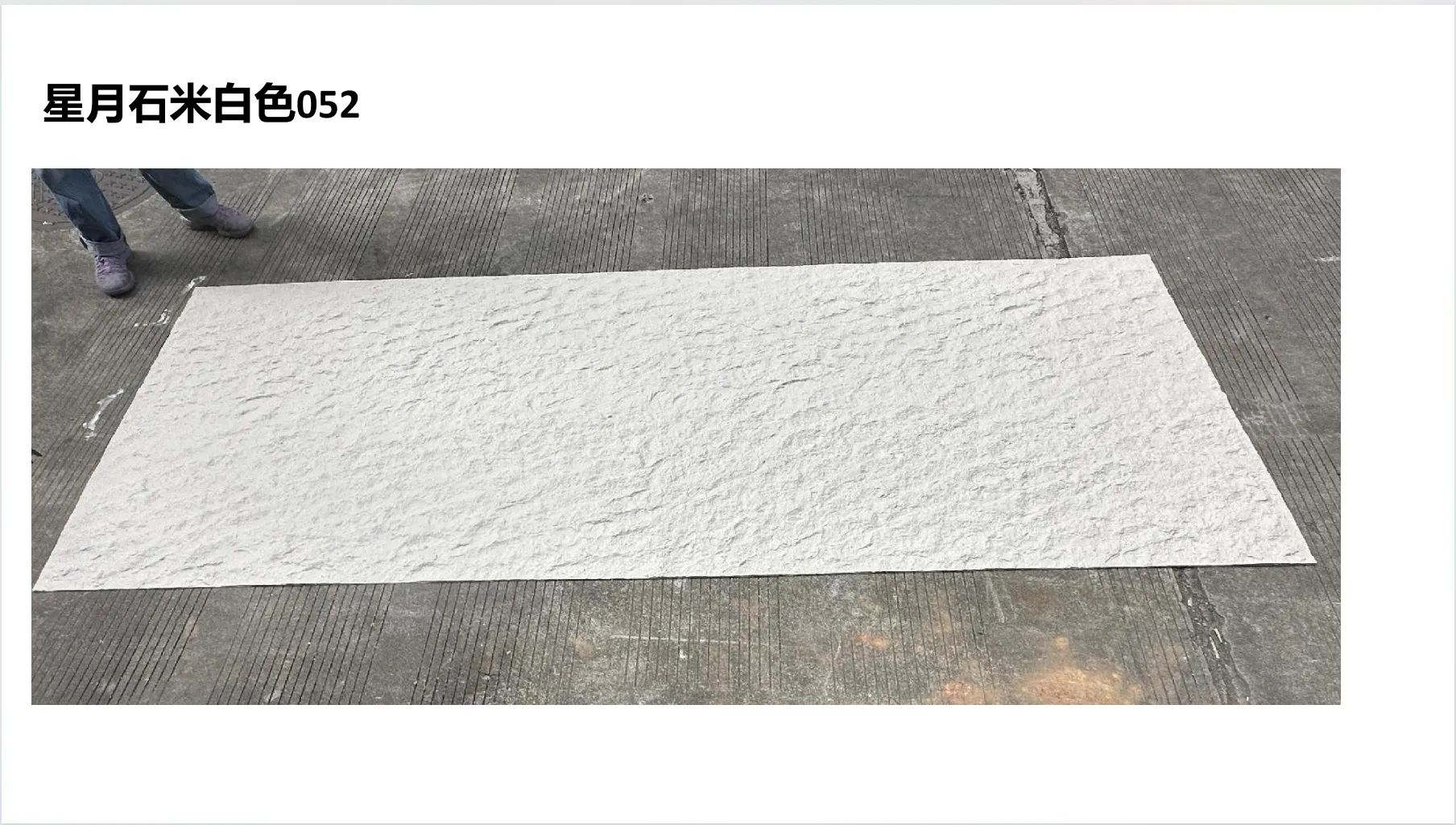
If you've ever sat down with a construction budget, you know the sting: the line item for "labor" can feel like a silent thief, eating up funds you'd rather spend on high-quality materials or unique design touches. Whether you're an architect overseeing a commercial project, a designer crafting a boutique hotel, or a homeowner finally building your dream space, the cost of installing stone, tile, or decorative panels often balloons beyond expectations—not because the materials themselves are overpriced, but because moving, cutting, and securing heavy materials demands time, manpower, and specialized skill. But what if there was a way to keep the beauty and durability of premium materials while slashing those labor costs? Enter MCM panels: lightweight, flexible, and designed to make installation a breeze. Let's dive into how these innovative materials—from mcm flexible stone to rammed earth board (matcha green) —are revolutionizing the industry, one labor hour saved at a time.
Let's start with the basics: traditional stone and masonry materials are heavy . A single square meter of natural travertine, for example, can weigh 25–30 kg. Granite? Up to 40 kg. Even cement boards, while lighter than stone, often clock in at 15–20 kg per square meter. Now, multiply that by hundreds (or thousands) of square meters for a project, and you're looking at a logistical nightmare. Here's why that weight translates directly to higher labor costs:
Take it from Sarah, a project manager at a mid-sized construction firm in Colorado: "We did a restaurant renovation last year where the client insisted on natural travertine (starry red) for the accent wall. Beautiful stuff, but each slab was 28 kg. The crew spent two full days just moving the materials from the truck to the second floor, and another three installing them. By the end, labor costs for that wall alone were 40% higher than we budgeted. The client loved the result, but they grumbled about the overage for months."
The problem isn't that natural materials aren't worth it—they are. The issue is that their weight creates a ripple effect of inefficiency. And in construction, time is money. So what if we could keep the look and feel of those premium materials but cut the weight by half (or more)? That's where MCM panels step in.
MCM stands for "Modified Composite Material," a term that might sound technical, but the concept is simple: these panels are engineered to mimic the texture, color, and durability of natural materials—stone, wood, metal, rammed earth—while being dramatically lighter and more flexible. Most MCM panels weigh just 4–8 kg per square meter, and some, like foamed aluminium alloy board (vintage silver) , are even lighter. That lightness isn't just about ease of lifting; it transforms every step of the installation process.
Let's break down why this matters. Imagine a crew installing mcm flexible stone instead of natural stone. The flexible stone panels weigh 5 kg per square meter, bend slightly to fit curves, and can be cut with standard tools (no need for diamond-tipped saws). A single worker can carry 4–5 panels at once. Installation? Instead of 2–3 people fumbling with a heavy slab, one worker can align, secure, and finish a panel in minutes. What took 5 days with natural stone might take 2 with MCM. Fewer workers, fewer hours, fewer headaches—and that's before we even talk about specialized labor.
But MCM panels aren't just "lightweight versions" of traditional materials. They're designed to enhance design possibilities while cutting costs. Let's take a closer look at some standout options and how they simplify installation:
Think of mcm flexible stone as stone with a yoga membership—it's strong but surprisingly bendable. Unlike rigid natural stone, these panels can curve around columns, archways, or rounded walls without cracking. For installers, that means no need to custom-cut wedge-shaped pieces to fit curves (a process that eats up hours). Instead, a single panel bends to the shape, and the adhesive backing (or simple mechanical fasteners) secures it in place. One contractor we spoke to called it "like installing wallpaper, but with the durability of stone." For projects with organic shapes—say, a boutique hotel with a curved lobby wall—this flexibility slashes installation time by 50% or more.
Natural travertine is beloved for its porous, earthy texture, but travertine (starry green) takes it up a notch with a mesmerizing "starry" pattern—tiny, glittering flecks that catch the light like a night sky over a forest. What makes it a labor-saver? At just 6 kg per square meter, it's less than half the weight of natural travertine. Installers can carry multiple panels up ladders or scaffolding without straining, and because the material is pre-finished, there's no need for on-site sealing or polishing (another common labor drain with natural stone). A recent café renovation in Portland used travertine (starry green) for their backsplash and feature wall; the crew finished the entire 80 sqm job in 3 days instead of the projected 6, saving over $3,000 in labor.
For projects craving a modern, industrial edge, lunar peak silvery delivers with its cool, metallic finish that mimics brushed aluminum or aged steel. But unlike real metal panels, which can weigh 12–15 kg per square meter, this MCM version is a feathery 4.5 kg. That means installers can mount it on interior or exterior walls without reinforcing the structure (a must with heavy metal). One commercial designer noted, "We used lunar peak silvery for a tech office's conference room wall. The client wanted that 'industrial chic' look, but we were worried about the weight on the drywall. With MCM, we didn't need to add extra studs—just glued and screwed it directly. The installers finished in a day, and the client couldn't believe how crisp it looked."
Rammed earth is having a moment, and for good reason—its warm, textured look evokes sustainability and connection to nature. But traditional rammed earth is a labor-intensive nightmare, requiring layers of soil, clay, and gravel to be compacted on-site, a process that can take weeks. rammed earth board (matcha green) solves that. These panels are factory-made to replicate the rich, earthy tones of matcha green rammed earth, but at just 7 kg per square meter, they install like paneling. A homeowner in Arizona used them for their outdoor patio walls: "We wanted that 'desert home' vibe without the mess of on-site rammed earth. The installers put up 100 sqm in two days, and it looks identical to the real thing. We saved $5,000 on labor and avoided weeks of construction dust."
Talk is cheap—let's look at hard data. We compared installation costs for three common materials (natural travertine, traditional cement board, and natural stone veneer) with their MCM counterparts. The results? A clear pattern of labor savings across the board.
| Material | Weight (kg/sqm) | Workers Needed per 100 sqm | Installation Time (days) | Estimated Labor Cost (USD/100 sqm)* |
|---|---|---|---|---|
| Natural Travertine | 28 | 4–5 | 6–7 | $8,000–$10,000 |
| MCM Travertine (Starry Green) | 6 | 2–3 | 2–3 | $3,000–$4,500 |
| Traditional Cement Board | 18 | 3–4 | 4–5 | $5,000–$6,500 |
| MCM Foamed Aluminium (Vintage Silver) | 4.5 | 2 | 1–2 | $2,000–$3,000 |
| Natural Stone Veneer | 22 | 3–4 | 5–6 | $7,000–$9,000 |
| MCM Flexible Stone | 5 | 2 | 2–3 | $3,500–$5,000 |
| Natural Rammed Earth (On-Site) | 35 | 5–6 | 10–14 | $12,000–$15,000 |
| MCM Rammed Earth (Matcha Green) | 7 | 2–3 | 2–3 | $3,500–$5,000 |
*Estimates based on average US labor rates ($25–$35/hour) and typical crew efficiency. Costs may vary by region.
The takeaway? For every 100 square meters, MCM panels cut labor costs by 40–60% compared to traditional materials. On a 500 sqm project, that's savings of $20,000–$30,000—money that can go toward upgrading fixtures, adding custom details, or padding your profit margin. And it's not just about the dollars: faster installation means projects finish on time (or early!), reducing stress for everyone involved.
Labor savings are the headline, but MCM panels offer perks that go beyond the budget sheet. Let's talk about why design professionals are raving about them:
Flexible materials like mcm flexible stone let you dream bigger. Want a curved accent wall in the lobby? A wavy backsplash in the kitchen? MCM panels bend and cut easily, so you're not limited to flat surfaces. travertine (starry green) , with its iridescent flecks, adds depth and drama that's hard to replicate with natural stone. One interior designer in Chicago used it for a hotel bar: "The client wanted 'something that feels like a forest at night.' With the starry pattern and the lightweight panels, we curved the bar front and backlit it—something we never could have done with heavy stone."
MCM panels are often made with recycled materials (like the aluminum in foamed aluminium alloy board (vintage silver) ) and require less energy to produce than mining and cutting natural stone. Plus, their light weight reduces fuel use during transportation—another win for eco-conscious projects.
Don't let "lightweight" fool you: MCM panels are tough. They're resistant to moisture, UV rays, and impact, making them ideal for high-traffic areas (think retail stores, airports) or outdoor use. rammed earth board (matcha green) , for example, holds up to rain and wind better than traditional rammed earth, which can erode over time.
With so many options—from foamed aluminium alloy board (vintage silver) to rammed earth board (matcha green) —how do you pick the right one? Start by asking: What's the vibe? For a modern, industrial look, go with metallic finishes like lunar peak silvery or foamed aluminium. For a warm, organic feel, rammed earth board (matcha green) or travertine (starry green) fits the bill. Then, consider the location: exterior walls need UV resistance, while bathrooms need moisture resistance (most MCM panels check both boxes). And don't forget to ask your supplier for samples—seeing the texture and color in person is key to making sure it matches your vision.
At the end of the day, construction is about more than just building—it's about creating spaces that inspire, function, and feel like home (or work, or play). Heavy materials have long been a barrier to that vision, driving up costs and limiting creativity. MCM panels change the game. With options like mcm flexible stone , travertine (starry green) , and rammed earth board (matcha green) , you can have the beauty of natural materials without the labor headaches. You'll save money, finish faster, and deliver a space that wows clients and users alike.
So the next time you're staring at a budget, remember: labor costs don't have to be a mystery. By choosing lightweight, labor-friendly MCM panels, you're not just cutting expenses—you're investing in a smoother, more creative, and more successful project. And that? That's priceless.
*Labor cost estimates based on average US rates (2024) and may vary by region, contractor, and project complexity.
Recommend Products












